Quick Answer: What Is the UPS Electric Truck?
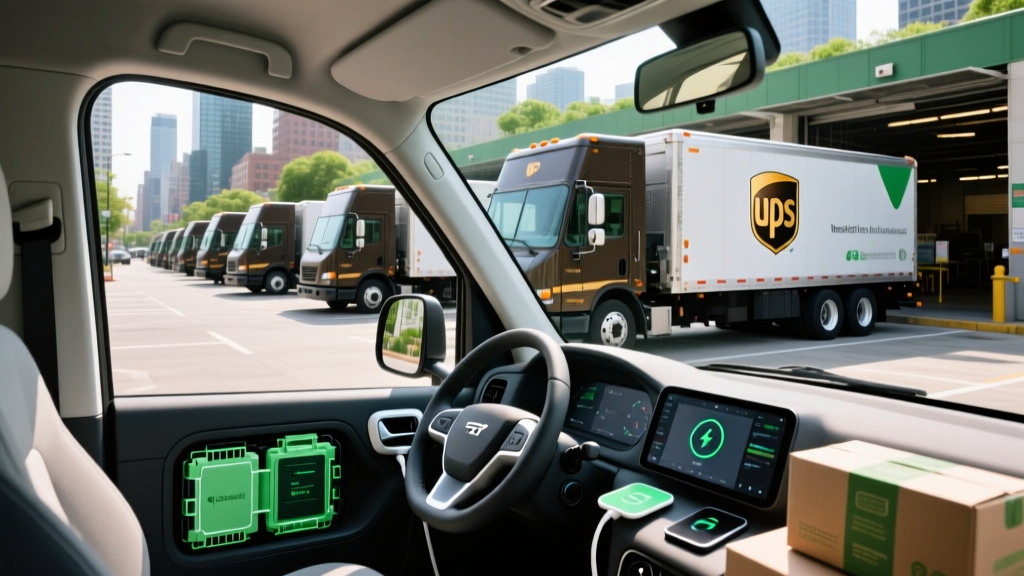
The UPS electric truck fleet consists primarily of custom-built BrightDrop Zevo 600 (formerly known as the BrightDrop EV600) and smaller Zevo 400 step vans deployed across US metro areas. As of early 2026, UPS operates over 1,000 electric delivery vehicles with a committed order pipeline exceeding 10,000 units from BrightDrop (a GM subsidiary). The Zevo 600 delivers an EPA-estimated 150–250 mile range depending on payload and configuration, uses a ~200 kWh Ultium NMC battery pack, and supports DC fast charging at up to 120 kW (10–80% in roughly 90 minutes). These are purpose-built commercial last-mile delivery vehicles — not available for consumer purchase — but their deployment signals where fleet EV economics stand today and what that means for the commercial EV market you may eventually buy into.
Why UPS Went Electric: The Fleet Numbers Behind the Decision
UPS doesn't buy electric trucks for PR. The company operates roughly 125,000 vehicles globally and burns through millions of gallons of diesel and gasoline annually. The shift to electric is driven by total cost of ownership (TCO) math that has flipped in EV's favor for predictable, depot-based routes.
Here's what makes the UPS electric truck route profile ideal for electrification:
- Daily mileage: Most urban delivery routes run 60–120 miles per day — well within the Zevo 600's real-world range even with cold-weather losses.
- Stop frequency: UPS drivers average 135+ stops per day. Every stop means regenerative braking recaptures energy, boosting effective efficiency far beyond the EPA sticker.
- Depot charging: Trucks return to the same facility nightly, enabling scheduled Level 2 or DC fast charging without public-charger dependency.
- Maintenance reduction: No oil changes, no diesel particulate filter replacements, no transmission fluid — EV drivetrains cut scheduled maintenance by an estimated 30–40%.
UPS has committed to sourcing 30% of its ground fleet fuel from non-conventional sources by 2026 and targets carbon neutrality by 2050. The BrightDrop order is the single largest EV fleet commitment in US logistics history.
Specs: BrightDrop Zevo 600 vs. Diesel Step Van
The Zevo 600 replaced traditional diesel and gasoline step vans (often based on Freightliner or Workhorse chassis) on select routes. Here's how the numbers stack up for a typical urban delivery configuration:
| Specification | BrightDrop Zevo 600 (EV) | Typical Diesel Step Van |
|---|---|---|
| Powertrain | td>Dual-motor AWD, Ultium platform6.7L turbodiesel V8 | |
| Horsepower | ~300 hp combined | ~260 hp |
| Torque | ~590 lb-ft (instant) | ~620 lb-ft (at 1,600 rpm) |
| Battery / Fuel Tank | ~200 kWh NMC (Ultium) | ~40-gallon diesel |
| EPA Range | 150–250 miles (config-dependent) | ~400–500 miles |
| Real-World Range (loaded, mixed) | ~120–180 miles | ~350–450 miles |
| Max DC Fast Charge | 120 kW peak | N/A (diesel fill in ~8 min) |
| 10–80% Charge Time | ~90 minutes | ~8 minutes |
| Level 2 Charge Rate | ~19.2 kW (overnight depot) | N/A |
| Cargo Volume | ~600 cu ft | ~550–700 cu ft |
| Payload Capacity | ~2,500–3,500 lbs | ~4,000–5,000 lbs |
| Energy/Fuel Cost per Mile | ~$0.12–$0.18/mi (electricity) | ~$0.35–$0.50/mi (diesel) |
| Estimated MSRP (fleet) | ~$100,000–$130,000 | ~$75,000–$95,000 |
| Scheduled Maintenance Cost/Year | ~$1,500–$2,500 | ~$4,000–$6,000 |
| Drivetrain Warranty | 8 years / 100,000 miles | 5 years / 100,000 miles |
Sources: BrightDrop Zevo 600 specs, fueleconomy.gov for comparable diesel efficiency baselines.
Real-World Range: What the EPA Sticker Doesn't Tell Fleet Managers
The Zevo 600's published 150–250 mile range window reflects configuration variability — a lightly loaded van with a smaller battery option sits at the low end, while a fully spec'd 200 kWh pack with moderate payload reaches the high end. But fleet operators plan around worst-case scenarios:
Real-World Range Expectations (Zevo 600, ~200 kWh pack)
- EPA combined estimate: Up to 250 miles (optimal config)
- Loaded urban route (summer): ~160–190 miles
- Loaded urban route (winter, 30°F): ~110–140 miles (30–40% cold-weather loss is typical for NMC packs without dedicated heat-pump cabin conditioning)
- Highway transfer at 65 mph: ~130–150 miles (aerodynamic drag dominates at speed; step vans are not designed for highway efficiency)
Bottom line: Most UPS routes of 60–120 daily miles are covered comfortably even in January in Chicago. Routes exceeding 150 miles in cold climates still require diesel backup or mid-day opportunity charging.
The Ultium platform's thermal management system helps moderate degradation, but NMC chemistry in cold weather is physics — not a software fix. UPS addresses this by assigning electric trucks to shorter, denser urban routes and keeping diesel on longer suburban and rural runs.
Charging Infrastructure: How Depot Charging Actually Works
Unlike consumer EV owners who rely on a mix of home and public charging, UPS uses a depot-based charging model — trucks return to a central facility and charge overnight. Here's how a typical UPS EV depot is configured:
| Charging Level | Power (kW) | Miles Added per Hour | Use Case at UPS Depot |
|---|---|---|---|
| Level 2 (AC) | 19.2 kW | ~30–40 mi/hr | Overnight top-up for trucks with 40%+ SoC remaining |
| DC Fast Charge | 60–120 kW | ~80–120 mi/hr (peak) | Quick turnaround for double-shift trucks or deep-depletion recovery |
A typical UPS EV depot installs between 20 and 100 Level 2 chargers plus a smaller number of DC fast chargers. The electrical infrastructure upgrade for a 50-charger depot can cost $2–5 million, including transformer upgrades, switchgear, trenching, and utility demand-charge negotiations. This is the single largest barrier to fleet electrification — not the trucks themselves.
UPS has partnered with utility companies on managed charging programs that stagger charge times to avoid peak demand charges. A truck that returns at 6 PM with 40% SoC doesn't need to charge immediately — it can begin charging at 11 PM when electricity rates drop to $0.06–$0.08/kWh, bringing the per-mile energy cost down to roughly $0.08–$0.10/mile.
Cost Breakdown: EV Fleet Truck vs. Diesel Over 8 Years
The upfront price premium for an electric step van is significant — roughly $25,000–$40,000 more than a diesel equivalent. But fleet TCO analysis flips the equation over a typical 8-year / 200,000-mile ownership cycle:
| Cost Category (8-Year / 200,000 mi) | BrightDrop Zevo 600 (EV) | Diesel Step Van |
|---|---|---|
| Vehicle Purchase Price | $115,000 | $85,000 |
| Federal Commercial Clean Vehicle Credit (§45W) | –$40,000 | $0 |
| Net Acquisition Cost | $75,000 | $85,000 |
| Fuel / Energy (200K miles) | $20,000–$28,000 | $60,000–$80,000 |
| Scheduled Maintenance | $14,000–$18,000 | $35,000–$45,000 |
| Brake Replacement (regen extends life) | $2,000–$3,000 | $6,000–$9,000 |
| Depot Charging Infrastructure (amortized per truck) | $8,000–$15,000 | $0 |
| Insurance (8 years) | $18,000–$22,000 | $15,000–$18,000 |
| Total Estimated 8-Year TCO | $137,000–$161,000 | $201,000–$237,000 |
Net savings per truck over 8 years: roughly $40,000–$76,000. This is why UPS, FedEx, and Amazon are all racing to electrify last-mile fleets. The IRS §45W Commercial Clean Vehicle Credit provides up to $40,000 for qualifying commercial EVs (the commercial equivalent of the consumer §30D credit), which is the key policy lever making the math work today.
What Consumer EV Buyers Can Learn from the UPS Electric Truck Strategy
You can't buy a BrightDrop Zevo 600 for your driveway, but the fleet electrification playbook reveals principles that apply directly to personal EV ownership decisions:
The Fleet-EV Decision Framework Applied to Your Purchase
Choose an EV if your daily driving looks like a UPS route:
- You drive under 100 miles per day on a predictable pattern
- You have reliable home or workplace Level 2 charging access
- Your climate isn't consistently below 20°F for extended periods (or your EV has a heat pump)
- You plan to keep the vehicle 6+ years to capture the TCO crossover
Choose a PHEV or stick with a hybrid if:
- Your daily mileage varies wildly (some days 20 miles, some days 300)
- You lack home charging and public infrastructure in your area is sparse
- You regularly tow or carry heavy payloads that compress EV range by 30%+
- You live in extreme cold (sub-zero winters) and your route has no mid-day charging options
Wait on EV adoption if:
- You're in a multi-unit dwelling with no charging installation pathway
- Your budget can't absorb the upfront premium even with tax credits
- Your state has no utility incentives for home charger installation
The reason UPS can electrify confidently is that they control the charging environment. For consumer buyers, the same principle applies: if you control a Level 2 charger at home, EV ownership is dramatically simpler and cheaper. If you don't, the experience can range from inconvenient to genuinely frustrating.
Common Misconceptions About Fleet Electric Trucks (and EVs Generally)
| Myth | Fact |
|---|---|
| "Electric trucks can't handle real delivery routes." | The Zevo 600 covers 60–120 mile urban routes daily with range to spare. The constraint is route length, not capability. |
| "The battery will need replacing in a few years." | Ultium NMC packs are warrantied for 8 years/100,000 miles at 70%+ capacity retention. Fleet data from early deployments shows degradation of 2–3% per year under managed charging protocols. |
| "Electric trucks are zero-emission everywhere." | Tailpipe emissions are zero. Upstream emissions depend on the local grid. A depot charged on coal-heavy power in Wyoming has a higher carbon footprint than one on hydro-powered grids in Washington state. Over the vehicle lifetime, EV fleets still produce 50–70% fewer lifecycle emissions in most US grids. |
| "Charging takes too long for commercial use." | For overnight depot charging, 8–10 hours at Level 2 is more than sufficient. DC fast charging at 120 kW adds ~100 miles in an hour — adequate for mid-shift top-ups. |
| "Fleet EVs are heavily subsidized and wouldn't work without government money." | The §45W credit accelerates adoption, but the per-mile energy and maintenance savings are real and self-sustaining. Most fleet TCO models show EV parity within 4–5 years even without incentives. |
The BrightDrop Ecosystem: What Comes After the Zevo 600
BrightDrop (spun out of GM in 2021, later restructured under GM's commercial vehicle division) also offers the smaller Zevo 400 (~250 cu ft cargo, ~150-mile range, ~$80,000–$100,000) aimed at smaller parcel carriers and grocery delivery. FedEx has also placed BrightDrop orders, and the platform is being evaluated by other logistics firms.
For the consumer market, the Ultium platform underpinning the Zevo is the same architecture in the Chevrolet Silverado EV, GMC Sierra EV, and Cadillac Escalade IQ. The battery technology, thermal management, and charging capabilities developed for fleet duty cycles are directly informing GM's consumer truck strategy. When you see a Silverado EV at your local dealer, it's carrying fleet-proven battery engineering underneath.
Frequently Asked Questions
Can I buy a UPS electric truck for personal use?
No. The BrightDrop Zevo 600 is a commercial-only vehicle sold through fleet channels. However, the consumer-facing Chevrolet Silverado EV and GMC Sierra EV share the same Ultium platform and offer similar battery technology in a pickup configuration, starting around $55,000–$60,000 for base trims.
How many electric trucks does UPS currently operate?
As of early 2026, UPS has deployed over 1,000 BrightDrop electric delivery vehicles across US metro areas, with a committed order pipeline exceeding 10,000 units. Additional EVs from other manufacturers (Workhorse, Thor Industries) supplement the fleet in specific markets.
What tax credits apply to commercial electric trucks?
The IRS §45W Commercial Clean Vehicle Credit provides up to $40,000 for qualifying commercial EVs with a GVWR over 14,000 lbs (up to $7,500 for lighter vehicles). Eligibility depends on battery sourcing requirements, MSRP caps for lighter vehicles, and the purchasing entity's tax liability. Consult a tax professional for specific eligibility.
How does cold weather affect UPS electric truck range?
NMC battery chemistry loses 25–40% of usable range in sustained sub-freezing temperatures. UPS mitigates this by assigning EVs to shorter urban routes in cold-climate cities and using battery preconditioning during depot charging. Real-world winter range for a loaded Zevo 600 drops to roughly 110–140 miles from a summer baseline of 160–190 miles.
Is the UPS electric truck actually better for the environment?
On a lifecycle basis, yes — in most US electricity grids. A NHTSA-referenced analysis shows that even on coal-heavy grids, an electric delivery truck produces 40–50% fewer lifecycle CO₂ emissions over 200,000 miles compared to diesel. On cleaner grids (hydro, wind, nuclear), the reduction reaches 65–75%. The breakeven point versus diesel typically occurs within 2–3 years of operation.
What does UPS fleet electrification mean for consumer EV prices?
Massive fleet orders drive battery manufacturing scale, which lowers per-kWh costs across the industry. Ultium platform production for BrightDrop directly supports GM's ability to price consumer EVs competitively. The more kWh GM produces, the cheaper each cell becomes — benefiting Silverado EV and Equinox EV buyers through lower MSRPs over time.