Quick Answer: Which EVs Are Least Reliable in 2026?
The vehicles that most frequently appear on reliability complaint lists and owner surveys share common traits: first-year production models from startups, luxury EVs with complex air-suspension and thermal systems, and older early-generation EVs with passive battery cooling. Specific models flagged by Consumer Reports, NHTSA complaint databases, and owner forums in 2025–2026 include the Rivian R1T/R1S (early 2022–2023 builds), certain Mercedes-Benz EQS/EQE variants, the Chevrolet Bolt EV/EUV (pre-recall 2017–2022 battery modules), and the Fisker Ocean (company ceased operations in late 2024, leaving owners without parts or service support). Conversely, the Hyundai Ioniq 5/6, Tesla Model 3 (Highland refresh), Toyota bZ4X, and BMW i4 consistently rank among the most dependable.
Buying an electric vehicle should reduce your cost of ownership and simplify maintenance — but only if the vehicle actually stays on the road. This guide breaks down which EVs have earned a spot on the unreliable EV list, why they fail, what reliable alternatives cost, and how to evaluate any EV before signing a purchase agreement.
What Makes an EV Unreliable? The Real Failure Points
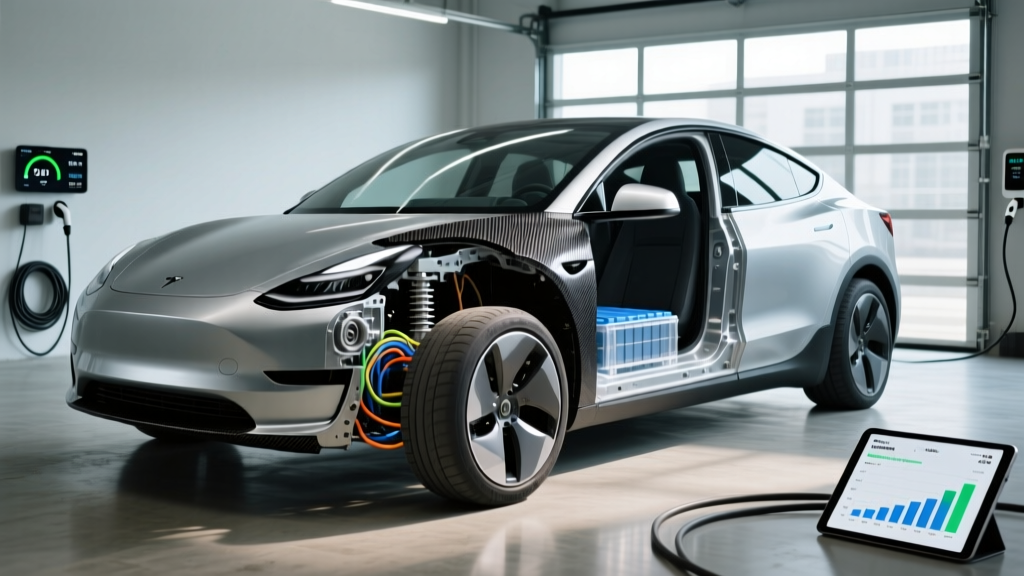
EVs have far fewer moving parts than internal-combustion vehicles — no timing belts, no oil pumps, no exhaust systems. But "simpler drivetrain" does not mean "nothing breaks." The reliability issues that land a model on this list typically fall into four categories:
- Battery thermal management failures: Passive or underserved liquid-cooling systems that lead to accelerated degradation, especially in hot climates or under repeated DC fast-charging. Early Nissan Leaf (air-cooled) remains the textbook example, but some newer models still undersize their cooling loops.
- Software and electrical gremlins: Infotainment freezes, OTA update bricking, phantom 12V battery drains, and faulty battery-management-system (BMS) readings that misreport state of charge.
- Build-quality and supplier defects: First-year production vehicles from low-volume manufacturers often suffer panel-gap issues, water intrusion, suspension component failures, and drive-unit bearing wear.
- Orphaned or unsupported models: When a manufacturer folds or discontinues a platform, parts availability collapses. The Fisker Ocean is the most acute 2025–2026 example; owners report 6–10 month waits for collision parts with no authorized service network.
Understanding which failure mode applies helps you evaluate whether a given model is a dealbreaker or a manageable risk.
The 2026 Unreliable EV List: Models and Specific Issues
Rivian R1T / R1S (2022–2023 Model Years)
Rivian's dual-motor and quad-motor trucks are capable off-road and on, but early-build vehicles have accumulated significant complaint volume. Common issues reported to NHTSA and owner forums include drive-unit replacement under warranty, air-suspension compressor failures, water intrusion through the front trunk seal, and software-induced range miscalculation. Rivian has issued multiple service campaigns, and 2024–2025 builds show measurable improvement — but used 2022–2023 examples carry real risk. The R1T Dual-Motor starts at $71,700 (2026 MSRP), and out-of-warranty drive-unit replacement can exceed $8,000.
Mercedes-Benz EQS 450+ / EQE 350+ (2022–2024)
Mercedes' dedicated EV sedans deliver luxury and range (EPA 350 mi for the EQS 450+), but owner surveys flag recurring issues: MBUX Hyperscreen software crashes, air-suspension failures at 25,000–40,000 miles, and heat-pump malfunctions in cold climates. Repair costs are steep — an EQS air-suspension strut replacement runs $2,800–$3,500 per corner. Combined with steep depreciation (40–50% loss in 3 years), these models represent a high-cost reliability gamble on the used market.
Fisker Ocean (All Model Years)
Fisker Inc. filed for bankruptcy in late 2024 after delivering roughly 10,000 Ocean SUVs. As of 2026, there is no authorized service network, no parts supply chain, and no entity honoring the original 6-year/60,000-mile powertrain warranty. Multiple owners report being unable to source replacement bumper covers, charge-port doors, or suspension components after collisions. Despite a compelling original spec (EPA 360 mi for the Extreme trim, 564 HP), the Ocean is effectively an orphaned vehicle. We classify it as the highest-risk entry on any unreliable EV list.
Chevrolet Bolt EV / EUV (2017–2022, Pre-Recall Battery)
GM's global recall of 2017–2022 Bolt batteries due to manufacturing defects (fire risk from damaged separator and folded anode) was largely resolved through battery-pack replacements. However, some vehicles still carry unreplaced modules, and the recall history suppresses resale value. The 2023–2024 Bolt EUV with the Ultium-adjacent pack is a different story — solidly reliable. If you're shopping used, verify the battery recall was completed via the VIN at NHTSA's recall lookup.
Volkswagen ID.4 (2021–2023 Model Years)
Early U.S.-spec ID.4 models have accumulated complaints around 12V battery failure (a surprisingly common EV issue that bricks the vehicle), infotainment software instability, and slow DC fast-charge tapering that frustrates road-trippers. The 2024+ models with updated software and the U.S.-built Chattanooga production show improvement, but 2021–2023 examples should be approached with caution. The ID.4 Pro S (2026 MSRP $47,990) offers 275 mi EPA range and a peak charge rate of 170 kW (10–80% in approximately 28 minutes).
Reliable Alternatives: What to Buy Instead
If the models above give you pause, these vehicles consistently rank well in dependability surveys, owner satisfaction, and long-term battery health data:
| Vehicle | EPA Range | Battery (kWh / Chemistry) | Peak DC Charge | 10–80% Time | Base MSRP (2026) | Key Reliability Strength |
|---|---|---|---|---|---|---|
| Hyundai Ioniq 5 (Long Range AWD) | 290 mi | 84 kWh / NMC | 240 kW | ~18 min | $47,500 | 800V architecture, proven e-GMP platform |
| Tesla Model 3 (Highland RWD) | 341 mi | 60 kWh / LFP | 170 kW | ~25 min | $38,990 | LFP longevity, Supercharger network access |
| Toyota bZ4X (FWD) | 252 mi | 71.4 kWh / NMC | 150 kW | ~30 min | $38,465 | 10-year/150k battery warranty, conservative SoC buffer |
| BMW i4 eDrive40 | 307 mi | 83.9 kWh / NMC | 200 kW | ~31 min | $57,900 | BMW's mature Gen5 eDrive, strong build quality |
| Hyundai Ioniq 6 (SEL AWD) | 270 mi | 77.4 kWh / NMC | 240 kW | ~18 min | $46,500 | Shared e-GMP platform, low drag coefficient (0.21 Cd) |
Notice a pattern: the most reliable EVs tend to come from manufacturers on their second or third generation of a dedicated EV platform, not first-year launches or low-volume startups.
EV vs. Gas vs. Hybrid: How Do Reliability Costs Compare?
| Cost Category (5-Year / 75,000 mi) | Reliable EV (e.g., Ioniq 5) | Gas Sedan (e.g., Honda Accord 1.5T) | Hybrid (e.g., Toyota Camry Hybrid) |
|---|---|---|---|
| Purchase Price (after incentives) | $40,000 (after §30D point-of-sale) | $29,500 | $31,200 |
| Energy / Fuel | $3,200 (home L2 at $0.14/kWh) | $7,500 (30 MPG at $3.00/gal) | $4,800 (52 MPG at $3.00/gal) |
| Maintenance | $900 (cabin filter, tire rotation, wiper fluid) | $3,800 (oil, filters, brakes, belts) | $3,200 (oil + reduced brake wear) |
| Insurance (avg) | $7,200 | $5,400 | $5,600 |
| Depreciation | $16,000 | $11,000 | $12,500 |
| Total 5-Year Cost | $67,300 | $57,200 | $57,300 |
An unreliable EV blows up this math entirely. A single out-of-warranty battery replacement ($12,000–$22,000 depending on pack size) or an air-suspension overhaul ($6,000–$10,000) can erase years of fuel savings. This is why choosing a model with demonstrated reliability matters more for EVs than for gas cars — the repair-cost ceiling is higher.
For a detailed look at federal incentive eligibility, consult the IRS §30D clean vehicle credit page. As of 2026, the credit offers up to $7,500 with strict MSRP caps ($55,000 for sedans, $80,000 for SUVs/trucks), adjusted gross income limits ($150,000 single / $300,000 joint), and battery-critical-mineral sourcing requirements. Eligibility can be verified via the IRS Energy Credits Online tool, and the credit can be transferred to the dealer at point of sale.
Real-World Ownership Factors That Affect Reliability
A model's reliability is not purely a function of engineering — your driving environment and charging habits play a major role:
Climate Impact
Cold climates reduce range by 15–30% (measured at 20°F vs. 70°F) due to battery resistance and cabin heating load. EVs with heat pumps (standard on the Ioniq 5, Model 3 Highland, and bZ4X) recover 10–15% of that loss compared to resistive heaters. In extreme heat (Phoenix, Las Vegas), battery cooling capacity matters enormously — vehicles with robust liquid-cooling loops degrade slower than those with marginal systems.
Home Charging Access
If you can install a Level 2 home charger (240V, 32–48A / 7.7–11.5 kW), you'll charge to 80% daily and rarely stress the battery. Expect $800–$2,200 for a professional installation including a NEMA 14-50 outlet or hardwired wall connector, plus $200–$600 for the charger unit itself (e.g., Emporia Vue, ChargePoint Home Flex, or Tesla Wall Connector). If your panel needs an upgrade from 100A to 200A service, add $1,500–$3,500. Without home charging, reliance on public DC fast-charging accelerates battery wear — particularly if you routinely charge above 80% SoC.
Driving Patterns
High-mileage commuters (60+ miles/day) benefit most from EVs economically but also accumulate cycle counts faster. A 300-mile-range EV driven 250 miles/day (with DC fast-charging) will hit 1,000 charge cycles in roughly 4 years — still within most battery warranties (8 years/100,000 miles minimum per federal mandate), but worth monitoring via the vehicle's State of Health (SoH) readout.
Decision Framework: Should You Buy That EV?
Use This Before Signing
- Is it a first-year model on a new platform? → If yes, wait 12–18 months for production maturity. If no, proceed.
- Does the manufacturer have an active service network in your area? → If the nearest authorized service center is 100+ miles away, factor in loaner-car logistics and towing costs. If no, consider a different brand.
- Is the battery warranty at least 8 years/100,000 miles? → This is the federal minimum for emissions-related components, and most manufacturers match it for the traction battery. If the warranty is shorter or the vehicle is out of warranty, request a pre-purchase battery health report.
- Has the vehicle been subject to a battery or drive-unit recall? → Check NHTSA.gov by VIN. If the recall is open and unaddressed, do not purchase until it is resolved.
- Can you charge at home? → If yes, the EV ownership experience is dramatically better. If no, evaluate whether your commute falls within 60% of the vehicle's real-world range (accounting for cold weather and highway driving) and whether reliable public Level 2 or DC charging exists along your route.
- Does the total 5-year cost beat a comparable hybrid or gas vehicle? → Run the math using the table above, adjusted for your local electricity rate, gas price, and insurance quote. If the EV costs more over 5 years even with incentives, a hybrid (e.g., Toyota Camry Hybrid at 52 MPG combined) may be the smarter financial choice.
Common Misconceptions About EV Reliability
| Myth | Fact |
|---|---|
| "EV batteries always need replacement after 8 years." | Most modern NMC and LFP packs lose 8–15% capacity over 8 years / 100,000 miles. Replacement is rare unless a manufacturing defect is present. LFP chemistry in particular (used in Tesla Model 3 RWD, standard-range BYD models) shows less than 10% degradation at 200,000 miles in fleet data. |
| "EVs break down more often than gas cars." | Consumer Reports' 2025 Annual Auto Reliability Survey found that EVs as a category have fewer mechanical breakdowns than ICE vehicles but more software and build-quality complaints. The gap is closing as platforms mature. |
| "DC fast-charging always destroys the battery." | Occasional DC fast-charging (1–2 sessions per week) has minimal impact on modern batteries with active thermal preconditioning. Daily DC fast-charging without preconditioning, especially in extreme heat, does accelerate degradation. The key variable is whether the vehicle preconditions the pack before charging — Tesla, Hyundai/Kia, and BMW all do this automatically when a charger is set as a navigation destination. |
| "All EVs qualify for the $7,500 tax credit." | As of 2026, only vehicles meeting MSRP caps, buyer income limits, and battery-sourcing requirements qualify. Many popular EVs (including several Tesla and Hyundai/Kia trims) qualify for the full $7,500, while others qualify for $3,750 (partial critical-minerals compliance) or nothing. Always check the fueleconomy.gov tax credit database for the specific VIN and trim. |
| "If an EV is unreliable, I can just trade it in." | EVs with known reliability issues suffer steeper depreciation. A Fisker Ocean or early EQS may trade at 40–60% below original MSRP, leaving upside-down loan balances. Reliability directly impacts resale value. |
Frequently Asked Questions
What is the most reliable EV brand in 2026?
Based on aggregated owner survey data, warranty claim rates, and long-term battery performance, Hyundai/Kia (e-GMP platform vehicles), Toyota (bZ4X), and Tesla (Model 3 Highland) lead the category. BMW's i4 and iX also perform well. These brands benefit from mature platforms, large service networks, and conservative battery management strategies.
Should I buy a used EV from a brand that went bankrupt, like Fisker?
No. Without an active parts supply chain or service network, even minor collision damage can render the vehicle unrepairable. Insurance companies may total a Fisker Ocean for damage that a supported vehicle would survive. The risk-to-reward ratio is unfavorable regardless of how low the used price falls.
How do I check an EV's battery health before buying used?
Request a State of Health (SoH) report from the dealer or a qualified EV technician. Most modern EVs display SoH via the BMS — a reading below 90% on a vehicle with under 50,000 miles is a yellow flag. You can also compare the current full-charge range estimate against the original EPA sticker; a drop exceeding 12–15% suggests above-average degradation.
Are Tesla vehicles reliable in 2026?
The Model 3 Highland refresh (2024+) and Model Y (2025 refresh) have shown significant build-quality improvements over earlier Fremont-built cars. The LFP battery in the Model 3 RWD is among the most durable chemistries in production. However, Tesla's service-center wait times in some metro areas remain a pain point. Reliability is strong; service logistics vary by region.
Does the federal EV tax credit cover used EVs?
Yes — a separate credit (§25E) provides up to $4,000 or 30% of the sale price (whichever is less) for used EVs priced at $25,000 or below, purchased from a dealer. Buyer income limits apply ($75,000 single / $150,000 joint). This credit is also transferable at point of sale as of 2024. Verify eligibility at IRS.gov.
What should a first-time EV buyer know before purchasing?
Three things matter most: (1) Confirm you can charge at home or work — without access to Level 2 charging, EV ownership becomes significantly more expensive and inconvenient. (2) Buy range for your worst-case scenario (cold weather, highway speeds), not the EPA sticker. Expect 70–80% of the EPA number in winter highway driving. (3) Factor in insurance costs, which average 15–30% higher for EVs than comparable gas vehicles due to repair-cost differentials. Get a quote before signing.