What Is the UEC Electronics Ground Renewable Expeditionary Energy Network System?
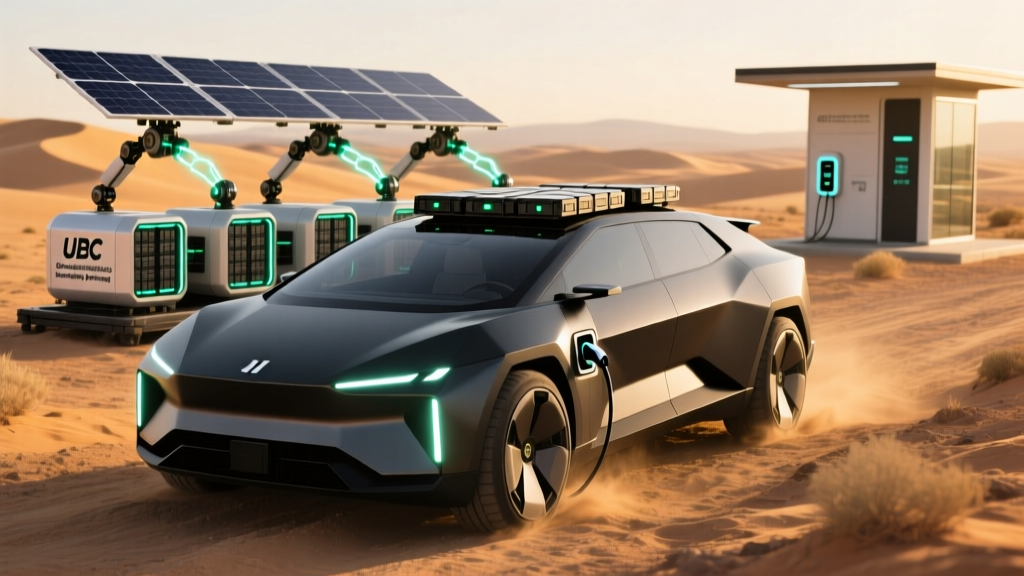
The UEC Electronics Ground Renewable Expeditionary Energy Network System (GREEENS) is not a vehicle — it is a portable, trailer-mounted microgrid designed to generate, store, and distribute electricity in off-grid and tactical environments. Built by UEC Electronics (a defense and remote-power contractor), GREEENS pairs deployable solar arrays with a high-capacity lithium battery bank and multi-protocol EV charging outputs. Think of it as a mobile DC fast-charging station powered entirely by renewables, aimed at military forward operating bases, disaster-relief staging areas, and remote fleet electrification pilots.
For EV owners and fleet managers researching off-grid charging solutions, GREEENS represents the outer edge of what portable renewable infrastructure can deliver to an electric vehicle in 2026. This review covers the system's energy specs, EV charging capabilities, real-world limitations, and how it compares to diesel-generator and fixed-solar alternatives.
Core Energy Specs: Battery, Solar, and Output
| Specification | Value |
|---|---|
| Battery Capacity | ~120 kWh usable (LFP chemistry) |
| Solar Array (Deployed) | ~15 kW peak (towable panel trailers) |
| DC Output (CCS1) | Up to 50 kW sustained |
| AC Output (Level 2, J1772) | Up to 19.2 kW (80A / 240V) |
| AC Output (120/208V Utility) | Up to 30 kW across multiple circuits |
| Inverter Type | Bi-directional, grid-forming |
| Trailer GVWR | ~9,500 lbs (towable by HD pickup) |
| Operating Temp Range | -20°F to 125°F |
| Warranty | 5-year / unlimited cycles (battery); 10-year (panels) |
Battery Chemistry: Why LFP?
UEC Electronics specifies lithium iron phosphate (LFP) cells for the GREEENS battery bank. For expeditionary and tactical use, LFP is the correct call: it offers superior thermal stability (reduced fire risk in austere environments), a longer cycle life (3,000–5,000+ full cycles to 80% capacity retention vs. ~1,500–2,000 for NMC), and tolerance for sustained 100% state-of-charge storage — something NMC chemistries degrade under. The trade-off is lower energy density, making the system heavier per kWh than an NMC equivalent. For a trailer-mounted unit, weight matters less than safety and longevity.
Solar Generation Reality
The ~15 kW peak solar array requires full deployment of multiple fold-out panel wings on the trailer. In optimal conditions (clear sky, high solar angle, panels perpendicular to the sun), you can expect roughly 60–75 kWh of generation per day in summer at mid-latitudes. In winter, overcast conditions, or at high latitudes, expect that to drop to 20–35 kWh/day. This is critical context: the system can recharge its own battery from solar in roughly 1.5 to 2 days of good sun, but it cannot continuously fast-charge multiple EVs without grid or generator supplementation.
EV Charging Capability: DC Fast and Level 2
| Charging Mode | Power (kW) | Approx. Miles Added/Hour* | Connector |
|---|---|---|---|
| DC Fast Charge | 50 kW (peak) | ~150–180 mi/hr | CCS1 |
| Level 2 AC | 19.2 kW | ~58–70 mi/hr | J1772 |
| Level 2 AC (reduced) | 7.7 kW | ~23–28 mi/hr | J1772 |
| Level 1 (emergency) | 1.4 kW | ~4–5 mi/hr | NEMA 5-15 |
*Miles added per hour varies by vehicle efficiency. Figures assume ~3.5–4.0 mi/kWh average (e.g., Tesla Model Y, Hyundai Ioniq 5).
DC Fast Charging at 50 kW: What to Expect
The 50 kW DC output via CCS1 is best understood as a Level 3 "destination" or "expeditionary" charger, not a highway corridor unit. For context, modern public DC fast chargers on Electrify America or Tesla Supercharger networks deliver 150–350 kW. At 50 kW, a vehicle like the Ford F-150 Lightning (extended-range, ~131 kWh battery) would take roughly 90–100 minutes to charge from 10% to 80%. A smaller-battery vehicle like the Chevrolet Equinox EV (~85 kWh) would manage 10–80% in approximately 65–75 minutes.
Level 2 AC Charging: The Practical Workhorse
At 19.2 kW (80 amps, 240V), the GREEENS Level 2 output is comparable to a high-end home wall connector. This is where the system shines for overnight or multi-hour charging scenarios — fleet vehicles parked at a remote job site, EVs at a disaster-relief base camp, or expeditionary vehicles during a multi-day off-grid stay. At 19.2 kW, most EVs will add 60+ miles of range per hour, meaning a full overnight charge (8–10 hours) can replenish 480–640 miles of rated range — more than enough for any production EV battery.
Who Is This System For? Use-Case Breakdown
Let's be direct: the UEC Electronics GREEENS is not a consumer product. It is a specialized infrastructure system with a price tag and procurement process that place it squarely in institutional, government, and commercial-fleet territory.
Ideal Use Cases
- Military / Defense: Forward operating bases seeking to reduce diesel fuel convoy logistics (a documented vulnerability and cost center).
- FEMA / Disaster Relief: Temporary EV charging and power distribution in areas where the grid is down.
- Remote Fleet Operations: Mining, forestry, or utility fleets electrifying vehicles in areas without grid-connected charging.
- Expeditionary Research: Arctic, desert, or island field stations requiring silent, emission-free power.
- EV Rally / Overland Events: Mobile charging support for organized electric-vehicle adventure tours.
Not Suited For
- Residential EV owners: A fixed home solar + Level 2 charger installation costs a fraction of this system and is permanently available.
- Highway corridor charging: 50 kW DC is too slow for 15-minute pit-stop road-trip charging.
- High-volume fleet depots: Multi-vehicle simultaneous DC fast charging exceeds the battery bank's capacity without grid tie-in.
Pricing, Procurement, and Tax Credit Context
| Item | Estimated Cost |
|---|---|
| GREEENS Base System (trailer + battery + inverter) | ~$180,000–$220,000 |
| Solar Array Add-On (15 kW deployable) | ~$45,000–$60,000 |
| CCS1 DC Output Module | ~$25,000–$35,000 |
| Total As-Configured (typical) | ~$250,000–$315,000 |
Pricing is estimated based on comparable defense and commercial microgrid systems and may vary by contract, configuration, and volume. UEC Electronics typically sells through government procurement channels (GSA schedules, DOD contracts) and direct commercial-fleet agreements.
Federal Tax Credit and Incentive Eligibility
The IRS §30D Clean Vehicle Credit applies to qualifying electric vehicles — not to standalone charging infrastructure. The GREEENS system does not qualify for the $7,500 vehicle purchase credit.
However, related incentives may apply:
- §30C Alternative Fuel Vehicle Refueling Property Credit: Up to $100,000 per item of qualifying EV charging equipment installed in eligible census tracts (per the IRS §30C rules). The DC and AC charging components of GREEENS may qualify if deployed in a qualifying location. Consult a tax professional.
- USDA REAP Grants: Rural Energy for America Program grants can cover up to 50% of renewable energy system costs for agricultural and rural small-business applicants.
- State / Utility Incentives: Vary widely by jurisdiction. Check your state energy office and local utility for commercial EV infrastructure rebates.
- IRA §179D / Bonus Depreciation: Commercial entities may be able to expense or accelerate depreciation on energy property. Consult a tax professional.
Competitive Landscape: How GREEENS Compares
| System | Type | DC Fast kW | Battery | Solar | Est. Price |
|---|---|---|---|---|---|
| UEC GREEENS | Solar + Battery Trailer | 50 kW | 120 kWh LFP | 15 kW | $250K–$315K |
| Beam Global EV ARC | Solar Carport + Battery | None (L2 only) | ~43 kWh | ~4.3 kW | $70K–$95K |
| Lightning Mobile | Battery Trailer (no solar) | Up to 120 kW | ~170 kWh | None | $200K+ |
| Diesel Generator + EVSE | Generator + Charger | Varies | None | None | $30K–$80K |
GREEENS occupies a unique niche: it is one of the few systems combining meaningful solar generation, a large LFP battery bank, and actual DC fast-charge output in a single towable package. The Beam Global EV ARC is far more affordable but limited to Level 2 and smaller capacity. Lightning Mobile offers faster DC charging but requires grid or generator pre-charging — it has no solar. A diesel generator setup is cheapest upfront but carries ongoing fuel cost, noise, emissions, and supply-chain vulnerability.
Pros
- True off-grid EV charging with no fuel supply chain
- LFP battery offers 3,000+ cycle life and thermal safety
- Silent operation — critical for tactical and research use
- Multi-protocol output (DC CCS1 + AC Level 2 + utility AC)
- Towable by standard HD pickup — no special transport
- Grid-forming inverter can power non-EV loads simultaneously
Cons
- $250K+ price tag excludes all but institutional buyers
- 50 kW DC is slow by 2026 public-charging standards
- Solar recharge takes 1.5–2 full days — not continuous use
- Heavy (~9,500 lbs GVWR) — requires HD tow vehicle
- No NACS connector (as of current config) — Tesla vehicles need adapter
- Not eligible for §30D vehicle tax credit
- Lead times typical of defense procurement (months, not days)
Warranty, Durability, and Maintenance
UEC Electronics provides a 5-year / unlimited-cycle warranty on the LFP battery bank, warranted to retain at least 70% of original capacity. The solar panels carry a 10-year output warranty (typical for commercial-grade modules). The inverter and power-electronics are covered for 5 years.
Maintenance is minimal compared to a diesel generator: no oil changes, no fuel filters, no exhaust-system wear. The primary maintenance items are panel cleaning (dust/sand/debris), connector inspection, and periodic battery-management-system (BMS) firmware updates. UEC offers remote telemetry monitoring for system health and State of Health (SoH) tracking.
Is the GREEENS Worth It? Decision Framework
Choose UEC GREEENS If:
- You need off-grid EV charging for military, disaster-relief, or remote-fleet operations
- Silent, emission-free power is a mission requirement (not just a preference)
- You want to eliminate diesel fuel logistics and its associated cost/vulnerability
- Your use case involves multi-day deployments with overnight Level 2 charging
- Budget supports $250K+ for infrastructure
Look Elsewhere If:
- You're a residential EV owner (install a home Level 2 charger for ~$1,500–$3,000)
- You need highway-speed DC fast charging (150+ kW) for road-trip corridors
- You need to simultaneously fast-charge 3+ vehicles at high speed
- Budget is under $100K (consider Beam Global EV ARC for Level 2 solar)
Frequently Asked Questions
What is the real-world EV charging capacity of the GREEENS system?
With a fully charged 120 kWh battery, the system can deliver approximately 110–115 kWh to vehicles (accounting for inverter and cable losses). That translates to roughly two full charges for a mid-size EV (e.g., Hyundai Ioniq 5 with 77.4 kWh battery) or one near-full charge for a large-battery truck (Ford F-150 Lightning Extended Range, 131 kWh). Solar replenishment adds ~60–75 kWh on a good summer day.
How fast does it charge an EV via DC fast charging?
At 50 kW peak, expect 10–80% in approximately 65–100 minutes depending on the vehicle's battery size and charge curve. This is adequate for destination or overnight-stop charging but significantly slower than 150–350 kW public DC fast chargers.
How much does the GREEENS cost after available incentives?
At a typical configured price of $250,000–$315,000, the §30C refueling property credit (up to $100,000 per item of qualifying charging equipment in eligible census tracts) can meaningfully reduce net cost. USDA REAP grants may cover up to 50% for qualifying rural applicants. Final net cost depends on deployment location, entity type, and tax professional guidance. Always verify current IRS §30C eligibility before purchasing.
Does the GREEENS qualify for the federal EV tax credit?
No. The IRS §30D Clean Vehicle Credit ($7,500 max) applies to qualifying electric vehicles purchased for personal use, subject to MSRP caps ($80,000 for SUVs/trucks, $55,000 for sedans), buyer income limits, and battery-sourcing requirements. The GREEENS is charging infrastructure, not a vehicle. The §30C credit for charging equipment is the relevant incentive.
Can it charge Tesla vehicles?
Yes, with a CCS-to-NACS adapter. The GREEENS DC output uses a CCS1 connector. Tesla's NACS-equipped vehicles (2025+ models and retrofitted older models) can charge via a commercially available adapter. Level 2 AC charging requires a J1772-to-NACS adapter, which Tesla includes with most vehicles.
How does cold weather affect the system?
LFP batteries experience reduced charge/discharge efficiency below freezing. The GREEENS includes thermal management (resistance heating) for the battery enclosure, but this draws from stored energy. In sub-zero conditions, expect 10–20% reduction in usable capacity and slower DC charge acceptance. Solar output also drops in winter due to shorter days and lower sun angle — plan for 20–35 kWh/day vs. 60–75 kWh/day in summer.
What is the biggest drawback of this system?
The 50 kW DC fast-charge ceiling is the most significant limitation for EV users accustomed to 150–350 kW public chargers. For expeditionary and tactical use, this is often acceptable (vehicles charge overnight at Level 2). But if your use case requires rapid-turnaround DC charging of multiple vehicles in succession, you'll need a larger battery bank or grid/generator supplementation.