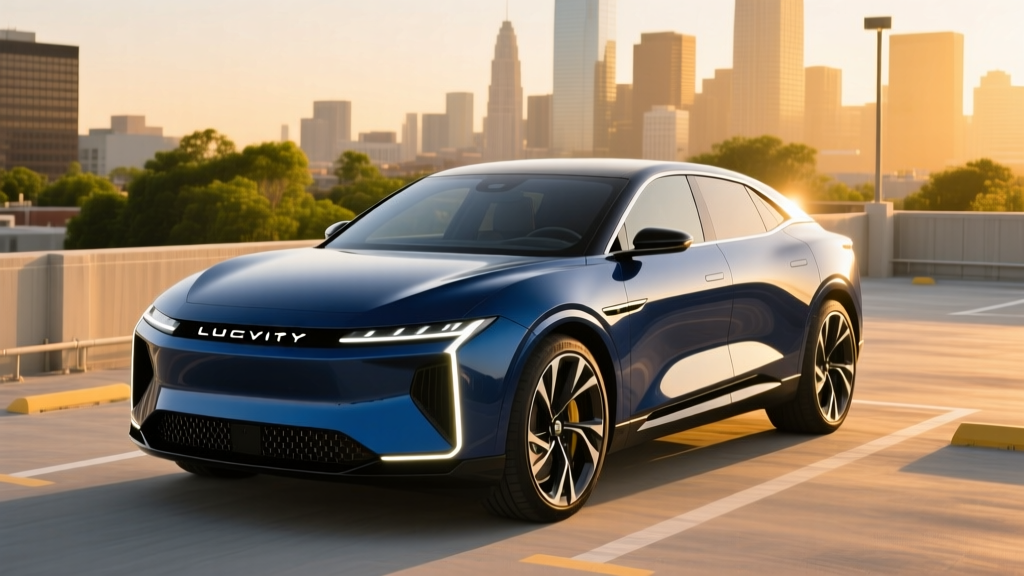
When Uber announced a multi-year agreement to deploy Lucid Gravity SUVs in its premium ride-hail and Uber Comfort Electric tiers, the headline was bold: thousands of luxury EVs hitting city streets. But what does the Uber Lucid deal actually mean for retail buyers? Can you purchase the same vehicle Uber is ordering, and more importantly, should you?
This review dissects the 2026 Lucid Gravity — the vehicle at the center of the Uber partnership — with the exact numbers, charging realities, and ownership economics you need before signing a purchase agreement.
The Uber-Lucid Partnership: What It Actually Covers
Lucid and Uber signed a commercial fleet agreement covering deliveries beginning in 2025 and extending through 2027. The deal targets the Gravity SUV (and to a lesser extent, the Air sedan) for Uber's premium tiers. Uber drivers who qualify can lease or purchase vehicles through a dedicated commercial channel with negotiated pricing — but this is not a consumer discount program.
Retail buyers purchase the Gravity through Lucid's direct-to-consumer model at standard MSRP. The Uber deal does, however, validate the Gravity's durability and efficiency for high-mileage use — a strong signal for everyday buyers concerned about long-term battery health.
2026 Lucid Gravity: Core Specifications
| Specification | Value |
|---|---|
| EPA Estimated Range | 440 miles (Grand Touring AWD) |
| Real-World Highway Range | ~370–395 mi (70–80 mph); ~320–350 mi in cold weather (<32°F) |
| Battery Usable Capacity | 118 kWh (NMC lithium-ion, 900V architecture) |
| Peak DC Fast Charge Rate | ~220 kW (est. sustained curve TBD) |
| 10–80% DC Charge Time | ~28–32 minutes (estimated) |
| Level 2 Home Charge Rate | 19.2 kW / ~60 miles of range per hour |
| Drivetrain | Dual-motor AWD |
| Horsepower | 800+ hp (Grand Touring) |
| 0–60 mph | ~3.5 seconds |
| Efficiency | ~120 MPGe combined / ~28 kWh/100 mi (est.) |
| Cargo Volume | ~60 cu ft (rear seats folded); front trunk included |
| Seating | Up to 7 passengers (3-row) |
| Base MSRP (Grand Touring) | $79,900 |
| Estimated As-Tested Price | $88,000–$96,000 (with options) |
| Battery/Powertrain Warranty | 8 years / 100,000 miles |
Real-World Range: EPA Sticker vs. What You'll Actually Get
Real-World Expectation: 370–395 mi highway (70–80 mph); 410–430 mi mixed city/suburban; 320–350 mi in sustained cold weather (<32°F) with cabin heat.
Lucid's efficiency engineering — pioneered on the Air sedan — carries over to the Gravity. The 900-volt architecture and compact drive units deliver class-leading kWh-per-mile figures. However, the Gravity is a 3-row SUV with more frontal area and weight than the Air, so highway and cold-weather losses are meaningful.
On a 300-mile road trip at 75 mph in 45°F weather, expect roughly 370–380 miles before hitting 10% State of Charge. In winter conditions (20°F, heated seats and steering wheel active, cabin at 70°F), budget for 320–350 miles of usable range. The Gravity's heat pump (standard) mitigates some cold-weather penalty, but physics still apply to a vehicle of this size.
Charging: 900V Architecture and Network Access
| Charging Level | Power / Rate | Miles Added per Hour | Notes |
|---|---|---|---|
| Level 1 (120V, 12A) | ~1.4 kW | ~4 mi/hr | Emergency/trickle only |
| Level 2 (240V, 80A) | 19.2 kW | ~60 mi/hr | Requires hardwired 100A circuit; full charge ~7 hours |
| DC Fast Charge (peak) | ~220 kW | N/A | 10–80% in ~28–32 min; tapers above 80% |
The Gravity's 900V electrical architecture allows it to accept high charge rates while keeping current (amps) manageable — reducing heat and improving efficiency. At a 350 kW Electrify America or Ionity station, the Gravity will peak near 220 kW and sustain strong speeds through 60–70% SoC before tapering.
Charge curve reality: Expect 10–50% to arrive quickly (roughly 12–14 minutes), but 50–80% will take another 14–18 minutes as the battery management system protects cell longevity. For road trips, charging to 80% and driving is faster than waiting for 100%.
Lucid uses the CCS1 connector for DC fast charging in North America. As of 2026, Lucid has not transitioned to NACS (Tesla's connector), though a future adapter or native port update is possible. Retail buyers should confirm their preferred charging networks support CCS1 — most major networks (Electrify America, EVgo, ChargePoint) do.
Home charging: To unlock the Gravity's 19.2 kW Level 2 capability, you need a hardwired wall connector on a 100-amp dedicated circuit. Most homes will require a panel upgrade (200A service minimum) and professional installation. Budget $1,500–$3,500 for equipment + electrician + permit. A standard 40A/9.6 kW setup delivers ~30 mi/hr — sufficient for most daily driving but slower for high-mileage users (including Uber drivers).
Performance, Interior, and Standout Technology
The Gravity Grand Touring's dual-motor AWD system delivers 800+ horsepower and a 0–60 mph time around 3.5 seconds — remarkable for a 3-row SUV weighing over 5,500 lbs. Air suspension is standard, enabling adjustable ride height for off-road clearance or highway efficiency.
Interior highlights:
- 34-inch curved glass cockpit display spanning the dashboard
- Lucid's "Surrealist" UI with over-the-air update capability
- Second-row reclining seats with optional executive package (massage, fold-out tables)
- Available third row suitable for children or short-trip adults
- Front trunk (frunk) with ~15 cu ft of cargo space
Driver assistance: The Gravity ships with Lucid's DreamDrive Pro system — a Level 2 (SAE) driver-assist suite combining adaptive cruise control, lane centering, automatic emergency braking, and blind-spot intervention. This is not self-driving. The driver must remain engaged, hands on or near the wheel, at all times. Lucid has not announced a Level 3 or Level 4 system for the Gravity as of 2026.
Notable drawbacks:
- CCS1 connector (no native NACS) limits Tesla Supercharger access without adapter
- Lucid's service center footprint remains thin outside major metro areas
- Third-row space is tighter than Rivian R1S or Tesla Model X
- No Apple CarPlay or Android Auto — Lucid's proprietary infotainment only
Pricing, Trims, and Federal Tax Credit Eligibility
| Trim | Base MSRP | §30D Federal Credit | Effective Price (if eligible) |
|---|---|---|---|
| Gravity Pure (RWD, est.) | ~$69,900 | Up to $7,500 (if sourcing rules met) | ~$62,400 |
| Gravity Grand Touring (AWD) | $79,900 | $0 (exceeds $80,000 SUV MSRP cap) | $79,900 |
| Gravity Sapphire (perf.) | ~$110,000+ | $0 (exceeds MSRP cap) | $110,000+ |
Critical tax credit detail: Under IRS §30D rules, SUVs must have an MSRP at or below $80,000 to qualify for the federal credit. The Gravity Grand Touring at $79,900 sits right at the threshold — but any options or destination charges pushing the sticker above $80,000 will disqualify it. The lower-tier Gravity Pure (if/when available) would more comfortably qualify, subject to battery-sourcing and critical-mineral requirements that change annually.
Buyer income caps also apply: $300,000 (married filing jointly), $225,000 (head of household), $150,000 (single). The point-of-sale transfer option (effective 2024+) allows eligible buyers to apply the credit as an immediate discount at delivery rather than waiting for tax filing. Consult a tax professional and verify current-year rules at irs.gov before committing.
Uber drivers: The commercial fleet deal may include separate incentives or lease structures not governed by §30D. Independent drivers purchasing retail should assume standard consumer eligibility rules.
Who Should Buy the Lucid Gravity — and Who Shouldn't
Pros
- Class-leading 440-mi EPA range for a 3-row SUV
- 900V architecture enables fast, efficient charging
- 800+ hp with air suspension — sports-car performance, luxury ride
- Spacious 5-seat config with usable 3rd row and large frunk
- High efficiency (~28 kWh/100 mi) reduces charging cost
Cons
- Grand Touring barely squeaks under §30D MSRP cap; options kill eligibility
- CCS1 only — no native NACS/Tesla Supercharger access
- Limited service centers; long repair waits possible in rural areas
- No wireless CarPlay/Android Auto
- High starting price; competitors (Rivian R1S, Kia EV9) cost less
Best for: Tech-forward families and premium commuters who prioritize range and efficiency above all else, live near Lucid service centers, and can charge at home on a high-power Level 2 circuit. Also compelling for Uber Comfort Electric drivers in markets where the commercial lease makes financial sense.
Skip it if: You need NACS/Supercharger access for frequent road trips, you live far from a Lucid service hub, you need guaranteed §30D credit eligibility (look at the Rivian R1S Standard or Kia EV9), or you prefer proven 3rd-row space (Model X or R1S).
How the Gravity Compares to Key Competitors
| Attribute | Lucid Gravity GT | Rivian R1S (Dual-Motor) | Tesla Model X (Long Range) |
|---|---|---|---|
| EPA Range | 440 mi | ~352 mi | ~348 mi |
| Battery (usable) | 118 kWh | ~128 kWh | ~100 kWh |
| Peak DC Charge | ~220 kW | ~200 kW | ~250 kW |
| 0–60 mph | ~3.5s | ~4.5s | ~3.8s |
| Base MSRP | $79,900 | ~$79,900 | ~$84,990 |
| Connector | CCS1 | NACS | NACS |
| §30D Eligible (base) | Borderline | Yes (if sourcing met) | No (MSRP >$80K) |
The Gravity wins on range and efficiency. The R1S wins on off-road capability, NACS charging, and service infrastructure. The Model X wins on Supercharger access and falcon-wing novelty but loses on price and aging platform.
FAQ: The Uber Lucid Deal and Gravity Ownership
Can I buy the same Lucid Gravity that Uber is using?
Yes — retail buyers can order the Gravity directly from Lucid at standard MSRP. The Uber deal is a commercial fleet arrangement with separate pricing and does not create a consumer discount.
What is the real-world range of the Lucid Gravity?
EPA-rated at 440 miles (Grand Touring AWD), expect 370–395 miles on the highway at 75 mph, and 320–350 miles in cold weather below freezing. Efficiency drops with aggressive driving, high HVAC use, and towing.
How fast does the Gravity charge at home and on the road?
At home on a hardwired 80A/19.2 kW Level 2 circuit, the Gravity adds ~60 miles of range per hour (full charge in ~7 hours). On a 350 kW DC fast charger, it peaks near 220 kW and charges 10–80% in approximately 28–32 minutes.
Does the Lucid Gravity qualify for the $7,500 federal EV tax credit?
The Grand Touring at $79,900 base MSRP is at the very edge of the §30D $80,000 SUV cap. Any options or fees above $80,000 disqualify it. Income caps ($150K single / $300K joint) and battery-sourcing rules also apply. Verify at irs.gov and consult a tax professional.
Is the Lucid Gravity worth buying over the Rivian R1S or Tesla Model X?
If maximum range and efficiency are your top priorities, yes. If you need NACS/Supercharger access, off-road capability, or a larger service network, the R1S is the stronger choice. The Model X is aging and priced higher with less range.
What is the battery warranty on the Gravity?
Lucid covers the battery and powertrain for 8 years or 100,000 miles, with a capacity retention threshold (typically 70%+). This is competitive with Rivian and Tesla.