The Verdict: Is an EV Worth It for Uber Driving?
Yes, but only if you meet three conditions: (1) You have reliable access to home Level 2 charging or ultra-cheap public DC fast charging, (2) you drive in a metro area with dense charging infrastructure, and (3) your daily mileage fits within a realistic ~200–250 mile real-world range buffer before needing a top-off. Drivers who meet these criteria report fuel savings of $200–$400 per month compared to a 30 MPG gas car, which can translate to $2,400–$4,800 annually. Drivers without home charging or who regularly exceed 250 miles per day in extreme cold may find a hybrid (like the Toyota Prius Prime) more profitable.
Uber's EV Requirements and Incentives in 2026
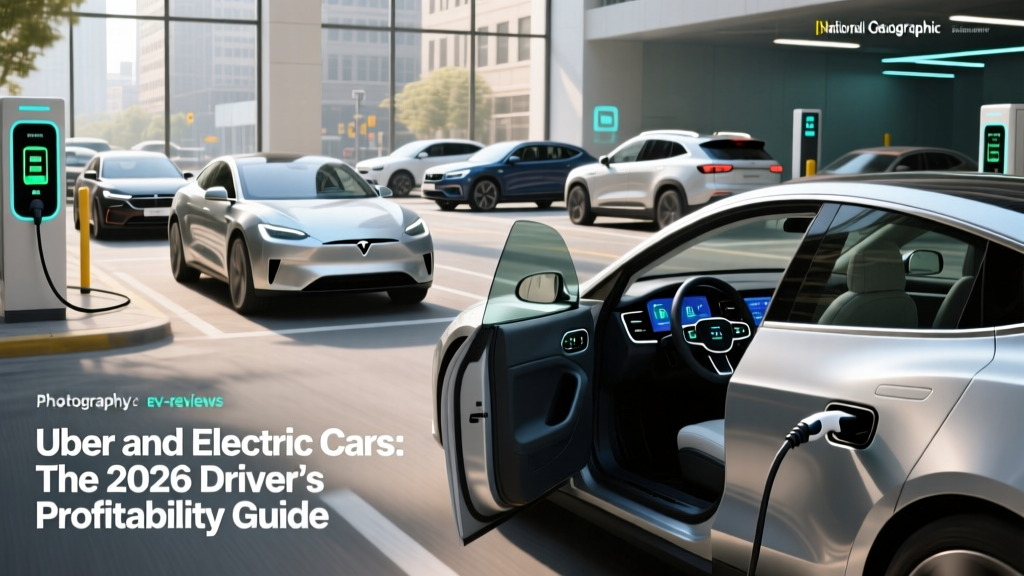
Uber has steadily expanded its EV incentive programs. In many US markets, drivers using zero-emission vehicles earn an extra $1 per trip bonus (capped at a certain number of trips per week, varying by city). Uber also partners with networks like EVgo and ChargePoint to offer discounted charging rates for active drivers—typically 10–25% off standard kWh rates.
Vehicle eligibility for UberX requires a 4-door car no older than 15 model years (varies by city). Most mainstream 2026 EVs qualify. For Uber Comfort, you'll need more legroom and newer model years—vehicles like the Tesla Model 3, Hyundai Ioniq 6, and Chevrolet Equinox EV often meet Comfort criteria, earning higher per-mile rates.
Best EVs for Uber Drivers: Range, Charging, and Cost
For rideshare profitability, you need the intersection of low purchase price, high real-world range, and fast DC charging. Here's how the top contenders stack up for 2026:
| Vehicle | Base MSRP | EPA Range | Battery (kWh) | Peak DC Charge | 10–80% Time | 0–60 mph |
|---|---|---|---|---|---|---|
| Chevrolet Equinox EV 2LT | $33,000 | 319 mi | 85 kWh (NMC) | 150 kW | ~30 min | 7.8 sec |
| Tesla Model 3 RWD | $38,990 | 272 mi | 57.5 kWh (LFP) | 170 kW | ~25 min | 5.8 sec |
| Hyundai Ioniq 6 SE | $37,500 | 361 mi | 77.4 kWh (NMC) | 240 kW | ~18 min | 7.1 sec |
| Nissan Leaf (SV Plus) | $31,000 | 212 mi | 60 kWh (NMC) | 100 kW | ~40 min | 7.9 sec |
Real-world range caveat: EPA range assumes moderate temperatures and mixed driving. At sustained highway speeds (70+ mph), expect 85–90% of the EPA sticker. In freezing weather (below 30°F), range can drop 20–35% depending on cabin heating demands. A 319-mile Equinox EV may deliver only ~210–230 miles in a cold Midwestern winter. Drivers in Phoenix, LA, or Miami will see numbers much closer to EPA estimates.
Charging curve reality: Peak DC charge rates (e.g., 240 kW on the Ioniq 6) are sustained only between roughly 10–50% SoC. Above 80%, charging slows dramatically to protect the battery—a 240 kW peak may taper to 40–60 kW past 80%. Plan your charging stops around the 10–80% window for maximum efficiency.
EV vs Gas vs Hybrid: The Rideshare Cost Comparison
The core question for any Uber driver: what actually costs less per mile when you factor in fuel, maintenance, and depreciation? Here's a data-driven comparison assuming 40,000 miles per year (a typical full-time rideshare workload):
| Category | EV (Equinox EV) | Hybrid (Prius) | Gas (Corolla) |
|---|---|---|---|
| Energy/Fuel Cost per Mile | $0.04–$0.07 (home L2) | $0.10 (57 MPG) | $0.14 (33 MPG) |
| Annual Fuel/Energy (40k mi) | $1,600–$2,800 | $4,000 | $5,600 |
| Oil Changes / Year | $0 | ~$200 | ~$350 |
| Brake Pad Replacement Interval | 100k+ mi (regen) | ~50k mi | ~35k mi |
| Annual Maintenance Estimate | $300–$500 | $600–$900 | $800–$1,200 |
| Insurance (Annual Avg) | $2,200–$3,000 | $1,600–$2,200 | $1,400–$2,000 |
| Purchase Price (Base) | $33,000 | $28,550 | $22,550 |
Key takeaway: The EV saves $1,800–$4,000 per year in fuel alone at 40,000 miles. Maintenance savings add another $300–$700. However, insurance premiums for EVs run 20–40% higher on average, eating back $400–$1,000 of those savings. Net annual savings for an EV over a gas Corolla: roughly $1,500–$3,500 for a full-time driver with home charging.
If you rely entirely on public DC fast charging at $0.35–$0.50/kWh, your energy cost per mile jumps to $0.10–$0.15—erasing most or all of the fuel savings. Home charging is the single biggest profitability variable for EV rideshare drivers.
Real Costs: Home Charging Setup and Daily Operations
Most full-time Uber drivers cover 100–150 miles per day. That requires roughly 30–45 kWh of energy daily (depending on vehicle efficiency). Here's what home charging infrastructure actually costs:
| Item | Cost Range |
|---|---|
| Level 2 Charger (240V, 32–48A) | $300–$700 |
| Electrician (240V outlet or hardwire) | $500–$2,000 |
| Electrical Panel Upgrade (if needed, 200A) | $1,500–$3,500 |
| Permit & Inspection | $100–$400 |
| Total (no panel upgrade) | $900–$3,100 |
| Total (with panel upgrade) | $2,400–$6,600 |
A 48-amp Level 2 charger delivers roughly 11.5 kW, adding about 35–45 miles of range per hour of charging (depending on vehicle efficiency). Charging from 20% to 90% overnight (~8 hours) on a Level 2 will fully replenish most EVs for the next day's driving. At a national average residential rate of $0.16/kWh, a full 85 kWh charge costs roughly $13.60.
Critical note: Always hire a licensed electrician for Level 2 installation. Your home's electrical panel must have sufficient capacity—adding a 48A circuit to an older 100A panel is a fire risk and code violation. A licensed electrician will assess whether a panel upgrade to 200A is necessary. Consult the National Electrical Contractors Association for qualified professionals in your area.
Federal Tax Credits and Incentives for Rideshare EVs
The IRS §30D Clean Vehicle Credit offers up to $7,500 for qualifying new EVs, but eligibility is far from guaranteed. As of 2026, the rules include:
- MSRP cap: Vans, SUVs, and trucks must be under $80,000; sedans under $55,000
- Buyer income cap: AGI must not exceed $150,000 (single), $225,000 (head of household), or $300,000 (joint)
- Battery sourcing: Increasingly strict critical-mineral and battery-component requirements phase in annually, disqualifying some models
- Point-of-sale transfer: You can transfer the credit to the dealer for an upfront price reduction, even if your tax liability is lower than the credit amount
- Commercial use note: If you use the vehicle primarily for business (rideshare), consult a tax professional—the §30D credit is technically for personal use, but many drivers use their EV for both personal and commercial driving
For a full breakdown of current-year qualifying models and sourcing requirements, check the official IRS qualifying manufacturers list. Eligibility changes as automakers shift battery supply chains—always verify before purchasing.
Common Misconceptions About EVs for Uber
| Myth | Fact |
|---|---|
| "EV batteries need replacing every few years" | Modern EV batteries are warranted for 8 years / 100,000 miles (10 years / 150,000 in California-emissions states). Real-world data from fueleconomy.gov shows most batteries retain 85–90% capacity after 100,000 miles. Replacement costs $5,000–$15,000 but is rarely needed within a vehicle's first decade. |
| "Charging takes too long for rideshare" | Most drivers charge overnight at home (6–8 hours on Level 2) and top up during meal breaks or between shifts. A 20-minute DC fast charge adds 100–180 miles. Strategic charging during natural downtime eliminates most range issues. |
| "You'll lose money on depreciation" | EV depreciation has normalized. While early EVs lost value rapidly, mainstream 2026 models like the Equinox EV and Model 3 retain 50–60% of value after 3 years, comparable to gas counterparts. High-mileage rideshare use accelerates depreciation for all vehicles equally. |
| "Cold weather makes EVs unusable for Uber" | Range drops 20–35% in sub-freezing temps—real but manageable. A 319-mile EV becomes a ~220-mile EV in winter. Drivers in cold climates should choose vehicles with 300+ EPA miles and a heat pump (standard on most 2026 EVs) to minimize cabin-heating energy draw. |
| "Public charging is unreliable" | Network uptime has improved significantly. Tesla Superchargers maintain ~99.5% uptime. Electrify America and EVgo average 92–96%. Use apps like PlugShare to check real-time station status before routing to a charger. |
Decision Framework: Should You Drive an EV for Uber?
Choose an EV if:
- You can install a Level 2 charger at home (garage or driveway with 240V access)
- Your daily driving is under 250 miles, or you have reliable mid-day DC fast charging
- You drive in a temperate or warm climate (or choose a 300+ mile EPA vehicle for cold regions)
- Your metro area has good public charging density (check PlugShare for your top routes)
- You plan to keep the vehicle 4+ years to recoup the higher upfront cost through fuel savings
Choose a hybrid (PHEV or HEV) if:
- You live in an apartment with no charging access and public chargers are sparse or expensive
- You regularly drive 300+ miles per day (long airport runs, intercity trips)
- You operate in extreme cold for 4+ months per year and can't accommodate range loss
- Your budget is under $30,000 and you need the lowest possible upfront cost
- You want zero charging-planning overhead—just gas up and go
Frequently Asked Questions
Does Uber pay more for electric vehicles?
In many markets, yes. Uber's Zero Emissions incentive program offers a per-trip bonus (commonly $1/trip, capped weekly) for drivers using EVs. Availability and amounts vary by city. Additionally, EVs often qualify for Uber Comfort or Uber Green categories, which can carry higher per-mile rates.
How much can I save driving an EV for Uber vs a gas car?
A full-time driver covering 40,000 miles/year can save $1,500–$3,500 annually after accounting for higher insurance costs. The savings come primarily from electricity being 50–70% cheaper per mile than gasoline, plus reduced brake and maintenance costs. Savings are maximized with home Level 2 charging at residential electricity rates.
What happens if I run out of charge during an Uber trip?
Plan proactively. Most EV apps (Tesla, Hyundai, Chevrolet) show real-time range and nearby chargers. Set a buffer: never accept a trip that would drop you below 15–20% SoC without a known charger at the destination. If you do run critically low, end the trip, direct the rider to a transfer point, and head to the nearest DC fast charger. A 15-minute top-up at 150+ kW adds 80–120 miles.
Is Tesla the best EV for Uber?
The Tesla Model 3 offers strong advantages: access to the Supercharger network (the most reliable DC fast-charging network in the US), excellent efficiency (4.0–4.5 mi/kWh), and strong Uber Comfort eligibility. However, the $38,990 base price is higher than the Equinox EV, and Tesla's insurance costs tend to be above average. The Ioniq 6's 361-mile EPA range and 18-minute 10–80% charging make it a compelling alternative. The best choice depends on your budget, local charging options, and whether Supercharger access matters more than upfront cost.
Can I use a used EV for Uber?
Yes, as long as the vehicle meets your city's age requirement (typically 15 model years or newer). A used EV can significantly reduce upfront cost. However, check the battery's State of Health (SoH)—most EVs display this in the settings or via an OBD-II scanner. Avoid vehicles with SoH below 85% for rideshare use, as reduced range will eat into your earning time. Federal used-EV credits (§25E) offer up to $4,000 on qualifying pre-owned EVs under $25,000, subject to income limits.
Do EV tires wear out faster?
Yes, typically 15–25% faster than on equivalent gas cars due to higher vehicle weight (battery mass) and instant torque. Budget $800–$1,400 for a set of four EV-optimized tires (e.g., Michelin e.Primacy, Hankook iON) every 30,000–40,000 miles under heavy rideshare use. Factor this into your cost calculations—it partially offsets maintenance savings from regenerative braking.
Bottom Line for Rideshare Drivers
An EV can be a highly profitable rideshare vehicle in 2026—but it is not a universal win. The math works best for drivers with home charging, moderate daily mileage, and access to incentives. Before committing, run your personal numbers: multiply your daily miles by $0.05–$0.07 (home charging cost per mile) vs $0.12–$0.15 (gas cost per mile), subtract the insurance premium difference, and divide the net annual savings into the purchase price gap. If the payback period is under 3 years and your charging access is solid, an EV is likely the smarter financial choice for your Uber driving.