When enthusiasts search for "tuning Tesla," they quickly discover that modifying an electric vehicle is a fundamentally different discipline than remapping an ECU or bolting on a turbocharger. The 2026 Tesla Model 3 Highland refresh — with its sharper styling, refined cabin, and updated thermal management — remains the platform most commonly associated with aftermarket EV modification. But before you invest in suspension upgrades, wheel packages, or software tweaks, you need to understand the exact performance envelope, the hard software limits Tesla enforces, and where modifications genuinely move the needle versus where they void warranties and degrade range.
This profile breaks down the 2026 Model 3 lineup with an eye toward tunability: what the platform can do stock, what the aftermarket offers, and what the physics of the battery and powertrain will not allow you to cheat.
2026 Tesla Model 3: Core Specs at a Glance
| Spec | RWD | Long Range AWD | Performance |
|---|---|---|---|
| EPA Range | 341 mi | 341 mi | 315 mi |
| Battery (usable) | ~57.5 kWh (LFP) | ~75 kWh (NMC) | ~75 kWh (NMC) |
| Horsepower | 271 hp | 346 hp | 510 hp |
| 0–60 mph | 5.8 sec | 4.2 sec | 2.9 sec |
| Drivetrain | RWD (single motor) | AWD (dual motor) | AWD (dual motor) |
| Peak DC Fast Charge | 170 kW | 250 kW | 250 kW |
| 10–80% DC Time | ~25 min | ~20 min | ~20 min |
| Level 2 Rate | 11.5 kW (~44 mi/hr) | 11.5 kW (~44 mi/hr) | 11.5 kW (~44 mi/hr) |
| MPGe (combined) | 132 MPGe | 125 MPGe | 113 MPGe |
| kWh/100 mi | 25 | 27 | 30 |
| Base MSRP | $38,990 | $44,990 | $52,990 |
| Battery Warranty | 8 yr / 100,000 mi | 8 yr / 120,000 mi | 8 yr / 120,000 mi |
Source: EPA fueleconomy.gov, Tesla specifications.
Real-World Range vs. the EPA Sticker
The Model 3 Highland's improved aerodynamics (a drag coefficient near 0.219) help it retain efficiency at highway speeds better than many competitors, but the fundamental physics of cold-weather EV operation remain. LFP chemistry in the RWD variant is also more tolerant of frequent 100% charging sessions — Tesla actually recommends periodic full charges for LFP to maintain state-of-charge calibration. NMC Long Range and Performance owners should continue targeting 80% daily and 100% only for trips, per Tesla's owner guidance.
Charging Speed: DC Fast Charge and Home Level 2
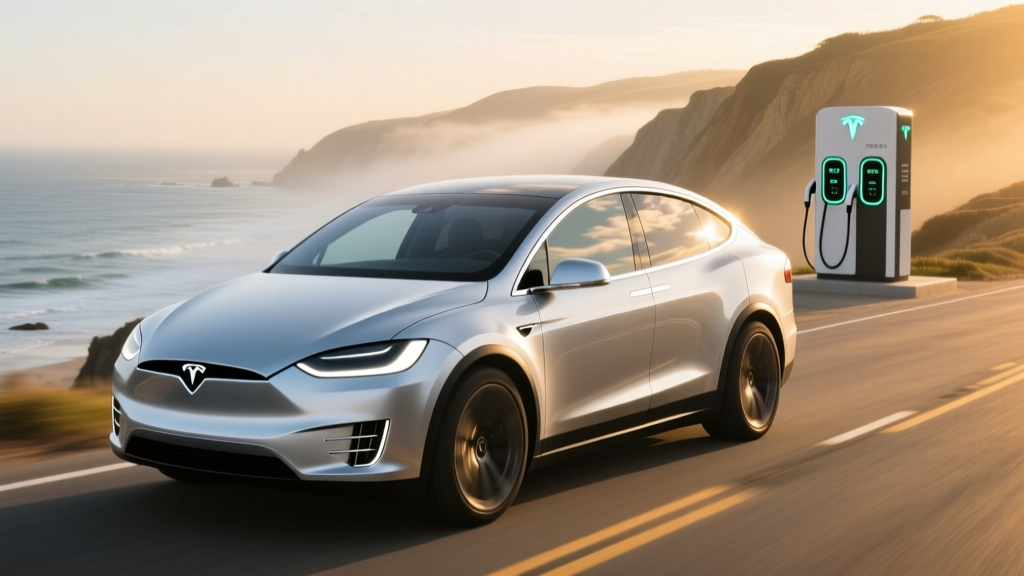
Understanding charging requires distinguishing kW (power — the rate of energy delivery) from kWh (energy — the battery's total capacity). A 250 kW peak rate doesn't mean you receive 250 kWh in an hour; it means at the peak moment, energy is flowing at that rate. The charge curve tapers significantly above 80% state of charge to protect battery longevity.
| Charging Level | Power | Rate (Approx.) | Use Case |
|---|---|---|---|
| Level 1 (120V household) | ~1.4 kW | ~5 mi/hr | Emergency/overnight trickle |
| Level 2 (240V home/public) | 11.5 kW | ~44 mi/hr | Daily home charging |
| DC Fast (Supercharger V3/V4) | Up to 250 kW (LR/Perf) | ~180 mi in 15 min (peak) | Road trips |
| DC Fast (RWD LFP) | Up to 170 kW | ~130 mi in 15 min (peak) | Road trips |
Charging curve reality: The Long Range and Performance models hit 250 kW only between roughly 10–30% SoC with a preconditioned battery. By 60%, power tapers to ~100 kW; by 85%, it drops to ~40 kW. The published 10–80% time of ~20 minutes assumes a preconditioned battery at a V3/V4 Supercharger. Arriving at a charger cold or charging above 80% will significantly extend your stop.
For home Level 2 installation, budget $500–$1,200 for a quality 48A wall connector plus $800–$2,500 for electrician labor depending on panel proximity and whether a 200A panel upgrade is needed. Tesla's Wall Connector remains one of the most reliable NACS-native options on the market.
What "Tuning Tesla" Actually Means in 2026
Unlike internal-combustion vehicles where ECU tuning, intake/exhaust mods, and boost controllers unlock significant power, Tesla's powertrain is software-locked and encrypted. Here's what the modification landscape actually offers:
Software and Powertrain Modifications
Tesla does not offer an official power-increase over-the-air purchase for the Model 3 (unlike the Model S/X "Acceleration Boost" of prior years). Third-party tuning boxes that intercept signals between the battery management system and drive inverter exist — primarily from European vendors — but they carry severe risks:
- Warranty voidance: Tesla's diagnostic systems detect abnormal power-draw patterns. A modified vehicle showing drive-unit or battery failures will almost certainly be denied warranty coverage.
- Thermal limits: The Model 3's drive units and battery are thermally managed but not infinitely so. Sustained power above factory limits accelerates degradation and risks thermal throttling mid-run.
- Safety systems: Modifying powertrain output can interact unpredictably with traction control and stability systems calibrated for factory torque curves.
Suspension and Handling Upgrades
This is where Model 3 tuning delivers genuine, warranty-friendly improvement. The Highland generation improved ride quality over the pre-2024 Model 3 substantially, but the aftermarket has responded with:
- Coilover kits (Mountain Pass Performance, Unplugged Performance): $2,000–$4,500 installed — adjustable ride height and damping for both comfort and track use.
- Sway bars: $400–$800 — reduce body roll without altering ride quality.
- Performance brake kits: Upgraded rotors and pads for repeated hard braking on track days ($1,500–$3,500).
Wheels, Tires, and Aero
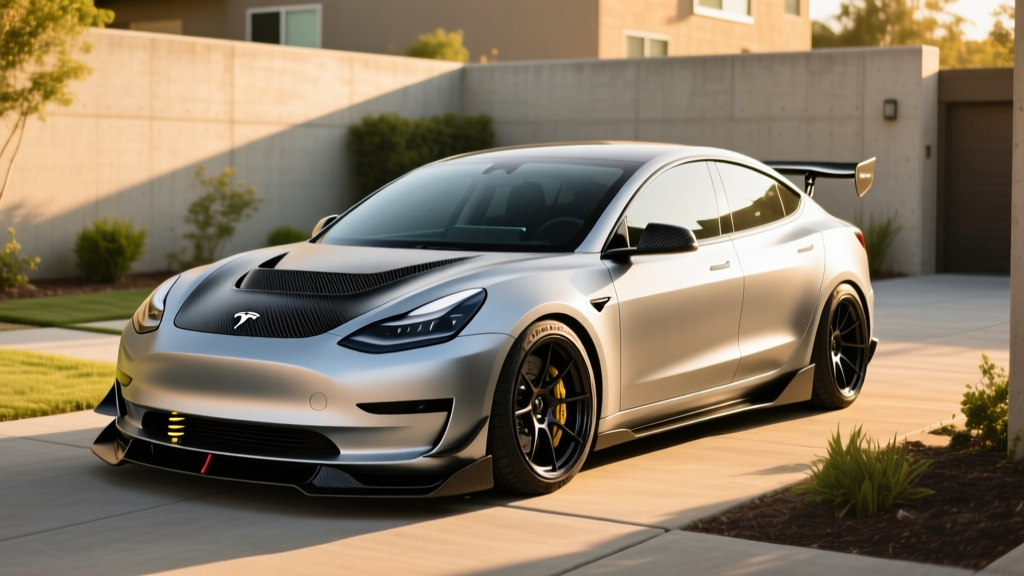
Lightweight forged wheels (19–20 inch) can reduce unsprung mass and marginally improve efficiency — though larger, wider tires typically increase rolling resistance and reduce range by 5–10%. Aerodynamic add-ons (front splitters, rear diffusers, spoiler extensions) from vendors like Vorsteiner or EV-specific shops offer visual differentiation with minimal measurable downforce at legal speeds.
Pricing, Tax Credits, and Total Cost
| Trim | Base MSRP | Federal Credit (§30D) | Effective Price |
|---|---|---|---|
| RWD (LFP) | $38,990 | Up to $7,500* | ~$31,490 |
| Long Range AWD | $44,990 | Up to $7,500* | ~$37,490 |
| Performance | $52,990 | Up to $7,500* | ~$45,490 |
*Per IRS §30D rules: credit depends on buyer income caps ($150K single / $300K joint AGI), vehicle MSRP under $55,000 (sedans), and battery critical-mineral + component sourcing requirements that shift annually. The RWD model's LFP battery has historically faced sourcing challenges that may reduce credit to $3,750 or $0 in some model years. Confirm eligibility at purchase via the IRS seller-reporting requirement and your tax professional.
Point-of-sale transfer is available, allowing the dealer to apply the credit directly to your purchase price rather than waiting for tax filing. This makes the effective price reduction immediate.
Interior, Tech, and Cargo Practicality
The Highland Model 3 interior shed most physical controls, centralizing everything — including glove-box release and turn signals (now steering-column stalks were restored for 2025+ models after customer feedback) — into the 15.4-inch center touchscreen. Rear passengers get an 8-inch screen for climate and entertainment.
- Cargo volume: 23 cu ft (rear trunk + frunk combined)
- Front headroom: 40.3 in | Rear headroom: 37.8 in
- Front legroom: 42.7 in | Rear legroom: 35.2 in
- Driver assist: Autopilot (SAE Level 2) standard; FSD (Supervised) available at $8,000 or $99/mo subscription
Pros, Cons, and Who Should Buy
- Class-leading Supercharger network access (17,000+ NA stalls)
- Highland ride quality dramatically improved over pre-2024
- LFP RWD offers lowest cost of entry + 100% charge tolerance
- OTA updates add features over time
- Strong resale value relative to non-Tesla EVs
- Minimal physical controls; screen-dependent interface
- Performance variants ride firmly even on standard suspension
- Aftermarket "power tunes" carry high warranty risk
- FSD subscription/purchase remains expensive with Level 2 limitations
- LFP RWD cold-weather range is modest (est. 200–220 mi below freezing)
Best for: Tech-forward commuters and road-trippers who value charging infrastructure above all else. The Long Range AWD suits two-adult households needing 280+ real-world highway miles. The RWD is ideal for budget-conscious buyers with reliable home charging. The Performance targets enthusiasts who want 2.9-second acceleration without sacrificing daily practicality — and who understand that "tuning" this car means suspension and brakes, not software hacks.
Frequently Asked Questions
What is the real-world range of the 2026 Tesla Model 3?
Expect 275–295 miles highway in moderate weather for the Long Range (EPA 341). In winter conditions, plan for 230–260 miles. The RWD (EPA 341 on a smaller LFP pack) delivers similar real-world figures due to slightly lower efficiency but sees less dramatic cold-weather percentage loss.
How fast does the Model 3 charge at home and on the road?
At home on a 240V Level 2 circuit at 11.5 kW, you gain approximately 44 miles of range per hour — a full overnight session replenishes the entire battery. On DC fast chargers, Long Range and Performance peak at 250 kW (10–80% in ~20 min); the RWD peaks at 170 kW (~25 min 10–80%).
Does the 2026 Model 3 qualify for the $7,500 federal EV tax credit?
It depends on your income (AGI caps apply), the specific battery sourcing in your build month, and the MSRP cap for sedans ($55,000). All three trims fall under the MSRP cap, but critical-mineral and battery-component sourcing rules mean the credit amount fluctuates. Verify at point of sale and consult a tax professional per IRS guidance.
Is it worth buying vs. the Hyundai Ioniq 6 or BMW i4?
The Model 3 wins on Supercharger network reliability, software integration, and efficiency (kWh/100mi). The Ioniq 6 offers faster 800V charging architecture (~18 min 10–80%) and a more traditional interior. The BMW i4 provides superior build quality and driving dynamics at a higher price. Choose Tesla if charging infrastructure and software are your top priorities.
Can I tune the Tesla Model 3 for more power?
Not through software in any warranty-safe manner. Tesla locks powertrain calibration, and third-party tuning boxes risk warranty denial. Meaningful performance upgrades focus on suspension (coilovers, sway bars), brakes, and wheels/tires — areas where the aftermarket is mature and the gains are real.
What are the biggest pros and cons of the Model 3 Highland?
Pros: Supercharger access, improved ride quality, efficiency, OTA evolution, resale value. Cons: Screen-reliant controls, firm Performance ride, LFP cold-weather limits, FSD cost vs. Level 2 reality, powertrain tuning is essentially off-limits.