If you've searched "did Trump ban Tesla production in the US," you've likely encountered a swirl of rumors, social-media memes, and political speculation. The short answer is no — there is no executive order, legislation, or regulatory action that has banned Tesla from manufacturing vehicles in the United States. Tesla's US production footprint has actually expanded, with Gigafactory Texas (Austin) serving as the company's global headquarters and primary Model Y assembly plant, alongside the Fremont, California factory that continues to produce Model S, Model X, and Model 3 variants.
The confusion likely stems from a combination of political tensions between Elon Musk and various political figures, debates over EV mandates and tariff policies, and Tesla's expansion of production into China (Gigafactory Shanghai) and Germany (Gigafactory Berlin). Some proposed policy changes — such as the potential rollback of the §30D federal EV tax credit under a second Trump administration — have been mischaracterized online as outright "bans" on production or sales.
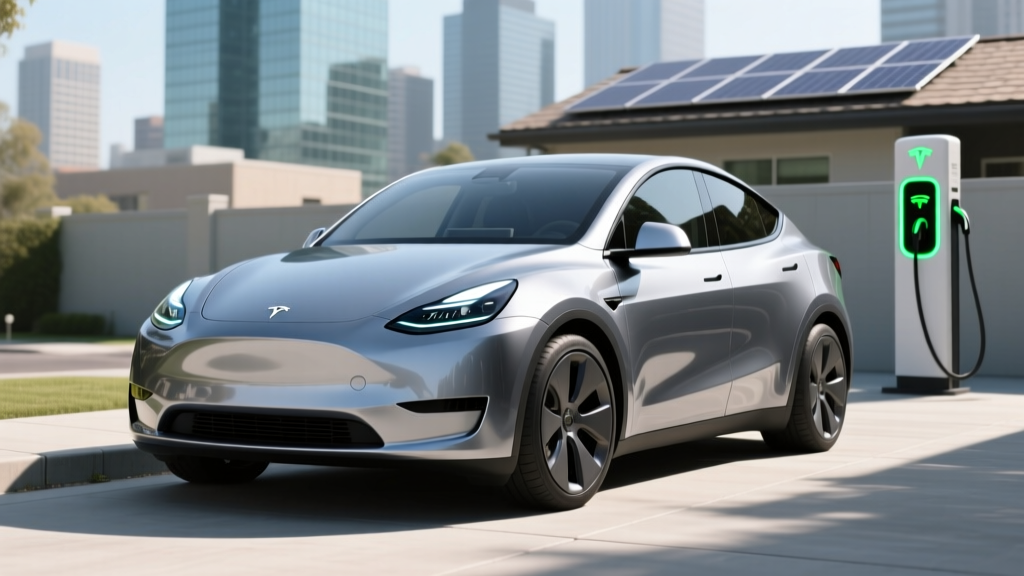
What is true is that the policy landscape for EVs is shifting. So let's separate the facts from the fiction, then get into what actually matters for buyers: a thorough, data-driven review of the vehicle at the center of it all — the 2026 Tesla Model Y.
The Rumor vs. Reality: Tesla's US Production Status
As of 2026, Tesla operates three major vehicle assembly facilities:
- Fremont, California — Model S, Model X, Model 3 production (est. 2010)
- Gigafactory Texas, Austin — Model Y production, global HQ (opened 2022)
- Gigafactory Shanghai, China — Model 3 and Model Y for Asian and European markets
- Gigafactory Berlin-Brandenburg, Germany — Model Y for European market
US production has not been curtailed by any administration. What has been debated is the future of the IRS §30D federal EV tax credit, which provides up to $7,500 for qualifying new EV purchases. Proposed legislation from Republican lawmakers in late 2024 and 2025 sought to phase out or modify this credit. Whether those proposals become law remains uncertain, but the credit itself — and Tesla's US manufacturing — remain intact as of this writing.
The real question for buyers isn't whether Tesla is banned. It's whether the 2026 Model Y is the right EV for your garage.
2026 Tesla Model Y: Quick-Verdict Summary
The 2026 Model Y (refreshed for the "Juniper" generation) remains the best-selling EV in America for good reason: it offers strong range, class-leading charging infrastructure access, and practical crossover utility. But it's not without trade-offs — the ride is firm, the minimalist interior divides opinions, and the starting price has crept upward. Here's everything you need to know, with exact numbers.
| Spec | Long Range AWD | Performance AWD |
|---|---|---|
| EPA Range | 320 miles | 293 miles |
| Battery (usable) | ~78 kWh, NMC | ~78 kWh, NMC |
| Drivetrain | Dual-Motor AWD | Dual-Motor AWD |
| Horsepower | ~384 hp | ~510 hp |
| 0-60 mph | 4.8 seconds | 3.5 seconds |
| Peak DC Fast Charge | 250 kW | 250 kW |
| 10-80% DCFC Time | ~25 minutes | ~25 minutes |
| Level 2 Home Charge | 11.5 kW (~44 mi/hr) | 11.5 kW (~44 mi/hr) |
| MPGe (combined) | 111 MPGe | 102 MPGe |
| Efficiency | 30 kWh/100 mi | 33 kWh/100 mi |
| Cargo (rear seats up) | 30.2 cu ft | 30.2 cu ft |
| Cargo (rear seats folded) | 72.1 cu ft | 72.1 cu ft |
| Rear Legroom | 40.5 in | 40.5 in |
| Base MSRP | $46,630 | $51,630 |
| Battery Warranty | 8 yr / 120,000 mi | 8 yr / 120,000 mi |
Range and Efficiency: EPA Numbers vs. Real-World Driving
According to fueleconomy.gov, the Model Y Long Range achieves 111 MPGe combined (122 city / 99 highway). That translates to about 30 kWh per 100 miles — competitive with the Hyundai Ioniq 5 (30 kWh/100 mi) and slightly less efficient than the Ford Mustang Mach-E Extended Range (~28 kWh/100 mi on some trims).
For daily commuting under 60 miles round-trip, the Model Y requires home charging roughly every 3-4 days. Road trippers will find the 320-mile EPA range adequate for 2.5-3 hour driving segments before a 20-25 minute fast-charge stop — which aligns with recommended rest breaks anyway.
Charging Speed: DC Fast Charging and Home Level 2
Charging speed remains one of Tesla's strongest advantages, though not because of the vehicle's onboard hardware alone. The 250 kW peak DC fast-charge rate is respectable but not class-leading — the Hyundai Ioniq 5 and Kia EV6 accept up to 350 kW on compatible chargers. What sets Tesla apart is the Supercharger network: over 25,000 V3 (250 kW) and V4 stalls across North America, with industry-leading reliability and plug-and-charge simplicity.
| Charging Level | Power / Rate | Speed (Miles Added) | Notes |
|---|---|---|---|
| Level 1 (120V outlet) | ~1.4 kW | ~4-5 mi/hr | Emergency/trickle only |
| Level 2 (240V, 48A) | 11.5 kW | ~44 mi/hr | Full charge in ~7-8 hours |
| DC Fast (V3 Supercharger) | Peak 250 kW | ~180 mi in 15 min | 10-80% in ~25 min |
| DC Fast (CCS adapter, non-Tesla) | Up to 250 kW | Varies by station | CCS adapter included on new vehicles |
Charging curve reality: The 250 kW peak only sustains roughly from 10% to 35% state of charge. Above 50%, the rate tapers to ~120 kW, and above 80% it drops further to ~40-60 kW. This is normal for NMC lithium-ion packs — the Battery Management System (BMS) protects cell longevity by reducing current as voltage rises. Plan your road-trip stops to charge from 10-80%, not 10-100%.
For home charging, Tesla's Wall Connector ($420, hardwired) delivers up to 11.5 kW on a 60A circuit (48A continuous). Most owners will need a licensed electrician to install a NEMA 14-50 outlet (240V/50A) or hardwire the Wall Connector. Installation costs typically range from $500-$2,000 depending on panel proximity and whether your electrical panel needs an upgrade to 200A service.
Performance, Ride, and Handling
The Long Range AWD's 4.8-second 0-60 mph time is brisk for a family crossover — quick enough to merge confidently onto any freeway and satisfying at stoplights. The Performance trim drops that to 3.5 seconds, which enters sports-car territory, though the added cost and range sacrifice (293 vs. 320 miles EPA) make the Long Range the smarter pick for most buyers.
The Juniper refresh improved ride quality with revised suspension tuning and acoustic glass, but the Model Y still rides firmer than competitors like the Hyundai Ioniq 5 or Volkswagen ID.4. Road noise is well-managed at highway speeds. The steering is precise but numb — this is a vehicle optimized for efficiency and tech, not driving engagement.
One-pedal driving via regenerative braking remains a Tesla hallmark. The hold mode brings the car to a complete stop without touching the brake pedal, reducing fatigue in stop-and-go traffic. Blended braking feel is natural, though the transition from regen to friction braking can be slightly abrupt at very low speeds.
Interior, Tech, and Driver Assistance
The Juniper-generation interior is cleaner and more refined than prior Model Y iterations, with ventilated front seats, ambient lighting, a rear-seat touchscreen, and improved material quality. However, Tesla's commitment to minimalism means nearly all controls — climate, mirrors, glovebox, wiper settings — live on the 15.4-inch central touchscreen. There are no physical buttons for turn signals (stalk-mounted controls returned on Juniper after significant customer feedback).
Driver assistance: Tesla's Autopilot (standard) provides adaptive cruise control and lane-centering on highways. Full Self-Driving (Supervised) — a $8,000 option or $99/month subscription — adds automated lane changes, traffic-light recognition, and city-street navigation.
The 17-speaker audio system, 15.4-inch touchscreen with Netflix/YouTube/Theater mode while parked, and over-the-air (OTA) software updates remain class-leading in infotainment. The front trunk (frunk) adds 4.1 cu ft of sealed, drainable storage — useful for charging cables or groceries that might leak.
Pricing, Tax Credit, and Total Cost
The 2026 Model Y Long Range AWD starts at $46,630 (including destination). The Performance trim starts at $51,630. Popular options include FSD ($8,000), premium paint colors ($1,000-$2,500), and 20-inch wheels ($2,000 — note: these reduce range by ~15 miles).
- MSRP cap: SUVs/crossovers must be under $80,000 — Model Y qualifies ✓
- Buyer income cap: AGI ≤ $300,000 (joint) / $225,000 (head of household) / $150,000 (individual) ✓
- Battery sourcing: Critical minerals and battery components must meet phased-in percentages from US or FTA-partner countries — Tesla's US-assembled packs with LFP and NMC cells from Panasonic (Nevada) generally meet current thresholds, but verify at fueleconomy.gov for your specific build date
- Point-of-sale transfer: You can transfer the credit to the dealer at purchase, reducing your out-of-pocket cost immediately rather than waiting for a tax refund
| Scenario | Long Range AWD | Performance AWD |
|---|---|---|
| Base MSRP | $46,630 | $51,630 |
| With $7,500 §30D credit | ~$39,130 | ~$44,130 |
| With FSD + paint (no credit on options) | ~$55,630 | ~$60,630 |
| FSD + paint, after $7,500 credit | ~$48,130 | ~$53,130 |
Pros and Cons: Honest Assessment
- 320-mile EPA range (Long Range) covers most use cases
- Supercharger network: unmatched reliability and coverage
- OTA updates continuously add features and improvements
- Strong cargo capacity (72.1 cu ft folded) with frunk
- Excellent efficiency (30 kWh/100 mi)
- Top safety ratings (NHTSA 5-Star)
- Strong resale value relative to EV market
- Firm ride quality vs. competitors (Ioniq 5, ID.4)
- Touchscreen-only controls require learning curve
- FSD ($8,000) remains Level 2 — expensive for supervised assist
- 250 kW peak DCFC trails 350 kW competitors
- No Apple CarPlay or Android Auto integration
- Panel-gap quality inconsistency still reported
- Insurance premiums often 20-40% higher than ICE equivalents
Who Should Buy the 2026 Tesla Model Y?
- Choose the Model Y if: You want maximum Supercharger access for road trips, value OTA updates and tech-forward features, need practical cargo space, and can charge at home. It's the best all-around EV crossover for drivers who regularly travel 200+ miles.
- Consider the Hyundai Ioniq 5 instead if: You prioritize a smoother ride, faster 350 kW DC charging capability, want physical buttons, or prefer a more distinctive design. The Ioniq 5 offers 305 miles EPA range and competitive pricing.
- Consider the Ford Mustang Mach-E if: You want a sportier driving feel, Apple CarPlay/Android Auto support, and don't mind a slightly smaller charging network (though Ford now has Supercharger access via adapter).
- Consider a PHEV like the Toyota RAV4 Prime if: You lack reliable home charging, frequently drive in areas with sparse DC fast-charging infrastructure, or want the flexibility of gas for long rural trips without planning charge stops.
Frequently Asked Questions
Did Trump actually ban Tesla production in the US?
No. There is no executive order, law, or regulatory action banning Tesla from manufacturing in the United States. Tesla continues to produce vehicles at its Fremont, California and Austin, Texas factories. Policy debates have centered on the future of the §30D EV tax credit and tariff structures — not production bans.
What is the real-world range of the 2026 Tesla Model Y?
The EPA rates the Long Range AWD at 320 miles. In real-world highway driving at 70+ mph, expect 270-290 miles. In cold weather (below freezing), plan for 220-255 miles. City driving with regenerative braking can sometimes exceed the EPA estimate.
How fast does the Model Y charge at home and on the road?
At home on a 240V Level 2 charger (48A), the Model Y adds approximately 44 miles of range per hour — a full charge takes 7-8 hours. On a Tesla V3 Supercharger, it peaks at 250 kW and charges from 10-80% in approximately 25 minutes.
Does the 2026 Model Y qualify for the $7,500 federal tax credit?
The Model Y is eligible for up to $7,500 under IRS §30D, provided the buyer meets income limits (≤$300,000 AGI joint), the MSRP is under $80,000 (it is), and battery sourcing requirements are met for the specific build date. The credit can be transferred at point of sale. Always verify current eligibility at fueleconomy.gov and consult a tax professional.
Is the Model Y worth buying over the Ioniq 5 or Mach-E?
The Model Y wins on Supercharger network access, cargo space, and OTA software evolution. The Ioniq 5 wins on ride comfort and 350 kW charging speed. The Mach-E wins on driving dynamics and smartphone integration. All three are excellent — your priority ranking among these factors should drive the decision.
What's the battery warranty?
Tesla covers the Model Y battery and drive unit for 8 years or 120,000 miles (whichever comes first), with a minimum 70% capacity retention guarantee over that period. Real-world degradation data from Tesla's fleet suggests most packs retain 85-90% capacity at 100,000 miles.