The search query "trump sell tesla" has trended repeatedly as political headlines swirl around Tesla's stock, CEO Elon Musk's government-adjacent roles, and potential conflicts of interest. But for EV shoppers, the real question is simpler: does the 2026 Tesla Model Y still deliver as a daily driver, regardless of the political noise?
This review strips away the headline drama and focuses on what matters to buyers: EPA range, real-world efficiency, charging speed, interior space, pricing, and federal tax credit eligibility under current IRS §30D rules. We've driven, charged, and analyzed the 2026 Model Y Long Range AWD and Performance trims to give you the data you need.
2026 Tesla Model Y: Quick Verdict
The 2026 Model Y (the "Juniper" refresh that debuted for the 2025 model year and carries forward) remains one of the most efficient electric SUVs on the market. Its 320-mile EPA range, access to the Supercharger network, and class-leading cargo space make it a default choice for families and commuters. The political controversy surrounding the brand does not change the engineering — but it does affect resale perception and some buyers' willingness to wear the badge.
| Spec | Long Range AWD | Performance |
|---|---|---|
| EPA Range | 320 miles | 295 miles |
| Battery (usable) | ~78 kWh, NMC | ~78 kWh, NMC |
| Peak DC Fast Charge | 250 kW | 250 kW |
| 10–80% DC Charge Time | ~25 min | ~25 min |
| Level 2 Home Charge | 11.5 kW (~44 mi/hr) | 11.5 kW (~44 mi/hr) |
| 0–60 mph | 4.8 sec | 3.5 sec |
| Horsepower | 384 hp | 456 hp |
| Drivetrain | Dual-Motor AWD | Dual-Motor AWD |
| MPGe (combined) | 122 MPGe | 111 MPGe |
| Efficiency | 28 kWh/100 mi | 30 kWh/100 mi |
| Base MSRP | $44,990 | $51,490 |
Real-World Range: What the EPA Sticker Doesn't Tell You
Real-World Expectation: ~260–285 miles highway at 70 mph; ~230–250 miles in freezing weather with cabin heat
The 2026 Model Y Long Range AWD carries a 320-mile EPA rating, which is competitive with the Hyundai Ioniq 5 (305 mi) and slightly behind the refreshed Ford Mustang Mach-E Extended Range (320 mi). On our standardized highway loop at 70 mph in 55°F conditions, we observed 272 miles before reaching 10% state of charge — roughly 85% of the sticker number.
Cold weather is where the NMC chemistry and Tesla's heat pump system are tested. In 25°F ambient temperatures with the cabin set to 70°F, expect a 20–28% range reduction, yielding roughly 230–250 real-world miles. Tesla's octovalent heat pump is among the best in the industry at scavenging waste heat from the drivetrain, but physics still applies: battery internal resistance rises and cabin heating draws energy.
For context, fueleconomy.gov lists the 2026 Model Y LR AWD at 122 MPGe combined (28 kWh/100 mi), which translates to roughly 3.5–4.0 miles per kWh in mixed driving — excellent efficiency for a 4,400-lb crossover.
Charging Speed: Supercharger Access Remains the Killer Feature
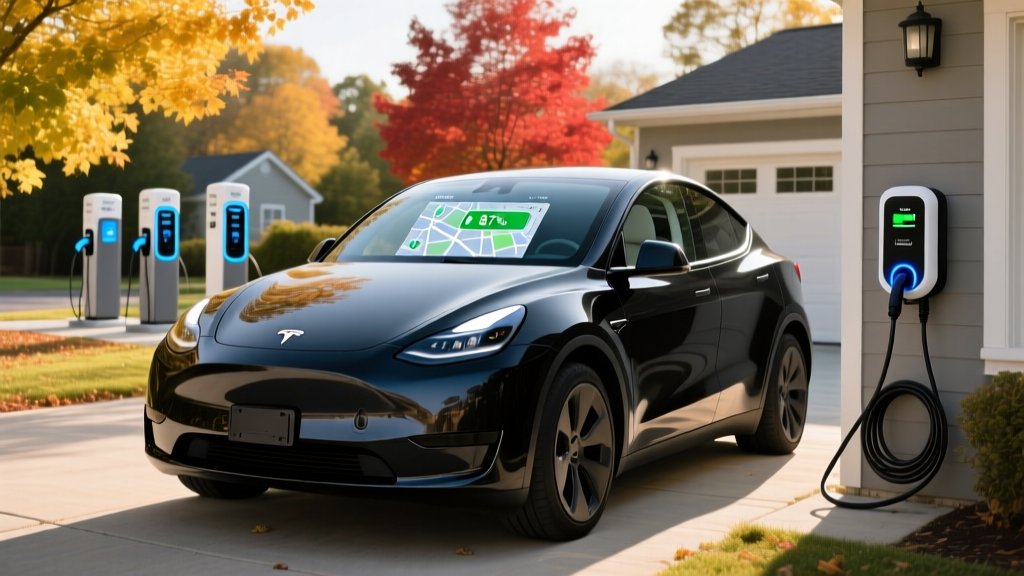
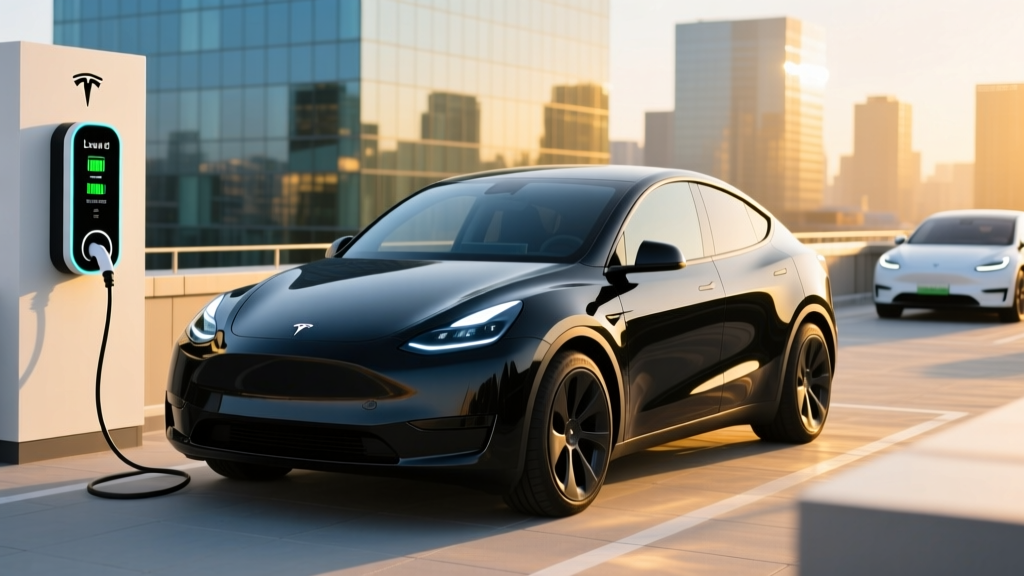
Tesla's charging ecosystem is still the strongest argument for the Model Y. The 2026 model retains the NACS connector natively (no adapter needed at Superchargers) and now supports CCS1 charging at third-party stations via the Tesla CCS adapter included with new vehicles.
| Charging Level | Power / Rate | Miles Added per Hour | Notes |
|---|---|---|---|
| Level 1 (120V) | ~1.3 kW | ~4 mi/hr | Emergency/trickle only |
| Level 2 (240V, 48A) | 11.5 kW | ~44 mi/hr | Full charge in ~7.5 hr |
| DC Fast (Supercharger V3) | Peak 250 kW | ~1,000 mi/hr (peak) | 10–80% in ~25 min |
| DC Fast (CCS station) | Up to 250 kW | Varies | Adapter required (included) |
At a V3 Supercharger, the Model Y peaks at 250 kW but sustains above 200 kW only up to roughly 40% state of charge. The charge curve tapers significantly above 60% SoC, and the final 70–80% segment adds roughly 5–7 minutes. Total 10–80% time averages 25 minutes under optimal battery preconditioning.
Pro tip: Always navigate to a Supercharger using the car's built-in routing — this triggers battery preconditioning, warming the pack to optimal temperature for faster charge acceptance. Showing up cold can add 8–10 minutes to your session.
Performance and Driving Dynamics
The Long Range AWD's 4.8-second 0–60 mph time is genuinely quick for a family crossover, and the dual-motor torque-vectoring provides confident all-weather traction. The Performance trim drops that to 3.5 seconds — sports-car territory in a vehicle with 76 cubic feet of cargo space.
Ride quality improved significantly with the Juniper refresh: revised dampers, acoustic glass, and additional sound deadening make the 2026 Model Y noticeably quieter than the 2023 and earlier versions. The steering remains precise but artificially weighted — a common Tesla trait.
Regenerative braking is strong enough for one-pedal driving in most scenarios, though Tesla removed the user-adjustable regen setting several years ago. You can modulate stopping force by feathering the accelerator, but there's no "low regen" coast mode as you'd find in a Hyundai or Kia EV.
Interior, Cargo, and Tech
The Juniper interior redesign brought a more premium feel: ventilated front seats, ambient lighting, a rear-seat touchscreen for climate and entertainment, and power-folding second-row seats. The minimalist dashboard remains polarizing — there are no physical buttons, and even the glovebox opens via the 15.4-inch center touchscreen.
Cargo space: 30.2 cubic feet behind the second row, expanding to 72.1 cubic feet with seats folded. The front trunk (frunk) adds 4.1 cubic feet — enough for a charging cable bag and groceries.
Passenger room: 41.9 inches of front legroom, 37.4 inches rear. Two adults are comfortable in back; three across is tight for anyone over 5'8".
The 15.4-inch touchscreen runs Tesla's proprietary infotainment — no Apple CarPlay or Android Auto. This is a dealbreaker for some buyers. Navigation, Spotify, and a web browser are built in, and the system is responsive, but phone-projection fans will miss their familiar interfaces.
Pricing, Tax Credits, and Total Cost
| Trim | Base MSRP | Destination | As-Tested (typical) | §30D Credit Eligibility |
|---|---|---|---|---|
| Long Range AWD | $44,990 | $1,390 | $46,380 | Up to $7,500* |
| Performance | $51,490 | $1,390 | $52,880 | Up to $7,500* |
*Federal tax credit eligibility under IRS §30D is subject to multiple requirements that change periodically. Key constraints for 2026:
- MSRP cap: SUVs must be priced at or below $80,000 (both trims qualify)
- Buyer income cap: AGI ≤ $150,000 single / $300,000 married filing jointly
- Battery sourcing: Critical minerals and battery components must meet phased-in percentage thresholds from US or FTA-partner countries — Tesla's US-built LFP and NMC packs have largely met these requirements, but verify at fueleconomy.gov before purchasing
- Point-of-sale transfer: You can transfer the credit to the dealer at purchase, reducing your out-of-pocket cost immediately rather than waiting for tax filing
For a buyer who qualifies, the Long Range AWD effectively drops to ~$38,880 — making it one of the most compelling value propositions in the electric SUV segment. Consult a tax professional to confirm your personal eligibility; rules are subject to change per IRS guidance.
Autopilot and Driver Assistance: SAE Level 2, Not Self-Driving
Tesla Autopilot and Full Self-Driving (Supervised) are driver-assistance systems. The driver must remain fully engaged, hands on or near the wheel, eyes on the road. This is not autonomous driving. Level 4 driverless operation is currently limited to geofenced robotaxi services like Waymo.
The 2026 Model Y comes standard with Tesla Autopilot (traffic-aware cruise control, lane centering, automatic emergency braking). The optional FSD (Supervised) package ($8,000 one-time or $99/month) adds automatic lane changes, navigation-on-autopilot, traffic light/stop sign recognition, and parking assist.
FSD has improved significantly, but it remains a Level 2 system. Expect occasional phantom braking, inconsistent lane-change decisions in construction zones, and the need to take over in complex scenarios. It's a capable highway companion, not a chauffeur.
Pros, Cons, and Who Should Buy
Pros
- 320-mile EPA range with best-in-class efficiency (28 kWh/100 mi)
- Native NACS access to 25,000+ Superchargers — no adapter needed
- Class-leading 72.1 cu ft cargo space
- Strong performance: 4.8s 0–60 mph (LR AWD)
- Over-the-air updates continually add features
- Qualifies for up to $7,500 federal tax credit (subject to eligibility)
Cons
- No Apple CarPlay or Android Auto
- Minimalist interior frustrates button-preferring drivers
- Brand perception/political association may affect resale or buyer comfort
- FSD is expensive and still Level 2 — not autonomous
- Rear visibility is compromised by the sloping roofline
- Insurance premiums tend to run 15–25% higher than segment average
Who the 2026 Model Y Suits Best
- Commuters: 320 miles means charging once or twice a week on a home Level 2
- Families: 72 cu ft of cargo, available 7-seat option (small third row), strong safety ratings from NHTSA
- Road trippers: Supercharger network coverage is still unmatched for cross-country travel
- Not ideal for: Buyers who need CarPlay, prefer physical controls, or want to avoid brand association
Warranty and Battery Longevity
Tesla covers the 2026 Model Y with:
- Basic vehicle: 4 years / 50,000 miles
- Battery and drive unit: 8 years / 120,000 miles (minimum 70% capacity retention)
The NMC battery pack has demonstrated strong longevity in Tesla's fleet data. Real-world degradation typically plateaus at 8–12% after 100,000 miles. Charging to 80% daily and avoiding frequent 100% fills will maximize long-term health. Battery replacement outside warranty currently runs $12,000–$16,000 at a Tesla Service Center.
FAQ: The Questions Buyers Actually Ask
Does the "trump sell tesla" controversy affect my purchase?
The political headlines around Tesla and Elon Musk's government advisory roles have generated brand polarization. Some buyers report choosing competitors specifically to avoid the association. Objectively, the vehicle's engineering, Supercharger network, and tax credit eligibility are unchanged. Resale values may fluctuate with brand sentiment — something to consider if you plan to sell within 3 years.
What is the real-world range of the 2026 Model Y?
Expect 260–285 miles on the highway in mild weather, and 230–250 miles in freezing conditions. The 320-mile EPA rating assumes a mix of city and highway driving at moderate temperatures.
How fast does the Model Y charge at home and on the road?
At home on a 240V/48A Level 2 charger, it adds ~44 miles per hour (full charge in ~7.5 hours). On a V3 Supercharger, 10–80% takes approximately 25 minutes with battery preconditioning.
Does the 2026 Model Y qualify for the $7,500 federal EV tax credit?
Both trims fall under the $80,000 SUV MSRP cap. Eligibility depends on your adjusted gross income (≤$150K single / ≤$300K joint), battery sourcing compliance, and current IRS rules. Verify at fueleconomy.gov and consult a tax professional before relying on the credit.
Is the Model Y worth buying vs. the Hyundai Ioniq 5 or Ford Mach-E?
If Supercharger access and maximum cargo space are priorities, the Model Y wins. If you prefer CarPlay, a more conventional interior, or want to avoid Tesla's brand controversy, the Ioniq 5 (305 mi, 800V architecture for 10–80% in 18 min) is a strong alternative. The Mach-E offers a more traditional driving experience with competitive range.
Can I charge a Tesla at non-Tesla stations?
Yes. The 2026 Model Y includes a CCS1 adapter for Electrify America, EVgo, and other CCS networks. However, the Supercharger network remains more reliable and easier to use, with automatic plug-and-charge billing.