The "Trump Banning Tesla Production" Rumor: What's Actually Happening
If you've searched "trump banning tesla production" recently, you're not alone. The phrase has circulated across social media and forums, fueled by the complex and often contradictory relationship between Donald Trump and Elon Musk. Let's cut through the noise with facts.
There is no executive order, proposed legislation, or regulatory action from the Trump administration aimed at banning Tesla production. As of 2026, Tesla's U.S. factories — including Giga Texas in Austin and the Fremont, California plant — continue full-scale manufacturing of the Model 3, Model Y, Model S, Model X, Cybertruck, and Semi. Tesla remains the top-selling EV brand in the United States by a wide margin.
The confusion likely stems from several overlapping narratives: Trump's historical criticism of EV mandates, his administration's attempts to roll back certain EV incentives and tailpipe emissions standards, and the very public political feud between Trump and Musk that intensified after their initial alliance in 2024-2025. Policy changes to the federal EV tax credit structure and EPA regulations have generated headlines that, when stripped of context, sound like existential threats to Tesla specifically. They aren't.
Tesla's production is governed by market demand, supply-chain logistics, and standard automotive safety regulation — not targeted political bans. If you're considering a Tesla purchase in 2026, the real question isn't whether production will stop, but whether the specific model fits your needs and budget. With that in mind, let's turn to the vehicle most buyers are actually cross-shopping: the 2026 Tesla Model Y.
2026 Tesla Model Y: Quick Verdict
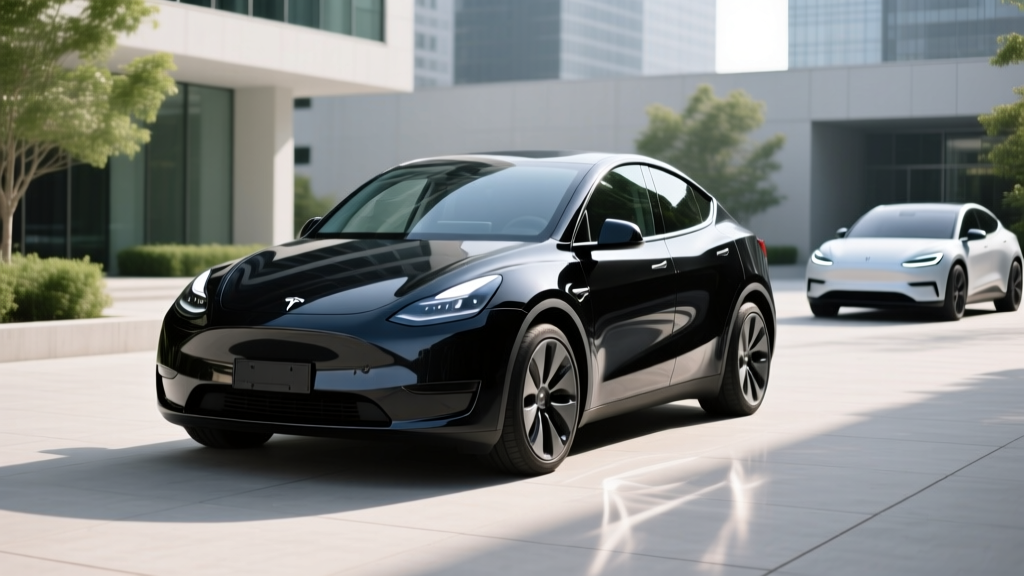
The refreshed Model Y (internally dubbed "Juniper") continues to anchor Tesla's sales volume. It offers strong range, access to the most reliable DC fast-charging network in North America, and a cargo-versus-price proposition that few competitors match. Its weaknesses — a firm ride, minimalist interior that isn't for everyone, and the ongoing Autopilot/FSD supervision requirement — remain unchanged from the previous generation.
| Spec | Long Range RWD | Long Range AWD | Performance |
|---|---|---|---|
| EPA Range | 320 mi | 295 mi | 277 mi |
| Battery (usable) | ~75 kWh, NMC | ~75 kWh, NMC | ~75 kWh, NMC |
| Peak DC Fast Charge | 250 kW | 250 kW | 250 kW |
| 10–80% DCFC Time | ~25 min | ~25 min | ~25 min |
| Level 2 Home Charging | 11.5 kW (~44 mi/hr) | 11.5 kW (~44 mi/hr) | 11.5 kW (~44 mi/hr) |
| 0–60 mph | 5.8 sec | 4.8 sec | 3.5 sec |
| Horsepower | ~346 hp | ~384 hp | ~456 hp |
| Drivetrain | RWD (single motor) | AWD (dual motor) | AWD (dual motor) |
| MPGe (combined) | 123 MPGe | 115 MPGe | 110 MPGe |
| Efficiency | 27 kWh/100mi | 29 kWh/100mi | 31 kWh/100mi |
| Base MSRP | $44,990 | $47,990 | $52,990 |
Source: EPA / fueleconomy.gov and Tesla.com. Specifications reflect 2026 model year.
Range and Efficiency: EPA Numbers vs. Real-World Driving
EPA estimate: 320 miles (Long Range RWD)
Expect in real-world highway driving (70-80 mph): ~260–280 miles
Expect in cold weather (below 32°F): ~220–250 miles (30-35% reduction typical for NMC chemistry without consistent preconditioning)
City/regenerative driving: ~300–315 miles — close to EPA sticker
The Model Y Long Range RWD's 320-mile EPA figure is competitive with the Hyundai Ioniq 5 (305 mi) and comfortably ahead of the Ford Mustang Mach-E Extended Range (290 mi). But the EPA combined cycle includes substantial low-speed city driving where regenerative braking recaptures energy. Sustained highway speeds above 70 mph increase aerodynamic drag substantially — the Model Y's crossover profile is less slippery than a sedan like the Model 3.
Tesla's heat pump (standard on all 2026 trims) mitigates cold-weather range loss compared to EVs using resistive cabin heaters. Preconditioning the battery via the Tesla app before departure is essential in cold climates — it warms the NMC pack for both efficiency and faster DC charging. Without preconditioning in freezing temps, expect your first 20 miles to consume energy at a rate 25-35% above normal.
Charging: Supercharger Network Advantage
| Charging Level | Power | Speed (miles added) | Notes |
|---|---|---|---|
| Level 1 (120V household) | ~1.4 kW | ~3–5 mi/hr | Emergency/trickle only |
| Level 2 (240V, 48A home) | 11.5 kW | ~44 mi/hr | Full charge in ~7–8 hours |
| DC Fast Charge (Tesla Supercharger V3/V4) | Peak 250 kW | ~175 mi in 15 min | 10–80% in ~25 min |
| DC Fast Charge (CCS adapter, non-Tesla networks) | Up to ~170 kW (adapter-limited) | ~120 mi in 15 min | Slower due to adapter overhead |
Tesla's Supercharger network remains the gold standard for reliability and ease of use. Plug-in is seamless — no RFID cards, no app fumbling at the stall. The 250 kW peak rate is strong, but understand the charging curve: the Model Y pulls peak power only between roughly 10–30% state of charge. From 30–60%, expect ~150 kW. From 60–80%, it tapers to ~80–100 kW. Above 80%, charging slows dramatically to protect battery longevity — that last 20% can take as long as the first 70%.
For home charging, Tesla's Wall Connector ($420, hardwired, up to 48 amps) delivers a full overnight charge for virtually any daily driving need. A 60-amp dedicated circuit is recommended; installation costs typically range from $800–$2,000 depending on panel proximity and whether a panel upgrade (to 200A service) is needed. Budget for a licensed electrician and local permitting.
With Tesla opening its North American Supercharger network to non-Tesla EVs (via NACS connectors and the Magic Dock CCS adapter), the network is more accessible than ever — but Tesla owners still benefit from native integration, automatic billing, and battery preconditioning that activates automatically when you navigate to a Supercharger.
Performance and Driving Dynamics
The Model Y Performance trim's 3.5-second 0–60 mph time puts it in sports-car territory, a remarkable feat for a 4,400-pound crossover. Even the base Long Range RWD at 5.8 seconds is brisk by any practical measure. Dual-motor AWD trims provide confident all-weather traction, with torque vectoring between front and rear motors.
Ride quality has improved with the Juniper refresh — revised damper tuning and acoustic glass reduce the harshness that plagued pre-2025 models. However, the Model Y still rides firmer than a Toyota RAV4 or Hyundai Ioniq 5. Road imperfections transmit through the 20-inch Performance wheels more than you'd like on broken pavement. The 19-inch Gemini wheels offer a noticeably more compliant ride and a ~10-mile range advantage due to lower rolling resistance.
One-pedal driving via regenerative braking (adjustable between Low and Standard) is well-implemented. "Standard" regen allows true one-pedal operation in city traffic, while "Low" mimics a coasting feel closer to a traditional automatic transmission.
Interior, Tech, and Cargo
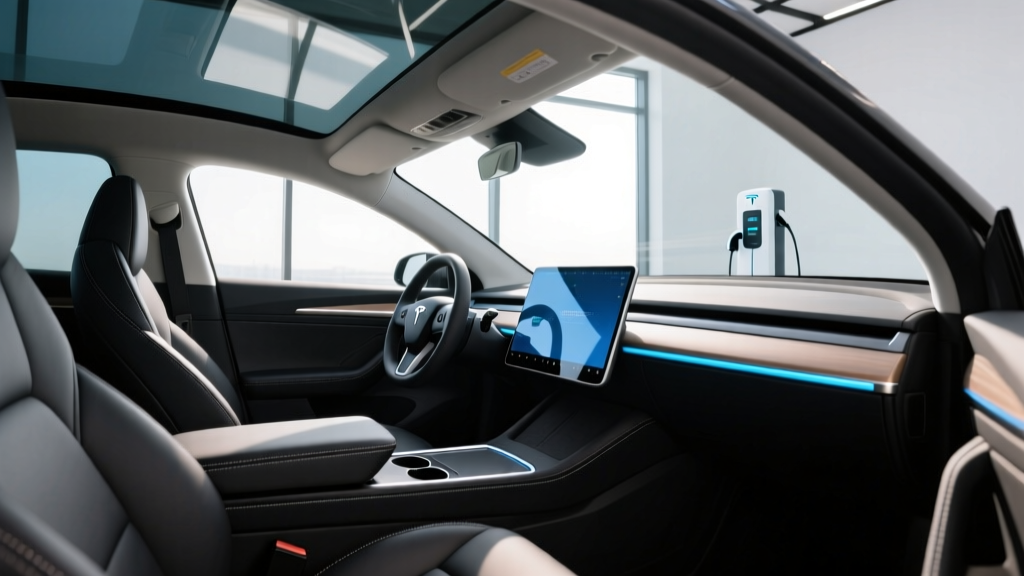
The Juniper refresh brought a more refined interior: ventilated front seats, ambient lighting, a rear-seat touchscreen for climate/entertainment, and improved material quality. The 15.4-inch center touchscreen handles virtually all vehicle controls — there are no physical buttons beyond steering-wheel stalks and a few haptic-touch panels. This minimalist approach polarizes buyers; some find it clean and intuitive, others miss physical climate knobs.
Cargo space: 30.2 cubic feet behind the second row, expanding to 72.1 cubic feet with the 60/40 rear seats folded. The front trunk (frunk) adds 4.1 cubic feet — useful for charging cables or a small bag. Rear legroom measures 41.6 inches, adequate for adults on longer trips.
Infotainment: Tesla's proprietary system includes native navigation with Supercharger routing, Spotify/Apple Music integration, a web browser, and over-the-air software updates that periodically add features. There is no Apple CarPlay or Android Auto — a deliberate Tesla choice that frustrates some buyers accustomed to phone projection.
Driver assistance: Basic Autopilot (adaptive cruise + lane centering) is standard. Full Self-Driving (Supervised) remains a $8,000 add-on or $99/month subscription.
Tesla Autopilot and FSD (Supervised) are SAE Level 2 driver-assist systems. The driver must remain fully engaged, hands on or near the wheel, and eyes on the road at all times. These systems do not make the Model Y a self-driving vehicle. Only Level 4 robotaxi services like Waymo operate without a human driver in defined geographic zones. Tesla's "Supervised" branding reflects this reality.
Pricing, Trims, and Federal Tax Credit Eligibility
| Trim | Base MSRP | Est. Federal Credit (§30D) | Est. Net Price |
|---|---|---|---|
| Long Range RWD | $44,990 | Up to $7,500* | ~$37,490* |
| Long Range AWD | $47,990 | Up to $7,500* | ~$40,490* |
| Performance | $52,990 | Up to $7,500* | ~$45,490* |
*Federal tax credit eligibility depends on multiple IRS §30D requirements. Credit can be applied at point of sale as of 2024+.
- Vehicle MSRP cap: SUVs/crossovers must be ≤$80,000 (all Model Y trims qualify)
- Buyer income cap: Modified AGI ≤$150,000 (single), ≤$225,000 (head of household), ≤$300,000 (joint)
- Battery sourcing: Must meet critical minerals and battery component requirements (phased thresholds increase annually — verify current-year compliance at IRS.gov §30D page)
- Final assembly: Must occur in North America (Tesla Fremont and Giga Texas both qualify)
- Point-of-sale transfer: Eligible buyers can apply the credit as an instant rebate at purchase, reducing out-of-pocket cost
Important: Battery-sourcing rules have tightened annually. Tesla's supply chain has adapted, but eligibility can shift with regulatory updates. Always confirm with your tax professional and the IRS before relying on the credit in your purchase decision.
Warranty and Long-Term Ownership
Tesla provides a 4-year/50,000-mile basic vehicle warranty and an 8-year/120,000-mile battery and drive unit warranty for the Model Y (Long Range and Performance). The battery warranty guarantees the pack will retain at least 70% of its original capacity during the warranty period. If degradation exceeds 30% within 8 years/120,000 miles, Tesla will repair or replace the battery.
Real-world data from Tesla's fleet suggests NMC packs in the Model Y typically degrade 8–12% over the first 100,000 miles, with the steepest drop occurring in the first 20,000 miles before stabilizing. Best practices for longevity: avoid frequent 100% charges (set daily limit to 80–90%), minimize repeated DC fast-charging when Level 2 is available, and use the vehicle's scheduled charging/departure features to minimize time spent at high state of charge.
Out-of-warranty battery replacement for the Model Y currently ranges from $12,000–$16,000 depending on the pack variant and labor. This is a significant potential cost, though most owners will sell or trade the vehicle before reaching this point.
Pros and Cons: The Honest Assessment
- Best-in-class Supercharger network access
- 320-mile EPA range (Long Range RWD) is highly practical
- Class-leading cargo volume for a compact EV crossover
- Continuous OTA updates add features post-purchase
- Strong resale value relative to non-Tesla EVs
- Performance trim: genuine sports-car acceleration
- No Apple CarPlay or Android Auto
- Firm ride on 20-inch wheels; road noise on coarse surfaces
- FSD ($8,000) remains Level 2 — expensive for what it delivers
- All-touchscreen controls polarize and can distract while driving
- CCS adapter needed for non-Tesla DC networks (adds friction)
- Insurance premiums run 15–25% higher than comparable ICE crossovers
Who Should Buy the 2026 Tesla Model Y?
- Choose the Model Y if: You value Supercharger access for road trips, want strong range in a practical crossover form factor, and prefer a tech-forward minimalist interior. Ideal for tech-savvy commuters and small families who take occasional road trips.
- Choose the Hyundai Ioniq 5 instead if: You prefer physical buttons, want 800V ultra-fast charging (10–80% in ~18 min at 350 kW chargers), and value Apple CarPlay/Android Auto integration.
- Choose the Ford Mustang Mach-E instead if: You want a more traditional crossover driving feel with a quieter ride and available BlueCruise hands-free driving on mapped highways.
- Choose a PHEV (e.g., Toyota RAV4 Prime) instead if: You lack reliable home charging access or frequently drive in areas with sparse DC fast-charging infrastructure.
Frequently Asked Questions
Is Trump actually banning Tesla production?
No. There is no proposed or enacted ban on Tesla manufacturing. Tesla's U.S. factories continue normal production in 2026. Political rhetoric around EV policy changes and the Trump-Musk relationship has generated misleading headlines, but Tesla faces no targeted production prohibition.
What is the real-world range of the 2026 Tesla Model Y?
The EPA rates the Long Range RWD at 320 miles. In real-world highway driving at 70–80 mph, expect 260–280 miles. In freezing temperatures, expect 220–250 miles. City driving with regenerative braking can approach the EPA sticker. These figures assume the battery is preconditioned.
How fast does the Model Y charge at home and on the road?
At home on a 240V Level 2 charger (48A/11.5 kW), the Model Y adds approximately 44 miles of range per hour, fully recharging overnight in 7–8 hours. On a Tesla Supercharger (250 kW peak DC), it charges from 10–80% in about 25 minutes. Charging slows significantly above 80% to protect the battery.
Does the 2026 Tesla Model Y qualify for the federal EV tax credit?
The Model Y qualifies for up to $7,500 under IRS §30D, provided the buyer meets income caps (≤$300,000 joint AGI) and the vehicle meets current-year battery sourcing and critical mineral requirements. The MSRP cap for SUVs is $80,000, and all Model Y trims fall well under that. The credit can be transferred at point of sale. Always verify current eligibility on IRS.gov and consult a tax professional.
Is the Tesla Model Y worth buying over competitors?
The Model Y's strongest advantages are the Supercharger network, strong range, and Tesla's software ecosystem. If those matter to you, it remains a top choice. If you prioritize ride comfort, physical controls, or CarPlay/Android Auto, the Hyundai Ioniq 5 or Ford Mach-E may be better fits. Test-drive both before deciding.
How long will the Model Y battery last?
Tesla warrants the battery for 8 years/120,000 miles with a minimum 70% capacity retention guarantee. Real-world fleet data suggests 8–12% degradation over 100,000 miles with normal use. Many Tesla packs reach 150,000–200,000 miles before significant capacity loss, though individual results vary based on charging habits and climate exposure.