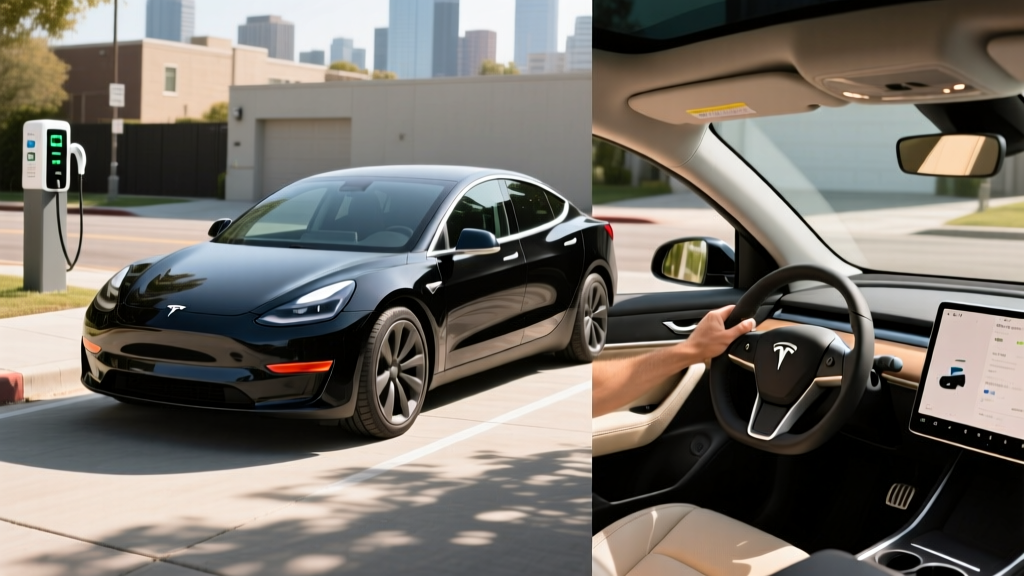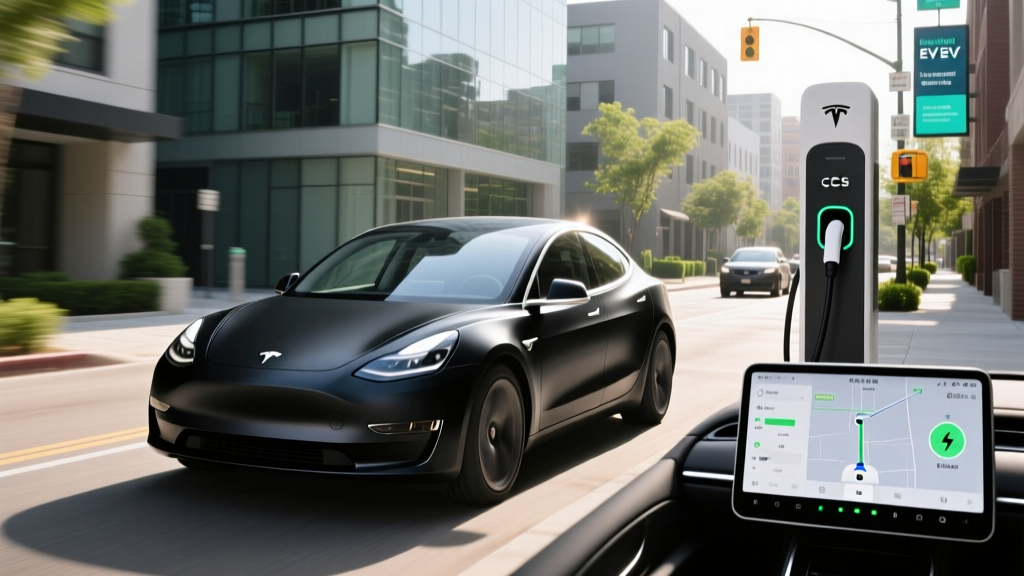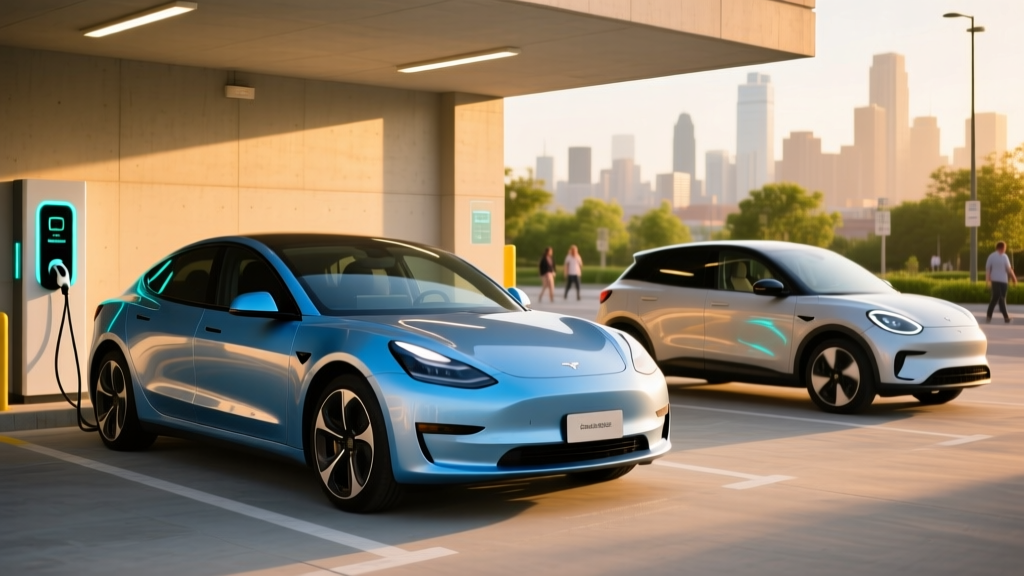
The short answer: A true EV (battery-electric vehicle with no gas engine) makes financial and practical sense if you can charge at home, drive under 250 miles daily, and live in a moderate climate. Expect to pay $35,000–$55,000 upfront, save $800–$1,500 annually on fuel and maintenance versus gas, and potentially qualify for up to $7,500 in federal tax credits. If you lack home charging, frequently drive 400+ miles in a single day, or endure extreme cold, a plug-in hybrid may be a better bridge.
What Exactly Is a True EV?
When shoppers search for a "true EV," they're typically distinguishing battery-electric vehicles (BEVs) from hybrids that still burn gasoline. A true EV runs exclusively on electricity stored in a lithium-ion battery pack—no internal combustion engine, no fuel tank, no tailpipe. You plug it in, charge the battery, and drive on electric power alone.
This differs from:
- Hybrid (HEV): Uses a small battery and electric motor to assist a gas engine. Cannot plug in. Example: Toyota Prius.
- Plug-in Hybrid (PHEV): Has a larger battery offering 25–45 miles of electric-only range plus a gas engine for longer trips. Example: Toyota RAV4 Prime.
- Extended-Range EV (EREV): Runs on electric power but carries a gas generator to recharge the battery. Example: upcoming Ram 1500 REV.
Popular true EVs in 2026 include the Tesla Model Y (320 miles EPA, ~$44,990), Hyundai Ioniq 5 (310 miles EPA, ~$42,450), Chevrolet Equinox EV (315 miles EPA, ~$33,600), and Ford Mustang Mach-E (310 miles EPA, ~$42,995).
True EV vs Gas Car: The Numbers
Let's compare a mainstream true EV—the 2026 Hyundai Ioniq 5 SEL—with a comparable gas SUV like the 2026 Toyota RAV4 LE AWD over five years and 75,000 miles of mixed driving.
| Cost Category | 2026 Ioniq 5 SEL (EV) | 2026 RAV4 LE AWD (Gas) |
|---|---|---|
| MSRP (before incentives) | $45,500 | $31,425 |
| Federal tax credit (§30D) | –$3,750 to $7,500* | $0 |
| Fuel/Energy (75k miles) | $3,200 (home charging) | $8,900 (gasoline) |
| Maintenance (5 years) | $1,800 | $3,900 |
| Insurance (5 years avg) | $9,500 | $7,800 |
| Estimated resale value | $22,000 | $19,500 |
| Net 5-Year Cost | ~$34,250–$37,750 | ~$32,625 |
*Tax credit eligibility depends on battery sourcing, buyer income, and MSRP caps under current IRS §30D rules. Always verify eligibility before purchase.
The EV costs more upfront but saves $5,700 on fuel and $2,100 on maintenance over five years. With the full $7,500 credit, the Ioniq 5 actually comes out slightly ahead. Without the credit, the gas car wins on pure economics, though the EV offers smoother acceleration, quieter operation, and zero tailpipe emissions.
Real-World Range: What to Actually Expect
EPA range estimates assume a mix of city and highway driving at moderate temperatures. Real-world range varies significantly based on conditions:
| Driving Scenario | Expected Range | Notes |
|---|---|---|
| City driving, 65°F | 320–340 miles | Regen braking recovers energy in stop-and-go |
| Highway (70 mph), 65°F | 260–280 miles | Aerodynamic drag increases at speed |
| Highway, 30°F (cold) | 210–240 miles | Battery chemistry less efficient, cabin heating draws power |
| Highway, 95°F (hot) | 270–290 miles | A/C load, but battery thermal management helps |
| Mountain driving (elevation gain) | 220–260 miles | Climbing consumes energy; descent regen partially recovers it |
If your daily commute is under 80 miles round-trip, even cold-weather range loss won't strand you. The anxiety emerges on road trips: a 400-mile journey in an Ioniq 5 requires one 20-minute DC fast-charging stop (10–80% at up to 240 kW takes ~18 minutes on a compatible charger). In winter, plan for two stops or longer charging sessions.
Charging Reality: Home, Public, and Costs
Home charging (Level 2, 240V): A 48-amp home charger adds ~30 miles of range per hour and fully replenishes an Ioniq 5 overnight. Installation costs $500–$2,000 depending on electrical panel capacity and run length. If your home has a 200-amp panel with spare capacity, expect ~$800–$1,200. Older homes may need a panel upgrade ($1,500–$3,500).
Public DC fast charging: Networks like Electrify America, EVgo, and Tesla Superchargers offer 150–350 kW speeds. Cost: $0.30–$0.50 per kWh, or roughly $15–$25 to charge from 10–80% on a 77 kWh battery. That's still cheaper than $50–$70 for equivalent gas, but 2–3x the cost of home charging.
Public Level 2: Slower (6–19 kW), often free at workplaces or shopping centers. Adds 20–60 miles per hour—fine for topping off, not for road trips.
Can you charge at home?
- Yes: A true EV is highly practical. You'll fuel 90%+ of your driving at home for ~$0.12–$0.15/kWh.
- No, but workplace/public L2 is reliable: Feasible if your daily mileage is under 100 miles and you have consistent access.
- No reliable charging access: Consider a PHEV instead. You can gas up like a normal car and still drive electric on short trips.
Federal Tax Credits and Incentives
The federal §30D tax credit offers up to $7,500 for new EVs meeting battery-sourcing and critical-mineral requirements. As of 2026, eligibility depends on:
- Buyer income caps: $150,000 single / $300,000 joint modified AGI
- MSRP caps: $55,000 for sedans, $80,000 for SUVs/trucks/vans
- Battery sourcing: Increasing percentages of battery components and critical minerals must be sourced from the U.S. or free-trade-agreement countries
- Point-of-sale transfer: You can apply the credit as a down-payment reduction at the dealer instead of claiming it on your tax return
Not all EVs qualify for the full $7,500. Some qualify for $3,750 (meeting only one of the two sourcing requirements), and others qualify for $0. Check the EPA's credit tracker before purchasing.
State and local incentives vary widely. California's CVRP offers up to $7,000 for income-qualified buyers; Colorado provides $5,000; many states offer nothing. Research your specific jurisdiction.
Common Misconceptions
| Myth | Fact |
|---|---|
| "EV batteries need replacing every 5 years" | Federal law mandates 8-year/100,000-mile battery warranties. Data shows most EVs retain 90%+ capacity after 100k miles. Replacements are rare and typically covered under warranty. |
| "EVs are worse for the environment" | Even on coal-heavy grids, EVs produce fewer lifecycle emissions than gas cars. On cleaner grids, the advantage grows. EPA lifecycle analysis confirms this. |
| "You can't drive an EV in winter" | Cold reduces range 20–30%, but modern heat pumps and preconditioning mitigate this. Norway—where EVs dominate—has harsh winters. |
| "EVs are slow to charge" | At home (Level 2), you plug in overnight and wake up full. On road trips, 10–80% DC fast charging takes 18–25 minutes for most 2026 models. |
| "The grid can't handle EVs" | Most charging happens overnight during off-peak hours. Utilities are upgrading infrastructure, and smart charging/V2G can actually stabilize grids. |
Decision Framework: Should You Buy a True EV?
Buy a true EV if:
- You can install or access reliable Level 2 charging at home or work
- Your daily driving is under 150 miles (covers 95%+ of Americans)
- You qualify for federal/state incentives that narrow the price gap
- You value smooth, quiet, instant-torque acceleration
- You want to reduce tailpipe emissions and fuel-cost volatility
Consider a PHEV or gas car if:
- You have no reliable charging access (apartment, street parking)
- You frequently drive 400+ miles in a single day without time to stop
- You live in extreme cold (–20°F or below) where range loss compounds
- Your budget is under $30,000 and you can't access used-EV credits
- You tow heavy loads regularly (EV towing range drops 40–50%)
Frequently Asked Questions
How long do EV batteries really last?
Most manufacturers warranty batteries for 8 years/100,000 miles against degradation below 70% capacity. Real-world data from Geotab and Recurrent shows average degradation of 1–2% per year, meaning a 300-mile EV might offer ~270 miles after 10 years. Replacement costs $8,000–$18,000 out of warranty but is uncommon before 150,000+ miles.
What's the cheapest true EV in 2026?
The Chevrolet Equinox EV LT starts around $33,600 (before incentives) and offers 315 miles of EPA range. With the $7,500 federal credit (if eligible), effective price drops to ~$26,100. The Nissan Leaf S starts lower (~$28,140) but offers only 149 miles of range and CHAdeMO charging, which is being phased out in the U.S.
Can I tow with a true EV?
Yes, but expect 40–50% range reduction when towing at highway speeds. The Ford F-150 Lightning tows 10,000 lbs but drops from 320 miles EPA to ~150–180 miles when pulling a 6,000-lb trailer. Rivian R1T and Tesla Cybertruck face similar penalties. For frequent heavy towing, plan charging stops carefully or consider a diesel.
Are EVs more expensive to insure?
Typically 15–25% more than equivalent gas cars due to higher repair costs and parts pricing. An Ioniq 5 might cost $1,900/year to insure vs $1,500 for a RAV4. Shop quotes from multiple insurers—some (like Progressive and State Farm) now offer EV-specific discounts.
What if I live in an apartment with no charging?
Options include: workplace charging, public Level 2 networks (ChargePoint, EVgo), DC fast-charging near your routine (grocery, gym), or advocating for your building to install chargers (some states mandate HOA/landlord cooperation). If none of these are feasible, a PHEV is more practical—you can gas up normally and charge opportunistically.
Do true EVs require oil changes or transmission service?
No. EVs have no engine oil, no transmission fluid (most use single-speed gearboxes), no spark plugs, no timing belts, and no exhaust systems. Maintenance is limited to cabin air filters, brake fluid (every 2–3 years), tire rotations, and wiper blades. Expect $300–$500/year in maintenance vs $800–$1,200 for a gas car.
A true EV isn't the right choice for every driver, but for the majority of Americans with home charging access and sub-150-mile daily commutes, it offers lower operating costs, smoother performance, and reduced emissions. Run your own numbers using the EPA's EV comparison tool, verify tax-credit eligibility, and test-drive with a focus on real-world range in your climate. The data—not the hype—should drive your decision.