Editor's note: The Trek Marlin+ 6 electric mountain bike falls outside autoedgeview.com's core coverage of electric and hybrid automobiles. We don't review e-bikes, scooters, or motorcycles. But because readers searching for the Marlin+ 6 are often evaluating it as part of a broader electrified-transportation decision — pairing it with an EV for commuting, trail access, or car replacement — we're offering a brief EV-analyst perspective on the category, followed by the ownership framework we'd apply to any battery-electric purchase.
Quick Answer: The Trek Marlin+ 6 Electric Mountain Bike
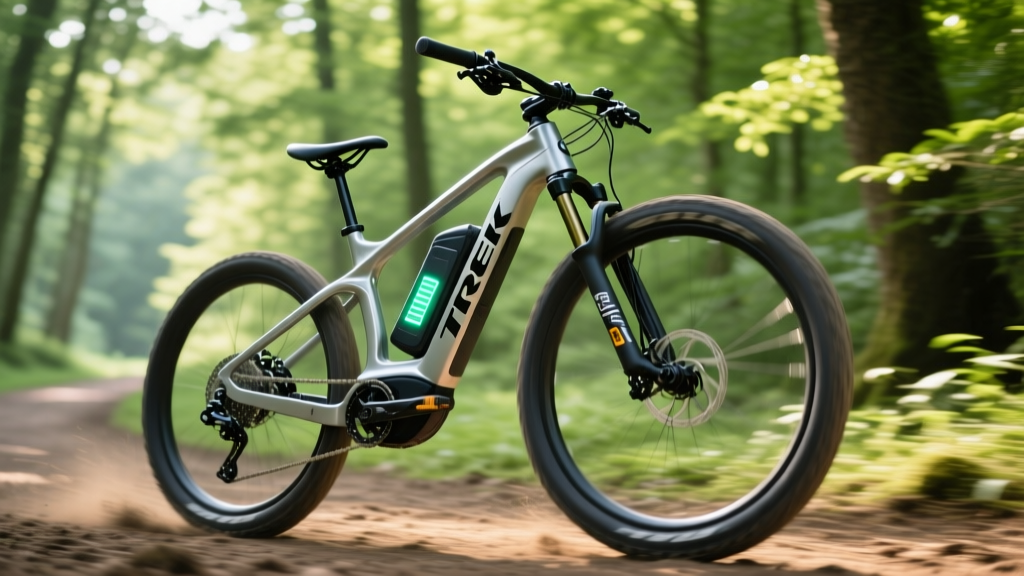
The Trek Marlin+ 6 is a Class 1 electric mountain bike (eMTB) with a mid-drive Bosch motor, typically a 500 Wh battery, and pedal assist up to 20 mph. It is not an electric vehicle in the automotive sense — it does not qualify for the federal §30D EV tax credit, has no EPA range rating, and requires no driver's license, registration, or insurance in most U.S. jurisdictions. If you're researching it as a car-replacement or EV-companion tool, the real question is whether its ~40-60 mile real-world range and ~$3,000-$4,000 price point fit your commuting or recreation pattern. For detailed eMTB reviews, consult dedicated cycling publications; below, we break down the ownership economics the way we would for any battery-electric platform.
Why an EV Buyer Might Be Searching for the Trek Marlin+ 6
A meaningful share of e-bike buyers are current or prospective EV owners building a multi-modal transportation stack: an EV for highway commuting and road trips, an eMTB like the Marlin+ 6 for last-mile errands, trail rides, and fair-weather commuting. The purchase decision is rarely "bike or car" — it's "does adding an e-bike reduce my EV charging frequency, insurance mileage, and fuel spend enough to justify the upfront cost?"
That framing requires concrete numbers, not marketing. Below we apply the same cost-and-capability analysis we'd use for a plug-in hybrid vs. BEV decision.
Spec Snapshot: What the Marlin+ 6 Actually Is (and Isn't)
| Attribute | Trek Marlin+ 6 (typical eMTB class) | Battery EV (e.g., 2026 compact SUV) |
|---|---|---|
| Energy storage | ~500 Wh lithium-ion | ~65-85 kWh usable (NMC or LFP) |
| Motor | Mid-drive, ~250W nominal / 85 Nm torque | 150-350 kW electric motor |
| Top assisted speed | 20 mph (Class 1, pedal-assist only) | 100-130 mph |
| Real-world range | ~40-60 miles (varies with assist level, terrain, rider weight) | ~230-330 miles EPA (real-world highway ~200-280) |
| Charging time (full) | ~4-5 hours on 120V wall outlet | ~8-12 hours Level 2 home; ~20-30 min 10-80% DC fast |
| Federal tax credit | Not eligible for §30D; may qualify for local e-bike rebates | Up to $7,500 §30D (income, MSRP, sourcing rules apply) |
| License / registration | Not required in most states (check local laws) | Required |
| Insurance (typical) | Optional; homeowner's/renter's rider ~$100-$200/yr | $1,200-$2,200/yr average |
Source: Trek Bicycles spec sheets and fueleconomy.gov for EV baselines. Confirm exact 2026 model-year specs with a Trek dealer before purchase.
Cost Breakdown: eMTB vs. EV vs. Gas Car for Short Trips
The Marlin+ 6 makes economic sense only when it actually displaces car trips. Below is a 5-year ownership comparison assuming 3,000 miles/year of short urban trips (under 15 miles each) shifted from a primary vehicle to the e-bike.
| Cost Category (5 years) | Trek Marlin+ 6 eMTB | Battery EV (compact SUV) | Gas Car (30 MPG combined) |
|---|---|---|---|
| Purchase price | $3,500-$4,000 | $38,000-$48,000 (before credit) | $28,000-$35,000 |
| Energy cost (15,000 mi total) | ~$150-$250 (electricity) | ~$1,800-$2,400 (home + public charging) | ~$5,500-$7,000 (gasoline) |
| Maintenance | ~$600-$1,000 (tires, chain, brake pads, tune-ups) | ~$1,500-$2,200 (tires, cabin filter, fluid top-offs) | ~$3,000-$4,500 (oil, filters, belts, brakes) |
| Insurance | ~$500-$1,000 (optional rider) | ~$6,000-$11,000 | ~$5,500-$9,500 |
| Battery replacement reserve | ~$600-$900 (after 3-5 years / 500-800 cycles) | Covered by 8-yr/100k-mi warranty typically | N/A |
| Total 5-year cost | ~$5,350-$7,150 | ~$47,300-$62,600 | ~$42,000-$56,000 |
Assumptions: $0.15/kWh home electricity, $3.50/gal gasoline, EV at 3.5 mi/kWh, 30 MPG gas car. E-bike displaces 3,000 car-miles/year; the EV and gas columns show the cost of those same miles if driven by car instead. IRS §30D credit not applied — confirm eligibility at irs.gov.
Real-World Ownership Considerations
The same variables that affect EV ownership apply to an eMTB, just at different magnitudes:
- Charging access: The Marlin+ 6 charges on a standard 120V household outlet — no Level 2 install required. If you live in an apartment without secure bike storage and an outlet, charging logistics become a real friction point, much like public-charging-only EV ownership.
- Climate and range loss: Lithium-ion e-bike batteries lose 20-35% of rated range below 40°F, mirroring the cold-weather degradation we see in EVs. Riders in northern climates should plan for ~30-mile real-world winter range vs. ~50-60 miles in summer.
- Storage and security: A $3,500+ eMTB needs indoor or locked storage. Theft rates for e-bikes are high in urban areas, and homeowner's/renter's insurance riders typically cap at $3,000-$5,000 per item.
- Battery lifecycle: Expect 500-800 full charge cycles before the battery drops below 80% state of health (SoH). At 3,000 miles/year, that's roughly 4-6 years before a $600-$900 replacement — analogous to EV battery degradation, just on a shorter timeline due to smaller pack size and less sophisticated thermal management.
- Trail access: Class 1 eMTBs are permitted on many (but not all) mountain bike trails. Always check local land-manager rules — some federal and state lands still restrict motorized assist on singletrack.
Common Misconceptions
| Myth | Fact |
|---|---|
| "It qualifies for the $7,500 federal EV tax credit." | No. §30D applies to four-wheeled motor vehicles with at least four wheels and a GVWR under 14,000 lb. E-bikes are excluded. Some states and utilities offer separate e-bike rebates ($300-$1,500 typical). |
| "The range is 100 miles." | Manufacturer "up to" claims assume minimum assist, flat terrain, light rider. Real-world mixed-assist range for a 500 Wh pack is typically 40-60 miles. This parallels EV EPA-vs-real-world discrepancies. |
| "I don't need insurance." | Legally true in most states, but a $3,500+ bike stolen from your garage or damaged in a crash is a real financial loss. An insurance rider is usually $100-$200/year. |
| "It replaces my car." | It can replace some car trips — fair-weather, short-distance, low-cargo. It does not replace highway commuting, family transport, or inclement-weather travel for most households. |
Decision Framework: Does the Marlin+ 6 Fit Your Electrified Setup?
Choose the Trek Marlin+ 6 (or a comparable Class 1 eMTB) if:
- You already own or plan to buy an EV and want to offload short urban/suburban trips to reduce charging frequency and mileage-based insurance costs.
- You have secure indoor storage with access to a 120V outlet for overnight charging.
- Your typical displaced trip is under 15 miles one-way, on bike-friendly routes.
- You want off-road trail capability (the "+" in Marlin+ signals eMTB intent, not commuter optimization).
- You live in a state or utility district offering an e-bike rebate that brings effective cost below $3,000.
Skip the Marlin+ 6 and put the budget toward EV charging infrastructure or a PHEV if:
- You lack secure bike storage — theft risk and charging logistics make ownership frustrating.
- Your primary goal is commuting, not trail riding — a dedicated commuter e-bike (with fenders, rack, lights) offers better utility per dollar.
- You're in a cold climate and can't commit to winterizing the battery — you'll get 4-5 months of usable range per year.
- The $3,500-$4,000 budget would more meaningfully go toward a Level 2 home charger installation (~$800-$2,000) that unlocks faster, cheaper EV charging daily.
Where to Go for Proper eMTB Reviews
autoedgeview.com covers electric and hybrid automobiles — we don't test e-bikes on trails, evaluate suspension kinematics, or compare Bosch vs. Shimano drive units. For authoritative Trek Marlin+ 6 reviews, consult:
- Trek's official spec page for current-year model details, sizing, and dealer locator.
- Dedicated cycling publications (BikeRadar, Pinkbike, Singletracks) for ride-quality assessments, motor-performance tests, and head-to-head eMTB comparisons.
- Local Trek dealers for test rides — eMTB fit and motor feel are personal and can't be evaluated from a spec sheet.
Frequently Asked Questions
Does the Trek Marlin+ 6 qualify for any federal tax incentive?
No. The IRS §30D Clean Vehicle Credit applies only to qualifying four-wheeled plug-in vehicles. E-bikes are excluded at the federal level. Some states (California, Colorado, Vermont, and others) and many electric utilities offer separate e-bike rebates — check your state energy office and utility provider for current programs.
How does e-bike charging compare to EV charging?
An e-bike like the Marlin+ 6 charges from a standard 120V wall outlet using a proprietary charger, typically in 4-5 hours from empty. There is no Level 2 or DC fast charging infrastructure for e-bikes. Energy cost is trivial — a full 500 Wh charge costs roughly $0.08 at $0.15/kWh, compared to $10-$15 for a full EV home charge.
How does this compare to a gas car or hybrid for short trips?
For trips under 15 miles in fair weather, an eMTB costs roughly $0.01-$0.02 per mile in electricity vs. $0.12-$0.18 per mile for a gas car and $0.04-$0.06 per mile for an EV. Maintenance per mile is also lower on the e-bike, though tire and drivetrain wear on an eMTB used off-road is higher than on a commuter e-bike.
What should a first-time EV buyer know before adding an e-bike?
Prioritize your EV home charging setup first — a Level 2 installation ($800-$2,000 depending on panel capacity and run length) delivers daily value. The e-bike is a complementary purchase that works best once your primary EV charging routine is established and you have identified specific short trips the bike can reliably replace.
How long will the e-bike battery last?
Expect 500-800 full charge cycles before the battery degrades below 80% of original capacity. At typical recreational use (3,000 miles/year), that translates to roughly 4-6 years before a replacement is needed at $600-$900. Store the battery at 40-60% state of charge during off-seasons to maximize lifespan — the same principle applies to EV battery storage.