The Short Answer on the Toyota Yaris Electric Car
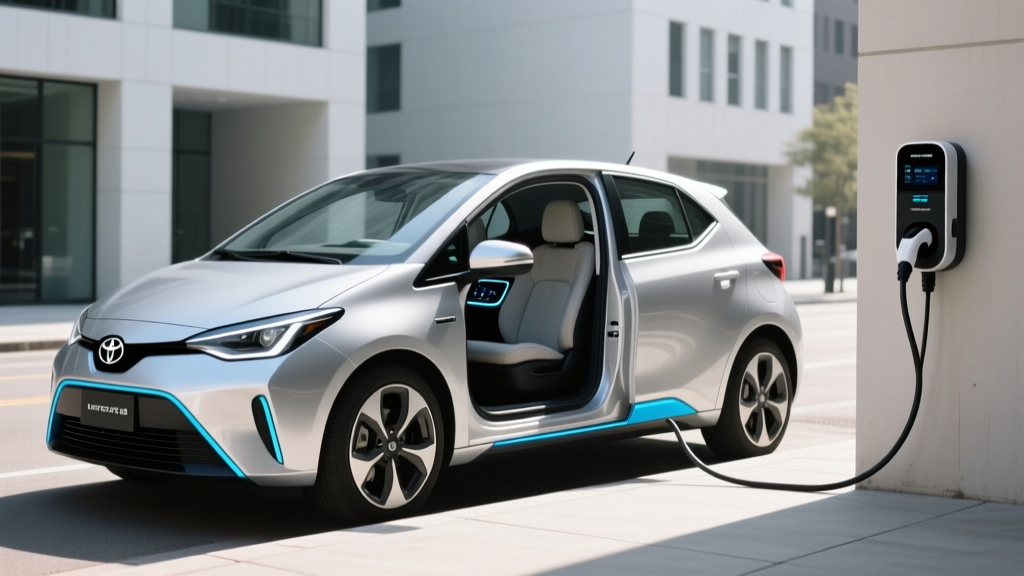
As of 2026, Toyota does not sell a fully electric Toyota Yaris in the United States. The Yaris was discontinued in the U.S. market after the 2020 model year, and Toyota has not announced a battery-electric Yaris for any global market. If you are searching for a "Toyota Yaris electric car," you are likely encountering one of three things: the conventional hybrid Yaris sold in Europe and Japan, the upcoming Toyota urban EV concepts, or misinformation. For U.S. buyers seeking a compact, efficient Toyota, the closest electrified options are the Toyota Prius (hybrid) and the Toyota bZ4X (all-electric crossover). This guide breaks down what actually exists, what alternatives make sense, and the real costs involved.
What the Toyota Yaris Electric Car Rumors Get Wrong
The Toyota Yaris has been a popular subcompact in global markets for decades, and the current-generation Yaris sold in Europe and Japan uses a highly efficient hybrid powertrain — not a fully electric one. That hybrid system pairs a 1.5-liter three-cylinder engine with an electric motor and a small lithium-ion battery, delivering approximately 68 mpg (WLTP combined). However, this is a conventional hybrid (HEV), meaning it cannot be plugged in and has no meaningful electric-only range.
Toyota's battery-electric vehicle (BEV) strategy has focused on larger vehicles. The Toyota bZ4X is the brand's current all-electric offering in the U.S. — a compact crossover with an EPA-estimated range of up to 252 miles and a starting MSRP around $37,070 for the 2025 model year (2026 pricing expected to be similar). Toyota has announced plans to expand its EV lineup, including smaller urban EVs, but no production-ready electric Yaris has been confirmed for any market.
Common Misconceptions Addressed
| Myth | Fact |
|---|---|
| "Toyota sells an electric Yaris in the U.S." | The Yaris was discontinued in the U.S. after 2020. No electric version exists in any market. |
| "The European Yaris Hybrid is a plug-in EV." | It is a conventional hybrid (HEV) — no plug, no electric-only driving beyond low-speed creeping. |
| "Toyota is anti-EV, so an electric Yaris will never come." | Toyota has committed to 30 BEV models globally by 2030 and is investing in solid-state batteries, but a Yaris-sized EV is not yet announced. |
| "I can import an electric Yaris from Japan." | Japan's Yaris is hybrid-only, and importing a non-U.S.-spec vehicle involves significant cost, EPA/DOT compliance hurdles, and no warranty support. |
Best Alternatives: What to Buy Instead of a Toyota Yaris EV
If you want a small, efficient, electrified vehicle in the Toyota ecosystem — or a true subcompact EV from another brand — here are the realistic options for 2026.
Within Toyota's Lineup
- Toyota Prius (HEV): EPA-estimated 57 mpg combined, starting MSRP ~$28,350. No plug required, proven reliability, excellent efficiency for city and highway driving.
- Toyota Prius Prime (PHEV): EPA-estimated 44 miles of electric-only range, then 48 mpg combined as a hybrid. Starting MSRP ~$33,445. Eligible for up to $3,750 in federal tax credits under current IRS §30D rules (income and sourcing restrictions apply).
- Toyota bZ4X (BEV): EPA-estimated 236–252 miles of range depending on trim and drivetrain, 71.4 kWh battery (NMC chemistry), up to 150 kW DC fast charging (10–80% in approximately 30 minutes). Starting MSRP ~$37,070. This is Toyota's only all-electric vehicle currently sold in the U.S.
True Subcompact EVs From Other Brands
- Chevrolet Bolt EV / Bolt EUV: If still available in 2026 inventory or as the next-gen model, the Bolt offers ~259 miles EPA range at an MSRP historically under $28,000 — one of the most affordable EVs ever sold in the U.S.
- Nissan LEAF: EPA-estimated 149–212 miles depending on battery option, starting under $30,000. CHAdeMO connector limits DC fast-charging network access as the industry shifts to NACS.
- Hyundai Kona Electric: EPA-estimated 261 miles, 64.8 kWh battery, NACS/CCS compatibility depending on model year, starting MSRP ~$34,000.
Cost Comparison: Hybrid vs. EV vs. What a Yaris Gas Car Would Cost
To understand the economics, let's compare what you'd actually spend over five years across three realistic scenarios: a Prius hybrid, a bZ4X all-electric, and a hypothetical gas-powered subcompact (using a 35 mpg combined baseline similar to what a Yaris gas model achieved).
| Cost Factor | Prius (HEV) | bZ4X (BEV) | Gas Subcompact (35 mpg) |
|---|---|---|---|
| Base MSRP | $28,350 | $37,070 | $22,000 (est.) |
| Federal Tax Credit | $0 (HEV ineligible) | Up to $7,500* | $0 |
| Effective Purchase Price | $28,350 | ~$29,570 | $22,000 |
| Fuel/Energy (5 yr, 60k mi) | ~$5,260 (gas) | ~$3,600 (electric)** | ~$9,430 (gas) |
| Maintenance (5 yr) | ~$2,500 | ~$1,200 | ~$3,800 |
| Insurance (5 yr avg) | ~$7,500 | ~$9,000 | ~$7,000 |
| 5-Year Total Cost | ~$43,610 | ~$43,370 | ~$42,230 |
* Federal §30D credit eligibility depends on buyer income caps ($150k single / $300k joint), MSRP caps ($55k for cars), battery sourcing requirements, and point-of-sale transfer rules. Verify current-year eligibility at irs.gov.
** Electric cost assumes $0.15/kWh national average and 3.5 miles/kWh efficiency. Actual costs vary significantly by utility rate and charging mix (home vs. public DC fast charging at $0.35–$0.50/kWh).
The takeaway: the bZ4X's higher sticker price is largely offset by the federal tax credit and dramatically lower fuel and maintenance costs over five years. The Prius hybrid lands in a nearly identical total-cost position without needing any charging infrastructure. A gas subcompact remains cheapest upfront but costs more to fuel and maintain long-term.
Real-World Ownership Considerations Before You Buy Any EV
If you're leaning toward an all-electric vehicle like the bZ4X or a competitor, these practical factors determine whether EV ownership works for you — regardless of whether a Toyota Yaris electric car existed.
Home Charging Access Is the Deciding Factor
EV ownership is dramatically more convenient and affordable when you can charge at home. A Level 2 home charger (240V, typically 7–11 kW) adds roughly 25–40 miles of range per hour of charging, meaning an overnight session fully replenishes most EVs. Installation costs range from $500 (simple outlet near the panel) to $2,500+ (panel upgrade, long conduit runs). If you live in an apartment or lack off-street parking, public charging becomes your primary option — and public DC fast charging at $0.35–$0.50/kWh can cost as much per mile as gasoline.
Cold Weather Reduces Range 20–35%
EPA range estimates assume moderate temperatures. In sustained below-freezing conditions, expect a bZ4X rated at 252 miles to deliver approximately 165–200 miles of real range. This is due to battery chemistry limitations and cabin heating energy demands. Vehicles with a heat pump (standard on many newer EVs) mitigate this loss somewhat but do not eliminate it.
Charging Speed Is About the Curve, Not the Peak
The bZ4X peaks at approximately 150 kW on a DC fast charger, but this peak is sustained only briefly at low state-of-charge (SoC). The charging curve tapers significantly above 80%, meaning a 10–80% session takes roughly 30 minutes, while 10–100% can take 50+ minutes. For road trips, plan stops around the 10–80% window for the best time efficiency.
The Federal Tax Credit Is Not Guaranteed
Under current §30D rules, the full $7,500 credit requires meeting critical-mineral and battery-component sourcing thresholds, which shift annually. Additionally, buyer income caps, MSRP limits ($55,000 for sedans, $80,000 for SUVs/trucks), and the option for point-of-sale transfer all affect what you actually receive. Always verify eligibility for the specific model year and trim you're purchasing.
Decision Framework: Which Electrified Toyota (or Competitor) Fits You?
If-Then Buying Guide
- If you want the lowest upfront cost and no charging hassle: Choose the Toyota Prius (HEV). At ~$28,350 MSRP and 57 mpg combined, it requires no behavior change and delivers outstanding fuel economy. Ideal if you lack home charging or drive in extreme cold.
- If you have home charging and want to minimize fuel costs: Choose the Toyota bZ4X (BEV). With the potential $7,500 federal credit, effective pricing drops close to the Prius, and your per-mile energy cost drops to roughly $0.04–$0.06 (vs. $0.12–$0.16 for gas).
- If you want electric-only commuting but need range flexibility: Choose the Prius Prime (PHEV). 44 miles of electric range covers most daily commutes, and the hybrid system eliminates range anxiety on longer trips.
- If you specifically want a subcompact EV under $30,000: Look outside Toyota at the Chevrolet Bolt EV (if available) or the Hyundai Kona Electric. Toyota does not currently offer a subcompact BEV.
- If you are waiting for a small Toyota EV: Toyota has signaled a next-generation compact EV platform (potentially related to the "C-HR EV" or similar urban EV concepts), but nothing is confirmed for the U.S. market before 2027 at the earliest. Do not delay a purchase you need now on an unannounced vehicle.
What a First-Time EV Buyer Should Know
If the search for a Toyota Yaris electric car has led you to consider your first EV purchase, here are the essential, non-obvious facts that experienced EV owners wish they'd known upfront:
- kW vs. kWh — learn the difference. kW (kilowatts) measures power — how fast energy flows, like the flow rate of a water hose. kWh (kilowatt-hours) measures energy capacity — how much is stored, like the size of a water tank. A 71.4 kWh battery charged at 150 kW peak does not charge in under 30 minutes because the rate tapers. This distinction is the single most common source of EV confusion.
- EPA range is a best-case estimate, not a guarantee. Highway driving at 75+ mph, cold weather, mountain terrain, and aggressive acceleration all reduce range. Budget a 20–30% buffer below the EPA sticker for realistic trip planning.
- NACS is becoming the standard connector. Tesla's North American Charging Standard (NACS) has been adopted by Ford, GM, Rivian, Hyundai, Toyota, and most major automakers for 2025+ models. If you're buying an EV with a CCS connector, adapters are available, but future-proofing favors NACS-equipped vehicles.
- Battery degradation is real but manageable. Most modern EV batteries lose approximately 5–10% capacity over the first 100,000 miles. Toyota covers the bZ4X battery at 8 years / 100,000 miles with a minimum 70% capacity retention guarantee. Avoid routinely charging to 100% or draining to 0% for daily use — staying between 20–80% SoC extends battery life.
- Insurance costs more for EVs. Expect premiums 15–25% higher than comparable gas vehicles due to higher repair costs and specialized parts. Get quotes before purchasing.
Frequently Asked Questions
Does Toyota make any electric car in 2026?
Yes. Toyota sells the bZ4X, a compact electric crossover with an EPA-estimated 236–252 miles of range, a 71.4 kWh NMC battery, and a starting MSRP around $37,070. Toyota has announced plans for additional EV models, but the bZ4X remains its only U.S.-market BEV as of early 2026.
Why was the Toyota Yaris discontinued in the U.S.?
Toyota discontinued the Yaris in the U.S. after the 2020 model year due to declining sales in the subcompact segment as buyers shifted toward crossovers and SUVs. The Yaris continued in Europe, Japan, and other markets, primarily as a hybrid.
Is the European Toyota Yaris Hybrid a plug-in?
No. The European Yaris Hybrid is a conventional hybrid (HEV) that cannot be plugged in. It uses regenerative braking and a small battery to assist the gasoline engine, achieving approximately 68 mpg (WLTP). It has no meaningful electric-only driving range.
Will Toyota release a small electric car in the U.S.?
Toyota has announced global plans for a diverse EV lineup including compact and subcompact models, potentially using solid-state battery technology in the late 2020s. However, no specific small EV (Yaris-sized or otherwise) has been confirmed for the U.S. market with a firm release date. Any claims about a "2026 Toyota Yaris EV" are not supported by official Toyota announcements.
What is the cheapest Toyota electrified vehicle I can buy?
The Toyota Prius (HEV) is the most affordable electrified Toyota, starting at approximately $28,350. For a plug-in option, the Prius Prime starts around $33,445 and may qualify for up to $3,750 in federal tax credits, bringing its effective price close to $29,700 for eligible buyers.
How much does it cost to charge an EV at home vs. public chargers?
Home charging on a standard utility rate (~$0.15/kWh) costs roughly $0.04–$0.05 per mile for a vehicle averaging 3.5 miles/kWh. Public DC fast charging networks (Electrify America, EVgo, etc.) typically charge $0.35–$0.50/kWh, raising the per-mile cost to $0.10–$0.14 — approaching gasoline costs. Home charging is essential to realizing EV fuel savings.