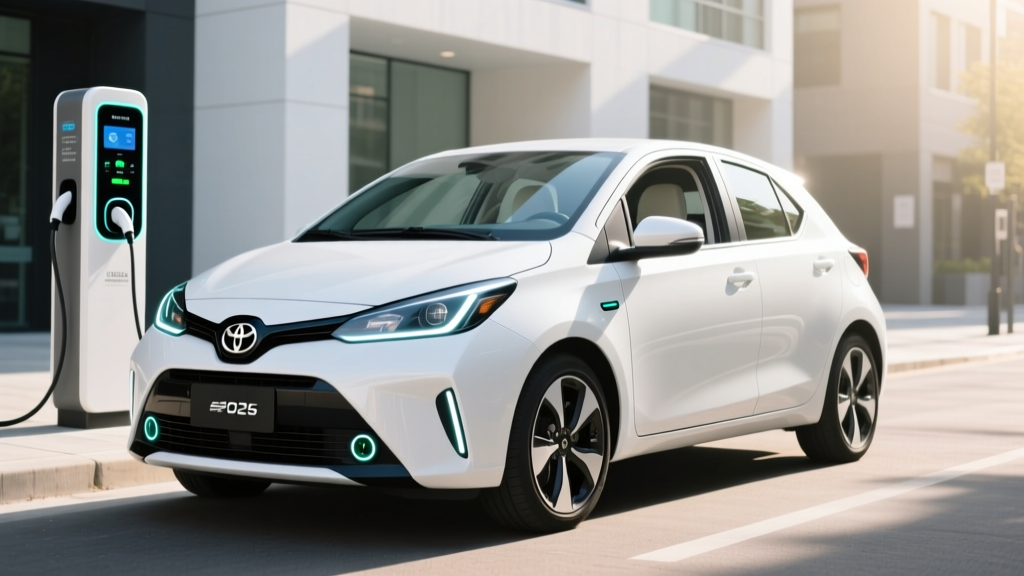
The Quick Answer: Toyota Yaris Electric Status
As of 2026, Toyota does not sell a fully electric Yaris (BEV) in the United States. The Yaris nameplate is currently offered as a hybrid in select global markets (Europe, Japan), but the US-market subcompact segment has shifted. If you're searching for a Toyota Yaris electric, here's what actually exists:
- Toyota Yaris Hybrid (Europe/Japan): A 1.5L HEV (non-plug-in) with no electric-only range. Not sold in the US.
- US Toyota EV alternatives: bZ4X (compact SUV), Prius/Prius Prime (PHEV), Corolla Hybrid.
- Closest US EV competitors: Chevrolet Bolt EV/EUV (used market), Nissan Leaf, Hyundai Kona Electric, Volvo EX30.
If Toyota announces a Yaris-based BEV for North America, specs remain preliminary. Below, we analyze what a Yaris-class EV would cost, how it compares to the hybrids and gas cars you can actually buy, and the real ownership math for subcompact EVs in this price range.
What Toyota Actually Offers in the Subcompact Space
Toyota's global electrification strategy leans heavily on hybrids and plug-in hybrids rather than full battery-electric vehicles in the subcompact segment. The Toyota Yaris Hybrid sold in Europe pairs a 1.5-liter three-cylinder engine with a small electric motor for a combined output around 130 hp, achieving roughly 65-70 MPG on the WLTP cycle. However, this is a conventional hybrid (HEV) — it has no plug, no electric-only range, and cannot be charged externally.
In the US, Toyota discontinued the Yaris after the 2020 model year. American buyers looking for Toyota efficiency in a small package now choose between:
- Toyota Prius (2026): 57 MPG combined, starting around $28,550 MSRP.
- Toyota Prius Prime (PHEV, 2026): ~44 miles electric-only range, 52 MPG combined after battery depletion, starting ~$33,450.
- Toyota Corolla Hybrid (2026): 50 MPG combined, starting ~$24,550.
- Toyota bZ4X (2026): 252-mile EPA range (FWD), 71.4 kWh battery, starting ~$38,465.
None of these are a "Yaris electric," but the Prius Prime and bZ4X represent the closest Toyota options for buyers wanting plug-in electrification.
Cost Comparison: Subcompact EV vs Hybrid vs Gas
Since a US-market Toyota Yaris electric doesn't exist, let's model what buyers in this segment actually face. We'll compare a hypothetical $28,000 subcompact EV (similar to a Hyundai Kona Electric or Chevy Bolt) against the real-world Toyota Corolla Hybrid and a typical gas subcompact.
| Metric | Subcompact EV (Hypothetical) | Toyota Corolla Hybrid | Gas Subcompact (e.g., Honda Fit-class) |
|---|---|---|---|
| Base MSRP | $28,000 | $24,550 | $20,000 |
| Federal Tax Credit (§30D) | Up to $7,500* | $0 (HEV not eligible) | $0 |
| Effective Price After Credit | ~$20,500 | $24,550 | $20,000 |
| EPA Efficiency | ~120 MPGe / 28 kWh/100mi | 50 MPG combined | 33 MPG combined |
| Fuel/Energy Cost (15,000 mi/yr) | ~$540/yr (home charging)** | ~$1,050/yr | ~$1,590/yr |
| Annual Maintenance | ~$300 | ~$450 | ~$550 |
| 5-Year Total Energy + Maint. | ~$4,200 | ~$7,500 | ~$10,700 |
* §30D credit eligibility requires meeting battery sourcing, MSRP caps ($55,000 for cars), and buyer income limits ($150K single / $300K joint). Verify at IRS.gov. Point-of-sale transfer available.
** Based on $0.13/kWh national average. Public DC fast charging costs significantly more (~$0.30-$0.50/kWh).
The math shows that a subcompact EV, when eligible for the full $7,500 credit, can undercut a Corolla Hybrid on effective purchase price and save roughly $3,300 over five years on energy and maintenance. But this hinges on two critical variables: tax credit eligibility and home charging access.
Real-World Ownership: What First-Time EV Buyers Must Know
If a Toyota Yaris electric arrives or if you choose an existing subcompact EV, the ownership experience differs fundamentally from a hybrid or gas car. Here are the non-negotiable realities:
Home Charging Is the Make-or-Break Factor
Over 80% of EV charging happens at home. Without access to a Level 2 (240V) home charger, EV ownership becomes significantly less convenient and more expensive. Level 1 (120V standard outlet) charging adds only 3-5 miles of range per hour — adequate for drivers covering under 30 miles daily, but inadequate for most.
A Level 2 home installation typically costs $800-$2,500 depending on panel capacity and wiring distance. If your home requires a panel upgrade (common in older homes with 100A service), expect an additional $1,500-$3,000. Buyers without garage or driveway access — apartment dwellers, street-parkers — should weigh this seriously before choosing a BEV over a hybrid.
Cold Weather Range Loss Is Real
A subcompact EV with a ~40 kWh battery and 250-mile EPA range will lose 20-35% of that range in freezing temperatures, depending on whether the vehicle uses a heat pump. That means 160-200 miles of real-world winter range. Drivers in northern climates with long commutes should budget for this. Hybrids and PHEVs don't face this issue to the same degree since the gasoline engine provides supplemental heat and range.
Charging Speed: Peak kW vs Sustained Reality
Subcompact EVs typically support 50-100 kW DC fast charging. A vehicle advertising "100 kW peak" will only sustain that rate between roughly 10-40% state of charge. Above 80%, charging slows dramatically to protect the battery — a 10-80% session might take 30-40 minutes at a 50 kW charger, or 20-25 minutes at a 100 kW-capable vehicle on a 150+ kW station. This is called the charge curve taper, and it's the reason real-world road-trip charging always takes longer than marketing suggests.
EV vs Hybrid vs Gas: Which Powertrain Fits You?
The decision between a full EV, a plug-in hybrid, a conventional hybrid, and a gas car isn't about which is "best" in the abstract — it's about your specific driving pattern, housing situation, and budget. Here's a practical framework:
Choose a full EV (BEV) if:
- You have reliable home Level 2 charging access
- Your daily driving is under 150 miles round-trip
- You qualify for the §30D federal tax credit (income and sourcing requirements)
- You want the lowest per-mile energy cost (~$0.04/mile on home charging)
- You're comfortable planning road-trip charging stops
Choose a plug-in hybrid (PHEV) if:
- You want electric-only commuting (25-50 miles) with gas-engine range for longer trips
- You have home charging but frequently drive 200+ miles in a day
- You live in a cold climate where BEV range loss is a concern
- You want to avoid public charging entirely
Choose a conventional hybrid (HEV) if:
- You cannot install a home charger (apartment, street parking)
- You want maximum fuel efficiency with zero behavioral change
- Your budget is under $25,000 and you don't qualify for EV incentives
Choose a gas car if:
- Upfront cost is the primary constraint
- You drive very low annual miles (under 6,000), reducing the fuel-savings payoff
- You frequently tow or haul heavy loads in a segment without electrified options
Common Misconceptions About Subcompact EVs
| Myth | Fact |
|---|---|
| "EV batteries need replacing every 5 years" | Federal law mandates 8-year/100,000-mile battery warranties. Real-world data shows most EV batteries retain 85-90% capacity after 100,000 miles. Full replacement (rare) costs $5,000-$15,000 depending on chemistry and vehicle. |
| "A small EV is unsafe" | Subcompact EVs like the Chevrolet Bolt earned IIHS Top Safety Pick ratings. EV platforms often have a low center of gravity (battery under floor) improving rollover resistance. Check IIHS.org and NHTSA ratings for specific models. |
| "EVs are worse in cold weather" | EVs start instantly in cold (no engine cranking), and cabin heating works immediately via electric heat pump or resistance heater. Range does decrease 20-35%, but preconditioning (warming the battery while plugged in) mitigates charging-speed loss. |
| "The tax credit is $7,500 for everyone" | The §30D credit has buyer income caps ($150K single, $300K joint), MSRP caps ($55K cars, $80K SUVs/trucks), and strict battery mineral/component sourcing rules. Many vehicles qualify for only $3,750 or $0. Always verify at IRS.gov before purchasing. |
| "Public charging is always unreliable" | Reliability varies by network. Tesla Superchargers consistently report 95%+ uptime. Electrify America and EVgo have improved but station-level reliability varies. Apps like PlugShare show real-time user-reported status. |
The Bottom Line for Yaris Electric Shoppers
If you're specifically seeking a Toyota Yaris electric in the US, the honest answer is that it doesn't exist yet, and Toyota has not announced a US-market Yaris BEV for 2026. Toyota's electrification strength in this price segment remains its hybrid lineup — the Corolla Hybrid at $24,550 and 50 MPG, and the Prius Prime PHEV at ~$33,450 with 44 miles of electric-only range.
If a full EV in the subcompact price range is your goal, the current market offers strong alternatives: the Hyundai Kona Electric (~$32,975, 261-mile EPA range), the Volvo EX30 (~$36,950, 265-mile range), and the growing used market for the Chevrolet Bolt EV ($15,000-$22,000, 259-mile range, though the new Bolt is expected for 2026-2027). Each of these delivers real-world efficiency around 3.0-3.5 miles per kWh, Level 2 home charging in 6-8 hours from empty, and DC fast charging from 10-80% in roughly 25-40 minutes depending on the vehicle and charger capacity.
Before committing to any EV, honestly assess your home charging situation, your daily and weekly driving patterns, and your tax credit eligibility. The savings are real — but only when the infrastructure and incentives align with your life.
Frequently Asked Questions
Will Toyota release a Yaris electric in the US?
Toyota has not announced a US-market Yaris BEV as of early 2026. Toyota's global EV strategy includes the bZ series (bZ4X, upcoming bZ compact) and continued hybrid expansion. A subcompact Toyota EV for North America is plausible but unconfirmed. Any announced specs would be preliminary until EPA certification.
What's the cheapest Toyota with a plug I can buy?
The 2026 Toyota Prius Prime (PHEV) starts around $33,450 and offers approximately 44 miles of electric-only range before the hybrid system engages. It qualifies for up to $7,500 in §30D federal tax credit depending on your income and the vehicle's battery sourcing compliance. Verify eligibility at IRS.gov.
How much does it cost to charge a subcompact EV at home?
At the US national average electricity rate of ~$0.13/kWh, fully charging a 40 kWh battery (typical subcompact EV) costs about $5.20. Driving 15,000 miles annually at 3.2 miles/kWh requires roughly 4,688 kWh, or about $609/year. Compare this to a 33 MPG gas car at $3.50/gallon: $1,591/year in fuel.
Do subcompact EVs qualify for the $7,500 tax credit?
Some do, but eligibility depends on the specific vehicle's battery sourcing (critical minerals and component manufacturing requirements), the vehicle's MSRP (must be under $55,000 for passenger cars), and the buyer's modified adjusted gross income (under $150,000 single / $300,000 joint). The credit can be transferred to the dealer at point of sale as a purchase-price reduction. Always confirm current eligibility before buying.
Is a hybrid better than an EV if I live in an apartment?
If you lack home charging access and cannot rely on workplace charging, a hybrid (HEV) or plug-in hybrid (PHEV) is usually the more practical choice. Public DC fast charging costs $0.30-$0.50/kWh, which narrows or eliminates the per-mile cost advantage of an EV. A conventional hybrid like the Corolla Hybrid delivers 50 MPG with zero charging infrastructure needed.