Toyota Urban Cruiser EV: The Quick Answer for Buyers
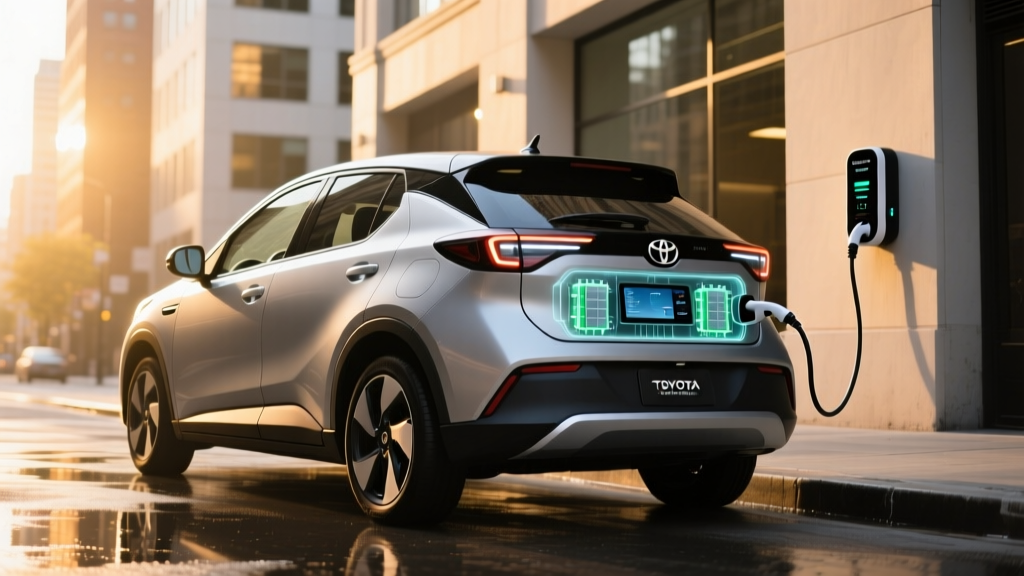
Bottom line: The 2026 Toyota Urban Cruiser EV is Toyota's entry into the subcompact electric crossover segment, targeting city drivers and commuters who want a practical, affordable BEV. Based on Toyota's announced global EV platform strategy, the Urban Cruiser EV is expected to deliver an EPA-estimated range of approximately 220–250 miles, a ~50–60 kWh battery pack, and a starting MSRP in the $28,000–$32,000 range before incentives. It is positioned below the bZ4X in Toyota's EV lineup and aims to compete with vehicles like the Chevrolet Equinox EV, Hyundai Kona Electric, and Nissan Leaf successor.
Note: As of early 2026, Toyota has announced the Urban Cruiser EV for select global markets. U.S. availability, final EPA certifications, and exact pricing remain preliminary. This guide uses announced specs and platform-level data to project what U.S. buyers should expect. Always verify with Toyota's official U.S. site before making purchase decisions.
What Is the Toyota Urban Cruiser EV?
The Urban Cruiser nameplate has existed in Toyota's global lineup as a compact crossover (essentially a rebadged Suzuki Vitara Brezza in some markets). The Toyota Urban Cruiser EV represents the electrified evolution of that concept — a subcompact battery-electric crossover designed for urban and suburban use. Toyota has signaled this model as part of its broader push to offer 30 BEV models globally by 2030, filling the gap below the larger bZ4X.
For U.S. buyers, the Urban Cruiser EV matters because it could be one of the most affordable name-brand electric crossovers on the market, an area where demand is high but options remain limited. Subcompact EVs under $35,000 are a thin segment, and Toyota's reputation for reliability could draw cautious first-time EV buyers.
Projected Specifications (Preliminary)
| Specification | Projected Figure |
|---|---|
| EPA Range (est.) | 220–250 miles |
| Battery Capacity (usable) | ~50–60 kWh (LFP chemistry likely) |
| DC Fast Charge (peak) | ~100–150 kW |
| 10–80% DC Fast Charge | ~28–35 minutes (est.) |
| Level 2 AC Charge Rate | ~7.2–11 kW |
| Motor Output | ~150–200 HP (FWD) |
| 0–60 mph (est.) | ~7.5–9.0 seconds |
| Starting MSRP (est.) | $28,000–$32,000 |
| Battery/Powertrain Warranty | 8 years / 100,000 miles (Toyota standard) |
These figures are projections based on Toyota's announced e-TNGA platform capabilities and competitive positioning. Final EPA certification may differ.
Real-World Range: What to Actually Expect
EPA Sticker: ~220–250 miles (projected)
Real-World Highway (70 mph): ~180–210 miles
Cold Weather (below 30°F): ~155–190 miles (25–30% reduction typical for LFP packs without aggressive preconditioning)
City/Commuter Driving: ~230–260 miles (regen braking helps in stop-and-go)
Toyota has historically been conservative with range estimates, often delivering real-world figures close to EPA ratings in moderate conditions. However, subcompact EVs face physics limitations: smaller battery packs mean less buffer for highway speeds, cold temperatures, and HVAC load.
If Toyota equips the Urban Cruiser EV with LFP (lithium iron phosphate) chemistry — a strong possibility given the price target and Toyota's partnership with BYD on battery supply — buyers should understand the trade-offs. LFP offers excellent cycle life (3,000+ charge cycles with minimal degradation) and lower cost, but it suffers more in cold weather than NMC chemistry and has lower energy density. For a city-focused commuter in mild climates, LFP is a smart choice. For Minnesota winters, it's a consideration.
Charging Speed Reality Check
A projected peak DC fast-charge rate of 100–150 kW means the Urban Cruiser EV won't match the 250+ kW speeds of premium EVs, but for a ~55 kWh battery, it's appropriate. Here's what that looks like in practice:
| Charging Level | Power (kW) | Miles Added per Hour | Typical Use Case |
|---|---|---|---|
| Level 1 (120V household) | ~1.4 kW | ~4–5 mi/hr | Overnight top-up, emergencies |
| Level 2 (240V home) | ~7.2–11 kW | ~22–35 mi/hr | Daily home charging |
| DC Fast Charge | ~100–150 kW peak | ~150+ mi in 30 min (to 80%) | Road trips, quick stops |
The charge curve will taper significantly above 80% State of Charge (SoC). Expect the 80–100% portion to add another 15–20 minutes. For daily driving, charging to 80% at home overnight is the sweet spot for battery longevity.
Urban Cruiser EV vs. Gas and Hybrid: Cost Comparison
The most common question for first-time EV buyers: does going electric actually save money? Let's compare the Urban Cruiser EV against a gas-powered subcompact crossover (like the Toyota C-HR or Honda HR-V) and Toyota's own hybrid options.
| Factor | Urban Cruiser EV (est.) | Gas Subcompact Crossover | Toyota Hybrid Crossover |
|---|---|---|---|
| Base MSRP | $28,000–$32,000 | $24,000–$28,000 | $28,000–$33,000 |
| Fuel/Energy Cost per Mile | $0.04–$0.06 (home charging) | $0.12–$0.16 (gas at $3.50/gal, 30 MPG) | $0.07–$0.09 (50 MPG) |
| Annual Fuel/Energy (12,000 mi) | $480–$720 | $1,440–$1,920 | $840–$1,080 |
| Maintenance (annual avg.) | $300–$400 | $600–$900 | $500–$700 |
| Federal Tax Credit (§30D) | Up to $7,500 (if eligible) | $0 | Up to $7,500 (PHEV only) |
| 5-Year Fuel Savings vs. Gas | $4,800–$6,000 | — | $3,000–$4,200 |
The math: If you qualify for the full federal EV tax credit and charge primarily at home, the Urban Cruiser EV could reach cost parity with a gas crossover within 2–3 years despite a higher sticker price. Without the tax credit, the breakeven extends to 4–5 years. Public DC fast charging at $0.35–$0.50/kWh erodes savings significantly — at those rates, per-mile cost approaches $0.10–$0.14.
§30D Federal Tax Credit Eligibility
- MSRP Cap: Vehicle must be under $80,000 (SUVs/crossovers) — Urban Cruiser EV clears this easily
- Buyer Income Cap: AGI ≤ $150,000 (single) / $300,000 (joint) — check your tax return
- Battery Sourcing: Critical minerals and battery components must meet phased percentages from U.S./FTA partners — this is the hardest requirement and changes annually. Toyota's supply chain (especially with BYD involvement) may affect eligibility
- Point-of-Sale Transfer: You can apply the credit as a dealer discount at purchase, reducing upfront cost immediately
- Verify: Check IRS §30D guidance and fueleconomy.gov for the specific model's eligibility at time of purchase
Critical note: If Toyota sources the Urban Cruiser EV's battery from BYD (China), the vehicle may not qualify for the full §30D credit due to foreign entity of concern (FEOC) restrictions on battery components and critical minerals. This is the single biggest financial variable for U.S. buyers. Toyota has not confirmed U.S.-spec battery sourcing as of this writing.
First-Time EV Buyer: What You Must Know
Buying your first EV involves considerations that don't exist with gas cars. Here's a practical framework:
Home Charging Access
This is the single most important factor. If you can install a Level 2 (240V) home charger, EV ownership is dramatically more convenient and cheaper. A typical Level 2 installation runs $800–$2,500 depending on your electrical panel capacity and distance from the panel to your garage or driveway. If you need a panel upgrade (from 100A to 200A service), add $1,500–$3,000.
If you cannot charge at home (apartment, street parking, no garage), you'll rely on public charging. This costs 2–4x more per mile and adds significant time to your routine. In this scenario, a hybrid (like the Toyota Corolla Cross Hybrid at ~42 MPG combined) may be a more practical choice.
Your Driving Pattern
The Urban Cruiser EV's ~230-mile range covers the vast majority of daily commutes (the average American drives ~37 miles per day, per FHWA data). If your daily round-trip commute is under 80 miles and you can charge at home, you'll rarely think about range. If you regularly drive 200+ miles in a day or take frequent road trips through charging-desert regions, the range limitation becomes real.
Climate Considerations
Cold weather reduces EV range by 20–30% due to battery chemistry and cabin heating demands. In sub-freezing climates, a 240-mile EPA rating becomes ~170–190 miles of real range. The Urban Cruiser EV's projected LFP battery may be more susceptible to cold-weather range loss than NMC-equipped competitors. Toyota's heat pump inclusion (if equipped) would mitigate some of this — confirm on the U.S. spec sheet.
Common EV Misconceptions: Myth vs. Fact
| Myth | Fact |
|---|---|
| "EV batteries need replacing every few years" | Modern EV batteries are warrantied for 8 years/100,000 miles and typically retain 85–90% capacity after 100,000 miles. LFP chemistry (likely in the Urban Cruiser EV) can exceed 3,000 full cycles — that's 500,000+ miles of theoretical life. |
| "EVs are more expensive to own" | Higher purchase price, but lower fuel and maintenance costs. Total cost of ownership often favors EVs within 3–5 years, especially with tax credits. No oil changes, fewer brake replacements (regen braking saves pads), and fewer moving parts. |
| "Charging takes too long" | Home Level 2 charging adds ~25–35 miles per hour — plug in overnight and wake up full. DC fast charging adds 150+ miles in 30 minutes. You spend less total time "fueling" an EV than a gas car when home charging is available. |
| "The grid can't handle EVs" | Most charging happens overnight during off-peak hours. Utilities are upgrading infrastructure, and smart charging/V2G technology helps balance load. This is a real long-term challenge but not a current barrier for individual buyers. |
| "EVs have zero emissions" | Tailpipe emissions are zero, but upstream electricity generation varies by region. In coal-heavy grids, the well-to-wheel advantage shrinks — but EVs still produce fewer lifecycle emissions than gas cars in nearly all U.S. regions per EPA analysis. |
Decision Framework: Is the Urban Cruiser EV Right for You?
Choose the Toyota Urban Cruiser EV if:
- You have home charging access (garage or driveway with 240V outlet)
- Your daily commute is under 80 miles round-trip
- You live in a mild-to-moderate climate (less severe cold-weather range loss)
- You want a brand-name EV under $35,000 and can wait for U.S. availability
- You prioritize low running costs and minimal maintenance
- You can verify §30D tax credit eligibility at time of purchase
Choose a hybrid instead (e.g., Toyota Corolla Cross Hybrid) if:
- You cannot charge at home reliably
- You regularly drive 250+ miles in a day or through rural charging deserts
- You live in extreme cold (sub-zero winters) and need consistent range
- You need a vehicle immediately and the Urban Cruiser EV isn't yet available in the U.S.
- Your budget is under $25,000 and you can't wait for incentives
Consider a competitor EV if:
- You need 300+ miles of range (look at the Hyundai Ioniq 5 or Tesla Model Y)
- You need AWD and higher performance (the Urban Cruiser EV is likely FWD-only in base trims)
- You want proven U.S. charging network access (Tesla's Supercharger network via NACS remains an advantage)
Ownership Costs: 5-Year Projection
| Cost Category | Urban Cruiser EV (est.) | Gas Crossover Baseline |
|---|---|---|
| Purchase Price (after credit) | $23,000–$32,000 | $26,000 |
| Fuel/Energy (5 years, 60,000 mi) | $2,400–$3,600 | $7,200–$9,600 |
| Maintenance (5 years) | $1,500–$2,000 | $3,000–$4,500 |
| Insurance (5 years, avg.) | $6,000–$8,000 | $5,000–$6,500 |
| Home Charger Installation | $1,000–$2,500 (one-time) | $0 |
| Estimated 5-Year Total | $33,900–$48,100 | $41,200–$46,600 |
Insurance tends to run 10–20% higher for EVs due to repair costs and battery replacement risk. Get quotes before purchasing. The 5-year total heavily depends on tax credit eligibility — with the full $7,500 credit, the Urban Cruiser EV is likely the cheaper option. Without it, the gap narrows significantly.
Frequently Asked Questions
Is the Toyota Urban Cruiser EV available in the United States?
As of early 2026, Toyota has announced the Urban Cruiser EV for select global markets but has not confirmed U.S. availability, pricing, or exact specifications. U.S. buyers should monitor Toyota.com for official announcements. If and when it launches stateside, expect a 6–12 month ramp-up period for dealer inventory.
Will the Urban Cruiser EV qualify for the $7,500 federal tax credit?
This depends entirely on battery sourcing and critical mineral requirements under §30D rules. If Toyota uses BYD-sourced LFP cells (a strong possibility given the price target), FEOC restrictions may disqualify it from the full credit. This will not be known until Toyota confirms U.S. battery supply chain details. Always check fueleconomy.gov for the specific VIN's eligibility at purchase time.
How does the Urban Cruiser EV compare to the Toyota bZ4X?
The bZ4X is a larger, more expensive compact SUV EV with ~252 miles of EPA range, a 71.4 kWh battery, and a starting MSRP around $37,000. The Urban Cruiser EV slots below it as a smaller, more affordable subcompact option with somewhat less range but a significantly lower entry price. Think of it as Toyota's answer to the Hyundai Kona Electric vs. Ioniq 5 positioning.
Can I use Tesla Superchargers with the Urban Cruiser EV?
This depends on the connector Toyota equips for the U.S. market. Toyota has announced adoption of NACS (Tesla's connector) for future U.S. EVs starting around 2025. If the Urban Cruiser EV launches with a NACS port, it will have native Supercharger access. If it launches with CCS, you'll need an adapter (Toyota is expected to provide or sell one). Confirm the connector type before purchase.
What's the real cost to charge at home?
At the U.S. average electricity rate of ~$0.16/kWh, fully charging a ~55 kWh battery from 10% to 100% costs approximately $8–$9. That's roughly equivalent to 220 miles of driving for under $10. Compare that to $35–$45 for the same range in a 30 MPG gas car. Your actual cost depends on your utility rate — some areas offer off-peak EV charging rates as low as $0.06–$0.08/kWh.
How long will the battery last?
Toyota warranties its EV batteries for 8 years or 100,000 miles (whichever comes first) against capacity loss below 70%. With LFP chemistry, real-world data from other manufacturers suggests 85–90% capacity retention at 150,000+ miles is achievable. Battery degradation is not a cliff — it's a gradual curve that plateaus. Most EV batteries outlast the vehicle's useful life.