The Short Answer on the Toyota Truck EV
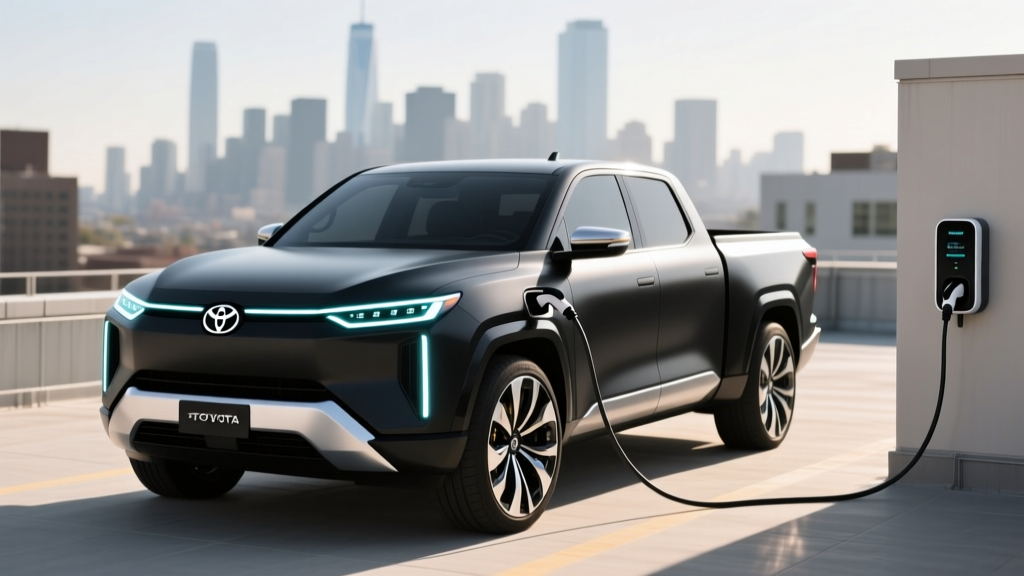
If you're searching for a Toyota truck EV, here's the reality for 2026: Toyota has not yet released a fully electric pickup. What you can buy today is the Toyota Tundra i-FORCE MAX hybrid (HEV, no plug) and the Tacoma i-FORCE MAX hybrid. Toyota has confirmed an all-electric pickup is in development — widely expected to arrive for the 2027 or 2028 model year — but as of early 2026, no official EPA range, battery size, pricing, or on-sale date has been published. If you need a zero-emission truck now, you'll be cross-shopping the Ford F-150 Lightning, Rivian R1T, Chevrolet Silverado EV, or Tesla Cybertruck. This guide breaks down what Toyota has announced, what we can reasonably project based on Toyota's EV platform strategy, and the real ownership math so you can decide whether to wait or buy a competitor today.
What Toyota Has Actually Said About an Electric Truck
Toyota's EV strategy has been cautious and multi-pathway — the company sells hybrids (HEVs), plug-in hybrids (PHEVs), hydrogen fuel-cell vehicles (Mirai), and battery-electric vehicles (bZ4X, bZ4X-derived models). In late 2021, Toyota previewed a lineup of upcoming EVs including a pickup truck concept, and subsequent executive statements have reaffirmed that an electric truck is planned for the North American market.
However, Toyota has repeatedly shifted timelines. The bZ4X — Toyota's first mass-market BEV — launched for the 2023 model year with an EPA range of up to 252 miles and a 71.4 kWh battery. Toyota's next-generation EV platform, which will underpin future models including the expected electric truck, has been teased with promises of improved range (targeting 300+ miles for sedans, potentially more for trucks with larger packs) and faster charging via a new dedicated EV architecture.
What's confirmed as of 2026:
- Toyota plans a battery-electric pickup for North America.
- It will likely use a next-generation battery platform (Toyota has discussed both advanced NMC and bipolar LFP options).
- No official MSRP, EPA range, battery kWh, towing capacity, or release date has been published.
- The truck is expected to compete in the midsize or full-size segment — Toyota has not specified which.
Source: Toyota bZ4X official page (for current EV platform reference); Toyota Motor Corporation global newsroom announcements.
Projected Specs: What We Can Reasonably Estimate
While we wait for official numbers, we can triangulate likely specifications based on the competitive landscape and Toyota's own EV trajectory. Here's a projection table — treat these as analyst estimates, not confirmed specs:
| Attribute | Estimated Range | Notes |
|---|---|---|
| Battery Capacity | 100–140 kWh usable | Competitive with F-150 Lightning (98–131 kWh) and Silverado EV (up to 200 kWh) |
| EPA Range | 250–350 miles | Depends on pack size and cab/bed configuration |
| Peak DC Fast Charge | 150–250 kW | Toyota's current bZ4X peaks ~150 kW; next-gen should improve |
| 10–80% Charge Time | 25–40 minutes (est.) | Depends on charge curve taper; expect slower ramp than Hyundai/Kia E-GMP |
| Level 2 Charging | ~11 kW onboard charger | Standard for trucks in this class |
| Horsepower | 350–550 HP (dual motor AWD) | Toyota typically tunes for durability over peak output |
| 0–60 mph | 5.0–7.0 seconds | Varies by trim and motor configuration |
| Towing Capacity | 7,500–10,000 lbs (est.) | EV trucks typically tow less than gas counterparts at max rating |
| Base MSRP | $55,000–$65,000 (est.) | Aligned with F-150 Lightning and Silverado EV entry trims |
| Battery Warranty | 8 years / 100,000 miles | Federal mandate minimum; Toyota may match or exceed |
Important caveat: These numbers are projections based on segment norms and Toyota's trajectory. Actual specs may differ significantly. Do not make a purchase decision on estimates.
Toyota Truck EV vs. Gas Tundra: The Ownership Cost Reality
The most common question truck buyers ask is whether going electric actually saves money. Let's compare the 2026 Toyota Tundra SR5 4x4 (gas, i-FORCE turbo V6) against a projected Toyota electric truck at a comparable trim level. We'll also include the Tundra i-FORCE MAX hybrid as a middle ground.
| Cost Category | 2026 Tundra SR5 Gas ($42,000 MSRP) | 2026 Tundra i-FORCE MAX Hybrid ($52,000 MSRP) | Toyota Truck EV (Projected $58,000 MSRP) |
|---|---|---|---|
| Purchase Price | $42,000 | $52,000 | $58,000 |
| Federal Tax Credit (§30D) | $0 | $0 (HEV ineligible) | $0–$7,500 (see eligibility below) |
| Net Purchase Cost | $42,000 | $52,000 | $50,500–$58,000 |
| Fuel/Energy (60k mi) | $9,600 (17 MPG, $3.50/gal) | $7,500 (20 MPG, $3.50/gal) | $3,600 (home charging, $0.14/kWh, 2.0 kWh/mi) |
| Maintenance (5 yr) | $3,500 | $3,500 | $1,500 (no oil changes, fewer moving parts) |
| Insurance (5 yr est.) | $9,000 | $9,500 | $11,000 (EVs typically 15–25% higher premiums) |
| Depreciation (5 yr est.) | $18,000 | $20,000 | $22,000–$26,000 (EV depreciation remains elevated) |
| Total 5-Year Cost | $82,100 | $92,500 | $88,600–$99,600 |
Key takeaways:
- The EV saves significantly on fuel and maintenance — roughly $6,000–$8,000 over five years vs. the gas Tundra.
- Higher insurance premiums and steeper depreciation partially offset those savings.
- The gas Tundra still wins on total cost of ownership in most scenarios unless you qualify for the full §30D tax credit and drive high annual mileage.
- The hybrid Tundra is a strong compromise: no charging infrastructure needed, ~15–20% fuel savings, and no EV depreciation risk.
Efficiency & Range at a Glance
| Metric | Gas Tundra 4x4 | Tundra Hybrid | Toyota Truck EV (Projected) |
|---|---|---|---|
| EPA Combined | 17–18 MPG | 20–22 MPG | ~70–85 MPGe (est.) |
| Real-World Highway | ~15–16 MPG | ~18–19 MPG | ~230–300 mi range (highway, 70 mph) |
| Cold-Weather Impact | Minimal | Minimal | 15–30% range loss below freezing |
| Towing Range Impact | ~30% MPG reduction | ~25–30% MPG reduction | ~40–50% range reduction (heavy trailer) |
| Refuel/Recharge Time | 5 minutes | 5 minutes | 25–40 min (10–80% DC fast) |
Fuel economy data: fueleconomy.gov (EPA). Projected EV figures are analyst estimates based on segment averages.
Charging the Toyota Truck EV: What You'll Actually Need
Charging is the single biggest ownership variable for any EV truck. Here's what to plan for:
Home Charging (Where 80%+ of EV Charging Happens)
An electric truck with a 100+ kWh battery demands serious home charging infrastructure. A standard 120V outlet (Level 1) adds roughly 2–4 miles of range per hour — essentially useless for a truck with a large pack. You'll need a Level 2 home charger on a 240V circuit:
- 48-amp Level 2 charger (~11.5 kW): Adds ~30–35 miles of range per hour. A full charge from 10% takes roughly 10–12 hours.
- Installation cost: $800–$2,500 if your electrical panel has capacity. If you need a panel upgrade (100A → 200A), add $1,500–$3,500.
- Circuit requirement: 60-amp breaker for a 48-amp charger.
Critical note: Not all homes can support a 60-amp dedicated circuit without an electrical panel upgrade. Get a licensed electrician to assess your panel before committing to an EV truck purchase. Older homes with 100-amp service may require a costly upgrade.
Public DC Fast Charging
For road trips, you'll rely on DC fast charging networks. A projected 150–250 kW peak charge rate means:
- At a 150 kW charger: ~30–40 minutes for a 10–80% charge, adding ~150–200 miles.
- At a 250+ kW charger: ~25–30 minutes if the truck can accept that rate.
- Charge curve taper is real: Peak kW is only sustained between roughly 10–50% SoC. Above 80%, charging slows dramatically to protect the battery. Plan stops around 10–80%, not 0–100%.
Network compatibility will depend on the connector Toyota adopts. As of 2026, the industry is converging on NACS (Tesla's connector, now SAE J3400) for most new EVs. Toyota has announced NACS adoption for future models, so the electric truck will almost certainly use NACS natively, giving it access to the Tesla Supercharger network — currently the most reliable and widespread DC fast charging network in the U.S.
Federal Tax Credit: Will the Toyota Truck EV Qualify?
The IRS §30D Clean Vehicle Credit offers up to $7,500 for qualifying new EVs — but eligibility is complex and changes frequently. As of 2026, here's what determines whether you'd get the credit on a Toyota electric truck:
| Requirement | Rule (2026) | Impact on Toyota Truck EV |
|---|---|---|
| MSRP Cap | ≤ $80,000 for trucks/vans/SUVs | Likely qualifies — projected base MSRP well under cap |
| Buyer Income Cap | ≤ $150K single / $300K joint (AGI) | Varies by buyer — check your AGI |
| Battery Component Sourcing | Must meet North American assembly thresholds | Uncertain — Toyota's battery supply chain is heavily Asian; this is the biggest wildcard |
| Critical Minerals | Must meet sourcing from U.S. or FTA-partner countries | Depends on Toyota's mineral supply agreements at launch |
| Point-of-Sale Transfer | Buyers can transfer credit to dealer for instant discount | Available if the vehicle qualifies — reduces effective purchase price at the dealership |
| Final Assembly | Must be assembled in North America | Likely — Toyota will almost certainly build the truck at a U.S. plant (possibly Texas or Kentucky) |
The honest truth: Even if the truck meets MSRP and assembly requirements, the battery sourcing and critical minerals rules are the hardest hurdles. Toyota's battery supply chain has historically relied on Japanese and Chinese suppliers, and meeting the §30D sourcing thresholds is not guaranteed. Competitors like Ford (F-150 Lightning) and GM (Silverado EV) have had an easier path due to established North American battery plants (e.g., Ultium Cells, BlueOval SK).
Always verify current eligibility at IRS.gov before purchasing. Tax rules change, and a tax professional should confirm your individual eligibility.
Common Misconceptions About Toyota and Electric Trucks
| Myth | Fact |
|---|---|
| "Toyota already sells an electric truck." | Toyota sells the Tundra i-FORCE MAX hybrid (HEV). It has no plug and no electric-only range. It is not an EV. |
| "The Toyota truck EV is available to order now." | As of early 2026, Toyota has not opened reservations or published official specs. The truck is in development. |
| "EV trucks can't tow." | EV trucks can tow — the F-150 Lightning is rated up to 10,000 lbs. However, towing at max capacity reduces range by 40–50%. Plan for more frequent charging stops when hauling. |
| "Toyota is behind on EVs, so their truck will be bad." | Toyota has been slow to market with BEVs, but their hybrid powertrain expertise is world-class. The electric truck will likely prioritize reliability and durability over bleeding-edge specs — which may suit truck buyers well. |
| "I'll save $10,000 in fuel in the first year." | Realistic annual fuel savings for a truck driven 12,000 miles/year are roughly $1,000–$1,500 depending on local electricity rates and gas prices. Savings compound over years, not months. |
| "The battery will need replacing in 5 years." | Modern EV batteries (NMC and LFP) are designed to retain 70–80% capacity at 100,000–150,000 miles. Federal law mandates an 8-year/100,000-mile battery warranty. Full replacement is rare and usually covered under warranty if degradation exceeds the threshold. |
Decision Framework: Wait for Toyota or Buy Now?
Should You Wait for the Toyota Truck EV or Buy a Competitor Today?
Wait for the Toyota truck EV if:
- You're a loyal Toyota buyer who values long-term reliability and resale value above all else, and you can wait until 2027–2028.
- You don't need a new truck within the next 12 months.
- You want to see how Toyota's next-gen battery platform performs in real-world conditions before committing.
- You're currently driving a truck that has plenty of life left and you're planning ahead.
Buy a competing EV truck now if:
- You need a truck within the next 6–12 months.
- You want to lock in the current §30D tax credit before potential legislative changes reduce or eliminate it.
- You've test-driven the F-150 Lightning, Rivian R1T, or Silverado EV and are satisfied with range, charging, and towing performance.
- You have reliable home charging access (Level 2, 240V) and your daily driving is under 250 miles.
Buy the Tundra i-FORCE MAX hybrid instead if:
- You don't have access to home charging (apartment, street parking, no garage).
- You regularly tow heavy loads over long distances and can't tolerate 40% range reduction or 30-minute charging stops.
- You live in a region with extreme cold (regular sub-zero temperatures) where EV range loss is significant.
- You want Toyota's proven reliability without the EV unknowns — the hybrid powertrain is battle-tested.
What First-Time EV Truck Buyers Must Know
If you've never owned an EV and you're considering an electric truck — whether it's the eventual Toyota or a competitor — here are the practical realities:
- Home charging is non-negotiable for most owners. Public charging alone is expensive, time-consuming, and unreliable in many areas. If you can't install a Level 2 charger at home, a PHEV or hybrid is a better fit.
- Range is not static. An EPA-rated 300-mile truck might deliver 220 miles at 75 mph in 30°F weather with a loaded bed. Always plan with a 20–30% buffer.
- kWh is your fuel tank; kW is your fuel pump. Battery capacity is measured in kWh (energy stored). Charging speed is measured in kW (power delivered). A 130 kWh battery charged at 200 kW will not fill in 40 minutes — the charge curve tapers significantly above 80% SoC.
- Towing changes everything. Expect 40–50% range loss when towing at or near max capacity. For a 300-mile rated truck, that means ~150–180 miles of real towing range. Plan road trips around DC fast charger locations.
- Insurance is higher. EV trucks typically cost 15–25% more to insure than gas equivalents due to higher repair costs, battery replacement risk, and purchase price. Get quotes before buying.
- Regenerative braking changes how you drive. Most EV trucks offer adjustable regen. At maximum, you can drive with one pedal in most city conditions — lifting off the accelerator slows the truck significantly and recovers energy.
Frequently Asked Questions
Does Toyota currently sell an electric pickup truck?
No. As of early 2026, Toyota does not sell a fully electric pickup. The Tundra i-FORCE MAX and Tacoma i-FORCE MAX are conventional hybrids (HEVs) — they use a small electric motor to assist the gas engine but have no plug, no electric-only range, and no external charging capability. Toyota has confirmed an electric truck is in development but has not released official specs, pricing, or an on-sale date.
When will the Toyota electric truck be available?
Toyota has not announced an official release date. Based on Toyota's EV development timeline and industry reporting, the most realistic estimate is the 2027 or 2028 model year, meaning it could arrive in showrooms as early as late 2026 or sometime in 2027. However, Toyota has delayed EV launches before, so treat any date as preliminary until officially confirmed.
How much will the Toyota truck EV cost?
No official pricing exists. Based on competitive positioning against the Ford F-150 Lightning (starting ~$55,000 in 2026) and the Chevrolet Silverado EV (~$55,000–$60,000), a reasonable estimate for a base Toyota electric truck is $55,000–$65,000, with higher trims potentially reaching $75,000–$85,000. The §30D MSRP cap for trucks is $80,000, which Toyota will likely try to stay under for key trims.
Will the Toyota truck EV qualify for the $7,500 federal tax credit?
It's too early to confirm. Eligibility depends on battery component sourcing, critical mineral sourcing, final assembly location, buyer income, and MSRP — all governed by IRS §30D rules. Toyota's battery supply chain has historically been Asia-heavy, which could make meeting North American sourcing thresholds challenging. Check IRS.gov closer to the truck's launch for a definitive answer, and consult a tax professional for your personal situation.
Should I buy an F-150 Lightning now or wait for Toyota?
If you need a truck now, the F-150 Lightning is the most proven electric truck on the market with real-world EPA range up to 320 miles (Extended Range battery), up to 10,000 lbs towing capacity, and a mature charging ecosystem. The Rivian R1T offers more off-road capability and a quad-motor option. The Silverado EV offers the longest available range (up to 440 miles on the top battery option). Waiting for Toyota makes sense only if you have strong brand loyalty and can wait 1–2+ years.
How does an EV truck handle cold weather?
All EVs lose range in cold temperatures — typically 15–30% at temperatures below freezing, with the largest losses occurring below 20°F. This is due to battery chemistry (lithium-ion cells are less efficient when cold) and cabin heating demand. Trucks with a heat pump (which Toyota will likely include) recover some efficiency by scavenging waste heat rather than using resistive heating. Preconditioning the battery while plugged in — warming it before you drive — mitigates some loss.
What's the difference between kW and kWh?
kW (kilowatt) measures power — the rate at which energy is delivered or consumed. Think of it as the speed of your fuel pump. A 200 kW DC fast charger delivers energy faster than a 50 kW charger. kWh (kilowatt-hour) measures energy — the total amount stored in your battery. Think of it as the size of your fuel tank. A 130 kWh battery holds more energy than a 100 kWh battery, giving more range. You'll see kW when discussing charging speed and kWh when discussing battery size and range.