Quick Answer: Should You Wait for Toyota's New Three-Row EV?
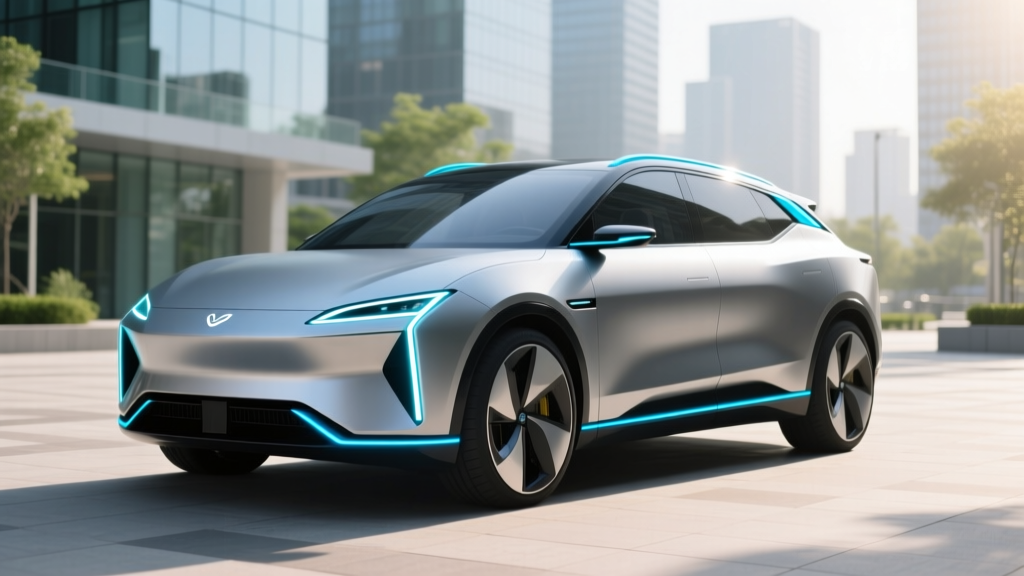
Toyota has officially confirmed a new large, three-row all-electric SUV aimed squarely at families currently shopping the Highlander, Grand Highlander, and Kia Telluride. As of early 2026, the model is announced but not yet on sale. Preliminary details point to a target EPA range near 300 miles, a starting MSRP in the low-to-mid $50,000s, and DC fast-charging capability above 200 kW. If you need a three-row family hauler today, the gas Grand Highlander or the plug-in-hybrid alternatives remain your only Toyota-dealer options. If your purchase timeline extends to late 2026 or 2027 and you have home Level 2 charging access, waiting could pay off — especially if the SUV qualifies for the federal §30D tax credit at point of sale.
What Toyota Has Actually Revealed (and What's Still Speculation)
Toyota's teaser campaign has confirmed the vehicle's existence, its three-row layout, and its battery-electric powertrain. The company has positioned it within its expanding "bZ" (beyond Zero) electrified lineup, signaling a move upmarket from the compact bZ4X into the high-volume family-SUV segment. Here is what we can confirm versus what remains estimated based on Toyota's platform engineering, supplier announcements, and competitive positioning:
| Spec Category | Confirmed by Toyota | Estimated / Preliminary |
|---|---|---|
| Body Style | Three-row SUV | — |
| Powertrain | Battery Electric (BEV) | Dual-motor AWD likely standard |
| Platform | — | Next-gen e-TNGA or dedicated large EV platform |
| Battery Chemistry | — | NMC (nickel manganese cobalt) for energy density |
| Usable Battery Capacity | — | ~90–105 kWh |
| EPA Range Target | "Over 300 miles" (paraphrased from executive statements) | ~290–320 mi EPA est. |
| Peak DC Fast Charge Rate | — | ~220–250 kW peak |
| 10–80% DC Charge Time | — | ~25–30 minutes (est.) |
| Level 2 AC Charging | — | ~11 kW onboard charger |
| 0–60 mph | — | ~5.5–6.5 sec (dual-motor est.) |
| Towing Capacity | — | ~3,500–5,000 lbs (class typical) |
| Starting MSRP | — | ~$52,000–$56,000 (est.) |
| On-Sale Date | — | Late 2026 as a 2027 model year |
Important context: Toyota's first dedicated EV, the bZ4X, launched with conservative range and charging specs relative to Hyundai/Kia's E-GMP rivals. Toyota has publicly acknowledged the need to improve EV competitiveness, and this larger SUV is expected to debut on a significantly upgraded platform with better thermal management and faster charging curves. However, until official EPA certification data is published on fueleconomy.gov, treat every number above as preliminary.
EV vs. Gas vs. Hybrid: How Does a Three-Row Electric Toyota Compare?
The natural cross-shops for this vehicle are the gas Toyota Grand Highlander, the Hyundai Palisade, the Kia EV9 (already on sale), and Toyota's own Highlander Hybrid. Here's how the economics and daily experience stack up using current data for existing rivals and estimates for Toyota's incoming EV:
| Metric | Toyota Grand Highlander Hybrid (AWD) | Kia EV9 (Long Range AWD) | Toyota 3-Row EV (Est.) |
|---|---|---|---|
| Powertrain | 2.4L turbo hybrid | BEV, dual motor | BEV, dual motor (est.) |
| EPA Combined | 35 MPG / ~36 MPG-e equiv. | 89 MPGe | ~85–95 MPGe (est.) |
| EPA Range / Tank | ~460 mi per tank | 279 mi (EPA) | ~300 mi (est.) |
| Starting MSRP | ~$46,000 | ~$56,000 | ~$52,000–$56,000 (est.) |
| Federal Tax Credit (§30D) | None (HEV, not PHEV/BEV) | Up to $7,500 (verify sourcing) | Up to $7,500 (if sourcing rules met) |
| "Fuel" Cost per Mile | ~$0.11/mi (gas at $3.50/gal) | ~$0.04/mi (home L2, $0.14/kWh) | ~$0.04/mi (est., home L2) |
| Annual Fuel/Energy (12k mi) | ~$1,320 | ~$480 | ~$480 (est.) |
| 5-Year Fuel/Energy Total | ~$6,600 | ~$2,400 | ~$2,400 (est.) |
| Maintenance (5-yr est.) | ~$2,800 | ~$1,200 | ~$1,200 (est.) |
The math is clear: a three-row EV saves roughly $4,200 in fuel and $1,600 in maintenance over five years compared to a gas-only equivalent. That's ~$5,800 in operational savings that partially offsets a higher purchase price. If the federal tax credit applies at point of sale (a $7,500 reduction at purchase), the EV can actually cost less upfront than the gas Grand Highlander's higher trims while delivering dramatically lower running costs.
5-Year Total Cost of Ownership Snapshot (12,000 mi/year)
| Cost Category | Gas Grand Highlander Hybrid | Toyota 3-Row EV (Est.) |
|---|---|---|
| Purchase Price (after credit) | ~$46,000 | ~$47,000 (est. after $7,500 credit) |
| Fuel / Energy (5 years) | $6,600 | $2,400 |
| Maintenance (5 years) | $2,800 | $1,200 |
| Insurance (5 years, avg.) | $7,500 | $8,500 (EV premium ~12%) |
| Estimated Depreciation | $18,000 | $20,000 (EV depreciation still higher) |
| 5-Year Total | ~$80,900 | ~$79,100 |
Note: Depreciation and insurance vary significantly by region, trim, and driver profile. EV insurance premiums remain 10–15% higher on average, per industry data. Depreciation for EVs has been steeper than gas vehicles in recent years, though this gap is narrowing as the market matures.
Real-World Ownership: What First-Time EV Buyers Must Consider
Specs and sticker prices only tell half the story. Here are the practical realities that determine whether a large three-row EV will actually work for your household:
Home Charging Access Is the Deciding Factor
For a vehicle with an estimated ~95 kWh battery, a standard 120V Level 1 outlet adds roughly 3–4 miles per hour — meaning a full charge from empty would take well over 24 hours. That's impractical for daily family use. You'll need a Level 2 home charger (240V, typically 32–48 amps / 7.7–11.5 kW) to add 25–35 miles per hour, enabling a full overnight charge in 8–10 hours.
Level 2 installation costs range from $500–$2,500 depending on your electrical panel's capacity. If your home has a 200-amp panel with spare breaker slots, expect the lower end. Homes with older 100-amp panels may need a $1,500–$3,000 panel upgrade before adding a dedicated 50-amp EV circuit. Always get a quote from a licensed electrician before committing to a purchase.
Real-World Range vs. the EPA Sticker
If Toyota hits its ~300-mile EPA target, expect the following in practice:
- City/suburban driving (moderate climate): 280–310 miles — EVs are most efficient at lower speeds with regenerative braking.
- Highway driving at 70–75 mph: 240–270 miles — aerodynamic drag is the primary range killer.
- Cold weather (below 30°F): 200–240 miles — battery chemistry slows and cabin heating draws significant energy, even with a heat pump.
- Towing or heavy cargo loads: 160–200 miles — towing a trailer can reduce range by 35–50%.
For most families driving 30–50 miles per day, even cold-weather range is more than sufficient with overnight home charging. Range becomes a real constraint primarily on road trips exceeding 200 miles one-way, where you'll need to plan DC fast-charging stops.
DC Fast Charging on Road Trips
If the estimated 220–250 kW peak charge rate holds, expect a 10–80% session in approximately 25–30 minutes at a compatible 350 kW station. However, peak kW is not sustained kW. The charging curve tapers significantly above 80% state of charge to protect battery longevity. In practice, you'll add ~180–200 miles of range in those 25 minutes, then need to decide whether to top off (slowly) or continue to the next stop. Toyota's adoption of the NACS (Tesla-style) connector for future models would also grant access to the Supercharger network — a significant reliability advantage over CCS-only stations, though Toyota has not yet confirmed the connector for this specific model.
Federal Tax Credit Eligibility: What the §30D Rules Mean for This SUV
Under current IRS §30D rules for 2026, a new EV may qualify for up to $7,500 in federal tax credits, which can be transferred to the dealer at point of sale as an immediate price reduction. However, eligibility is far from guaranteed. Here's the checklist:
- MSRP cap: SUVs must have a base MSRP of $80,000 or below. Toyota's estimated $52,000–$56,000 starting price should clear this easily.
- Buyer income cap: Modified adjusted gross income must not exceed $300,000 (joint filers), $225,000 (head of household), or $150,000 (individual).
- Battery sourcing requirements: The battery's critical minerals and components must meet escalating domestic/free-trade-partner sourcing thresholds. This is the rule that has disqualified many EVs in 2024–2025. Toyota's supply chain decisions for this specific model will determine eligibility — we won't know until closer to launch.
- Final assembly: Must occur in North America. Toyota's U.S. manufacturing footprint makes this likely but unconfirmed for this model.
- Point-of-sale transfer: You can elect to transfer the credit to the dealer at purchase, reducing your out-of-pocket cost immediately rather than waiting to claim it on your tax return.
For the latest rules, always verify at IRS.gov Clean Vehicle Credits. Tax credit eligibility can change with model-year battery sourcing updates, and consulting a tax professional is recommended for your specific situation.
Common Misconceptions About Large Electric SUVs
| Myth | Fact |
|---|---|
| "EV batteries need replacing every few years and cost $20,000." | Federal law mandates battery warranties of at least 8 years/100,000 miles. Modern NMC and LFP batteries show ~10–15% degradation after 100,000 miles based on fleet data. Most batteries outlast the vehicle. Replacement is rare and typically covered under warranty during the coverage period. |
| "A three-row EV can't tow anything useful." | Large EV SUVs like the Rivian R1S and Kia EV9 tow 5,000–7,700 lbs. However, towing reduces range by 35–50%. If you tow frequently over long distances, a hybrid or gas vehicle may still be more practical. |
| "Public charging is unreliable everywhere." | Reliability varies enormously. Tesla Superchargers consistently report 99%+ uptime. Electrify America and other CCS networks have improved but still trail. NACS adoption is expanding Supercharger access to non-Tesla EVs through adapters and native connectors. |
| "I'll save money no matter what." | Savings depend on your electricity rate, driving pattern, home charging access, and whether you qualify for the tax credit. Apartment dwellers without charging access who rely solely on public DC fast chargers may pay $0.10–$0.15/mile — comparable to or exceeding gas costs. |
| "EVs are worse in winter." | Range drops 20–30% in freezing temperatures — this is real. However, EVs start instantly in cold weather (no cranking), and preconditioning while plugged in warms the battery and cabin using grid power, preserving range. AWD EVs also have excellent traction with instant torque. |
Decision Framework: Should You Wait, Buy Now, or Go Hybrid?
Choose Based on Your Situation
Wait for Toyota's three-row EV if:
- Your purchase timeline is flexible (late 2026–2027)
- You have or can install Level 2 home charging
- Your daily driving is under 80 miles round-trip
- You want a Toyota dealer experience with a BEV
- You qualify for the §30D tax credit based on income
Buy the Kia EV9 now if:
- You need a three-row EV today
- You want proven EPA data (279 mi range, 89 MPGe)
- You're comfortable with Kia's dealer and service network
- The EV9's available $7,500 credit applies to your purchase
Buy the Grand Highlander Hybrid if:
- You lack home charging access and can't install it
- You regularly drive 300+ miles in a single trip
- You tow frequently (4,000+ lbs over distance)
- You live in a region with limited public charging infrastructure
- You want maximum range flexibility without planning charging stops
Consider a plug-in hybrid (PHEV) if:
- You want electric-only daily commuting (30–40 mi) with gas-engine road-trip range
- You have Level 2 charging but also take frequent long trips
- You're not ready to commit to full electric but want to reduce fuel consumption
What to Watch Before This SUV Goes on Sale
Between now and launch, Toyota will release critical details that should shape your decision:
- Official EPA range and MPGe ratings — expected mid-to-late 2026, published on fueleconomy.gov
- Battery chemistry confirmation — NMC (higher energy density, more degradation concern) vs. LFP (heavier but longer cycle life and can be charged to 100% daily without concern)
- Connector type — NACS (native Supercharger access) vs. CCS1 (requires adapter for Superchargers)
- §30D tax credit eligibility — determined by battery sourcing and final assembly location
- ADAS suite details — whether Toyota Safety Sense 4.0 includes hands-free highway driving (Level 2 driver-assist, not self-driving) and how it compares to GM Super Cruise or Ford BlueCruise
- Trim-level pricing — base, mid, and high trim MSRPs, which affect whether the $80,000 SUV cap is met
When will Toyota's three-row electric SUV be available to buy?
Toyota has not announced an exact on-sale date. Based on the teaser timeline and typical auto industry lead times, the most likely window is late 2026 as a 2027 model year. Reservations may open several months before deliveries begin.
Will it be bigger than the Grand Highlander?
Toyota has described it as a "large" three-row SUV, suggesting it will be at least comparable to the Grand Highlander's dimensions (~201 inches long, ~107-inch wheelbase). Third-row usability and cargo volume behind the third row will be critical metrics for family buyers — we'll know more when interior specifications are released.
How much will home charging cost to install?
For a Level 2 (240V) home charger installation, expect $500–$2,500 for the charger unit and basic electrical work if your panel has capacity. If you need a panel upgrade from 100A to 200A, add $1,500–$3,000. The federal government offers a tax credit of up to $1,000 for home charging equipment installation (residential clean vehicle charger credit), subject to income and location restrictions.
Will this SUV qualify for the $7,500 federal tax credit?
It depends on battery component and critical-mineral sourcing, final assembly location, your income, and the MSRP cap — all per current IRS §30D rules. Toyota's U.S. manufacturing presence makes domestic assembly likely, but battery sourcing is the wildcard. Eligibility will be confirmed closer to launch.
Is an electric SUV practical for a family that takes road trips?
For road trips under 250 miles one-way, yes — one DC fast-charge stop (25–30 minutes for 10–80%) is manageable. For longer trips (500+ miles), expect 2–3 charging stops adding 60–90 minutes to your journey. If your family takes frequent 600+ mile road trips and you're in a region with sparse charging infrastructure, a hybrid remains more practical for now.
What about battery longevity and replacement cost?
Toyota is expected to offer a battery warranty of at least 8 years/100,000 miles (federally mandated minimum), likely extending to 10 years/150,000 miles based on Toyota's current hybrid battery warranty precedent. Real-world degradation data from modern NMC packs shows ~10–15% capacity loss at 100,000 miles. Full battery replacement, if ever needed out of warranty, typically costs $8,000–$15,000 for a pack of this size — but this is uncommon within the vehicle's typical ownership lifecycle.