The Short Answer on the RAV4 EV
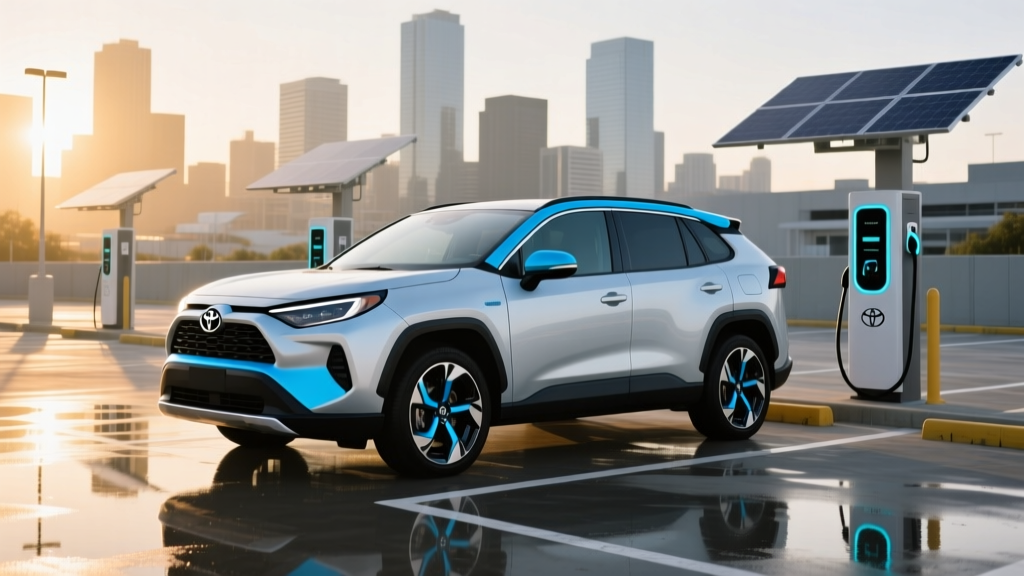
Toyota discontinued the RAV4 EV after the 2014 model year. There is no new Toyota RAV4 EV for 2026. If you're searching for a "RAV4 EV" today, you're likely looking at a used 2012–2014 model (EPA range: only 103 miles) or confusing it with the RAV4 Prime, which is a plug-in hybrid (PHEV) with 42 miles of electric-only range. For a true battery-electric SUV in the RAV4's size class, the closest 2026 alternatives are the Hyundai Ioniq 5, Tesla Model Y, and Ford Mustang Mach-E — all offering 270+ miles of EPA range, DC fast charging above 150 kW, and potential §30D tax credit eligibility.
What Was the Toyota RAV4 EV?
Toyota produced two generations of the RAV4 EV. The first (1997–2003) used nickel-metal hydride batteries and was leased primarily in California. The second generation (2012–2014) was far more notable: it used a Tesla-supplied battery and powertrain — a 41.8 kWh lithium-ion pack powering a 154-hp electric motor through the front wheels.
Here's what those 2012–2014 specs look like against a modern 2026 EV:
| Spec | 2014 RAV4 EV | 2026 Hyundai Ioniq 5 (Std Range) | 2026 Tesla Model Y (Long Range) | 2026 Ford Mustang Mach-E (Ext Range) |
|---|---|---|---|---|
| EPA Range | 103 mi | 290 mi | 320 mi | 320 mi |
| Battery (usable) | 41.8 kWh | 63.0 kWh | 78.1 kWh | 91.0 kWh |
| Peak DC Charge Rate | 50 kW (CHAdeMO) | 185 kW (CCS/NACS) | 250 kW (NACS) | 150 kW (CCS/NACS) |
| 10–80% DC Fast Charge | ~60 min (est.) | ~24 min | ~25 min | ~35 min |
| Horsepower | 154 hp | 170 hp | 384 hp (dual motor) | 290 hp (RWD) |
| 0–60 mph | ~8.6 sec | ~7.4 sec | ~4.8 sec | ~5.8 sec |
| Original MSRP | $49,800 | $42,600 | $46,630 | $43,995 |
The gap is enormous. A 2026 Ioniq 5 starts below what the 2014 RAV4 EV cost, delivers nearly three times the range, charges more than three times faster, and qualifies for up to $7,500 in federal tax credits under IRS §30D rules — depending on your income, the vehicle's MSRP, and battery-sourcing requirements.
Why Toyota Killed the RAV4 EV
Several factors converged to end the RAV4 EV program:
- Tesla partnership dissolved. Toyota had invested in Tesla and contracted them to supply the powertrain. As Tesla scaled its own vehicles, the supply arrangement ended.
- Low sales volume. The RAV4 EV was sold only in California and moved fewer than 3,000 units total across three model years.
- Toyota pivoted to hybrids and hydrogen. Rather than pursue battery-electric SUVs, Toyota doubled down on the Prius, RAV4 Hybrid, and later the Mirai fuel-cell vehicle. Toyota's leadership was openly skeptical of BEVs until roughly 2021.
- Regulatory credits fulfilled. The RAV4 EV helped Toyota meet California ZEV mandate requirements at the time. Once those obligations were satisfied through other means, the business case evaporated.
Toyota's first modern, dedicated battery-electric vehicle — the bZ4X — didn't arrive until the 2023 model year, nearly a decade after the RAV4 EV was discontinued. The bZ4X offers 252 miles of EPA range and is a more direct spiritual successor, though it has faced criticism for mediocre DC charging speeds (peaking around 150 kW) relative to competitors.
RAV4 Prime: The Plug-In Hybrid You Can Actually Buy
If you want an electrified RAV4 in 2026, the RAV4 Prime is Toyota's current offering. It's a plug-in hybrid (PHEV), not a battery-electric vehicle. Here's what that means in practice:
| Metric | RAV4 Prime (PHEV) | RAV4 Gas (AWD) | Hyundai Ioniq 5 (BEV) |
|---|---|---|---|
| Powertrain | 2.5L + electric motors | 2.5L 4-cylinder | Battery electric |
| Electric-Only Range | 42 mi (EPA) | 0 mi | 290 mi (EPA) |
| Combined MPG/MPGe | 38 MPG (gas) / 94 MPGe (electric) | 30 MPG combined | 114 MPGe combined |
| Total Range | ~600 mi (gas + electric) | ~440 mi | 290 mi |
| Battery Capacity | 18.1 kWh (usable ~14.5 kWh) | N/A | 63.0 kWh |
| Home Charging (Level 2) | ~2.5 hours (3.3 kW onboard) | N/A | ~6 hours (10.9 kW onboard) |
| Base MSRP | $43,690 | $30,250 | $42,600 |
| Federal Tax Credit (§30D) | Up to $3,750* | None | Up to $7,500* |
*Tax credit amounts depend on income caps, MSRP limits, and battery component/mineral sourcing requirements. Verify current eligibility at IRS.gov before purchasing.
The RAV4 Prime makes sense if you can charge at home (even a standard 120V outlet adds about 8–10 miles overnight) and your daily commute is under 40 miles. You'd drive on electricity most weekdays and use the gas engine only for longer trips. But if you're specifically seeking a zero-tailpipe-emission electric vehicle, the Prime isn't it.
Real Costs: EV vs. Hybrid vs. Gas in the RAV4 Class
Let's model a realistic 5-year ownership scenario. Assumptions: 12,000 miles/year, $0.14/kWh home electricity, $3.50/gallon gas, no public charging for the BEV owner with home access.
| Vehicle | Energy/Fuel Cost | Maintenance (est.) | Total (Energy + Maint.) |
|---|---|---|---|
| RAV4 Gas (30 MPG) | $7,000 | $3,200 | $10,200 |
| RAV4 Prime (70% electric driving) | $2,800 | $2,800 | $5,600 |
| Hyundai Ioniq 5 BEV (home charging) | $2,520 | $1,500 | $4,020 |
Sources: fueleconomy.gov efficiency data, AAA maintenance cost averages. Actual costs vary by electricity rate, gas price, driving mix, and local service pricing.
The BEV saves roughly $6,200 over five years in energy and maintenance versus the gas RAV4. The RAV4 Prime splits the difference. However, the Ioniq 5's higher purchase price (about $12,000 more than a base gas RAV4) means you need the tax credit and several years of driving to break even on total cost of ownership. If you qualify for the full $7,500 point-of-sale credit, the math shifts decisively in the EV's favor within about 3 years.
Common Misconceptions — Fact-Checked
| Myth | Fact |
|---|---|
| "The RAV4 EV is still in production." | Discontinued after 2014. Toyota's current EV is the bZ4X; their electrified RAV4 is the Prime PHEV. |
| "EVs need battery replacement every few years." | Modern NMC and LFP batteries are warrantied for 8 years/100,000 miles at 70%+ capacity retention. Real-world degradation data from sources like fueleconomy.gov and owner surveys show most packs lose 10–15% capacity over 8–10 years — not catastrophic failure. |
| "You can't road-trip an EV." | A 2026 Ioniq 5 or Model Y adds 150–200 miles of range in 15–20 minutes at a DC fast charger. The Tesla Supercharger network and expanding NACS-accessible stations cover all major US highway corridors. The real constraint is in rural charging deserts — a legitimate concern in parts of the Mountain West and Great Plains. |
| "Cold weather kills EV range entirely." | Cold weather does reduce range — typically 20–30% at 20°F with cabin heating. A 290-mile Ioniq 5 might deliver 200–230 miles in deep cold. Preconditioning the battery and using seat/steering wheel heat (more efficient than cabin air) mitigate losses. This is a real limitation, not a dealbreaker for most drivers. |
| "EVs are always cheaper to own." | Not automatically. Higher purchase prices, potentially higher insurance premiums (10–25% more for some models), and public charging costs ($0.30–$0.50/kWh at DC fast chargers) can erode savings. The math works best with home charging and tax-credit eligibility. |
First-Time EV Buyer Essentials
If you're coming from a gas RAV4 and considering your first EV, here's what actually matters:
Home Charging Is the Foundation
Over 80% of EV charging happens at home. A Level 2 home charger (240V, typically 32–48 amps) adds 25–40 miles of range per hour and fully replenishes most EV batteries overnight. Professional installation of a Level 2 charger typically costs $800–$2,500 depending on your electrical panel's capacity and the distance from panel to charger location. If your home has a 200-amp panel with available capacity, expect the lower end. Older homes with 100-amp service may need a panel upgrade ($1,500–$3,500) before adding an EV circuit.
Understand kW vs. kWh
This is the single most common confusion point. kWh (kilowatt-hours) measures battery capacity — how much energy the car stores, like gallons in a gas tank. kW (kilowatts) measures power flow — how fast energy moves, like gallons-per-minute at the pump. A 63 kWh battery charged at 10 kW (Level 2) takes about 6.3 hours from empty. The same battery at 150 kW (DC fast charger) can go from 10–80% in roughly 24 minutes — though charging speed tapers significantly above 80% to protect battery health.
Real-World Range vs. EPA Stickers
EPA range estimates are a useful baseline, but real-world results vary. Expect to see:
- Mild weather, mixed driving: Close to EPA (±5%)
- Sustained highway speeds (75+ mph): 10–15% below EPA
- Cold weather (below 30°F): 20–30% below EPA
- Mountain driving with elevation gain: Higher consumption uphill, some recovery via regen downhill
For a 290-mile EPA-rated Ioniq 5, plan conservatively for about 220 miles of usable range on a cold-weather highway trip — and know where your charging stops are.
Decision Framework: What Should You Actually Buy?
Choose the RAV4 Prime (PHEV) if:
- You can charge at home (even Level 1/120V works for 42 miles of range)
- Your daily commute is under 40 miles round-trip
- You frequently take road trips to areas with sparse charging infrastructure
- You want Toyota's reliability reputation and dealer network
- You're not ready to fully commit to a battery-electric vehicle
Choose a pure EV (Ioniq 5, Model Y, Mach-E) if:
- You have reliable home charging access (Level 2 strongly recommended)
- Your daily driving is under 200 miles (covers 95%+ of American drivers, per FHWA data)
- You qualify for the §30D federal tax credit (income caps: $150K single / $300K joint; vehicle MSRP caps: $55K for SUVs)
- You want the lowest ongoing fuel and maintenance costs
- You're comfortable planning charging stops on road trips
Stick with a gas RAV4 (or wait) if:
- You live in an apartment or street-park with no charging access
- Your budget is strictly under $30,000
- You regularly drive in extreme cold or remote areas far from DC fast chargers
- You plan to keep the vehicle 15+ years and want maximum simplicity
Frequently Asked Questions
Is Toyota making a new RAV4 EV for 2026 or 2027?
As of early 2026, Toyota has not announced a next-generation RAV4 EV. Toyota's current battery-electric SUV is the bZ4X (252 miles EPA range, starting around $43,000). Toyota has announced plans to expand its EV lineup, including a next-generation platform, but no RAV4-badged BEV has been confirmed. The RAV4 and RAV4 Prime are expected to continue with updated hybrid powertrains.
Can I still buy a used RAV4 EV?
Yes, but inventory is extremely limited — only about 3,000 were built for the 2012–2014 model years. Used examples typically sell for $12,000–$18,000 depending on mileage and battery condition. The 103-mile EPA range and CHAdeMO DC charging connector (now largely obsolete in the US outside of legacy stations) make it difficult to recommend except as a low-cost commuter car with guaranteed home charging. The used EV tax credit (§25E) offers up to $4,000 or 30% of the sale price for qualifying used EVs under $25,000.
Does the RAV4 Prime qualify for a tax credit?
The RAV4 Prime may qualify for a partial federal tax credit (up to $3,750) under §30D, depending on current battery-sourcing and critical-mineral requirements, which have tightened significantly since 2023. The RAV4 Prime's MSRP (~$43,690) is below the $80,000 SUV cap, and most buyers will fall under income limits. However, Toyota's battery supply chain sourcing determines whether the credit is available in full, in part, or not at all. Always verify current eligibility at IRS.gov before making a purchase decision.
What's the best electric alternative to the RAV4 in 2026?
For buyers who want a similarly sized crossover with strong value, the Hyundai Ioniq 5 (290 mi range, $42,600 base, 185 kW DC charging) is our top pick. The Tesla Model Y Long Range (320 mi, $46,630, Supercharger network access) is the volume leader. The Ford Mustang Mach-E Extended Range (320 mi, $43,995) offers a more traditional driving feel. All three are compact-to-midsize crossovers in the spirit of what a modern RAV4 EV would be.
How much does home Level 2 charging installation cost?
A typical Level 2 home charger installation (240V, 40-amp circuit, hardwired or NEMA 14-50 outlet) costs $800–$2,500 total, including the charger unit ($300–$700) and electrician labor. Costs rise if your electrical panel needs an upgrade to handle the additional load — a 100-amp to 200-amp panel upgrade runs $1,500–$3,500. Always get a licensed electrician's assessment before committing to a charger purchase. Some utilities offer rebates of $200–$500 for Level 2 installations.