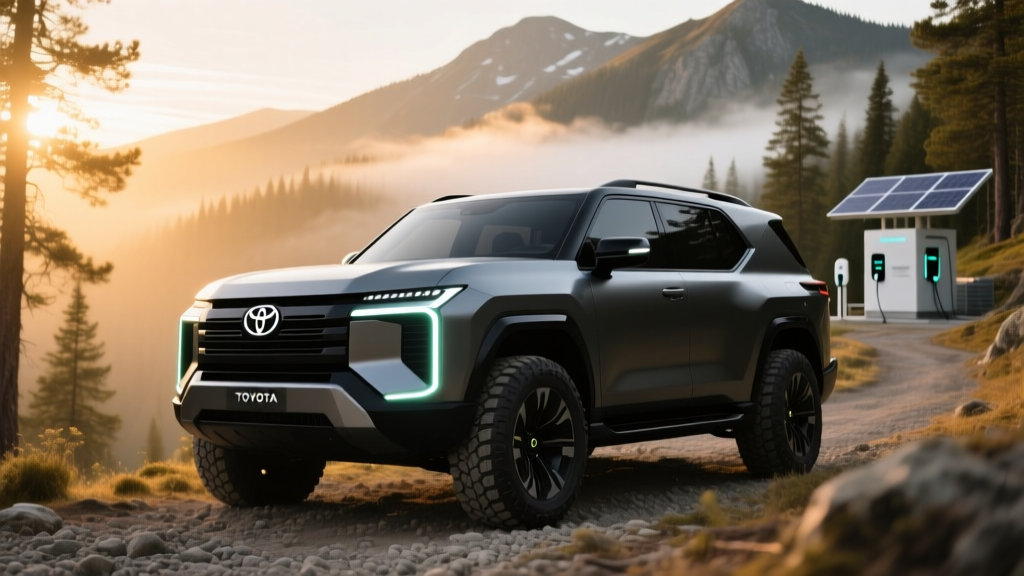
Quick Answer: As of early 2026, Toyota has not released or formally announced a fully electric Toyota Land Cruiser EV for the U.S. market. The current-generation Land Cruiser (250 Series, reintroduced for 2024) is offered exclusively as a hybrid (i-FORCE MAX turbocharged 2.4L inline-four paired with a hybrid electric motor). Toyota's global EV roadmap references a next-generation "Land Cruiser" that could include a battery-electric variant, but no confirmed U.S. launch date, EPA range, battery size, or pricing exists yet. Buyers researching a "Toyota Land Cruiser EV" are likely encountering speculation, renderings, or confusion with the existing hybrid powertrain.
Why the Toyota Land Cruiser EV Doesn't Exist Yet (But Might)
Toyota has been notably cautious in its battery-electric vehicle rollout compared to rivals like Hyundai, Ford, and General Motors. The company's multi-pathway strategy—spanning hybrids, plug-in hybrids, hydrogen fuel cells, and BEVs—means that nameplates as iconic as the Land Cruiser don't receive a pure-electric variant until Toyota is confident in battery supply, charging infrastructure, and market demand for full-size electric SUVs.
The Land Cruiser's global reputation rests on extreme off-road durability and long-distance reliability in remote areas—precisely the environments where charging infrastructure remains sparse. A fully electric Land Cruiser would need to address:
- Range under load: Off-road driving, towing (the hybrid is rated at 6,000 lbs), and roof-top cargo dramatically increase energy consumption. A heavy body-on-frame EV could easily consume 500+ Wh/mile in trail conditions, cutting effective range in half.
- Remote charging access: Overlanding routes through Moab, the Rubicon Trail, or Alaskan highways have minimal DC fast-charging coverage.
- Battery protection: Off-road articulation and rock-crawling demand serious underbody armor for a battery pack mounted in the chassis floor—a significant engineering challenge for ground clearance.
- Weight: A 100+ kWh NMC battery pack adds roughly 1,200–1,500 lbs. The hybrid Land Cruiser already weighs approximately 5,000 lbs; an EV variant could push 6,500+ lbs, affecting trail performance and tire wear.
That said, Toyota's bZ electric sub-brand is expanding, and the company has teased a next-generation Land Cruiser concept globally. A battery-electric variant remains plausible for the 2027–2029 timeframe, likely built on Toyota's improved e-TNGA or a dedicated body-on-frame EV platform.
The Current Land Cruiser: Hybrid, Not Electric
Understanding what Toyota actually sells today is critical for buyers who may be confusing the hybrid system with a plug-in or fully electric setup. The 2024–2026 Toyota Land Cruiser (250 Series) uses the i-FORCE MAX hybrid powertrain:
| Specification | 2026 Toyota Land Cruiser (Hybrid) |
|---|---|
| Powertrain | 2.4L turbocharged inline-4 + hybrid electric motor |
| Combined Output | 326 hp / 465 lb-ft torque |
| Transmission | 8-speed automatic |
| EPA Fuel Economy | 22 city / 25 hwy / 23 combined MPG |
| Towing Capacity | 6,000 lbs |
| Drivetrain | Full-time 4WD with locking center differential |
| Starting MSRP | ~$58,150 (1958 trim); ~$63,000 (Land Cruiser trim) |
| Federal Tax Credit (§30D) | Not eligible (not a PHEV or BEV) |
| Battery Warranty | 10 years / 150,000 miles (hybrid battery) |
This is a conventional hybrid (HEV), not a plug-in. The small hybrid battery (approximately 1.87 kWh) charges through regenerative braking and the engine—you never plug it in. It improves low-end torque for off-road crawling and adds modest fuel savings versus a non-hybrid powertrain, but it does not offer any electric-only driving range.
EV vs. Hybrid: What a Future Land Cruiser EV Would Need to Deliver
If Toyota does launch a battery-electric Land Cruiser, here's what the numbers would need to look like to compete with existing full-size electric SUVs and satisfy the Land Cruiser buyer profile:
| Metric | Current Land Cruiser Hybrid | Estimated Land Cruiser EV (Speculative) | Rivian R1S (Dual-Motor, 2025) |
|---|---|---|---|
| EPA Range | ~500 miles (18.7 gal tank) | 320–380 miles (est.) | 352–410 miles |
| Battery Capacity | ~1.87 kWh (hybrid) | 110–135 kWh usable (est.) | 128 kWh (Max Pack) |
| Peak DC Fast Charge | N/A | 200–250 kW (est.) | 220 kW |
| 10–80% Charge Time | N/A | 28–35 min (est.) | ~30 min |
| Horsepower | 326 hp | 500–700 hp (est.) | 665 hp (Dual-Motor) |
| 0–60 mph | ~6.5 sec | 4.0–5.5 sec (est.) | 3.5 sec |
| Towing Capacity | 6,000 lbs | 7,000–8,000 lbs (est.) | 7,700 lbs |
| Estimated Starting Price | ~$58,150 | $75,000–$90,000 (est.) | $79,900 |
| Federal Tax Credit | None | Up to $7,500 if eligible* | Up to $7,500 if eligible* |
*Federal §30D tax credit eligibility depends on MSRP caps ($80,000 for SUVs), buyer income limits ($300K joint / $150K single), and battery component/critical mineral sourcing requirements. Rules are subject to change—consult IRS.gov for current-year guidance.
Real Costs: Hybrid Land Cruiser Today vs. a Hypothetical EV
For buyers deciding whether to purchase the current hybrid Land Cruiser now or wait for a potential EV, here's a 5-year cost projection based on 15,000 miles/year:
| Cost Category (5 Years) | Land Cruiser Hybrid (23 MPG) | Estimated Land Cruiser EV (2.2 kWh/mi) |
|---|---|---|
| Purchase Price (base) | $58,150 | $82,000 (est.) |
| Federal Tax Credit | $0 | –$7,500 (if eligible) |
| Fuel / Electricity | $12,717 (gas at $3.90/gal) | $5,280 (home charging at $0.16/kWh) |
| Maintenance (est.) | $3,500 | $1,800 |
| Insurance (est.) | $9,500 | $11,200 |
| 5-Year Total (approx.) | $83,867 | $92,780 |
Key takeaways from this comparison:
- The hybrid is significantly cheaper upfront. A ~$24,000 price gap means the EV's fuel savings would take 10+ years to close the gap at current energy prices.
- Electricity savings are real but modest for this use case. Saving ~$7,400 over 5 years on fuel is meaningful, but it doesn't overcome the purchase premium for most buyers.
- Maintenance savings favor the EV—no oil changes, fewer fluid replacements, less brake wear due to regenerative braking—but the hybrid's Toyota reliability reputation keeps its maintenance costs low too.
- Insurance is typically 15–20% higher for EVs due to higher repair costs and battery replacement risk.
Common Misconceptions About the Toyota Land Cruiser EV
| Myth | Fact |
|---|---|
| "The new Land Cruiser is electric." | The 2024–2026 Land Cruiser is a conventional hybrid (HEV). It has no plug, no electric-only range, and runs entirely on gasoline supplemented by a small hybrid battery. |
| "Toyota is launching a Land Cruiser EV in 2026." | No official U.S. announcement exists. Toyota's global EV roadmap references future models, but no Land Cruiser BEV has been confirmed for any market with a firm date. |
| "The hybrid Land Cruiser qualifies for the $7,500 tax credit." | Conventional hybrids (HEVs) are not eligible for the §30D federal clean vehicle credit. Only BEVs and PHEVs with sufficient battery capacity qualify. |
| "An electric Land Cruiser would have the same off-road capability." | EV torque delivery is excellent for rock crawling, but range under off-road load, battery vulnerability, and remote charging gaps remain serious challenges that Toyota must solve. |
| "I can convert my Land Cruiser to electric." | EV conversion kits for body-on-frame SUVs are extremely rare, cost $40,000–$80,000+, void all warranties, and are not street-legal in all states without extensive recertification. |
Decision Framework: Should You Wait or Buy Now?
Buy the current Land Cruiser Hybrid if:
- You need a capable off-road SUV today and can't wait 2–4 years for an unconfirmed EV variant.
- Your driving includes remote overlanding where DC fast chargers are scarce.
- Your budget is under $65,000 and you don't want to stretch into Rivian R1S or GMC Hummer EV territory.
- You value Toyota's long-term reliability track record and 10-year/150,000-mile hybrid battery warranty.
- You tow regularly and need proven 6,000-lb capability without range-loss anxiety.
Wait for a potential Toyota Land Cruiser EV (or consider alternatives) if:
- You have reliable home Level 2 charging and most of your driving is within 200 miles of home.
- You want 500+ hp and instant torque for highway passing and trail crawling.
- You're willing to spend $80,000+ and can benefit from the §30D federal tax credit.
- You want zero tailpipe emissions for daily commuting and environmental reasons.
- You're open to the Rivian R1S (352–410 mi range, 7,700-lb towing, excellent off-road modes) or the GMC Hummer EV SUV (314 mi range, 830 hp, Watts to Freedom mode) as current-production electric alternatives in the full-size off-road SUV segment.
What First-Time EV Buyers Should Know (If You're Considering Alternatives)
If the Land Cruiser EV search has you exploring the broader electric SUV market, here are practical realities:
Home charging is essential. Level 2 home charging (240V, 7–11 kW) adds roughly 25–40 miles of range per hour and costs $800–$2,500 to install, depending on whether your electrical panel needs an upgrade. Without home charging, EV ownership becomes significantly less convenient and more expensive (public DC fast charging costs $0.30–$0.50/kWh vs. $0.12–$0.18/kWh at home).
Cold weather cuts range 20–35%. If you live in sub-freezing climates, a vehicle rated at 350 miles EPA may deliver only 230–280 miles in winter. Battery preconditioning and heat pump systems help, but the loss is unavoidable physics.
Charging curves taper above 80%. A vehicle advertising "250 kW peak charging" will only sustain that rate between roughly 10–50% state of charge. From 80–100%, charging slows to Level 2 speeds. Plan road-trip stops around 10–80% charges for the fastest experience.
Depreciation is higher for EVs (for now). According to industry data, 3-year-old EVs retain roughly 45–55% of their value vs. 55–65% for comparable ICE vehicles. Tesla price cuts and rapid battery tech improvements have compressed used EV values. This may stabilize as the market matures.
Frequently Asked Questions
Is there a fully electric Toyota Land Cruiser available to buy in 2026?
No. The only Land Cruiser sold in the U.S. for the 2026 model year uses the i-FORCE MAX hybrid powertrain (gasoline engine + hybrid electric motor). It is not a plug-in vehicle and has no electric-only driving range.
Will Toyota make an electric Land Cruiser?
Toyota has referenced future electrified versions of the Land Cruiser globally, and the company's expanding bZ EV lineup suggests it's possible. However, no U.S. launch date, specs, or pricing have been confirmed. Industry analysts expect a potential reveal in the 2027–2029 timeframe if it happens.
Does the hybrid Toyota Land Cruiser get a federal tax credit?
No. The §30D federal clean vehicle credit applies only to battery-electric vehicles (BEVs) and plug-in hybrids (PHEVs) meeting specific battery sourcing, MSRP, and buyer income requirements. Conventional hybrids like the Land Cruiser are excluded. See IRS.gov for current rules.
What electric SUVs can I buy instead of waiting for a Land Cruiser EV?
Current production alternatives in the rugged, full-size electric SUV segment include the Rivian R1S (352–410 mi range, from ~$79,900), GMC Hummer EV SUV (314 mi, from ~$98,000), and the upcoming electric Jeep Wagoneer S (projected 300+ mi). None match the Land Cruiser's heritage or expected price point, but all offer genuine off-road capability with zero tailpipe emissions.
How much would a Toyota Land Cruiser EV cost if it's released?
Based on comparable full-size electric SUVs and Toyota's pricing strategy, a Land Cruiser EV would likely start between $75,000 and $90,000—significantly more than the current hybrid's ~$58,000 base price. The §30D tax credit could reduce that by up to $7,500 for eligible buyers, depending on MSRP caps and battery sourcing rules at the time of launch.