Quick Answer: Is There a Toyota Land Cruiser Electric?
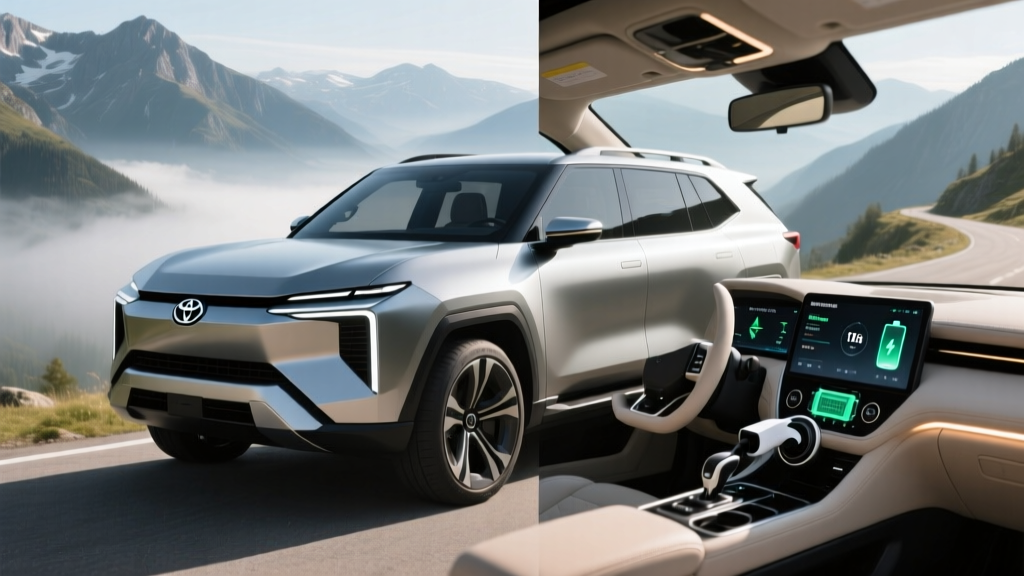
As of early 2026, Toyota has not released a fully electric Land Cruiser. The current-generation Land Cruiser (reintroduced to the U.S. for the 2024 model year) is a hybrid-only vehicle built around Toyota's i-FORCE MAX turbocharged 2.4-liter hybrid powertrain. Toyota has announced a next-generation Land Cruiser 300-series electric variant for global markets, with preliminary details emerging through patent filings and concept previews, but no U.S.-spec battery-electric Land Cruiser has been confirmed for sale, and no EPA range, pricing, or charging specifications have been published.
If you're searching for a "Toyota Land Cruiser electric," you're most likely looking at one of three options: the current hybrid Land Cruiser (which delivers limited electric-only assist but is not a plug-in), a future battery-electric Land Cruiser (announced globally, timeline uncertain for North America), or Toyota's existing electric SUV, the bZ4X. Below, we break down what's real, what's rumored, and how the numbers compare.
Current Toyota Land Cruiser: Hybrid, Not Electric
The Land Cruiser Toyota sells in the United States today is a conventional hybrid electric vehicle (HEV), not a plug-in hybrid (PHEV) or battery-electric vehicle (BEV). It cannot be plugged in, has no electric-only driving range, and relies on its gasoline engine as the primary power source with electric motor assist.
| Spec | Value |
|---|---|
| Powertrain | i-FORCE MAX 2.4L turbo 4-cyl hybrid |
| Combined Output | 326 hp / 465 lb-ft torque |
| EPA Fuel Economy | 23 MPG combined (22 city / 25 hwy) |
| Drivetrain | Full-time 4WD with locking center diff |
| Towing Capacity | 6,000 lbs |
| Base MSRP | ~$58,150 (1958 trim) |
| Federal EV Tax Credit (§30D) | Not eligible (not a PHEV or BEV) |
The hybrid system improves fuel economy modestly over the previous V8 generation (which returned roughly 14–15 MPG combined), but at 23 MPG, the Land Cruiser remains a fuel-intensive vehicle by any standard. According to fueleconomy.gov, annual fuel cost for the Land Cruiser hybrid runs approximately $2,650 at 15,000 miles per year and $3.50/gallon regular unleaded.
What Toyota Has Announced About an Electric Land Cruiser
Toyota has signaled its intent to electrify the Land Cruiser nameplate as part of its broader EV roadmap, but concrete details remain scarce. Here's what we know from official statements and credible industry reporting:
- Land Cruiser Se Concept (2023 Tokyo Motor Show): Toyota unveiled a battery-electric concept wearing the Land Cruiser name with a monocoque body, three-row seating, and a sleek, car-like silhouette that departed significantly from the body-on-frame production Land Cruiser. Toyota labeled it a concept exploring "new possibilities" for the nameplate.
- Global Electrification Strategy: Toyota has committed to launching 30 BEV models globally by 2030, with a target of 3.5 million annual EV sales. A production electric Land Cruiser would fit within this plan, likely targeting markets with stricter emissions regulations (Europe, China, potentially North America).
- No U.S. Confirmation: Toyota Motor North America has not confirmed a battery-electric Land Cruiser for the U.S. market. If one arrives, industry analysts expect it no earlier than the 2027–2028 model year.
Any specifications circulating online regarding an "electric Land Cruiser" — range figures, battery sizes, pricing — are preliminary estimates or speculation and should not be treated as confirmed data. We will update this guide when Toyota publishes official U.S.-spec information.
Estimated Electric Land Cruiser Specs vs. Current Hybrid
Based on Toyota's existing EV platform (e-TNGA, used in the bZ4X) and the competitive landscape for large electric SUVs, here's a reasonable projection of what a production electric Land Cruiser might look like compared to the current hybrid. All figures in the "Electric (Projected)" column are estimates only.
| Attribute | 2025 Hybrid (Actual) | Electric (Projected/Estimated) |
|---|---|---|
| Powertrain | 2.4L turbo HEV | Dual-motor AWD BEV |
| Horsepower | 326 hp | ~400–500 hp (est.) |
| 0–60 mph | ~6.5 sec | ~4.5–5.5 sec (est.) |
| EPA Range / Fuel Economy | 23 MPG combined (~470 mi on 20.4-gal tank) | ~280–350 mi (est.) |
| Battery Capacity | ~1.87 kWh (hybrid assist) | ~100–120 kWh usable (est.) |
| DC Fast Charging | N/A | ~150–250 kW peak (est.) |
| 10–80% Charge Time | N/A | ~25–35 min (est.) |
| Base MSRP (Est.) | $58,150 | $70,000–$85,000 (est.) |
| Federal Tax Credit | Not eligible | Up to $7,500 if §30D requirements met |
| Annual Fuel/Energy Cost | ~$2,650 (gas) | ~$650–$900 (electricity, est.) |
The projected electric variant would likely cost $12,000–$27,000 more upfront than the hybrid but could save $1,750–$2,000 per year in energy costs, depending on local electricity rates and driving patterns. At those savings, the break-even point on the price premium would be roughly 7–12 years before incentives.
If You Need an Electric Toyota SUV Today: The bZ4X
Toyota's only battery-electric SUV currently on sale in the U.S. is the bZ4X. It's a compact-to-midsize crossover — significantly smaller and less capable off-road than a Land Cruiser — but it's the closest thing to an "electric Toyota SUV" you can actually buy right now.
| Spec | FWD | AWD |
|---|---|---|
| Battery | 71.4 kWh (usable) | 71.4 kWh (usable) |
| EPA Range | 252 mi | 228 mi |
| Power | 201 hp | 214 hp |
| 0–60 mph | ~7.1 sec | ~6.5 sec |
| DC Fast Charge (peak) | ~150 kW | ~150 kW |
| 10–80% Charge | ~30 min | ~30 min |
| Base MSRP | ~$37,070 | ~$40,480 |
| §30D Tax Credit | Check current eligibility at IRS.gov — battery sourcing rules apply | |
The bZ4X is a competent commuter EV but lacks the body-on-frame ruggedness, towing capacity, and off-road hardware Land Cruiser buyers expect. It also falls short on range compared to competitors like the Hyundai Ioniq 5 (303 mi EPA) and Tesla Model Y (308 mi EPA). Real-world highway range in the bZ4X AWD typically lands around 185–205 miles at 70 mph in moderate temperatures, with further reduction in cold weather.
Cost Breakdown: Hybrid Land Cruiser vs. a Comparable Electric SUV
Since a production electric Land Cruiser doesn't exist yet, let's compare the current Land Cruiser hybrid against a comparable large electric SUV — the Rivian R1S Dual-Motor — to illustrate what an electric alternative costs today in the full-size, three-row, off-road-capable segment.
| Cost Category | 2025 Land Cruiser Hybrid | 2025 Rivian R1S Dual-Motor (est.) |
|---|---|---|
| Purchase Price (base MSRP) | $58,150 | $79,900 |
| Federal Tax Credit | $0 | Up to $7,500 (verify §30D eligibility) |
| Effective Purchase Price | $58,150 | ~$72,400 |
| Annual Fuel/Energy (15K mi/yr) | ~$2,650 (gas) | ~$800 (electric, home charging avg) |
| 5-Year Fuel/Energy Total | $13,250 | $4,000 |
| Maintenance (5-yr est.) | ~$3,500 | ~$1,800 |
| Insurance (5-yr avg) | ~$9,500 | ~$11,000 |
| 5-Year Total (excl. depreciation) | $84,400 | $89,200 |
The electric SUV saves significantly on energy and maintenance, but the higher purchase price and insurance premiums narrow the gap. Depreciation is the wildcard — Toyota Land Cruisers historically hold value exceptionally well, while EV depreciation curves remain steeper and less predictable. According to Kelley Blue Book data, the Land Cruiser's projected 5-year resale value retention is among the highest in the industry, which could make the hybrid the more economical long-term hold despite higher fuel costs.
Real-World Ownership Considerations for an Electric Land Cruiser (If It Comes)
If Toyota does bring a battery-electric Land Cruiser to the U.S., buyers should weigh these practical factors:
Home Charging Access
A large-battery EV (100+ kWh) requires Level 2 home charging to be practical. On a 240V / 48-amp Level 2 circuit (~11.5 kW), a 110 kWh battery charges from empty to full in roughly 10–12 hours. Without home charging, daily reliance on public DC fast chargers adds time, cost (DCFC rates often $0.35–$0.55/kWh vs. $0.12–$0.18/kWh at home), and inconvenience. If you cannot install a Level 2 charger at home, a hybrid remains the more practical choice.
Cold-Weather Range Loss
Large SUVs with high frontal area and heavy weight are particularly susceptible to cold-weather range reduction. Expect a 20–35% range loss at 20°F compared to the EPA sticker, based on testing data from AAA and real-world owner reports for comparable EVs. A projected 320-mile EPA range could realistically drop to 210–255 miles in winter highway driving. A heat pump (standard on some Toyota EVs) mitigates but does not eliminate this loss.
Towing and Payload
Towing dramatically reduces EV range — often by 40–50% at highway speeds with a loaded trailer. The current hybrid Land Cruiser tows 6,000 lbs. An electric variant would likely match or exceed that rating, but real-world towing range on a 110 kWh battery could fall to 150–180 miles. For frequent towing, the hybrid's quick refueling (5 minutes at any gas station) retains a clear advantage.
Off-Road Capability
Electric motors deliver instant torque and precise throttle control — advantages in technical off-road situations. However, battery weight (likely 7,000+ lbs curb weight for an electric Land Cruiser) increases the risk of getting stuck in soft terrain, and underbody battery protection adds complexity. The current hybrid Land Cruiser's mechanical 4WD system with locking differentials is a proven, field-serviceable setup that off-road enthusiasts trust.
Common Misconceptions About a Toyota Land Cruiser Electric
| Myth | Fact |
|---|---|
| "The Toyota Land Cruiser is already available as an electric vehicle." | The current U.S.-market Land Cruiser is a hybrid (HEV), not a plug-in or battery-electric vehicle. No BEV Land Cruiser is on sale. |
| "The Land Cruiser Se concept is going into production as shown." | The Se was a design concept. Production versions typically change significantly. No production timeline or specs have been confirmed for the U.S. |
| "An electric Land Cruiser would be cheaper to own than the hybrid." | Lower energy and maintenance costs help, but a higher purchase price, potentially higher insurance, and steeper depreciation could offset savings over 5 years. |
| "I'll get the full $7,500 federal tax credit on any future electric Land Cruiser." | §30D credit eligibility depends on MSRP caps (≤$80,000 for SUVs), buyer income limits, and battery mineral/component sourcing requirements that change annually. Always verify at IRS.gov. |
| "Electric SUVs can tow just as far as gas ones." | EVs lose 40–50% of range while towing at highway speeds. A 320-mile EPA range could drop to ~160 miles with a loaded trailer. |
Decision Framework: What Should You Buy?
Choose the Current Toyota Land Cruiser Hybrid If:
- You need a rugged, body-on-frame SUV with proven off-road capability today
- You tow frequently (6,000-lb rating, no range penalty from refueling speed)
- You lack reliable home Level 2 charging access
- You live in a region with extreme cold or limited DC fast-charging infrastructure
- You prioritize long-term resale value (Land Cruiser depreciation is historically minimal)
- You drive more than 250 miles between stops regularly
Wait for a Future Electric Land Cruiser If:
- You have home Level 2 charging and mostly drive under 200 miles per day
- You want instant electric torque and a quieter, smoother powertrain
- You're willing to wait until at least 2027–2028 for a potential U.S. release
- Lower daily energy cost ($0.04–$0.06/mile on home electricity vs. $0.17/mile on gas) matters to you
- You don't tow heavy loads frequently
Consider an Alternative Electric SUV Now If:
- You want a large electric SUV today — look at the Rivian R1S, Tesla Model X, or Kia EV9
- You want a Toyota EV today — the bZ4X is available but is a smaller, less capable crossover
- You want Toyota reliability with a plug — the RAV4 Prime PHEV offers 42 miles of electric-only range plus 38 MPG hybrid, starting around $43,690
Frequently Asked Questions
Will Toyota make an all-electric Land Cruiser for the U.S.?
Toyota has not confirmed a U.S.-spec battery-electric Land Cruiser. The Land Cruiser Se concept demonstrated the idea, but no production timeline, pricing, or specifications have been announced for North America. Toyota has committed to 30 BEV models globally by 2030, so an electric Land Cruiser is plausible but not guaranteed for the U.S. market.
Is the current Toyota Land Cruiser a plug-in hybrid?
No. The current Land Cruiser uses Toyota's i-FORCE MAX hybrid system, which is a conventional hybrid (HEV). It cannot be plugged in and has no electric-only driving range. The electric motor assists the gasoline engine but does not independently propel the vehicle for meaningful distances.
What is the closest electric alternative to a Toyota Land Cruiser?
In terms of size, off-road capability, and three-row seating, the Rivian R1S is the closest battery-electric equivalent. The Kia EV9 offers three rows at a lower price point but with less off-road capability. Within Toyota's own lineup, the bZ4X is the only EV, but it's a smaller crossover without the Land Cruiser's ruggedness or towing capacity.
How much would an electric Toyota Land Cruiser cost?
No official pricing exists. Based on the current hybrid Land Cruiser's $58,150 starting price and the typical EV premium for large SUVs, a reasonable estimate is $70,000–$85,000 for a base model, potentially higher for off-road-oriented trims. Federal §30D tax credit eligibility (up to $7,500) would depend on MSRP caps, income limits, and battery sourcing rules in effect at launch.
Does the Land Cruiser hybrid qualify for any tax credits?
No. The federal §30D clean vehicle credit applies only to plug-in electric vehicles (BEVs and PHEVs) meeting specific battery sourcing, MSRP, and buyer income requirements. Conventional hybrids like the Land Cruiser do not qualify. Some states may offer minor incentives for hybrids — check your state's energy office for details.
How does the Land Cruiser hybrid's fuel cost compare to an electric SUV?
At 23 MPG combined and $3.50/gallon, the Land Cruiser hybrid costs roughly $2,650 per year in fuel (15,000 miles). A comparable large electric SUV charging primarily at home at $0.15/kWh and averaging 2.5 mi/kWh would cost roughly $900 per year — a savings of about $1,750 annually. Over five years, that's roughly $8,750 in energy savings, which partially offsets the higher purchase price of current large EVs.