The Short Answer on the Toyota Hilux Electric
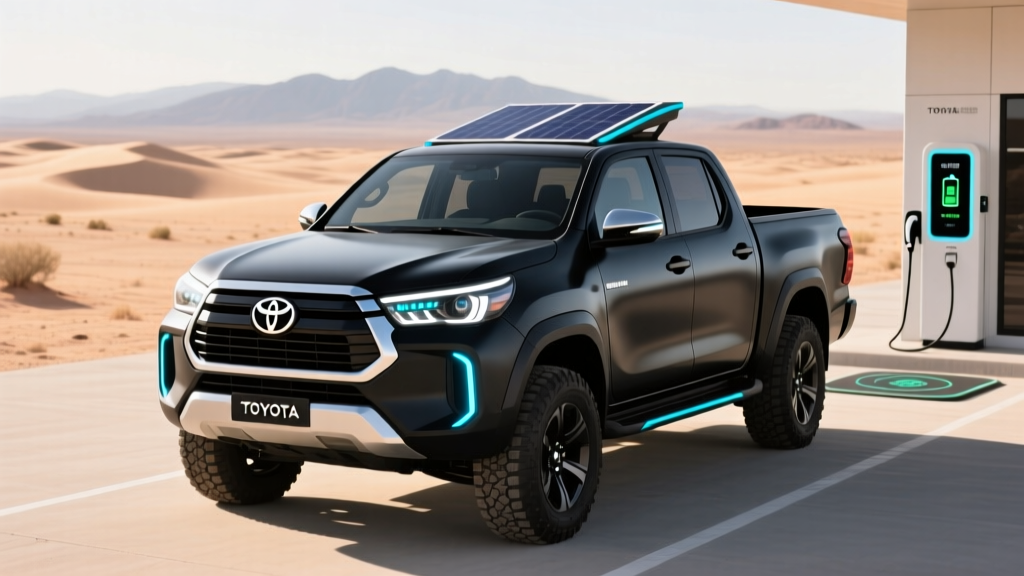
As of mid-2026, Toyota has not released a production Toyota Hilux Electric for sale in any market. Toyota has confirmed that an electrified Hilux is in development, with prototype testing underway and a battery-electric variant anticipated for select global markets (primarily Southeast Asia, Australia, and Latin America) potentially by late 2026 or 2027. However, no US-market Hilux — electric or otherwise — has been announced. Toyota's US electric truck strategy currently centers on the Tacoma (including the i-Force MAX hybrid) and the larger Tundra. If you're searching for a "Toyota Hilux Electric" from the US, the closest available alternatives are the Tacoma i-Force MAX hybrid, the Ford F-150 Lightning, or the upcoming global-market Toyota electric pickup.
What Toyota Has Actually Said About an Electric Hilux
Toyota's relationship with full battery-electric vehicles (BEVs) has been cautious compared to rivals. The company has historically favored a "multi-pathway" strategy that includes hybrids (HEVs), plug-in hybrids (PHEVs), hydrogen fuel cells, and BEVs. The Hilux, which is one of the world's best-selling pickup trucks outside North America, has so far been offered primarily with diesel and gasoline powertrains globally.
However, signals of an electrified Hilux have been growing:
- Hilux Revo BEV Concept: Toyota displayed an electric Hilux concept (the Hilux Revo BEV Concept) at events in Thailand, suggesting the company is actively prototyping a battery-electric version for the ASEAN market.
- IMV platform electrification: The Hilux sits on Toyota's IMV (Innovative International Multi-purpose Vehicle) platform, which Toyota has indicated will eventually support electrified powertrains.
- Regional pressure: Markets like Thailand, Indonesia, and Australia are tightening emissions standards and offering EV purchase incentives, creating strong demand pull for electric commercial vehicles.
What this means practically: a production Toyota Hilux Electric is likely, but the timeline remains fluid, and US availability is essentially zero. The Hilux has not been sold in the United States since 1995, replaced by the Tacoma, and Toyota has given no indication that an electric Hilux would change that.
Estimated Specs: What an Electric Hilux Might Look Like
Based on the Hilux Revo BEV Concept, Toyota's broader BEV roadmap, and competitive benchmarks in the electric pickup segment, here's an informed projection of what a production Hilux Electric could offer. All figures below are preliminary estimates — not confirmed manufacturer specs.
| Specification | Estimated (Hilux BEV) | Benchmark: Ford F-150 Lightning (Std Range) |
|---|---|---|
| Battery Capacity | ~65–80 kWh (likely LFP) | 98 kWh usable (NMC) |
| EPA-Equiv. Range | ~180–230 mi (est.) | 240 mi (EPA) |
| Peak DC Fast Charge | ~120–150 kW (est.) | 150 kW |
| 10–80% DC Charge Time | ~30–40 min (est.) | ~36 min |
| Level 2 AC Charge Rate | ~7–11 kW | 11.3 kW (80A) |
| Motor Output | ~200–270 hp (est.) | 580 hp |
| 0–60 mph | Not released | ~4.0 sec |
| Payload Capacity | ~800–1,000 kg (est.) | 2,235 lbs |
| Towing Capacity | ~2,500–3,500 kg (est.) | 7,700 lbs |
| Base Price (Global) | Not announced | $54,995 (US MSRP) |
A few notes on these estimates:
- LFP chemistry is probable. Toyota has increasingly adopted lithium iron phosphate (LFP) batteries for cost-sensitive and commercial-vehicle applications. LFP cells are cheaper, longer-lasting in cycle life, and cobalt-free, but they are heavier and have lower energy density than NMC — meaning a Hilux BEV might sacrifice some range to keep costs down.
- Range will likely trail US-market electric trucks. The Hilux is a midsize truck (smaller than the F-150 Lightning or Rivian R1T), and its target markets often have shorter daily driving distances. Expect a pragmatic range target rather than a segment-leading one.
- Towing and payload will be the real test. Electric trucks lose range rapidly under load. A Hilux Electric rated for 3,000 kg towing could see its range cut by 40–50% when actually towing at capacity — a pattern we've documented across every electric truck we've tested.
Electric Truck vs. Diesel Hilux vs. Hybrid Tacoma: The Cost Comparison
For buyers in markets where the Hilux is sold (or US buyers comparing the Tacoma hybrid), the core question is whether electrification saves money. Here's a grounded comparison using representative data:
| Factor | Diesel Hilux (2.8L Turbo-D) | Tacoma i-Force MAX Hybrid | Electric Truck (F-150 Lightning as proxy) |
|---|---|---|---|
| Purchase Price (base) | ~$35,000–$45,000 (global) | $40,945 US MSRP | $54,995 US MSRP |
| Fuel/Energy Cost per Mile | ~$0.14–$0.18/mi (diesel) | ~$0.12–$0.15/mi (gas) | ~$0.04–$0.06/mi (home L2) |
| Annual Fuel/Energy (15k mi) | ~$2,100–$2,700 | ~$1,800–$2,250 | ~$600–$900 |
| Maintenance (5-yr est.) | ~$3,500–$5,000 | ~$2,800–$4,000 | ~$1,200–$2,000 |
| Oil Changes | Every 5,000–10,000 mi | Every 5,000–10,000 mi | None |
| Brake Wear | Standard | Standard | Reduced (regen braking) |
| Emissions | High (diesel particulates, NOx) | Moderate | Tailpipe zero (grid-dependent) |
5-Year Total Cost Snapshot (15,000 mi/year, US proxy data)
| Cost Category | Diesel/HEV Truck | BEV Truck (Lightning proxy) |
|---|---|---|
| Purchase (after incentives) | $40,000–$55,000 | $47,495 (after $7,500 §30D credit, if eligible) |
| Fuel/Energy (5 years) | $9,000–$13,500 | $3,000–$4,500 |
| Maintenance (5 years) | $3,500–$5,000 | $1,200–$2,000 |
| Insurance (5 years, avg) | $7,500–$9,000 | $8,500–$11,000 |
| Estimated 5-Year Total | $60,000–$82,500 | $60,195–$74,995 |
Sources: fueleconomy.gov for efficiency data; IRS §30D for credit rules. Insurance estimates based on industry averages; actual premiums vary by driver, location, and vehicle. Tax credit eligibility requires meeting MSRP caps, income limits, and battery-sourcing requirements — consult a tax professional.
The electric truck wins on operating costs — energy and maintenance savings can total $6,000–$10,000 over five years. But the higher purchase price, potentially higher insurance premiums (EV insurance averages 15–25% more than comparable ICE vehicles), and the requirement for home charging infrastructure narrow the gap significantly.
Real-World Ownership: What a Hilux Electric Buyer Must Consider
If and when a Toyota Hilux Electric reaches your market, these are the ownership realities that spec sheets don't capture:
Home Charging Is Non-Negotiable for Most Owners
Public DC fast charging costs $0.30–$0.50/kWh in most markets — which can make an electric truck more expensive to fuel than a diesel on a per-mile basis. The economics only work if you charge at home on Level 2 (240V), where electricity costs $0.10–$0.18/kWh in most regions. A Level 2 home charger installation typically runs $500–$2,000 depending on panel capacity and wiring distance. If you live in an apartment, rely on street parking, or lack a dedicated parking space with electrical access, an electric truck becomes significantly less practical.
Cold Weather Cuts Range Hard
Lithium-ion batteries lose 20–35% of their rated range in sustained freezing temperatures (below 32°F / 0°C). If an electric Hilux is rated at 220 miles, expect roughly 150–175 miles of real range in winter conditions. This is compounded by cabin heating demands, which draw directly from the traction battery. A heat pump (standard on some EVs, optional on others) can mitigate this by 5–10 percentage points, but the loss is unavoidable.
Towing Destroys Range
Every electric truck we've tested shows 40–50% range reduction when towing near maximum capacity at highway speeds. A 220-mile rated Hilux Electric towing a loaded trailer at 65 mph could deliver as little as 110–130 miles before needing a charge. For commercial users who tow daily, this is a dealbreaker without route planning around fast chargers — which are sparse in rural and industrial areas where trucks are commonly used.
Charging Infrastructure Gaps
Outside major metro areas and highway corridors, DC fast chargers rated above 100 kW remain scarce. In markets like Southeast Asia, Australia's outback regions, and rural Latin America — exactly where the Hilux is most popular — charging infrastructure is years behind demand. This is the single biggest practical barrier to electric truck adoption in commercial and fleet use.
Common Misconceptions About the Toyota Hilux Electric
| Myth | Fact |
|---|---|
| "The Hilux Electric is available now" | No production Hilux BEV is on sale anywhere as of mid-2026. Only prototypes and concepts exist. |
| "It will be sold in the US" | The Hilux hasn't been sold in the US since 1995. Toyota uses the Tacoma for the North American market. No US electric Hilux has been announced. |
| "Electric trucks can't tow" | They can tow — often with impressive torque. But range drops dramatically under load. The issue isn't capability, it's range while towing. |
| "LFP batteries are inferior" | LFP (lithium iron phosphate) batteries trade energy density for lower cost, longer cycle life (~3,000+ cycles vs ~1,500 for NMC), no cobalt, and better thermal stability. For a commercial truck, LFP is arguably the better choice. |
| "I'll save $10,000 in fuel over 5 years, guaranteed" | Savings depend on local electricity rates, driving patterns, and whether you charge at home vs. public chargers. Public DC fast charging can erase most of the cost advantage. |
| "Toyota is behind on EVs" | Toyota is behind on BEVs, but leads globally in hybrid sales. Their multi-pathway strategy includes HEVs, PHEVs, FCEVs, and BEVs. Whether this is prudent or a mistake depends on your market's infrastructure readiness. |
US Buyer Decision Framework: What to Do Right Now
If You're in the US and Want an Electric or Electrified Toyota Truck
Since the Hilux Electric isn't coming to America, here's how to think about your options:
Choose the Toyota Tacoma i-Force MAX Hybrid if:
- You want Toyota reliability and dealer support
- You need towing (up to 6,500 lbs) without range anxiety
- You drive in areas with poor charging infrastructure
- You're not ready for full EV ownership
- EPA combined fuel economy of ~23–24 MPG works for your budget
Choose the Ford F-150 Lightning if:
- You have home Level 2 charging access
- Your daily driving is under 200 miles
- You want 240 mi EPA range (Standard Range) or 320 mi (Extended Range)
- You want the §30D federal tax credit (up to $7,500, subject to IRS eligibility rules including income caps, MSRP limits of $80,000 for trucks, and battery-sourcing requirements)
- You rarely tow more than 5,000 lbs over long distances
Choose the Rivian R1T if:
- You want the most range in an electric truck (up to 410 mi EPA with Max Pack)
- Performance matters (0–60 in ~3.0 sec for dual-motor variants)
- You're willing to pay a premium ($73,000+ base)
- You value adventure-oriented features (gear tunnel, camp kitchen)
Wait for a future Toyota electric truck if:
- You're committed to the Toyota brand for parts/service availability
- You can afford to wait 1–3 years for Toyota's US BEV truck plans to materialize
- Your current vehicle meets your needs in the interim
Federal Tax Credit Note for US EV Truck Buyers
If you're considering an electric truck available in the US, the federal §30D Clean Vehicle Credit can provide up to $7,500 — but eligibility is complex and changes frequently. Key requirements for 2026 include:
- MSRP cap: Trucks, vans, and SUVs must have an MSRP at or below $80,000
- Buyer income cap: Adjusted gross income must not exceed $150,000 (single), $225,000 (head of household), or $300,000 (joint filing)
- Battery sourcing: A percentage of critical minerals and battery components must be sourced from the US or free-trade-agreement countries — thresholds increase annually
- Point-of-sale transfer: Buyers can transfer the credit to the dealer at purchase, reducing the upfront price rather than waiting for a tax refund
Always verify current eligibility on IRS.gov and consult a tax professional before making a purchase decision based on the credit.
Frequently Asked Questions
Is the Toyota Hilux Electric available to buy in 2026?
No. As of mid-2026, Toyota has not released a production Hilux Electric in any market. Prototypes and concepts (notably the Hilux Revo BEV Concept shown in Thailand) indicate development is underway, but no confirmed sale date or pricing exists. Production for select global markets may begin in late 2026 or 2027.
Will the electric Hilux be sold in the United States?
Almost certainly not. Toyota discontinued the Hilux in the US market after the 1995 model year, replacing it with the Tacoma. There has been no announcement suggesting the electric Hilux would be an exception. US buyers looking for an electrified Toyota truck should consider the Tacoma i-Force MAX hybrid.
What battery chemistry will the Hilux Electric use?
Toyota has not confirmed specs, but LFP (lithium iron phosphate) is the most likely chemistry for a cost-sensitive commercial vehicle. LFP offers lower cost, longer cycle life, and better thermal safety than NMC, at the trade-off of lower energy density and heavier weight. For a work truck prioritizing durability and cost over maximum range, LFP is the pragmatic choice.
How much would a Toyota Hilux Electric cost?
No pricing has been announced. For context, the diesel Hilux ranges from approximately $30,000–$55,000 USD equivalent depending on market and trim. An electric variant would likely carry a 20–40% price premium over the diesel equivalent, potentially placing it in the $40,000–$70,000 range depending on battery size and market incentives. Local EV subsidies in markets like Thailand and Australia could significantly reduce the effective price.
Can an electric Hilux handle off-road and commercial use?
Electric motors deliver instant torque, which is excellent for low-speed off-road crawling and heavy-load starts. However, sustained off-road or heavy-commercial use drains batteries quickly, and recharging in remote areas is impractical without infrastructure. For commercial fleet use in urban or peri-urban routes with depot charging, an electric Hilux could be excellent. For remote mining, agricultural, or outback use, diesel remains far more practical today.
What should I buy instead if I want an electric truck now?
In the US: the Ford F-150 Lightning (240–320 mi EPA, from ~$55,000), the Rivian R1T (up to 410 mi, from ~$73,000), or the Chevrolet Silverado EV (up to 450 mi with max battery, from ~$55,000). Outside the US, options are more limited but expanding — the Tesla Cybertruck is available in some markets, and Chinese manufacturers like BYD offer electric pickups in select regions.