Quick Answer: As of early 2026, Toyota has not officially revealed a battery-electric Highlander. The current three-row Highlander remains a hybrid-only model (the 2026 Highlander Hybrid). Toyota's bZ large SUV concept signals an upcoming three-row EV that could wear the Highlander nameplate, but no production model has been confirmed for sale. Buyers searching for a "Toyota Highlander EV reveal" are likely reacting to concept teasers and industry speculation. If Toyota does launch a Highlander EV, expect it as a 2027 or 2028 model with an estimated EPA range of 280–320 miles, a ~90–100 kWh battery, and a starting MSRP near $52,000–$58,000.
What Toyota Has Actually Shown (and What's Still Rumor)
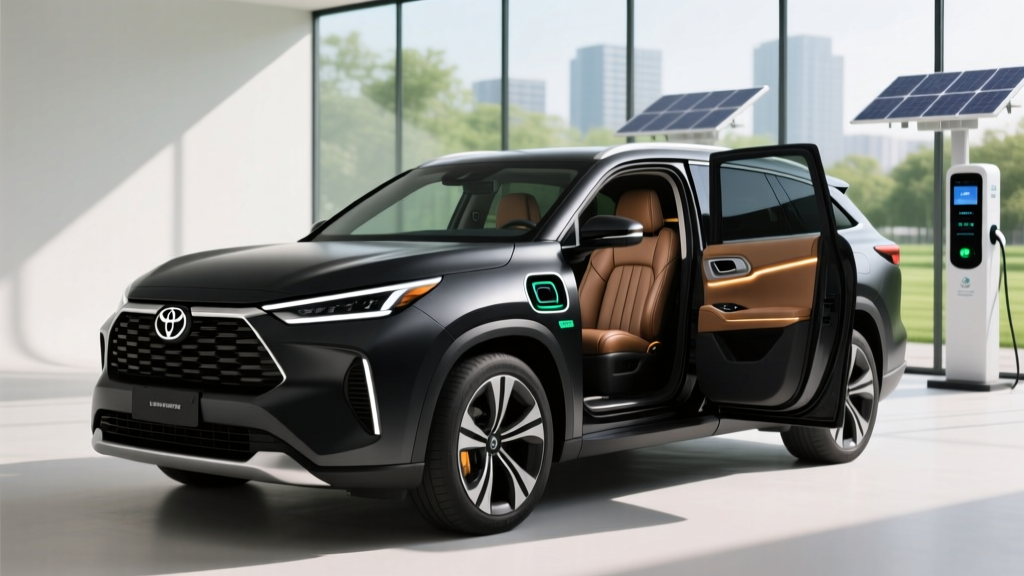
Toyota's EV strategy has accelerated through its bZ ("beyond Zero") series, but the lineup remains limited in the U.S. to the bZ4X compact crossover and the upcoming bZ large SUV concept displayed at auto shows. That concept previews a three-row electric SUV positioned above the bZ4X — the segment where the gas/hybrid Highlander currently lives.
Here is what we know versus what is speculation as of mid-2026:
- Confirmed: Toyota has teased a three-row electric SUV concept under the bZ umbrella, built on an evolved e-TNGA or next-generation dedicated EV platform.
- Confirmed: The 2026 Toyota Highlander is available only as a hybrid (2.5L four-cylinder hybrid, up to 36 MPG combined per fueleconomy.gov).
- Unconfirmed/Speculative: Production name (Highlander EV vs. bZ5x or new nameplate), exact battery capacity, EPA range, pricing, and on-sale date.
- Industry estimates: A production three-row Toyota EV is expected to arrive for the 2027 or 2028 model year, competing with the Kia EV9, Hyundai Ioniq 9, and potentially a refreshed Tesla Model X or Rivian R2 three-row variant.
Toyota has historically been conservative with EV rollouts, prioritizing hybrids and plug-in hybrids. The company's official newsroom has not issued a press release confirming a Highlander EV production timeline. Any article claiming definitive specs is working from concept renderings and supply-chain leaks, not manufacturer data.
Projected Specs: What a Highlander EV Could Look Like
Based on the bZ large SUV concept dimensions, Toyota's stated battery roadmap, and competitive benchmarks in the three-row EV segment, here are reasonable preliminary estimates. Treat these as informed projections, not official figures.
| Specification | Projected Estimate | Segment Benchmark (Kia EV9) |
|---|---|---|
| Battery Capacity (usable) | ~90–100 kWh | 99.8 kWh (NMC) |
| EPA Range (est.) | 280–320 mi | 270–304 mi |
| Drivetrain | AWD (dual motor) likely standard | RWD or AWD |
| Horsepower | ~350–400 hp | 379 hp (AWD) |
| 0–60 mph | ~5.5–6.5 sec | 5.0 sec (AWD) |
| Peak DC Fast Charge | ~180–250 kW | 210 kW (peak) |
| 10–80% DC Charge Time | ~25–35 min (est.) | ~24 min (claimed) |
| Level 2 Charging (240V) | ~11 kW onboard | 10.9 kW |
| Seating | 7-passenger (3 rows) | 6 or 7 passengers |
| Towing Capacity | ~3,500–5,000 lbs (est.) | 4,500 lbs |
| Starting MSRP (est.) | $52,000–$58,000 | $54,900 (base) |
Real-World Range Expectation: If the Highlander EV achieves an EPA rating of ~300 miles, plan for approximately 240–260 miles of usable highway range at 70–75 mph in moderate temperatures. In cold weather (below 32°F), expect a 20–30% reduction, bringing usable range down to roughly 210–240 miles. These figures align with real-world testing of similar three-row EVs and are consistent with how NMC battery chemistry performs under load and temperature stress.
Highlander Hybrid vs. a Future Highlander EV: Cost and Efficiency
The 2026 Highlander Hybrid is a known quantity. A future Highlander EV would need to justify its higher purchase price through lower running costs. Here is how the math looks based on current data and reasonable EV projections.
| Factor | 2026 Highlander Hybrid | Projected Highlander EV |
|---|---|---|
| Base MSRP | ~$40,000 | ~$52,000–$58,000 (est.) |
| Federal Tax Credit (§30D) | $0 (not a BEV/PHEV with sufficient EV range) | Up to $7,500 (if eligible — see caveats below) |
| Effective Starting Price | ~$40,000 | ~$44,500–$50,500 (est., after max credit) |
| EPA Combined Efficiency | 36 MPG | ~85–95 MPGe (est.) |
| Annual Fuel/Energy Cost (15,000 mi) | ~$1,875 (gas at $3.50/gal) | ~$600–$900 (electricity at $0.14/kWh avg) |
| Annual Maintenance | ~$400–$600 | ~$150–$250 (no oil changes, fewer moving parts) |
| 5-Year Fuel + Maintenance | ~$11,375–$12,375 | ~$3,750–$5,750 |
| Battery/Powertrain Warranty | 10 yr / 150,000 mi (hybrid components) | Expected 8 yr / 100,000 mi (EV battery, federal minimum) |
The EV saves roughly $6,000–$8,000 over five years in fuel and maintenance, but the purchase premium (even after the tax credit) is $4,500–$10,500. The break-even point depends heavily on your local electricity rates, annual mileage, and whether you qualify for the full federal credit.
Tax credit caveat: The §30D federal EV tax credit of up to $7,500 has strict requirements in 2026, including MSRP caps ($80,000 for SUVs), buyer income limits ($300,000 joint / $150,000 single), and battery component and critical mineral sourcing rules. Many EVs from legacy automakers are still working through supply-chain compliance. Toyota's ability to qualify will depend on where battery cells and minerals are sourced at the time of purchase. Always verify current eligibility at IRS.gov before counting on the credit in your budget.
Real-World Ownership: What First-Time EV Buyers Need to Know
If you are considering a three-row EV — whether a future Highlander EV or an existing alternative like the Kia EV9 — these ownership realities matter more than spec-sheet numbers.
Home Charging Is Non-Negotiable for Most Owners
Over 80% of EV charging happens at home. If you cannot install a Level 2 (240V) charger at your residence, daily EV ownership becomes significantly less convenient. A Level 2 home installation typically costs $1,200–$3,500 total (charger hardware plus licensed electrician labor and permits), and more if your electrical panel needs an upgrade to 200 amps. With an 11 kW onboard charger and a ~95 kWh battery, a full Level 2 charge from empty takes roughly 8–9 hours — ideal for overnight charging.
Without home charging, you will rely on public DC fast charging and Level 2 destination chargers, which adds time, cost (public DC charging often runs $0.35–$0.55/kWh vs. $0.12–$0.16/kWh at home), and unpredictability to your routine.
Charging on Road Trips: The Curve Matters
Peak DC fast-charge rates (e.g., 200 kW) are not sustained across the entire session. Most EVs hit peak speed only between roughly 10–40% state of charge, then taper significantly. A session from 10–80% at a 350 kW-capable station might average 120–150 kW in practice. On a road trip with a ~300-mile EV, plan for a 25–35 minute charging stop every 200–240 miles to stay above a comfortable buffer.
Climate and Driving Pattern Considerations
- Cold climates (Upper Midwest, Northeast): Expect 20–30% range loss in sustained sub-freezing temperatures. A heat pump (likely standard on a Toyota EV given their bZ4X inclusion) helps but does not eliminate this loss.
- Hot climates (Southwest): Battery thermal management handles heat well, but cabin cooling draws energy. Range impact is typically 5–10% — far less than cold.
- Mountain driving: Elevation gains consume energy; regenerative braking recovers some on descents. Net impact is moderate but noticeable on steep passes.
- Mostly city/suburban driving: This is where EVs shine. Regenerative braking and stop-and-go efficiency mean you may exceed your EPA rating in urban use.
Common Misconceptions About a Highlander EV
| Myth | Fact |
|---|---|
| "The Highlander EV is available now." | It is not. The 2026 Highlander is hybrid-only. A three-row Toyota EV is projected for 2027–2028 at the earliest. |
| "It will get the full $7,500 tax credit." | Eligibility depends on battery sourcing rules, MSRP caps, and your income at time of purchase. Never assume full credit eligibility — verify at IRS.gov. |
| "An EV SUV can tow as much as the gas Highlander." | Towing with an EV typically cuts range by 40–50%. The gas Highlander tows up to 5,000 lbs; an EV version may match that rating, but expect range to drop to ~150–180 miles while towing. |
| "I'll never need to charge — it has 300 miles of range." | Real-world highway range at 75 mph is typically 80–85% of the EPA sticker. Cold weather drops it further. Plan conservatively. |
| "Toyota's EV will charge as fast as a Tesla." | Toyota's current bZ4X peaks at ~150 kW, slower than Tesla's ~250 kW V3 Superchargers. A future model may improve this, but Toyota has historically prioritized battery longevity over peak charge speed. |
Decision Framework: Should You Wait or Buy Now?
Choose the 2026 Highlander Hybrid NOW if:
- You need a three-row family SUV this year and cannot wait 12–24 months for an unconfirmed EV.
- You do not have reliable home charging access (apartment, street parking, no garage).
- You frequently tow more than 3,000 lbs or regularly drive 300+ mile stretches in rural areas with sparse charging infrastructure.
- Your budget is under $45,000 and you want proven reliability with no first-year-model risk.
- You drive fewer than 12,000 miles per year — the hybrid's fuel savings vs. an EV's savings gap narrows at low mileage.
Wait for a Toyota three-row EV (or buy a Kia EV9 / Hyundai Ioniq 9 now) if:
- You have home Level 2 charging and drive 15,000+ miles annually — the fuel and maintenance savings justify the higher purchase price within 4–6 years.
- You want lower tailpipe emissions and your electricity grid includes meaningful renewable sources.
- Your daily commute is under 80 miles round-trip, making overnight home charging more than sufficient.
- You are open to existing three-row EVs: the Kia EV9 (EPA range up to 304 mi, starting ~$54,900) is available now and offers strong value, DC fast charging up to 210 kW, and available 7-seat configuration.
- You can benefit from the §30D tax credit and your state offers additional EV incentives (check afdc.energy.gov for state-level programs).
What to Watch Next
Toyota typically reveals production models 6–12 months before the on-sale date. Watch for:
- Official press release on Toyota's newsroom confirming production intent, nameplate, and target specs.
- EPA certification filings, which reveal official range and efficiency numbers before the car reaches dealers.
- Battery sourcing announcements — Toyota's partnership with Panasonic (Prime Planet Energy & Solutions) and potential U.S. battery plant output will determine §30D credit eligibility.
- Charging network partnerships — Toyota bZ4X owners currently get limited complimentary charging on certain networks. A future three-row EV may include expanded access to Tesla Superchargers (via NACS adapter, which Toyota has confirmed for future models) or Electrify America.
Until Toyota officially confirms a production Highlander EV or bZ-equivalent three-row SUV, treat all specs and timelines as preliminary. The hybrid Highlander remains a strong, efficient choice for three-row buyers who need a vehicle today.
Frequently Asked Questions
Has Toyota officially revealed a Highlander EV?
No. As of mid-2026, Toyota has shown a bZ large SUV concept that previews a three-row electric vehicle, but no production model named "Highlander EV" has been officially confirmed with specs, pricing, or an on-sale date.
When will a Toyota three-row EV be available to buy?
Industry projections suggest a 2027 or 2028 model year launch, which would mean late 2026 or 2027 for first deliveries. This is unconfirmed and subject to Toyota's production timeline decisions.
What is the best three-row EV available right now?
The Kia EV9 is the strongest current option: EPA range up to 304 miles, DC fast charging up to 210 kW, 6- or 7-seat configurations, and starting around $54,900. The Hyundai Ioniq 9 is also entering the market with competitive specs. The Tesla Model X offers more range but starts significantly higher (~$80,000+).
Will a Toyota Highlander EV qualify for the $7,500 federal tax credit?
It depends on battery component sourcing, critical mineral origin, the vehicle's MSRP (must be under $80,000 for SUVs), and your adjusted gross income. Toyota's current bZ4X has faced sourcing challenges for full credit eligibility. Check IRS.gov for the latest qualifying vehicle list before purchasing.
How does the Highlander Hybrid compare in efficiency to a future EV?
The 2026 Highlander Hybrid achieves 36 MPG combined (~$1,875/year in fuel at 15,000 miles). A projected Highlander EV at ~90 MPGe equivalent would cost roughly $600–$900/year in electricity at national average rates. The EV saves ~$1,000–$1,275 annually in energy costs, with additional savings from reduced maintenance.
Can I charge a three-row EV on a standard 120V outlet?
Yes, but extremely slowly. Level 1 (120V) charging adds roughly 3–5 miles of range per hour. Fully recharging a ~95 kWh battery from empty would take 24+ hours. A Level 2 (240V) home charger is strongly recommended and adds roughly 30–40 miles per hour of charging.