Quick Answer: Toyota Highlander EV Launch Status
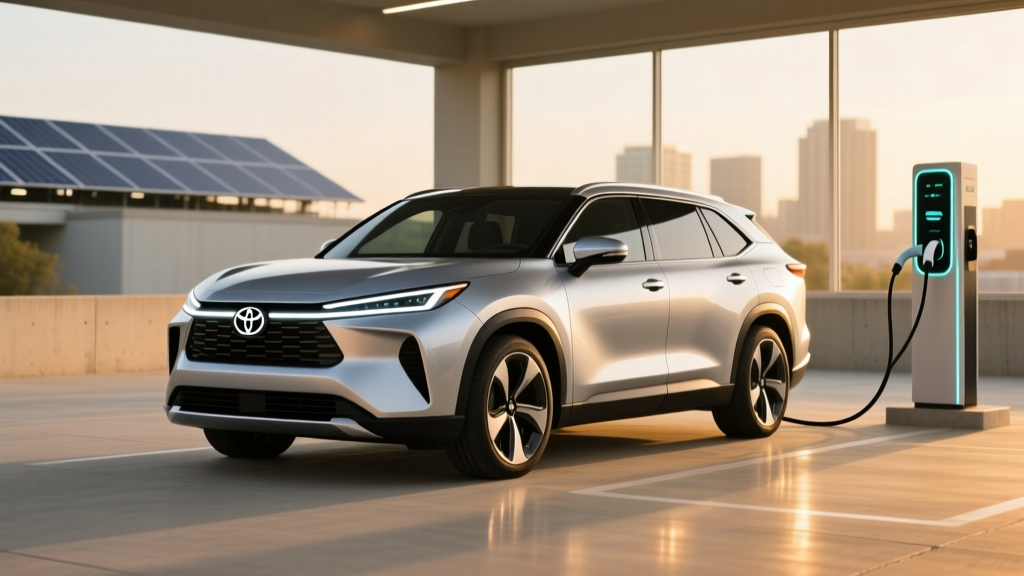
As of early 2026, Toyota has not yet released a fully electric Highlander in the United States. The company has confirmed a three-row electric SUV is in development for the North American market, built on its dedicated EV platform, but an official on-sale date, final EPA range figures, and MSRP remain unannounced. Toyota currently sells the bZ4X (a two-row electric crossover) and offers the Highlander exclusively as a gas V6 or hybrid. If you need a three-row EV today, competitors like the Kia EV9, Hyundai Ioniq 9, and Tesla Model X are available now. A Toyota three-row EV is widely expected to arrive for the 2027 model year, likely carrying the Highlander nameplate or a new bZ-series designation.
What Toyota Has Confirmed About Its Three-Row EV Plans
Toyota's EV roadmap, updated through 2026, includes a commitment to launch 30 battery-electric models globally by 2030, with several targeting the North American market. Among these is a midsize, three-row electric SUV — the segment the gas Highlander has dominated for over two decades. The vehicle will ride on Toyota's next-generation EV platform, which the company has stated will support 800-volt architecture for faster DC charging and improved efficiency over the current bZ4X's 400V system.
What we know from Toyota's public statements and industry reporting:
- Platform: Next-gen dedicated EV architecture (not the adapted e-TNGA used in the bZ4X)
- Battery chemistry: Likely a mix of NMC for Long Range trims and potentially LFP for base trims, following industry trends Toyota has acknowledged
- Target range: Toyota has referenced a goal of 750 km (~466 miles) on its next-gen platform under WLTP testing, which would translate to roughly 350-400 miles EPA in real-world US conditions — though this figure applies to the platform broadly, not necessarily the three-row SUV specifically
- Charging: 800V architecture should enable peak DC fast-charge rates above 250 kW, with a target 10-80% time under 20 minutes
- Production: Toyota's Georgetown, Kentucky plant is being retooled for EV production, with battery supply from its North Carolina battery plant
Until Toyota publishes official specifications, every number above should be treated as preliminary and estimated. The company has a history of conservative range and performance targets that sometimes exceed expectations at launch, but also a history of delaying EV launches relative to competitors.
Current Highlander Hybrid vs. the EV That May Come
For buyers considering whether to wait for the Toyota Highlander EV launch or purchase a current Highlander Hybrid, the comparison matters now. Here's how the 2026 Highlander Hybrid stacks up against estimated EV specs:
| Specification | 2026 Highlander Hybrid (AWD) | Expected Toyota 3-Row EV (Estimated) |
|---|---|---|
| Powertrain | 2.5L 4-cyl + 2 electric motors | Dual-motor AWD BEV |
| Horsepower | 243 hp combined | ~350-400 hp (est.) |
| 0-60 mph | ~7.8 sec | ~5.5-6.5 sec (est.) |
| EPA Range / Fuel Economy | 35 MPG combined (~595 mi on 17 gal) | ~350-400 mi (est. EPA) |
| Energy Capacity | 17.1-gallon fuel tank | ~95-110 kWh battery (est.) |
| Refuel / Recharge Time | ~5 min (gas station) | ~20-25 min 10-80% DC fast (est.) |
| Seating | 7-8 passengers | 7 passengers (est.) |
| Cargo (behind 3rd row) | 16.1 cu ft | ~15-20 cu ft (est.) |
| Starting MSRP | ~$42,000 | ~$50,000-$55,000 (est.) |
| Federal Tax Credit (§30D) | Not eligible | Up to $7,500 if eligible (see below) |
The Highlander Hybrid's 595-mile total range and five-minute refueling remain advantages for road-trip-heavy families. The EV will likely offer stronger acceleration, lower per-mile energy cost, and zero tailpipe emissions — but with longer refueling stops and range sensitivity to cold weather and highway speeds.
Real Costs: Purchase, Charging, Fuel, and Maintenance
A three-row SUV purchase is a significant financial decision. Here's a five-year cost projection comparing the current Highlander Hybrid to an estimated three-row EV, assuming 15,000 miles per year and national average energy prices.
| Cost Category (5-Year / 75,000 mi) | Highlander Hybrid | Estimated 3-Row EV |
|---|---|---|
| Purchase Price (MSRP) | $42,000 | $52,000 (est.) |
| Federal Tax Credit (§30D) | $0 | Up to -$7,500 (if eligible) |
| Effective Purchase Price | $42,000 | $44,500 (est.) |
| Fuel / Electricity (75k mi) | $7,500 (at $3.50/gal, 35 MPG) | $3,750 (at $0.15/kWh, 3.0 mi/kWh) |
| Maintenance (5 years) | $3,200 | $1,500 (est.) |
| Insurance (5 years) | $7,500 | $8,500 (est., EVs typically 10-15% higher) |
| Estimated 5-Year Total Cost | $60,200 | $58,250 (est.) |
The EV's higher sticker price is partially offset by the §30D federal tax credit (up to $7,500, subject to MSRP caps of $80,000 for SUVs, buyer income limits, and battery critical-mineral sourcing requirements). Over five years, the EV saves roughly $3,750 on fuel and $1,700 on maintenance (no oil changes, fewer brake replacements due to regenerative braking), but costs about $1,000 more in insurance premiums.
Home charging note: These electricity costs assume primarily Level 2 home charging at residential rates. If you rely exclusively on public DC fast charging (at $0.35-$0.50/kWh), your fuel cost could double to $7,500-$9,500 over five years — erasing the fuel savings advantage entirely. Home charging access is the single biggest economic variable in EV ownership.
Federal Tax Credit Eligibility: What to Know
If and when the Toyota three-row EV launches, buyers should verify current IRS §30D rules before counting on the full $7,500 credit. Key requirements for 2026:
- MSRP cap: Vehicle must have an MSRP at or below $80,000 (SUV classification)
- Buyer income cap: Modified adjusted gross income must not exceed $300,000 (joint), $225,000 (head of household), or $150,000 (single)
- Battery sourcing: Increasing percentages of critical minerals and battery components must be sourced from the US or free-trade-agreement countries — these thresholds tighten annually
- Point-of-sale transfer: Eligible buyers can transfer the credit to the dealer at purchase, reducing the out-of-pocket price immediately
- Assembly: Final assembly must occur in North America
Toyota's North Carolina battery plant and Kentucky assembly plant position a future three-row EV well for the assembly requirement. However, battery mineral sourcing remains the most uncertain variable, as it depends on Toyota's supply chain at the time of launch. Always confirm eligibility with a tax professional before purchase.
Three-Row EV Alternatives Available Right Now
If you can't wait for the Toyota Highlander EV launch, several three-row electric SUVs are on sale in 2026. Here's how the field compares:
| Model | EPA Range | Battery (kWh) | Peak DC Charge | 10-80% Time | Starting MSRP |
|---|---|---|---|---|---|
| Kia EV9 (LR RWD) | 304 mi | 100.0 kWh (NMC) | 236 kW | ~24 min | $54,900 |
| Hyundai Ioniq 9 (LR) | ~320 mi | 110.3 kWh (NMC) | 250 kW | ~22 min | $56,000 |
| Tesla Model X (LR) | 335 mi | 100 kWh (NMC) | 250 kW | ~25 min | $79,990 |
| Rivian R1S (Dual Max) | 352 mi | 149 kWh (NMC) | 200 kW | ~35 min | $75,900 |
The Kia EV9 and Hyundai Ioniq 9 are the closest analogues to what a Highlander EV would offer: mainstream pricing, three rows, and competitive range. Both use NMC battery chemistry and support fast charging above 230 kW. The EV9 qualifies for partial §30D credit depending on trim and sourcing; check fueleconomy.gov for the latest eligibility details.
Real-World Ownership: What First-Time EV Buyers Should Know
Range Reality vs. the EPA Sticker
EPA range estimates assume a mix of city and highway driving at moderate temperatures. In real-world ownership:
- Highway driving at 75+ mph: Expect 80-85% of EPA range due to aerodynamic drag on a large SUV
- Cold weather (below 30°F): Expect 70-80% of EPA range, as battery heating and cabin climate draw significant energy
- Combined worst case (cold + highway): As low as 60-65% of EPA range — a 350-mile EV could deliver ~220 miles in these conditions
For a family SUV used for road trips, plan your route around the worst-case scenario, not the sticker number.
Charging Infrastructure Gaps
While the NHTSA-monitored EV infrastructure network continues to grow, charging deserts remain real — particularly in rural areas and along certain interstate corridors. Before committing to an EV:
- Map your most common road trips against DC fast-charger locations (Tesla Supercharger, Electrify America, EVgo)
- Check if your destination (cabin, relatives' homes) has charging access
- Confirm your home electrical panel can support a Level 2 charger (240V, 40-48 amp circuit) — a panel upgrade can cost $1,500-$3,000
The Charging Curve Matters More Than Peak kW
A vehicle advertising "250 kW peak charging" does not sustain that rate for the entire session. Lithium-ion batteries accept charge fastest at low state of charge (SoC) and taper significantly above 50-60%. A realistic charging session from 10-80% at a 250 kW-capable vehicle averages closer to 130-160 kW sustained. This is why manufacturers quote 10-80% times rather than peak rates — and why preconditioning the battery (warming it before arrival at a charger) matters for achieving advertised speeds.
Decision Framework: Should You Wait or Buy Now?
Wait for the Toyota Highlander EV if:
- You are a loyal Toyota owner who values the brand's reliability reputation and dealer network
- Your purchase timeline is flexible (12-24 months out)
- You have confirmed home Level 2 charging access or can install it
- Your daily driving is under 80 miles round-trip, making home charging sufficient for daily needs
- You want a mainstream-priced three-row EV with Toyota's warranty coverage (typically 3yr/36k basic, 5yr/60k powertrain, 8yr/100k battery)
Buy a three-row EV now (Kia EV9, Hyundai Ioniq 9) if:
- You need a three-row electric SUV within the next 6 months
- You want to lock in current §30D tax credit eligibility before sourcing rules tighten further
- You're comfortable with Kia/Hyundai's growing EV service infrastructure
- You've test-driven these models and they meet your space, range, and feature requirements
Stick with the Highlander Hybrid if:
- You frequently drive in areas with sparse charging infrastructure
- You cannot install a Level 2 charger at home
- Your budget is firmly under $45,000
- You regularly tow (the Hybrid is rated for 5,000 lbs; most three-row EVs are rated 3,500-5,000 lbs but lose significant range while towing)
- You live in extreme cold and regularly take winter road trips exceeding 250 miles
Common Misconceptions About the Highlander EV
| Myth | Fact |
|---|---|
| "The Highlander EV is already available." | Toyota has not launched a fully electric Highlander as of 2026. The Highlander is available as a gas V6 or hybrid only. A three-row EV is in development. |
| "It will have 500+ miles of range." | While Toyota's next-gen platform targets high efficiency, realistic EPA estimates for a three-row SUV are 350-400 miles. Claims above 450 miles are speculative. |
| "It will cost the same as the gas Highlander." | EVs carry higher battery costs. Expect a starting MSRP of $50,000-$55,000 — roughly $8,000-$13,000 more than the base gas Highlander before any tax credits. |
| "All EVs qualify for the $7,500 tax credit." | The §30D credit has strict MSRP, income, and battery-sourcing requirements. Not every EV qualifies for the full amount, and rules tighten annually. |
| "EVs don't need any maintenance." | EVs still need tire rotations, cabin air filters, brake fluid checks, windshield wipers, and coolant service. Maintenance costs are lower but not zero. |
Frequently Asked Questions
When will the Toyota Highlander EV be available?
Toyota has not announced an official on-sale date. Industry estimates point to a 2027 model-year launch, meaning it could arrive in dealerships in late 2026 or early 2027. Toyota typically reveals full specifications 6-9 months before deliveries begin.
Will the electric Highlander use the NACS (Tesla) connector?
Toyota has committed to adopting the North American Charging Standard (NACS) for its future EVs in North America. A three-row EV launched in 2027 would almost certainly use NACS, granting native access to Tesla Supercharger stations — a significant infrastructure advantage over CCS-equipped competitors.
How does the Highlander Hybrid's efficiency compare to an EV?
The 2026 Highlander Hybrid AWD achieves 35 MPG combined per the EPA, which translates to roughly $0.10/mile at $3.50/gallon. A three-row EV achieving 3.0 miles per kWh would cost roughly $0.05/mile at $0.15/kWh (national residential average). The EV halves your per-mile energy cost, but only if you charge primarily at home.
Can I reserve a Toyota Highlander EV now?
No. Toyota has not opened reservations for an electric Highlander or three-row EV. Any website claiming to accept deposits is not an official Toyota channel. Monitor Toyota's official newsroom for announcements.
What battery warranty should I expect?
Toyota's current EV battery warranty on the bZ4X is 8 years / 100,000 miles against defects and excessive capacity loss (typically defined as dropping below 70% state of health). A future three-row EV would likely carry the same or improved coverage. This is consistent with industry standards and federal requirements for battery warranties.
Should I install a home charger before the EV launches?
If you own your home and have a 200-amp electrical panel, installing a Level 2 charger now is a smart move. A 48-amp hardwired Level 2 unit (like the ChargePoint Home Flex or Emporia Vue) costs $500-$700 for equipment and $500-$1,500 for professional installation, depending on your panel's proximity to the garage. This setup delivers roughly 30-35 miles of range per hour of charging — sufficient to fully replenish a large SUV battery overnight. Having the infrastructure ready means you can charge from day one when the vehicle arrives.