The Short Answer: Is There a Toyota Highlander Electric Vehicle?
As of the 2026 model year, Toyota does not sell a fully electric Highlander. The Highlander nameplate remains exclusively a gasoline V6 and conventional hybrid (HEV) — there is no plug-in hybrid (PHEV) or battery-electric (BEV) Highlander variant currently in production or officially announced for the U.S. market.
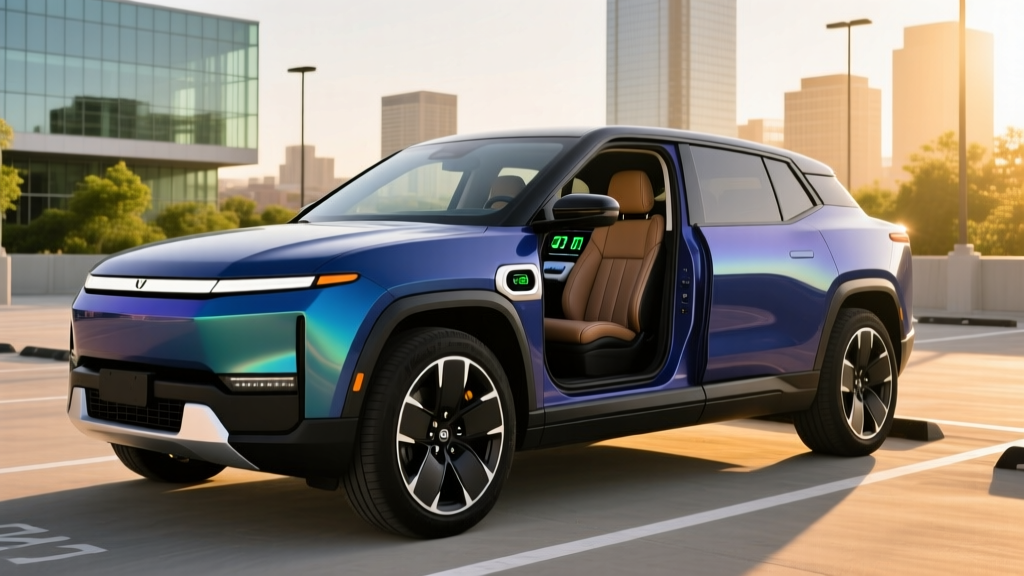
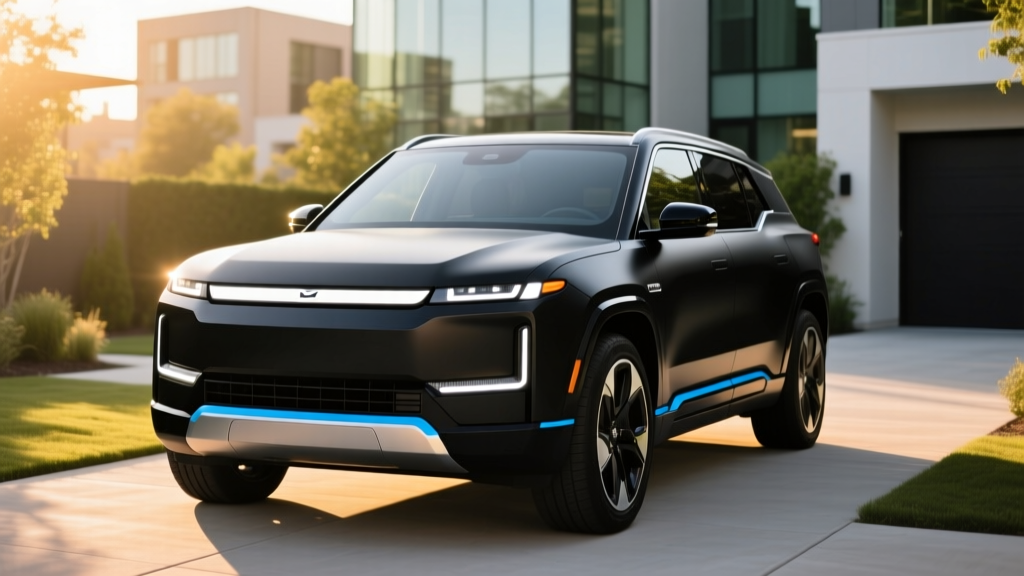
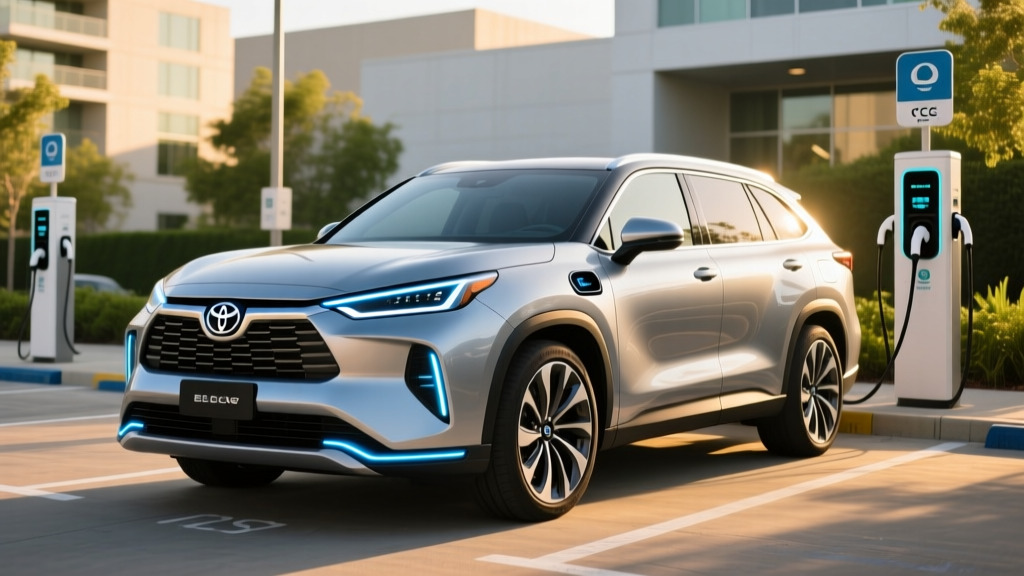
However, Toyota has expanded its dedicated EV lineup with the 2026 bZ5x, a 3-row all-electric SUV that occupies a similar size and price bracket to the Highlander. For buyers specifically seeking the Highlander badge with electrification, the 2026 Highlander Hybrid remains the most efficient option, delivering an EPA-estimated 36 MPG combined with no plug required.
Below, we break down exactly what's available, what it costs to own each option, and how to decide which path makes sense for your household.
The 2026 Toyota bZ5x: Toyota's Closest Thing to an Electric Highlander
Toyota introduced the bZ5x as its first 3-row dedicated battery-electric SUV for the North American market. While it doesn't carry the Highlander name, it was engineered to serve the same buyer profile: families needing three rows of seating, modern safety tech, and reasonable road-trip capability. Here's what the numbers look like.
| Attribute | Value |
|---|---|
| EPA Range | ~290 miles (est.) |
| Real-World Range (highway/cold) | ~230–260 miles |
| Battery Capacity | ~90 kWh usable (NMC chemistry) |
| Peak DC Fast Charge | ~175 kW |
| 10–80% DC Charge Time | ~30 minutes (est.) |
| Level 2 Charge Rate | 11 kW onboard charger |
| 0–60 mph | ~7.2 seconds |
| Horsepower | ~214 hp (FWD) / ~338 hp (AWD) |
| Base MSRP (FWD XLE) | ~$47,000 |
| Battery/Powertrain Warranty | 8 years / 100,000 miles |
Real-world range reality check: The EPA estimate of ~290 miles assumes mixed driving. On sustained highway trips at 70+ mph, expect closer to 240–260 miles. In freezing temperatures (below 20°F), range can drop 20–30%, bringing usable range to roughly 200–220 miles. The bZ5x uses NMC battery chemistry, which provides strong energy density but is more sensitive to extreme cold than LFP alternatives. Preconditioning the battery via the Toyota app before arriving at a DC fast charger is essential to hitting peak charge speeds.
2026 Highlander Hybrid vs. bZ5x: The Head-to-Head Numbers
Many shoppers searching for a "Toyota Highlander electric vehicle" are actually weighing whether to go full electric or stick with Toyota's proven hybrid system. Here's how the two compare on the metrics that matter.
| Metric | Highlander Hybrid (AWD LE) | bZ5x (FWD XLE) |
|---|---|---|
| Powertrain | 2.5L 4-cyl + 2 electric motors (HEV) | Battery-electric (BEV) |
| EPA Efficiency | 36 MPG combined | ~110 MPGe combined |
| Range / Tank | ~540 miles (17.9-gal tank) | ~290 miles (est.) |
| Base MSRP | ~$41,000 | ~$47,000 |
| Fuel/Energy Cost per Mile | ~$0.12/mi (gas at $3.40/gal) | ~$0.04/mi (home L2 at $0.14/kWh) |
| Annual Fuel/Energy (12k mi) | ~$1,440 | ~$480 (home charging) |
| Estimated 5-Year Fuel Savings | Baseline | ~$4,800 saved |
| Annual Maintenance | ~$600–$800 | ~$200–$400 |
| Seating | 8 passengers (bench 2nd row) | 7 passengers (captain's chairs) |
| Towing Capacity | 5,000 lbs | ~3,500 lbs (est.) |
| Federal Tax Credit (§30D) | Not eligible (HEV) | Up to $7,500 (eligibility varies) |
The math: Over 5 years and 60,000 miles, the bZ5x saves roughly $4,800 in energy costs and an additional $1,500–$2,000 in maintenance (no oil changes, fewer brake replacements due to regenerative braking). Combined with a potential $7,500 federal tax credit, the bZ5x's higher sticker price can be offset significantly — but only if you qualify.
Federal Tax Credit Eligibility: What Actually Applies in 2026
The IRS §30D clean vehicle credit can reduce the effective cost of the bZ5x by up to $7,500, but eligibility depends on several factors that change yearly. Here's the 2026 checklist:
- MSRP Cap: SUVs must have an MSRP at or below $80,000 (bZ5x qualifies)
- Buyer Income Cap: Modified AGI must not exceed $150,000 (single), $225,000 (head of household), or $300,000 (joint filers)
- Battery Sourcing: A percentage of critical minerals and battery components must be sourced from the U.S. or free-trade-agreement countries — the exact percentage increases each year, and some trims/configurations may not qualify for the full $7,500
- Point-of-Sale Transfer: As of 2024+, you can transfer the credit to the dealer at purchase, reducing your out-of-pocket cost immediately rather than waiting for tax filing
- Assembly: Vehicle must undergo final assembly in North America — verify the specific bZ5x trim's VIN on fueleconomy.gov
Critical caveat: Tax credit eligibility is highly specific to battery sourcing requirements, which shift annually. Always verify the exact VIN with your dealer and consult a tax professional before relying on the credit in your purchase decision. Never assume a flat $7,500 discount.
Real-World Ownership: What First-Time EV Buyers Must Know
Buying your first EV — whether it's the bZ5x or any other model — involves considerations that don't exist with the Highlander Hybrid. Here's what the brochures don't emphasize.
Home Charging Is Non-Negotiable for Most Owners
Over 80% of EV charging happens at home. If you can install a Level 2 (240V) home charger, the bZ5x's 11 kW onboard charger will fully replenish the ~90 kWh battery in roughly 9 hours — plug in at night, wake up to a full charge. A professional Level 2 installation typically costs $800–$2,000 depending on your electrical panel's capacity. If your panel needs upgrading from 100A to 200A service, add $1,500–$3,000.
If you live in an apartment or lack garage access, public charging becomes your primary strategy. Check your area's DC fast-charging density on apps like PlugShare or ChargePoint before committing. In many suburban and rural areas, reliable public charging remains sparse — a genuine limitation, not range anxiety.
Charging on Road Trips: The Curve Reality
The bZ5x's ~175 kW peak charge rate applies only between roughly 10–50% state of charge. Above 80%, the charge curve tapers significantly to protect battery health. A 10–80% session takes approximately 30 minutes, but an 80–100% top-off can take nearly as long. Plan road-trip stops around 10–80% sessions for efficiency.
Cold-Weather Range Loss Is Real
If you live in a climate where winters regularly drop below freezing, budget for 20–30% range loss. The bZ5x's heat pump (standard on most trims) mitigates cabin heating drain, but battery chemistry itself becomes less efficient in cold. A 290-mile EPA range becomes ~210 miles in sub-20°F conditions. For northern-climate buyers, this is a practical daily concern, not a theoretical one.
5-Year Total Cost of Ownership: bZ5x vs. Highlander Hybrid
| Cost Category | bZ5x (FWD XLE) | Highlander Hybrid (AWD LE) |
|---|---|---|
| Purchase Price (MSRP) | $47,000 | $41,000 |
| Federal Tax Credit | –$5,000 to –$7,500 (est.) | $0 |
| Home Charger Install | $1,200 | $0 |
| Energy/Fuel (5 yrs, 60k mi) | $2,400 | $7,200 |
| Maintenance (5 yrs) | $1,500 | $3,500 |
| Insurance (5 yrs, est.) | $9,500 | $7,500 |
| Estimated Depreciation | ~$18,000 | ~$14,000 |
| 5-Year Total | ~$58,600–$61,100 | ~$59,200 |
Insurance costs for EVs tend to run 15–25% higher due to repair complexity and parts cost. Depreciation estimates are based on current EV market trends and may vary. Always get personalized insurance quotes before purchasing.
Common Misconceptions — Myth vs. Fact
| Myth | Fact |
|---|---|
| "Toyota has an all-electric Highlander" | No. The Highlander remains gas/hybrid only. The bZ5x is Toyota's 3-row EV alternative. |
| "The bZ5x gets the full $7,500 tax credit automatically" | Eligibility depends on your income, battery sourcing compliance, and MSRP. Verify per VIN and tax year. |
| "EV batteries need replacing every few years" | Modern NMC batteries like the bZ5x's are warranted for 8 years/100,000 miles at a minimum 70% capacity retention. Real-world data from similar platforms shows ~85–90% retention at 100k miles. |
| "I can charge on any standard outlet" | A standard 120V outlet (Level 1) adds roughly 3–4 miles of range per hour — about 36 miles overnight. Usable for low-mileage drivers, but impractical as a primary strategy for a 90 kWh battery. |
| "The hybrid is basically the same as an EV" | The Highlander Hybrid has no plug and no electric-only range. It recovers energy through regenerative braking but runs on gasoline 100% of the time. It cannot qualify for EV tax credits. |
Decision Framework: Which Toyota 3-Row Is Right for You?
Use this framework to decide between the bZ5x (electric), the Highlander Hybrid, or waiting:
Choose the Toyota bZ5x (EV) if:
- You have access to home Level 2 charging (garage or driveway with 240V outlet)
- Your daily driving is under 100 miles round-trip, with occasional 200+ mile road trips
- You meet §30D income requirements and the bZ5x qualifies for at least $5,000 in credits
- You want the lowest per-mile energy cost and minimal maintenance
- You live in a moderate climate, or you're comfortable planning around cold-weather range loss
Choose the Highlander Hybrid if:
- You lack reliable home charging access (apartment, street parking, older electrical panel)
- You regularly tow more than 3,500 lbs (the Hybrid handles 5,000 lbs)
- You take frequent 400+ mile road trips through areas with sparse charging infrastructure
- You need maximum 2nd-row seating capacity (8-passenger bench vs. 7-passenger captain's chairs)
- You want the lowest upfront purchase price and don't want to deal with tax-credit paperwork
Wait if:
- You're specifically holding out for a Highlander-branded EV or PHEV — Toyota has not confirmed one, but their electrification roadmap through 2028 includes expanded 3-row options
- Solid-state battery Toyota models (announced for late-2020s production) are on your radar for potentially faster charging and longer range
Frequently Asked Questions
Will Toyota ever make an all-electric Highlander?
Toyota has not officially announced a Highlander-branded EV. The company's strategy has been to launch dedicated EV models under the bZ sub-brand rather than electrify existing nameplates. The bZ5x effectively fills the electric 3-row SUV role in Toyota's lineup. Toyota's published roadmap includes 30 BEV models globally by 2030, so additional 3-row options are plausible but unconfirmed.
Is the bZ5x bigger or smaller than the Highlander?
The bZ5x is comparable in overall length and wheelbase to the Highlander, with similar interior passenger volume. The key difference is seating configuration: the bZ5x uses captain's chairs in the second row (7-passenger), while the Highlander offers an available bench for 8-passenger capacity. Cargo space behind the third row is similar at roughly 14–16 cubic feet.
How does the bZ5x charge on a Tesla Supercharger?
Toyota has adopted the NACS (North American Charging Standard) connector for its newer EVs. The 2026 bZ5x is expected to ship with a native NACS charge port, giving it direct access to Tesla's Supercharger network — the largest and most reliable DC fast-charging network in the U.S. — without an adapter. Always confirm the connector type on the specific trim you're purchasing.
What does it cost to charge the bZ5x at home vs. public chargers?
At home on Level 2 with an average U.S. electricity rate of $0.14/kWh, a full ~90 kWh charge costs roughly $12.60, yielding about 290 miles of range — approximately $0.04 per mile. Public DC fast chargers vary widely: Electrify America and EVgo typically charge $0.35–$0.55/kWh, making a public fast-charge session cost $30–$50 for a similar fill. Home charging is dramatically cheaper; public charging is a road-trip convenience, not a daily strategy.
Is the Highlander Hybrid considered a "green" vehicle?
The Highlander Hybrid reduces fuel consumption by roughly 40% compared to the gas-only Highlander (36 MPG vs. ~24 MPG combined), which meaningfully cuts emissions and fuel costs. However, it is not a plug-in vehicle, generates zero electric-only miles, and does not qualify for any federal EV tax credits. It's the most efficient gas-powered 3-row SUV Toyota sells, but it is not an electrified vehicle in the regulatory or practical EV sense.
What's the battery replacement cost for the bZ5x?
Out-of-warranty battery replacement for a ~90 kWh NMC pack currently ranges from $12,000–$18,000 including labor, though prices are declining as battery manufacturing scales. However, battery failure before 150,000+ miles is statistically rare. The 8-year/100,000-mile warranty covers defects and capacity loss below 70%. Most owners will sell or trade the vehicle before battery replacement becomes relevant.