The Short Answer
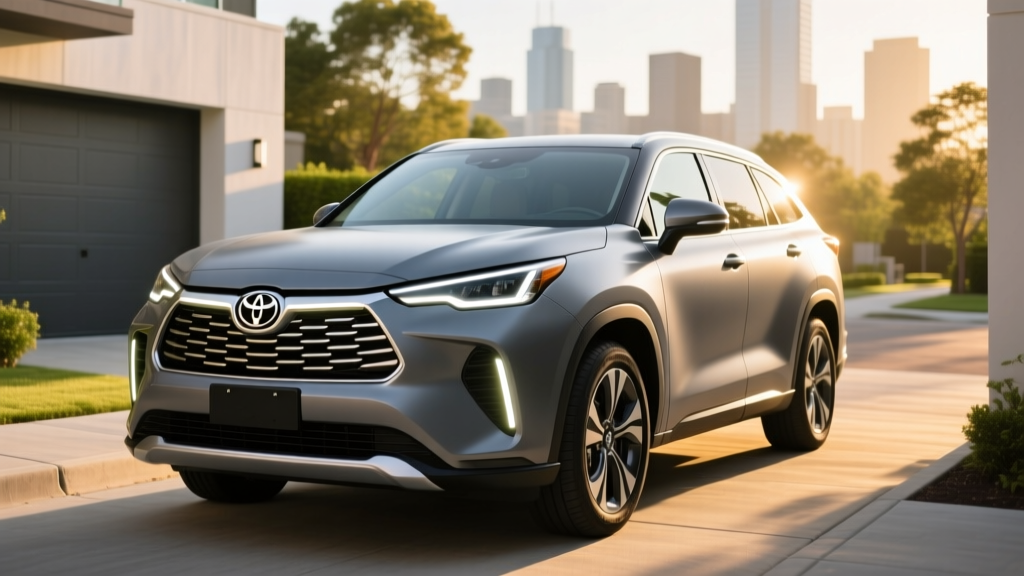
As of the 2026 model year, Toyota does not sell a fully electric Highlander. The Toyota Highlander lineup remains available exclusively as a conventional hybrid (HEV) and a gasoline model. If you're searching for a "Highlander electric vehicle," you're likely looking at one of three paths: the Highlander Hybrid (no plug, ~36 MPG combined), the Grand Highlander Hybrid (larger, ~34 MPG), or Toyota's actual three-row electric SUV, the bZ5X (announced, expected late 2026/2027). Below, we break down the real costs, efficiency, and ownership trade-offs for each option so you can decide what actually fits your family.
Why There's No Electric Toyota Highlander (Yet)
Toyota has been notably cautious in its EV rollout compared to Hyundai, Kia, and Ford. While the brand has committed to a broad battery-electric lineup by 2030, the midsize three-row SUV segment — where the Highlander competes — has not yet received a dedicated BEV in Toyota's U.S. lineup. The Highlander nameplate continues on two powertrains:
- 2.4L Turbo Gasoline — 265 HP, ~24 MPG combined (EPA)
- 2.5L Hybrid (HEV) — 243 HP combined system output, 36 MPG combined (EPA)
Neither of these is a plug-in hybrid (PHEV) or a battery-electric vehicle (BEV). You cannot charge a Highlander at home or at a public charger. If plug-in capability is a priority, you'll need to look at the RAV4 Prime (PHEV, 42 miles electric-only, but only two rows) or cross-shop competitors like the Kia EV9 or Hyundai Ioniq 9, both of which are three-row BEVs available now.
Highlander Hybrid vs. Gas vs. Competitor EVs: The Numbers
Let's put real data on the table. The following comparison shows what a buyer cross-shopping a three-row family hauler actually faces in 2026:
| Spec / Model | Toyota Highlander Hybrid (AWD) | Toyota Highlander Gas (AWD) | Kia EV9 (Land AWD) | Hyundai Ioniq 9 (SEL AWD) |
|---|---|---|---|---|
| Powertrain | 2.5L HEV | 2.4L Turbo | Dual-motor BEV | Dual-motor BEV |
| Horsepower | 243 HP | 265 HP | 379 HP | 320 HP |
| 0–60 mph | ~7.8 sec | ~7.2 sec | ~5.0 sec | ~5.8 sec |
| EPA Efficiency | 35 MPG combined | 24 MPG combined | 83 MPGe | 85 MPGe |
| EPA Range / Tank | ~540 mi (17.9 gal) | ~430 mi (17.9 gal) | ~280 mi (100 kWh battery) | ~310 mi (110.3 kWh battery) |
| Max DC Fast Charge | N/A | N/A | ~210 kW (10–80% ~24 min) | ~240 kW (10–80% ~20 min) |
| Battery / Fuel | 1.6 kWh NiMH (self-charging) | Gasoline only | 100 kWh NMC | 110.3 kWh NMC |
| Seating | 7–8 | 7–8 | 6–7 | 6–7 |
| Starting MSRP (2026) | ~$42,800 | ~$40,200 | ~$59,900 | ~$58,500 |
| Federal Tax Credit (§30D) | Not eligible (HEV) | Not eligible | Up to $7,500 (eligibility varies) | Up to $7,500 (eligibility varies) |
| Powertrain Warranty | 5 yr / 60,000 mi; Hybrid battery 10 yr / 150,000 mi | 5 yr / 60,000 mi | 10 yr / 100,000 mi | 10 yr / 100,000 mi |
Sources: fueleconomy.gov, Toyota Highlander Hybrid specs, Kia EV9, Hyundai Ioniq 9. Prices and specs reflect 2026 model year where available; verify with your dealer.
Real-World Ownership Costs: 5-Year Breakdown
The sticker price only tells part of the story. Below is a 5-year / 75,000-mile total cost of ownership estimate for the Highlander Hybrid versus the Kia EV9 as a representative three-row BEV. This assumes 15,000 miles/year, $3.50/gallon regular gas, and a blended home/public EV charging rate of $0.14/kWh.
| Cost Category | Highlander Hybrid (AWD LE) | Kia EV9 (Land AWD) |
|---|---|---|
| Purchase Price (MSRP) | $42,800 | $59,900 |
| Federal Tax Credit | $0 | Up to $7,500 (point-of-sale)* |
| Effective Purchase Price | $42,800 | $52,400 |
| Fuel / Energy (5 yr) | ~$10,900 (gas at 35 MPG) | ~$5,500 (electric at ~2.8 mi/kWh) |
| Maintenance (5 yr) | ~$3,200 (oil, filters, brakes, fluids) | ~$1,400 (cabin filter, tire rotation, wiper fluid) |
| Estimated Insurance (5 yr) | ~$8,500 | ~$10,200 |
| Estimated Depreciation (5 yr) | ~$18,000 | ~$26,000 |
| Total 5-Year Cost | ~$83,400 | ~$95,500 |
*Federal §30D tax credit eligibility depends on buyer income caps ($150K single / $300K joint), MSRP caps ($80K for SUVs), battery critical-mineral and component sourcing rules, and point-of-sale transfer. Verify current rules at IRS.gov. State and local incentives vary.
Key takeaway: The Highlander Hybrid wins on total cost over five years primarily because of its lower purchase price and stronger resale value. The EV9 recoups ground through dramatically lower fuel and maintenance costs — roughly $5,400 in energy savings and $1,800 in maintenance savings — but the ~$17,000 higher effective purchase price and steeper depreciation keep it more expensive overall in this timeframe. Stretch the horizon to 8–10 years and the math shifts in the EV's favor, especially if gas prices rise.
Common Misconceptions About a "Highlander EV"
| Myth | Fact |
|---|---|
| "The Highlander Hybrid is a plug-in EV." | It's a conventional HEV. The small 1.6 kWh battery charges only through regenerative braking and the gas engine. There is no plug, no electric-only driving range, and no eligibility for the §30D federal EV tax credit. |
| "I'll save $7,500 buying any Toyota hybrid." | The federal §30D credit applies only to plug-in vehicles (BEVs and PHEVs) meeting specific battery-sourcing and income requirements. Standard hybrids like the Highlander HEV do not qualify. |
| "A three-row EV is just as practical for road trips." | Three-row BEVs like the EV9 and Ioniq 9 offer 280–310 miles of EPA range. That's viable, but on a 600-mile road trip you'll add 20–30 minutes of DC fast charging. The Highlander Hybrid covers 540 miles on a tank with a 5-minute refill. Plan accordingly. |
| "EVs don't work in cold climates." | Battery range drops 15–30% in sub-freezing temperatures, but modern thermal management systems mitigate this. The real issue is that a 280-mile EV becomes a ~200-mile EV in a Minnesota winter — which matters more if you lack home charging. A hybrid is unaffected by cold-weather range loss. |
| "I need home charging to own an EV." | Home Level 2 charging is ideal and covers 80%+ of daily needs for most owners. But if you live in an apartment or lack a garage, rely on workplace charging or public DC fast chargers. This works — but adds cost and time compared to home charging. |
What About Toyota's Upcoming Three-Row Electric SUV?
Toyota has announced the bZ5X, a three-row battery-electric SUV expected to slot above the bZ4X in the lineup. As of early 2026, the bZ5X is announced but not yet on sale. Preliminary details suggest:
- Platform: Toyota's next-gen e-TNGA or a dedicated EV architecture
- Estimated range: 280–320 miles (EPA, preliminary)
- Expected pricing: $50,000–$60,000+ starting MSRP
- Production: Likely at Toyota's Kentucky or Alabama plant, which could help qualify for §30D credits
Until the bZ5X is officially specced and on dealer lots, treat all figures as estimates. If you need a three-row family vehicle now, the Highlander Hybrid is the Toyota option; the EV9 or Ioniq 9 are the electric alternatives.
Decision Framework: Which Three-Row SUV Is Right for You?
Choose the Highlander Hybrid if:
- You drive more than 400 miles between stops regularly and don't want to plan around charging.
- You lack reliable home or workplace charging access.
- You live in an extreme-cold climate where BEV range loss would drop below your daily needs.
- You want a lower purchase price and proven Toyota reliability with a 10-year hybrid battery warranty.
- You need a full 8-seat configuration (available on certain trims).
Choose a Three-Row BEV (Kia EV9 / Hyundai Ioniq 9) if:
- You have access to Level 2 home charging (a 240V / 40–48A circuit, ~$500–$2,000 to install).
- Your daily driving is under 150 miles round-trip, and road trips are occasional.
- You want the lowest per-mile energy cost (~$0.05/mi at home vs. ~$0.10/mi in the hybrid at $3.50/gal gas).
- You value instant torque, quiet operation, and a frunk (front trunk).
- You qualify for the federal §30D credit (check income, MSRP, and sourcing rules at IRS.gov).
Wait for the Toyota bZ5X if:
- You want a Toyota-badged three-row EV specifically and can delay your purchase into late 2026 or 2027.
- You want to see whether U.S. production qualifies for the full §30D credit.
First-Time EV Buyer Essentials
If you're leaning toward a three-row BEV instead of the Highlander Hybrid, here's what matters before you sign:
- Home charging is non-negotiable for convenience. A Level 2 home charger (7.2–11.5 kW) adds 25–40 miles of range per hour of charging, easily replenishing a day's driving overnight. Budget $500–$2,000 for equipment and electrician installation. If your electrical panel is maxed out, a panel upgrade can add $1,500–$3,000.
- Understand kW vs. kWh. kW (kilowatts) measures power — how fast you charge. kWh (kilowatt-hours) measures energy — how big the battery is. A 100 kWh battery charged at 10 kW takes 10 hours. A 210 kW DC fast charger can add 10–80% in ~24 minutes, but the charge rate tapers significantly above 80% to protect the battery.
- EPA range ≠ your range. Highway driving at 75+ mph, cold weather, roof cargo boxes, and towing all reduce real-world range by 10–30%. If an EV is rated at 300 miles EPA, plan for ~220–260 miles in mixed real-world use.
- Insurance costs more for EVs. Expect premiums 15–25% higher than a comparable gas vehicle due to higher repair costs and battery replacement value. Get quotes before purchasing.
- Tax credits aren't guaranteed. The §30D credit has strict rules around buyer income, vehicle MSRP caps ($80,000 for SUVs/vans/pickups), and battery component/critical-mineral sourcing. These rules change. Confirm eligibility on IRS.gov or with a tax professional before relying on a $7,500 credit in your budget.
Frequently Asked Questions
Will Toyota make an electric Highlander?
Toyota has not announced an electric version of the Highlander specifically. Instead, the brand is developing the bZ5X, a new three-row electric SUV on a separate nameplate, expected to arrive in late 2026 or 2027. The existing Highlander will likely continue as a hybrid and gas model alongside it.
Is the Highlander Hybrid considered an electric vehicle?
No. The Highlander Hybrid is a conventional HEV (hybrid electric vehicle) that uses a small battery and electric motor to assist the gas engine. It cannot be plugged in, has no electric-only driving range, and does not qualify for EV tax credits. It's more efficient than the gas Highlander (~35 MPG vs. ~24 MPG) but still runs entirely on gasoline.
How much does it cost to charge a three-row EV vs. fueling a Highlander Hybrid?
At a national average of $0.14/kWh for home charging, a three-row BEV like the Kia EV9 costs roughly $0.05 per mile. The Highlander Hybrid at 35 MPG and $3.50/gallon costs about $0.10 per mile. Over 15,000 miles/year, that's ~$750 for electricity vs. ~$1,500 for gas — a savings of ~$750/year. Public DC fast charging at $0.35–$0.50/kWh narrows or eliminates this advantage, so home charging access matters.
What three-row EVs can I buy right now instead of a Highlander?
As of 2026, the primary options are the Kia EV9 (280 mi range, ~$59,900), Hyundai Ioniq 9 (310 mi range, ~$58,500), Tesla Model X (320 mi range, ~$82,000+), and Rivian R1S (330+ mi range, ~$79,000+). The Volvo EX90 (310 mi, ~$78,000+) is also entering the market. All are significantly more expensive than the Highlander Hybrid but offer genuine electric driving.
Does the Highlander Hybrid qualify for any tax credits?
The federal §30D clean vehicle credit applies only to plug-in electric vehicles (BEVs and PHEVs). The Highlander Hybrid, as a conventional HEV, does not qualify. Some states offer rebates or incentives for hybrids, but these vary by jurisdiction — check your state's energy or environmental agency for current programs.