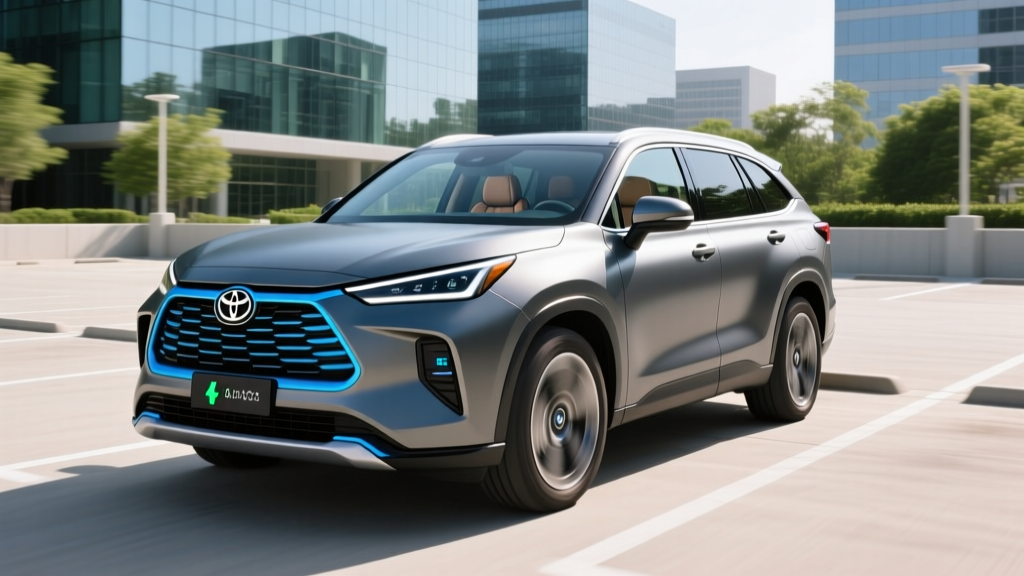
Quick Answer: As of early 2026, Toyota has not released a fully electric Highlander in the U.S. market. The current Toyota Highlander lineup includes a conventional gas model and a Highlander Hybrid (HEV). Toyota has announced its bZ Large electric SUV concept — widely expected to become a production three-row electric SUV that would serve as the spiritual successor to a "Highlander Electric" — but it remains unannounced for sale. If you need a three-row electric SUV today, alternatives like the Kia EV9, Hyundai Ioniq 9, or Rivian R1S are available now.
What Is the Toyota Highlander Electric SUV?
The search for a "Toyota Highlander Electric" reflects a real gap in Toyota's U.S. lineup. The Highlander nameplate — one of the best-selling midsize three-row SUVs in America — currently comes in two flavors: a 2.4-liter turbocharged gas model and the Highlander Hybrid, which pairs a 2.5-liter four-cylinder with electric motors for an EPA-estimated 35 MPG combined. Neither is a plug-in or battery-electric vehicle.
Toyota has signaled its intent to enter the three-row electric SUV segment. The bZ Large SUV concept, unveiled in 2024, previews a production battery-electric SUV expected to ride on Toyota's e-TNGA platform with an estimated range exceeding 300 miles. However, Toyota has not confirmed a production name, final specs, pricing, or an on-sale date. Industry analysts project a 2026 or 2027 model-year launch at the earliest.
Until that production vehicle arrives, there is no Highlander Electric you can buy. Here's what Toyota currently offers and how it compares to what the EV market delivers today.
Current Highlander Lineup: Gas vs. Hybrid vs. What an EV Would Offer
For buyers cross-shopping the Highlander, here's how the existing models stack up against projected three-row electric SUV competitors in the same price bracket.
| Specification | 2026 Highlander Gas (LE) | 2026 Highlander Hybrid (LE) | Kia EV9 (Land AWD) | Hyundai Ioniq 9 (SEL AWD) |
|---|---|---|---|---|
| Powertrain | 2.4L Turbo I-4 | 2.5L I-4 + 2 electric motors (HEV) | Dual-motor BEV | Dual-motor BEV |
| Horsepower | 265 hp | 243 hp combined | 379 hp | 338 hp |
| EPA Range / MPG | 24 MPG combined | 35 MPG combined | 275 mi (EPA est.) | 311 mi (EPA est.) |
| Battery / Fuel Tank | 17.9 gal tank | 17.1 gal tank | 99.8 kWh (NMC) | 110.3 kWh (NMC) |
| Max DC Fast Charge | N/A | N/A | 236 kW peak | 240 kW peak |
| 10–80% DC Charge Time | N/A | N/A | ~24 min | ~24 min |
| 0–60 mph | 7.5 sec | 8.0 sec | 5.0 sec | 5.3 sec |
| Seating | 7–8 passengers | 7–8 passengers | 6–7 passengers | 6–7 passengers |
| Starting MSRP | $39,620 | $42,320 | $59,900 | $61,450 |
| Federal Tax Credit (§30D) | None | None | Up to $7,500* | Up to $7,500* |
* Federal EV tax credit eligibility under IRS §30D depends on buyer income caps ($150K single / $300K joint), vehicle MSRP caps ($80K for SUVs), battery critical-mineral sourcing, and final assembly in North America. Credit may be transferred to the dealer as a point-of-sale discount. Confirm eligibility with a tax professional before purchasing.
What Would a Highlander Electric Cost to Own?
While we can't give exact ownership figures for a vehicle that doesn't yet exist, we can model what a production Toyota three-row EV might cost based on the bZ Large concept's projected specs and compare it to the current Highlander Hybrid — the closest apples-to-apples comparison for Toyota-loyal families.
| Annual Cost Category | Highlander Hybrid (35 MPG) | Projected Toyota 3-Row EV (300 mi range, 3.0 mi/kWh) |
|---|---|---|
| Fuel / Energy (12,000 mi/yr) | $1,234 (gas at $3.60/gal) | $520 (home charging at $0.13/kWh) |
| Public DC Fast Charging Supplement | N/A | $180 (est. 10 road-trip charges/yr) |
| Total Energy Cost | $1,234 | $700 |
| Oil Changes | $180 (3× per year) | $0 |
| Brake Pad Replacement Interval | ~40,000 mi | ~80,000+ mi (regen braking) |
| Annual Maintenance Estimate | $450 | $150 |
| Insurance (national avg.) | $1,650 | $1,950 (EV premium ~18%) |
| Total Annual Running Cost | $3,334 | $2,800 |
Key takeaway: A three-row Toyota EV would save roughly $534 per year in running costs versus the Highlander Hybrid, primarily from cheaper home electricity and reduced maintenance. However, the EV's higher purchase price (likely $55,000–$65,000 vs. $42,320 for the Hybrid) means it could take 5–7 years to break even on the upfront premium, even with a $7,500 federal tax credit applied.
For families driving less than 12,000 miles per year or those without reliable home charging access, the Highlander Hybrid's lower sticker price and 35 MPG combined may still represent the more economical choice.
Real-World Ownership Considerations Before You Wait
If you're holding out for a Highlander Electric, weigh these practical factors against your current situation:
Home Charging Access
EV ownership economics hinge on Level 2 home charging. A 240-volt Level 2 charger adds roughly 25–30 miles of range per hour of charging and costs $500–$2,000 installed (equipment plus licensed electrician). If you live in an apartment, condo, or street-parking situation without charging access, a three-row EV becomes significantly less practical — public DC fast charging costs 2–3× more per kWh and requires dedicated time.
Cold-Weather Range Loss
Lithium-ion batteries lose 15–30% of their EPA-rated range in sustained sub-freezing temperatures. A 300-mile EPA-rated three-row EV could deliver as little as 210–255 miles in winter highway driving. If you live in the Upper Midwest or Northeast and regularly drive 200+ miles in winter, this is a real constraint — not a marketing footnote.
Driving Patterns
Three-row SUV buyers often tow and road-trip. Current electric SUVs in this class tow 3,500–5,000 lbs, but towing cuts range by 30–50%. If you tow a boat or camper more than 100 miles, a hybrid or gas SUV eliminates the charging-stop logistics that a BEV requires.
Third-Row and Cargo Practicality
Current three-row EVs like the Kia EV9 offer usable third rows and 20+ cu ft of cargo behind the third row. Toyota's bZ Large concept appears similarly sized. However, battery packaging under the floor can raise the floor height, potentially compromising third-row headroom versus the gas Highlander. Final dimensions won't be known until production specs are released.
Common Misconceptions About a Highlander Electric
| Myth | Fact |
|---|---|
| "The Highlander Electric is available to order now." | Toyota has not announced a production Highlander EV for sale. The bZ Large concept previews a future three-row electric SUV, but no pricing, specs, or on-sale date is confirmed. |
| "The Highlander Hybrid is a plug-in you can charge at home." | The Highlander Hybrid is a conventional HEV — it charges its small battery through regenerative braking and the gas engine. There is no plug, no electric-only range, and no home charging. |
| "An electric Highlander would automatically qualify for the $7,500 tax credit." | Credit eligibility depends on battery sourcing (critical minerals and components manufactured in the U.S. or FTA-partner countries), final assembly in North America, buyer income limits, and MSRP caps. Toyota's prior bZ4X faced sourcing challenges that limited credit eligibility — the same risk applies to future models. |
| "Electric SUVs can't tow." | Current three-row EVs like the Rivian R1S tow up to 7,700 lbs. The limitation isn't capability — it's range reduction while towing, which can cut effective range in half. |
| "I'll save money immediately by going electric." | Higher purchase prices and insurance premiums mean EV savings accumulate over years, not months. Break-even depends on your annual mileage, local electricity rates, and whether you qualify for tax incentives. |
Should You Wait or Buy Now?
Buy a Kia EV9 or Hyundai Ioniq 9 now if:
- You need a three-row electric SUV within the next 6 months
- You have Level 2 home charging or can install it
- Your daily driving is under 200 miles and you road-trip 3–5 times per year
- You want access to the current §30D federal tax credit before potential rule changes
- You value 236–240 kW DC fast charging for road-trip practicality
Buy a Highlander Hybrid now if:
- You don't have reliable home charging access
- You regularly tow more than 150 miles one-way
- You live in a region with extreme cold and limited charging infrastructure
- You want Toyota's proven reliability record and dealer network
- Your budget is under $50,000 and you can't wait 1–2 years for an EV launch
Wait for a Toyota three-row electric SUV if:
- Your current vehicle is functional and you have 12–24 months of flexibility
- You're a Toyota-loyal buyer who prefers the brand's resale value and service network
- You want to see whether Toyota adopts NACS (Tesla connector) for Supercharger access
- You want confirmed battery chemistry (LFP vs. NMC) and warranty terms before committing
What First-Time EV Buyers Should Know
If the Highlander Electric search is your entry point into EV shopping, here are the fundamentals that apply to any three-row electric SUV you consider:
kW vs. kWh: Kilowatts (kW) measure power — how fast you charge. Kilowatt-hours (kWh) measure energy — how big the battery is. A 100 kWh battery charged at 200 kW doesn't fill in 30 minutes; the charge curve tapers above 80% State of Charge, so a realistic 10–80% session takes 20–30 minutes at a capable DC fast charger.
Battery Chemistry Matters: NMC (nickel manganese cobalt) batteries offer higher energy density and longer range but degrade faster if routinely charged to 100%. LFP (lithium iron phosphate) batteries tolerate daily 100% charging and last longer but are heavier, reducing range. Toyota has used both chemistries across its global lineup — the choice for a three-row SUV will affect your daily charging habits.
Battery Warranty: Federal law mandates a minimum 8-year/100,000-mile battery warranty for EVs. Most manufacturers guarantee 70% capacity retention over that period. Toyota historically offers 10-year/150,000-mile hybrid battery warranties, suggesting a competitive EV battery warranty is likely.
Charging Network Access: As of 2026, the Tesla Supercharger network — now accessible to NACS-equipped vehicles from Ford, GM, Rivian, and others — remains the most reliable DC fast-charging network in the U.S. Confirm whether any EV you consider has native NACS or requires a CCS-to-NACS adapter, and check fueleconomy.gov for official EPA range and efficiency data.
Frequently Asked Questions
Is there a fully electric Toyota Highlander available in 2026?
No. Toyota currently sells the Highlander as a gas-only model and a hybrid (HEV). A three-row electric SUV based on the bZ Large concept is expected but has no confirmed production name, specs, or on-sale date as of early 2026.
How much would a Toyota Highlander Electric cost?
Toyota has not announced pricing. Based on the positioning of the Kia EV9 ($54,900–$73,900) and Hyundai Ioniq 9 ($56,450–$75,450), a Toyota three-row electric SUV would likely start between $50,000 and $60,000, with higher trims reaching $65,000–$70,000.
Will the Toyota electric SUV qualify for the $7,500 federal tax credit?
It depends. Under current IRS §30D rules, eligibility requires North American final assembly, battery sourcing compliance (critical minerals and components from the U.S. or FTA partners), buyer income below caps ($300K joint / $150K single), and MSRP under $80,000 for SUVs. Toyota's U.S.-built EVs may qualify, but sourcing requirements remain a variable. Consult a tax professional before relying on the credit.
Is the Highlander Hybrid a plug-in electric vehicle?
No. The Highlander Hybrid is a conventional hybrid (HEV). It cannot be plugged in, has no electric-only driving range, and charges its small battery through regenerative braking and the gasoline engine. It does not qualify for any EV tax incentives.
What three-row electric SUVs can I buy right now?
As of 2026, available options include the Kia EV9 (275 mi range, from $54,900), Hyundai Ioniq 9 (311 mi range, from $56,450), Rivian R1S (up to 410 mi with Max Pack, from $79,900), and the Tesla Model X (335 mi range, from $79,990). The VinFast VF 9 is also listed but has limited availability and service infrastructure.
What range should I expect from a three-row electric SUV in real-world driving?
EPA estimates for current models range from 270–335 miles. In real-world highway driving at 70+ mph, expect 80–85% of the EPA figure (roughly 220–285 miles). In cold weather (below 30°F), expect a further 15–25% reduction, yielding 180–240 effective miles. Plan road trips around 180–200 mile segments to maintain a comfort buffer.