The Short Answer on Toyota EV Sedans
As of the 2026 model year, Toyota does not sell a dedicated battery-electric sedan in the U.S. market. The closest electrified sedans Toyota offers are the Prius (HEV) and Prius Prime (PHEV), plus the hybrid Camry. Toyota's bZ series currently includes the bZ4X SUV; a bZ sedan (based on the bZ3C concept) has been announced for select global markets but is not yet confirmed for U.S. sale. If you want a Toyota sedan with electric-only driving, the Prius Prime plug-in hybrid is the only current option — offering up to 44 miles of EPA-rated electric range before the gas engine engages.
Toyota's Electrified Sedan Lineup: Where Things Stand
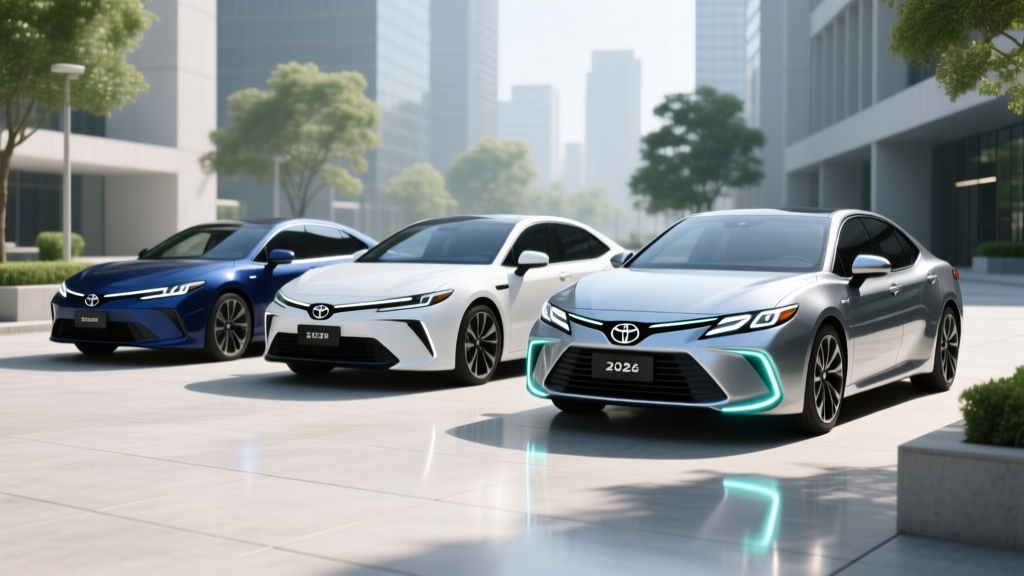
Toyota's approach to electrification has been deliberate — some say cautious — and the 2026 lineup reflects that philosophy. Rather than rushing a dedicated BEV sedan to market, Toyota has invested heavily in hybrid and plug-in hybrid powertrains across its sedan range. Here's what you can actually buy today:
| Model | Powertrain | EPA Electric Range | Combined MPG / MPGe | Battery | Base MSRP |
|---|---|---|---|---|---|
| Prius (HEV) | Hybrid | N/A | 57 MPG combined | 1.0 kWh (NiMH-equiv.) | ~$29,500 |
| Prius Prime (PHEV) | Plug-in Hybrid | 44 mi (EV mode) | 52 MPG / 127 MPGe | 13.6 kWh (Li-ion) | ~$34,000 |
| Camry (HEV) | Hybrid | N/A | 51 MPG combined | ~1.6 kWh | ~$30,500 |
| Crown (HEV) | Hybrid | N/A | 41 MPG combined | ~1.6 kWh | ~$42,500 |
For buyers specifically searching for a "Toyota EV sedan," the Prius Prime is the most electric car in Toyota's current sedan stable. It charges on Level 1 (120V) in about 10 hours or Level 2 (240V, 3.3 kW onboard charger) in roughly 4 hours. There is no DC fast charging capability — a significant limitation for road-trip flexibility.
Prius Prime: The Closest Thing to a Toyota EV Sedan
The 2026 Prius Prime pairs a 2.0-liter four-cylinder engine with two motor-generators and a 13.6 kWh lithium-ion battery pack. In EV mode, it delivers 44 miles of all-electric range per the EPA, enough for most daily commutes without burning a drop of gasoline.
Real-World Range Expectations
EPA rating: 44 miles electric-only
Real-world (moderate temps, mixed driving): 38–42 miles
Cold weather (below 30°F): 30–35 miles (battery efficiency drops, cabin heating draws power)
Highway-heavy at 75+ mph: 34–38 miles
Once the battery depletes, the Prime seamlessly switches to hybrid mode, where it achieves an EPA-rated 52 MPG combined. This dual personality is the PHEV's strongest selling point: electric commuting with zero range anxiety on longer trips.
On the performance side, the Prime produces 220 combined system horsepower — a dramatic improvement over earlier generations — and hits 0–60 mph in approximately 6.6 seconds. It's genuinely quick off the line in EV mode thanks to instant electric torque.
Cost Breakdown: Prius Prime vs. Gas Sedan vs. Full EV
The economics of choosing a PHEV over a conventional gas car or a dedicated BEV depend heavily on your driving patterns, electricity rates, and whether you can charge at home. Here's a five-year comparison assuming 15,000 miles/year, $3.50/gallon gas, and $0.14/kWh electricity (national average):
| Cost Category | Prius Prime (PHEV) | Camry LE (Gas) | Tesla Model 3 RWD (BEV) |
|---|---|---|---|
| Purchase Price (base MSRP) | $34,000 | $28,500 | $39,000 |
| Federal Tax Credit (§30D) | $3,750* | $0 | Up to $7,500** |
| Effective Purchase | $30,250 | $28,500 | $31,500 |
| Fuel/Energy (5 years) | ~$3,800 | ~$7,500 | ~$3,150 |
| Maintenance (5 years) | ~$2,200 | ~$3,800 | ~$1,500 |
| Insurance (5 years est.) | ~$8,500 | ~$7,200 | ~$9,800 |
| Estimated 5-Year Total | ~$44,750 | ~$47,000 | ~$45,950 |
*The Prius Prime qualifies for a partial federal credit under IRS §30D rules; the exact amount depends on battery sourcing compliance and your income. **Tesla Model 3 eligibility is subject to MSRP caps ($55,000 for sedans), income limits ($150K single / $300K joint), and critical-mineral sourcing requirements. Point-of-sale transfer is available. Consult a tax professional.
What About a Dedicated Toyota BEV Sedan?
Toyota has previewed its future electric sedan direction with the bZ3C concept and the China-market bZ3 sedan (developed with BYD). However, as of early 2026, no dedicated Toyota battery-electric sedan has been officially confirmed for the U.S. market. Toyota has announced plans to roll out a broader BEV lineup globally by 2027–2028, including next-generation models with improved battery chemistry and faster charging, but U.S. sedan specifics remain unannounced.
If a Toyota BEV sedan does arrive, industry expectations based on Toyota's announcements suggest:
- Battery capacity: ~70–80 kWh usable (likely NMC chemistry for energy density)
- EPA range target: 300+ miles
- DC fast charging: potentially 150–250 kW peak (10–80% in ~20–30 minutes)
- Starting MSRP: likely $38,000–$45,000 before incentives
These are preliminary projections, not confirmed specifications. We'll update this guide when Toyota makes a formal U.S. announcement.
EV vs. Hybrid vs. Gas: Which Toyota Sedan Fits Your Life?
The right choice isn't about which powertrain is "best" in the abstract — it's about which matches your actual driving patterns, housing situation, and budget. Here's a practical framework:
Decision Framework: Which Toyota Sedan to Buy
Choose the Prius (HEV) if:
- You have no access to home or workplace charging
- You want maximum MPG (57 combined) with zero plug-in hassle
- Your budget is under $32,000 and you want the lowest entry price
- You drive 12,000+ miles/year mostly in city/suburban traffic
Choose the Prius Prime (PHEV) if:
- You have Level 1 or Level 2 charging at home or work
- Your daily commute is under 40 miles round-trip
- You want electric daily driving but need gas flexibility for road trips
- You want to reduce fuel consumption dramatically without range anxiety
Wait for a Toyota BEV sedan (or look at competitors) if:
- You want zero tailpipe emissions and no gasoline engine at all
- You have reliable Level 2 home charging and access to DC fast charging
- You drive under 300 miles/day and can plan charging on road trips
- You're willing to consider the Tesla Model 3, Hyundai Ioniq 6, or BMW i4 now
Choose the Camry Hybrid if:
- You need a midsize sedan with more interior space (100.4 cu ft passenger volume vs. Prius's 93.5)
- You value a smoother, quieter ride over maximum efficiency
- You don't want to plug in and just want excellent MPG (51 combined)
Real-World Ownership: What First-Time Buyers Miss
If you're considering the Prius Prime as your first plug-in vehicle, several practical realities deserve attention before you sign:
Home charging is essential for PHEV economics. The Prius Prime's 13.6 kWh battery charges in about 10 hours on a standard 120V outlet (Level 1), which works if you park overnight. A Level 2 home charger (240V) cuts that to ~4 hours. If you can't charge at home — apartment parking, street parking, no garage — you'll rarely use EV mode, and the Prime becomes a slightly heavier, more expensive Prius. Installation of a Level 2 outlet typically costs $500–$2,000 depending on panel capacity and distance from the electrical panel; a full panel upgrade (100A to 200A) can add $1,500–$4,000.
Cold weather reduces electric range significantly. In sub-freezing temperatures, expect the Prime's 44-mile EV range to drop to roughly 30–35 miles. The battery's internal resistance increases, and cabin heating draws from the pack. Toyota's heat pump system (standard on the Prime) helps, but physics is physics.
No DC fast charging. Unlike a full BEV, the Prius Prime cannot use DC fast chargers. On road trips, you'll simply drive in hybrid mode at 52 MPG. This is a non-issue for most PHEV buyers, but it means you can't "top up" at an Electrify America or Tesla Supercharger station.
Tax credit eligibility is complex. The federal §30D credit for the Prius Prime depends on battery component sourcing, critical-mineral content, your adjusted gross income, and MSRP caps. These rules have tightened significantly since 2023. Always check the latest IRS guidance and confirm eligibility with your tax advisor before relying on a specific credit amount.
Common Misconceptions About Toyota and EVs
| Myth | Fact |
|---|---|
| "Toyota doesn't make any electric cars." | Toyota sells the bZ4X electric SUV and the Prius Prime PHEV sedan. A dedicated BEV sedan has not yet been confirmed for the U.S. |
| "Hybrids are outdated technology." | The 2026 Prius achieves 57 MPG combined — better than most BEVs' equivalent energy cost per mile in regions with expensive electricity. Hybrids remain highly relevant where charging infrastructure is limited. |
| "The Prius Prime is basically a regular Prius." | The Prime has a larger 13.6 kWh battery, 220 combined HP (vs. 194 in the standard Prius), 44 miles of EV range, and a fundamentally different driving experience in electric mode. |
| "PHEV batteries degrade quickly and cost a fortune to replace." | Toyota warranties the Prius Prime's hybrid battery for 10 years / 150,000 miles (in states following CARB standards; 10yr/100,000mi in others). Real-world data shows Toyota hybrid batteries lasting 150K–200K+ miles. Replacement, if needed, runs ~$3,000–$4,500. |
| "I'll save more money with a full EV." | It depends. A BEV may save more on fuel but costs more upfront, may carry higher insurance premiums, and requires reliable charging access. The PHEV is often the lower-risk choice for first-time electrified buyers. |
Competitor BEV Sedans Worth Considering
If you're set on a full battery-electric sedan and Toyota doesn't yet offer one, these 2026 models fill the gap:
| Model | EPA Range | Battery | Peak DC Charge | 10–80% | Base MSRP |
|---|---|---|---|---|---|
| Tesla Model 3 RWD | 341 mi | ~60 kWh (LFP) | 170 kW | ~25 min | ~$39,000 |
| Hyundai Ioniq 6 SE | 361 mi | 77.4 kWh (NMC) | 240 kW | ~18 min | ~$42,500 |
| BMW i4 eDrive40 | 307 mi | 83.9 kWh (NMC) | 200 kW | ~31 min | ~$57,000 |
| VW ID.7 Pro S | ~340 mi (est.) | 86 kWh (NMC) | 200 kW | ~26 min | ~$50,000 |
Each of these offers genuine long-range BEV capability with DC fast charging. The Ioniq 6 leads on charging speed; the Model 3 leads on price and Supercharger network access. None, however, match the Prius Prime's flexibility for drivers without reliable charging.
FAQ: Toyota EV Sedan Questions
Will Toyota release a fully electric sedan in the U.S.?
Toyota has not officially confirmed a U.S.-market BEV sedan as of early 2026. The bZ3 sedan exists in China (developed with BYD), and Toyota has signaled a broader BEV rollout by 2027–2028. We'll update this guide when details are confirmed. Until then, the Prius Prime PHEV is Toyota's most electric sedan offering.
How much does it cost to charge a Prius Prime at home?
Fully recharging the 13.6 kWh battery from empty costs roughly $1.90 at the national average residential rate of $0.14/kWh. That gives you about 44 miles of electric range — equivalent to about 4.3 cents per mile. Compare that to a 30 MPG gas sedan at $3.50/gallon: about 11.7 cents per mile. You'll save roughly $0.07 per mile driven on electricity.
Is the Prius Prime eligible for the federal tax credit?
The Prius Prime may qualify for a partial federal tax credit under IRS §30D, but the exact amount depends on battery sourcing compliance, your income (capped at $150K single / $300K joint filers), and the vehicle's MSRP (must be under $55,000 for sedans). Point-of-sale transfer is available if eligible. Credit amounts and sourcing rules change — always verify with the IRS and your tax professional.
Can I road-trip in a Prius Prime?
Yes — that's the PHEV advantage. Once the 44-mile electric range depletes, the Prime operates as a standard hybrid achieving 52 MPG combined. You refuel at any gas station in under 5 minutes. There's no need to plan around charging stations, which makes the Prime practical for drivers who take regular long trips through areas with sparse charging infrastructure.
What's the battery warranty on the Prius Prime?
Toyota covers the Prime's hybrid battery for 10 years or 150,000 miles (whichever comes first) in states that follow California Air Resources Board (CARB) emissions standards — which includes most coastal and many midwestern states. In non-CARB states, coverage is 10 years or 100,000 miles. The rest of the powertrain carries a 5-year/60,000-mile warranty.