The Short Answer on Toyota's EV Pickup
As of early 2026, Toyota has not yet released a battery-electric pickup for the U.S. market. The company has confirmed an all-electric truck is in development — previewed by the EPU concept — and is expected to arrive as a 2027 or 2028 model-year vehicle. If you need a Toyota truck today, your electrified options are limited to the Tundra i-FORCE MAX hybrid (HEV, no plug) and the upcoming next-generation Tacoma hybrid. Buyers specifically seeking a BEV Toyota pickup should expect preliminary specs to emerge in late 2026 or 2027, with EPA range likely targeting 300+ miles, a price floor near $55,000, and §30D federal tax credit eligibility that will depend on battery sourcing and buyer income at launch.
What Toyota Has Actually Announced (and What Remains Speculative)
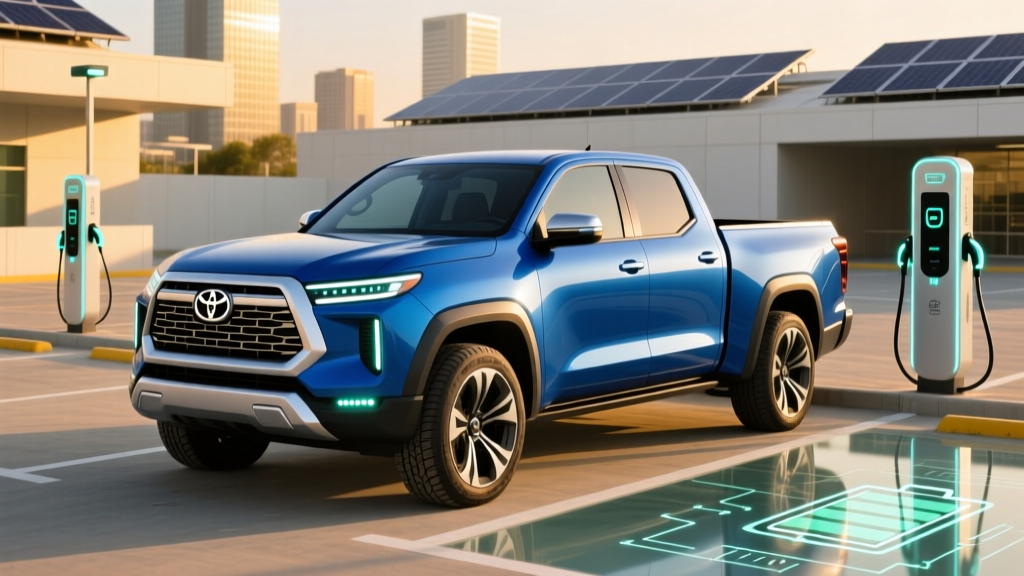
Toyota's EV pickup roadmap has been measured compared to rivals. The EPU concept, revealed in 2023, previewed a mid-size electric truck with a unibody platform, a crew-cab layout, and a roughly 4-foot bed — positioning it closer to a Ford Maverick or Hyundai Santa Cruz competitor than a full-size F-150 Lightning rival. Toyota executives have since confirmed a production EV truck is coming to North America, but final specs remain unreleased.
Based on Toyota's current EV platform strategy (the e-TNGA architecture used in the bZ4X) and industry reporting, here is what we can reasonably project — with the critical caveat that all figures below are preliminary estimates, not manufacturer-confirmed data:
| Attribute | Estimated Spec | Notes |
|---|---|---|
| Platform | e-TNGA (next-gen) | Expected unibody, similar to EPU concept |
| Battery Chemistry | LFP or NMC (TBD) | Toyota has signaled LFP for cost-competitive models |
| Battery Capacity | ~85–105 kWh usable | Estimated based on 300+ mi target |
| EPA Range (target) | 300–340 miles | Official EPA number not yet published |
| Peak DC Charge Rate | ~150–250 kW | Current Toyota EVs peak around 150 kW; next-gen may improve |
| 10–80% Charge Time | ~25–35 minutes (est.) | Depends on final battery and charge-curve tuning |
| Horsepower | ~350–500 hp (AWD dual motor) | Concept suggested AWD with dual motors |
| 0–60 mph | ~5.5–7.0 seconds (est.) | Varies by trim and motor config |
| Towing Capacity | ~5,000–7,500 lbs (est.) | Mid-size class estimate |
| Base MSRP | ~$55,000–$65,000 | Before any tax credits or incentives |
| Production Start | Late 2027 or 2028 | Per Toyota's EV roadmap announcements |
Toyota has historically been conservative with EV range claims, and the bZ4X's real-world range shortfall (EPA rated at 252 miles AWD but often delivering 200–220 in mixed highway/cold-weather driving) is a cautionary data point. Until official EPA testing is published on fueleconomy.gov, treat any range figure as an estimate.
EV Pickup vs. Gas and Hybrid Trucks: A Cost and Capability Comparison
For buyers weighing a future Toyota EV pickup against what's available now — or against current EV trucks from Ford, Rivian, and Chevrolet — the math involves more than sticker price. Here's how the major categories break down using representative 2026 models:
| Metric | Est. Toyota EV Pickup | Ford F-150 Lightning (2026) | Toyota Tacoma i-FORCE MAX Hybrid (2026) | Chevrolet Silverado EV (2026) |
|---|---|---|---|---|
| Powertrain | BEV (dual motor AWD est.) | BEV (dual motor AWD) | HEV (turbo 4-cyl + electric motor) | BEV (dual motor AWD) |
| EPA Range / Fuel Economy | ~300–340 mi (est.) | 230–320 mi (varies by battery) | ~24 MPG combined | ~350–440 mi |
| Base MSRP | ~$55,000–$65,000 (est.) | ~$55,000–$78,000 | ~$42,000–$52,000 | ~$55,000–$80,000 |
| Fueling Cost (per mile) | ~$0.04–$0.06 (home L2) | ~$0.04–$0.06 (home L2) | ~$0.14–$0.18 (gas at $3.40/gal) | ~$0.04–$0.06 (home L2) |
| DC Fast Charge (10–80%) | ~25–35 min (est.) | ~20–40 min (varies) | N/A (gas) | ~20–40 min |
| Maintenance (5-yr est.) | ~$1,500–$2,500 | ~$1,500–$2,500 | ~$3,500–$5,000 | ~$1,500–$2,500 |
| Federal Tax Credit (§30D) | TBD — sourcing dependent | Up to $7,500 (eligibility varies) | Not eligible (HEV) | Up to $7,500 (eligibility varies) |
| Towing (max rated) | ~5,000–7,500 lbs (est.) | 7,700–10,000 lbs | 6,500 lbs | 8,000–10,000 lbs |
The key takeaway: EV pickups offer dramatically lower per-mile fueling costs and reduced maintenance (no oil changes, fewer brake replacements due to regenerative braking), but they carry a higher upfront price, a towing range penalty (expect a 30–50% range reduction when towing near max capacity), and dependence on charging infrastructure that varies enormously by region.
Real Costs of EV Pickup Ownership: A 5-Year Breakdown
Let's model what owning a Toyota EV pickup might cost over five years, assuming 15,000 miles per year (75,000 total), compared to a gas-powered Tacoma. These are estimates based on projected specs and current energy/fuel prices.
| Cost Category | Est. Toyota EV Pickup | Toyota Tacoma Gas (2026) |
|---|---|---|
| Purchase Price (base MSRP) | $60,000 (est.) | $42,000 |
| Federal Tax Credit (§30D) | –$7,500 (if eligible) | $0 (HEV/gas not eligible) |
| Effective Purchase | $52,500 | $42,000 |
| Home Charger Install (Level 2) | $1,200–$2,500 | $0 |
| Fuel/Energy (75,000 mi) | $3,750 (at $0.05/mi home) | $11,250 (at $0.15/mi gas) |
| Maintenance (5 yr) | $2,000 | $4,500 |
| Insurance (5 yr avg) | $12,000 (EV premium ~15%) | $10,400 |
| Estimated Depreciation | ~$22,000 (est. 42%) | ~$16,000 (est. 38%) |
| 5-Year Total (approx.) | ~$90,950–$92,250 | ~$84,150 |
Critical nuance: The EV's fuel and maintenance savings (~$10,000 over 5 years) are real, but they only partially offset the higher purchase price and insurance premiums. The math improves significantly if you qualify for the full §30D federal tax credit ($7,500), can charge primarily at home on off-peak utility rates, and drive more than 15,000 miles per year. If you lack home charging access and rely on public DC fast chargers at $0.35–$0.50/kWh, the per-mile cost rises to $0.10–$0.14 — narrowing the gap with gas considerably.
Tax Credit Eligibility: What We Know (and Don't Know) for a Future Toyota EV
The IRS §30D clean vehicle credit has strict requirements that will apply to any future Toyota EV pickup at the time of purchase. Key criteria as of 2026:
- MSRP cap: Pickup trucks must have an MSRP at or below $80,000 to qualify.
- Buyer income cap: Modified AGI must not exceed $150,000 (single), $225,000 (head of household), or $300,000 (joint).
- Battery sourcing: A percentage of critical minerals and battery components must be sourced from the U.S. or free-trade-agreement countries — thresholds that increase each year through 2029.
- Point-of-sale transfer: Eligible buyers can transfer the credit to the dealer for an upfront price reduction, rather than waiting for a tax refund.
- Assembly: Final assembly must occur in North America.
Toyota's current EV, the bZ4X, is assembled in Japan and therefore does not qualify for §30D. If Toyota builds its EV pickup at a North American plant (likely in the U.S. South, where Toyota has significant manufacturing), eligibility becomes possible — but battery-sourcing rules are the wild card. Consult a tax professional before relying on credit eligibility for purchase planning.
What First-Time EV Pickup Buyers Should Plan For Now
Even though the Toyota EV pickup isn't available yet, the preparation work is the same as for any BEV purchase. Here's a practical checklist:
Home Charging Readiness
A Level 2 home charger (240V, 32–48 amps) is essential for practical EV truck ownership. Expect to add roughly 20–30 miles of range per hour of Level 2 charging, which is sufficient to replenish a full day's driving overnight. Installation costs typically run $800–$2,500 for a straightforward setup (panel capacity available, short wire run), but can exceed $4,000–$7,000 if your electrical panel needs a 200-amp upgrade. Get a quote from a licensed electrician before committing to any EV purchase.
Cold-Weather Range Loss
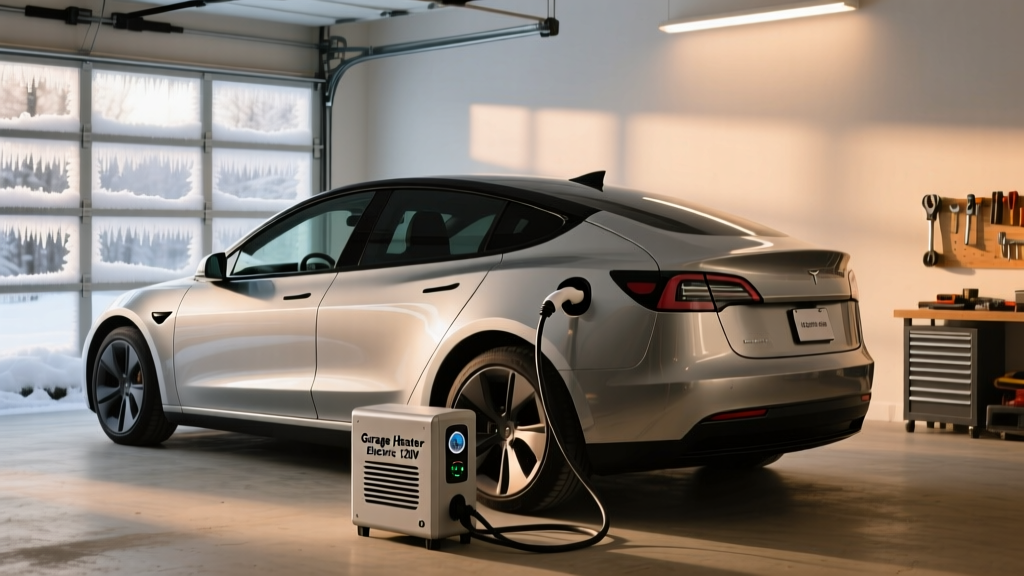
Every EV loses range in cold weather — typically 20–35% at temperatures below 20°F, based on real-world testing data. A truck with a 320-mile EPA rating may deliver only 210–250 miles in winter highway driving. If you live in the Upper Midwest, Northeast, or mountain states, budget for this shortfall and prioritize a model with a heat pump (which Toyota has used in the bZ4X and is likely to include in future EVs).
Charging Infrastructure Reality
Public DC fast-charging networks have expanded considerably, but coverage remains uneven in rural areas — exactly where pickup owners often drive. Before buying, map your typical routes against PlugShare or the DOV Alternative Fuels Station Locator to ensure viable charging exists. Toyota's current EV charging partnerships and whether it will adopt the NACS connector (enabling Tesla Supercharger access) remain open questions that could significantly affect real-world usability.
Towing and Payload
If you tow regularly, understand that an EV truck's range drops sharply under load. The Ford F-150 Lightning, for example, loses 40–50% of its range when towing a 6,000-pound trailer at highway speeds. If towing is a core use case, a hybrid truck (which maintains consistent fuel economy under load) may be more practical until EV charging infrastructure matures along common towing corridors.
Common Misconceptions About Toyota and EV Pickups
| Misconception | Fact |
|---|---|
| "Toyota already sells an electric pickup." | As of 2026, Toyota does not sell a BEV pickup in the U.S. The EPU concept previewed one, but production has not begun. |
| "EV batteries need replacing every 5 years." | Modern EV batteries are warranted for 8 years / 100,000 miles (federal minimum). Real-world degradation data from Tesla, Hyundai, and others shows ~10–15% capacity loss over 150,000–200,000 miles for NMC chemistries, and potentially less for LFP. |
| "A Toyota EV truck will definitely qualify for the $7,500 tax credit." | Eligibility depends on North American assembly, battery-sourcing thresholds, MSRP caps, and buyer income — none of which are confirmed for an unreleased model. |
| "EV pickups can't tow as much as gas trucks." | Max towing ratings for EV trucks like the F-150 Lightning (up to 10,000 lbs) are competitive with gas equivalents. The limitation is range while towing, not capability. |
| "Charging an EV truck costs as much as gas." | At residential electricity rates (~$0.13–$0.17/kWh), charging costs roughly $0.04–$0.06 per mile — about one-third the cost of gas at $3.40/gallon in a 24 MPG truck. Public DC fast charging is more expensive but still typically below gas on a per-mile basis. |
Decision Framework: Should You Wait for Toyota's EV Pickup or Buy Now?
Choose to WAIT for the Toyota EV Pickup if:
- You have reliable home charging access and can wait until 2027–2028.
- You prefer a mid-size truck footprint (Maverick/Santa Cruz class) rather than a full-size F-150 Lightning or Silverado EV.
- Toyota brand loyalty and dealer network matter to you, and you want to stay within the Toyota ecosystem.
- Your daily driving is under 200 miles round-trip, making range and charging less of a concern.
- You rarely tow more than 5,000 pounds.
Choose to BUY NOW (an existing EV or hybrid truck) if:
- You need a truck within the next 12 months — the Toyota EV pickup is still 1–2+ years away from deliveries.
- You regularly tow heavy loads (6,000+ lbs) and need proven range-under-load data — the F-150 Lightning or Rivian R1T have real-world track records.
- You lack home charging access and live in a charging-desert region — a hybrid (Tacoma i-FORCE MAX or Tundra hybrid) avoids this limitation entirely.
- You want to lock in current §30D tax credit eligibility on a model with confirmed sourcing compliance, rather than gamble on future rules.
- Budget is a primary concern — the Tacoma gas/hybrid starts $13,000–$18,000 lower than projected EV pickup pricing.
Frequently Asked Questions
When will the Toyota EV pickup be available to buy?
Toyota has not announced an official on-sale date. Based on the company's EV roadmap and production timelines, a 2027 reveal with 2028 model-year deliveries is the most likely scenario, though delays are possible given Toyota's historically cautious EV rollout pace.
Will the Toyota EV pickup use NACS or CCS for charging?
Toyota has not confirmed which connector standard its future EV trucks will use. Several automakers have committed to NACS (the Tesla connector) for upcoming models, which would grant access to the Supercharger network. Until Toyota confirms, this remains an open question — and an important one for buyers who prioritize charging network access.
How does a Toyota EV pickup compare to the Tacoma?
They will serve different buyers. The Tacoma (gas/hybrid) offers proven reliability, lower entry pricing (~$42,000), no charging dependence, and a strong off-road reputation. The EV pickup will offer lower operating costs, instant torque, a frunk, and zero tailpipe emissions — but at a higher entry price, with range limitations when towing, and charging-infrastructure dependence. If you drive mostly in-town and charge at home, the EV will likely cost less per mile. If you tow, go off-grid, or live in a rural area, the Tacoma remains the more practical tool.
What battery chemistry will Toyota use?
Toyota has not confirmed the chemistry for its EV pickup. The company has publicly discussed LFP (lithium iron phosphate) batteries for more affordable EVs, which would offer longer cycle life and lower degradation but slightly less energy density than NMC (nickel manganese cobalt). An LFP battery would mean you could routinely charge to 100% without accelerating degradation — a practical advantage for daily-use trucks. NMC would offer more range in a smaller package but benefits from staying between 20–80% state of charge for longevity.
Can I reserve a Toyota EV pickup now?
No. Toyota has not opened reservations for an EV pickup as of early 2026. Be cautious of any third-party site claiming to accept deposits. When reservations do open, they will be announced through Toyota's official channels and dealer network.