The Short Answer on Toyota's EV Lineup
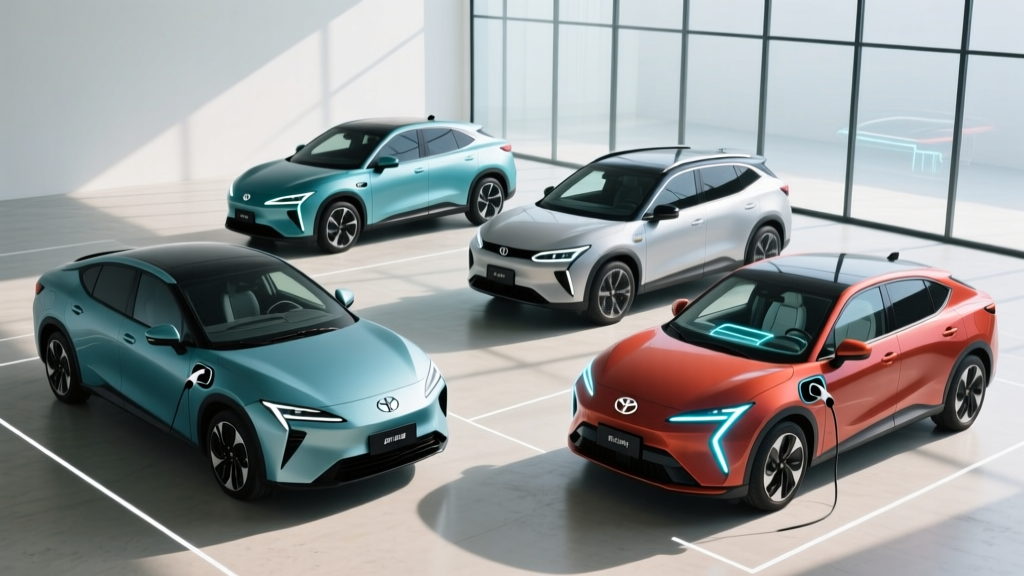
As of 2026, Toyota sells two battery-electric vehicles in the U.S.: the bZ4X crossover (EPA range up to 252 miles, starting around $37,070) and the newly introduced bZ Woodland SUV (EPA range up to 260 miles, starting around $43,070). Both use a 72.8 kWh (usable) NMC battery and support up to 150 kW DC fast charging. If you want Toyota reliability with zero tailpipe emissions and a short learning curve, these are your options. If you need 350+ miles of range or ultra-fast 250+ kW charging, Toyota's lineup doesn't yet compete with the Hyundai Ioniq 5 or Tesla Model Y on those metrics. Toyota's real strength remains its hybrid and PHEV lineup — 15+ models — which may be the smarter play for buyers without home charging or in extreme climates.
What's Actually in the 2026 Toyota EV Lineup
Toyota has historically taken a cautious approach to full battery-electric vehicles, investing heavily in hybrids, plug-in hybrids, and hydrogen. That's changing, but slowly. Here's what you can actually buy today:
| Spec | 2026 bZ4X (FWD) | 2026 bZ4X (AWD) | 2026 bZ Woodland |
|---|---|---|---|
| EPA Range | 252 mi | 228 mi | 260 mi |
| Battery (usable) | 72.8 kWh, NMC | 72.8 kWh, NMC | 72.8 kWh, NMC |
| Horsepower | 201 hp | 214 hp | 338 hp |
| 0-60 mph | 7.1 sec | 6.5 sec | ~5.0 sec (est.) |
| Peak DC Charge Rate | 150 kW | 150 kW | 150 kW |
| 10-80% DC Time | ~30 min | ~30 min | ~30 min |
| Level 2 Charge Rate | 6.6 kW | 6.6 kW | 6.6 kW |
| Combined MPGe | 119 MPGe | 104 MPGe | TBD |
| Base MSRP | $37,070 | $39,120 | $43,070 |
| Battery Warranty | 10 yr / 150,000 mi | 10 yr / 150,000 mi | 10 yr / 150,000 mi |
Sources: fueleconomy.gov, Toyota bZ4X specs.
Real-World Range: What the EPA Sticker Doesn't Tell You
EPA vs. Reality: The bZ4X FWD is rated at 252 miles, but expect ~210-225 miles on highway road trips at 70-75 mph. In cold weather (below 32°F), plan for 180-200 miles of usable range before needing to charge. The AWD model, rated at 228 miles, realistically delivers 190-210 miles highway and can dip below 170 in deep winter.
The bZ Woodland's 260-mile rating is more competitive, but its boxier shape and standard AWD mean highway and cold-weather losses follow a similar pattern: ~220 miles highway, ~185 in cold conditions.
Toyota's battery thermal management system is adequate but not class-leading. Unlike Hyundai/Kia's heat pump and battery preconditioning system, the bZ platform doesn't actively precondition the battery for DC fast charging unless you navigate to a charger using the built-in route planner. This means cold-weather charging sessions can be noticeably slower — sometimes adding 10-15 minutes to a 10-80% session in freezing temperatures.
Charging Speeds and Infrastructure Reality
| Charging Level | Power | Miles Added Per Hour | Where You'll Use It |
|---|---|---|---|
| Level 1 (120V) | ~1.2 kW | ~4 mi/hr | Emergency / overnight trickle |
| Level 2 (240V, 32A) | ~6.6 kW | ~22 mi/hr | Home / workplace |
| DC Fast Charge | Up to 150 kW | ~150 mi in 30 min (10-80%) | Road trips, public stations |
The 150 kW peak DC charge rate is the bZ lineup's most significant limitation versus rivals. The Hyundai Ioniq 5 peaks at 240 kW on 800V architecture (10-80% in ~18 minutes), and the Tesla Model Y can sustain high charge rates on the Supercharger network. Toyota's 10-80% time of ~30 minutes is functional for road trips but not exceptional.
Connector note: The 2026 bZ4X and bZ Woodland still use the CCS1 connector. Toyota has announced a transition to the NACS (Tesla-style) connector for future models, but current vehicles ship with CCS. You can use a NACS-to-CCS adapter to access Tesla Superchargers, though at slightly reduced peak speeds due to adapter overhead.
Cost Breakdown: Toyota EV vs. Toyota Hybrid vs. Gas
Let's compare a realistic 5-year ownership scenario for three Toyota options: the bZ4X FWD, the RAV4 Hybrid, and the RAV4 gas model. This assumes 15,000 miles/year, $0.14/kWh home electricity, $3.40/gallon gas, and standard maintenance schedules.
| Cost Factor (5 Years) | bZ4X FWD | RAV4 Hybrid | RAV4 Gas (FWD) |
|---|---|---|---|
| Base MSRP | $37,070 | $33,425 | $30,425 |
| Fed. Tax Credit (§30D)* | Up to $7,500 | $0 | $0 |
| Effective Purchase Price | ~$29,570 | $33,425 | $30,425 |
| Fuel / Energy (5 yr) | ~$3,675 | ~$6,375 | ~$8,500 |
| Maintenance (5 yr) | ~$1,500 | ~$2,800 | ~$3,200 |
| Insurance (5 yr est.) | ~$9,500 | ~$7,800 | ~$7,500 |
| Est. 5-Year Total Cost | ~$44,245 | ~$50,400 | ~$49,625 |
*Federal §30D tax credit eligibility depends on MSRP caps (SUVs ≤$80,000), buyer income limits ($150K single / $300K joint), battery critical-mineral and component sourcing requirements, and point-of-sale transfer rules. Verify current eligibility at IRS.gov or with a tax professional. Credit amounts and sourcing rules change frequently.
Key takeaway: The bZ4X wins on total cost primarily because of the federal tax credit and lower energy/maintenance costs. But insurance runs ~$300-$400/year higher than the RAV4 Hybrid, and if you don't qualify for the full credit (or any credit), the math shifts dramatically. The RAV4 Hybrid at 39 MPG combined remains the safest financial bet for buyers uncertain about charging access.
Common Misconceptions About Toyota EVs
| Myth | Fact |
|---|---|
| "Toyota doesn't make EVs." | They sell two: the bZ4X and bZ Woodland. More are coming (a three-row SUV and a next-gen sedan have been announced for 2027-2028). |
| "The bZ4X battery will degrade quickly." | Toyota warranties the battery for 10 years / 150,000 miles against capacity loss below 70%. Real-world NMC degradation data from early bZ4X owners shows ~5-7% loss over the first 50,000 miles — typical for liquid-cooled packs. |
| "I can charge at any Tesla Supercharger." | Only with a NACS-to-CCS adapter. Toyota's CCS port requires an adapter for Tesla's NACS stalls. Charging speed may be slightly reduced through the adapter. |
| "EVs don't work in cold weather." | Range drops 15-30% in freezing temps — real, but manageable with planning. The bZ4X has a battery heater, but preconditioning only activates via the navigation route planner. Set it up before you leave. |
| "A hybrid is always better." | For apartment dwellers without charging, yes. For homeowners with Level 2 access and mostly local driving, the bZ4X's $0.09/mile energy cost beats the RAV4 Hybrid's $0.085/mile — and you get smoother, quieter driving with zero oil changes. |
Home Charging: What You Actually Need
Toyota includes a dual-voltage charging cable (120V/240V) with the bZ4X and bZ Woodland. On a standard 120V outlet, you'll recover about 4 miles of range per hour — fine for PHEVs but painfully slow for a 72.8 kWh battery. For real EV ownership, you need a Level 2 home charger.
| Item | Typical Cost Range |
|---|---|
| Level 2 Charger (40A, hardwired) | $400 - $700 |
| Electrician labor (240V/50A circuit) | $800 - $2,000 |
| Permit & inspection | $50 - $200 |
| Electrical panel upgrade (if needed, 200A) | $1,500 - $3,500 |
| Total (no panel upgrade) | $1,250 - $2,900 |
| Total (with panel upgrade) | $2,750 - $6,400 |
At 6.6 kW, the bZ4X's onboard charger adds about 22 miles of range per hour on Level 2. A full 0-100% charge takes roughly 11 hours — easily done overnight. Important: the bZ4X's 6.6 kW onboard charger is the bottleneck, not the charger unit. Even if you install a 48A (11.5 kW) home charger, the car can only accept 6.6 kW. This is a cost-saving measure Toyota made, and it's noticeable vs. rivals that accept 11-19 kW on Level 2.
Consult a licensed electrician for a site assessment before purchasing equipment. Many utilities offer rebates of $200-$500 for Level 2 installations — check your local provider.
Decision Framework: Is a Toyota EV Right for You?
Choose a Toyota bZ4X or bZ Woodland if:
- You have home Level 2 charging (or can install it)
- Your daily commute is under 80 miles round-trip
- You qualify for the §30D federal tax credit (check income and sourcing rules)
- You want Toyota's 10-year/150,000-mile battery warranty and dealer network
- You take road trips 2-4 times per year and can plan ~30-minute charge stops
- You value a familiar, non-tech-bro brand experience
Choose a Toyota Hybrid (RAV4, Camry, Highlander, etc.) instead if:
- You live in an apartment or can't install home charging
- You regularly drive 300+ miles in a day and don't want to plan charge stops
- You live in an extreme cold climate (below 0°F regularly) where range loss compounds
- You don't qualify for the federal tax credit, closing the cost gap
- You want 400+ miles of total range without thinking about it
Look at a non-Toyota EV if:
- You need 300+ miles of EPA range (Tesla Model Y: 320 mi, Hyundai Ioniq 5: 318 mi)
- You want ultra-fast DC charging (Hyundai/Kia at 240 kW, Tesla at 250 kW)
- You want NACS native (no adapter) for seamless Supercharger access
- You want a wider EV selection (sedans, trucks, three-row SUVs)
What's Coming Next for Toyota EVs
Toyota has confirmed several upcoming EVs for the U.S. market, though specs remain preliminary:
- Three-row bZ SUV (announced, ~2027): Expected to ride on an evolved e-TNGA platform with a larger battery (~90+ kWh) targeting 300+ miles of range. NACS connector likely standard.
- Next-gen bZ sedan (announced, ~2027-2028): Toyota has teased improved battery chemistry and faster charging. Could be a Camry-sized EV.
- NACS adoption: Future Toyota EVs will ship with the Tesla-style NACS connector natively, eliminating the need for adapters at Superchargers.
These are announced models — not yet available for purchase. Final specs, pricing, and availability will be confirmed closer to launch.
Frequently Asked Questions
Does the Toyota bZ4X qualify for the $7,500 federal tax credit?
Eligibility under IRS §30D depends on several factors: buyer income (≤$150K single, ≤$300K joint), the vehicle's MSRP (must be ≤$80,000 for SUVs), and battery critical-mineral and component sourcing requirements that change annually. The bZ4X's MSRP qualifies, but battery sourcing rules are the variable. Check the latest list at fueleconomy.gov and confirm with a tax professional. The credit can be transferred to the dealer at point of sale as a purchase-price reduction.
How does the bZ4X compare to the Subaru Solterra?
The bZ4X and Solterra share the same e-TNGA platform, battery, and powertrain. Differences are mostly cosmetic (grille, badging) and in standard equipment — Subaru includes AWD standard and slightly different suspension tuning. Pricing, range, and charging speeds are nearly identical. Buy whichever dealer offers the better price.
Can I tow with a Toyota bZ4X or bZ Woodland?
The bZ4X has a maximum towing capacity of 2,200 lbs — enough for a small utility trailer but not a boat or camper. The bZ Woodland is expected to tow up to 3,500 lbs. Towing significantly reduces range — expect a 30-50% drop depending on trailer weight and aerodynamics.
What's the battery replacement cost?
Out-of-warranty replacement for the 72.8 kWh pack is estimated at $12,000-$16,000 including labor. However, Toyota's 10-year/150,000-mile battery warranty is among the best in the industry, and NMC degradation data suggests most packs retain 85-90% capacity at 100,000 miles. Full replacement within the first decade is rare.
Is the bZ4X a good first EV?
Yes, with caveats. It's approachable, the controls are conventional Toyota, and the dealer network is vast. But the 150 kW charge speed and 6.6 kW Level 2 rate are below average for 2026. If you can test-drive a Hyundai Ioniq 5 or Tesla Model Y for comparison, you'll see what faster charging feels like. If Toyota brand loyalty and warranty peace of matter most to you, the bZ4X is a solid, if conservative, choice.