The Short Answer on the Toyota EV Highlander
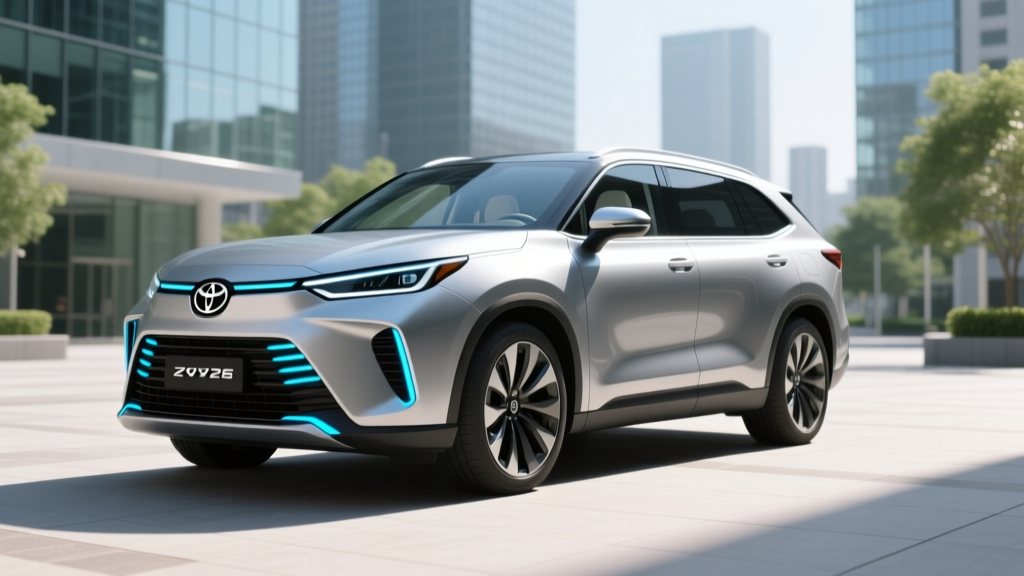
As of early 2026, Toyota has not yet released a fully electric Highlander. The three-row SUV remains available as a gas V6 and, in some markets, a hybrid. Toyota has confirmed that a battery-electric, three-row SUV is in development for the U.S. market, likely riding on the company's next-generation e-TNGA or a new dedicated EV platform, but official EPA range figures, pricing, and a firm on-sale date have not been published. If you need a three-row electric SUV today, competitors like the Kia EV9, Hyundai Ioniq 9, and Rivian R1S are already on dealer lots. If you can wait and are committed to the Toyota ecosystem, here's what the data suggests the EV Highlander will look like based on Toyota's announced battery roadmap, platform patents, and segment benchmarks.
What Toyota Has Actually Said About a Three-Row EV
Toyota's EV strategy has evolved significantly since the bZ4X launched for the 2023 model year. In its 2026 battery-EV roadmap update, Toyota confirmed plans for a "next-generation BEV lineup" spanning multiple segments, including a large SUV positioned for North America. The company has also detailed its fifth-generation lithium-ion battery packs, targeting a 20% improvement in energy density and a 10-minute 10–80% DC fast-charge capability by the 2027–2028 model-year window.
What this means for an EV Highlander: expect a usable battery capacity in the 90–110 kWh range (likely NMC chemistry given the energy-density requirements for a heavy three-row SUV), an EPA-estimated range target of 280–320 miles, and DC fast-charging at a peak rate of 180–250 kW depending on the variant. These are projected figures based on segment norms and Toyota's published battery roadmap — not confirmed specs.
Projected Specs vs. the Gas Highlander: A Data Comparison
Until official numbers drop, the most useful exercise is comparing what a competitive three-row EV delivers against the current gas Highlander. This gives buyers a realistic baseline for what to expect.
| Spec | 2025 Toyota Highlander (Gas V6) | 2025 Toyota Grand Highlander Hybrid | Projected Toyota EV Highlander | 2026 Kia EV9 (Long Range AWD) |
|---|---|---|---|---|
| Powertrain | 3.5L V6, 265 hp | 2.4L turbo hybrid, 362 hp | Dual-motor BEV (est.) | Dual-motor, 379 hp |
| 0–60 mph | 7.5 sec | 5.7 sec | ~5.0–6.0 sec (est.) | 5.0 sec |
| Range / Fuel Economy | 24 MPG combined | 36 MPG combined | ~280–320 mi EPA (est.) | 280 mi EPA |
| Energy Capacity | 17.9 gal tank | 17.1 gal tank | ~95–110 kWh (est.) | 100 kWh (usable) |
| DC Fast Charge (peak) | N/A | N/A | ~200–250 kW (est.) | 210 kW peak |
| 10–80% Charge Time | N/A | N/A | ~18–25 min (est.) | ~24 min |
| Seating | 7–8 passengers | 7–8 passengers | 6–7 passengers (likely) | 6–7 passengers |
| Cargo (behind 3rd row) | 16.1 cu ft | 20.6 cu ft | ~18–22 cu ft (est.) | 20.2 cu ft |
| Starting MSRP | $39,070 | $45,390 | ~$55,000–$62,000 (est.) | $59,900 |
| Federal Tax Credit (§30D) | None | Up to $7,500 (PHEV/HEV rules vary) | Potentially up to $7,500* | Up to $7,500* |
* §30D eligibility depends on MSRP caps ($80,000 for SUVs), buyer income limits, and battery-component/critical-mineral sourcing requirements per IRS guidelines. Always verify current-year rules with a tax professional.
Real Costs: Buying, Charging, and Maintaining a Three-Row EV
The sticker price is only the start. Here's a realistic five-year cost projection comparing a gas Highlander, the Grand Highlander Hybrid, and a projected EV Highlander at 15,000 miles/year.
| Cost Category | Gas Highlander V6 | Grand Highlander Hybrid | Projected EV Highlander |
|---|---|---|---|
| Purchase Price (base MSRP) | $39,070 | $45,390 | $58,000 (est.) |
| Federal Tax Credit | $0 | $0 (HEV ineligible) | –$7,500 (if eligible) |
| Effective Purchase | $39,070 | $45,390 | $50,500 (est.) |
| Fuel / Energy (75k mi) | $9,375 ($3.50/gal, 24 MPG) | $6,250 ($3.50/gal, 36 MPG) | $3,750 ($0.15/kWh home avg, 3 mi/kWh) |
| Maintenance (5 yr) | $2,800 | $2,500 | $1,200 (no oil, fewer fluids) |
| Insurance (5 yr avg) | $7,500 | $7,800 | $8,500 (EV premium ~10–15%) |
| Home Charger Install | $0 | $0 | $800–$2,000 (Level 2, 240V) |
| 5-Year Total | $58,745 | $61,940 | $64,750–$66,150 |
Key takeaway: Even with the federal tax credit and lower energy/maintenance costs, a three-row EV SUV carries a higher five-year total cost than a gas or hybrid Highlander — primarily due to the higher purchase price and EV insurance premium. The breakeven point typically arrives around year 7–8 or at higher annual mileage (20,000+ miles/year), assuming consistent home charging access.
Real-World Ownership Considerations Before You Wait
A three-row EV is a specific use case. Here are the practical factors that determine whether the EV Highlander (or any large EV SUV) will work for your household.
Home Charging Access Is Non-Negotiable
Charging a 100 kWh battery on a standard 120V outlet (Level 1) adds roughly 3–4 miles of range per hour — meaning a full charge from empty would take over 24 hours. You need a Level 2 home charger (240V, 40–48 amps) to add 25–35 miles per hour, enabling overnight replenishment. Installation typically costs $800–$2,000, but can reach $4,000+ if your electrical panel needs an upgrade from 100A to 200A service. If you rent, live in a condo without charging access, or rely solely on street parking, a large-battery EV becomes significantly less practical.
Cold-Weather Range Loss Hits Large Batteries Hard
Lithium-ion batteries lose efficiency in cold temperatures. Expect 20–30% range reduction in sustained sub-freezing conditions (below 32°F), and up to 40% in extreme cold (below 0°F) when using cabin heating. A projected 300-mile EPA range could drop to 210–240 real-world miles in a Minnesota January. A heat pump — which Toyota has been adding to newer EV platforms — mitigates this somewhat, but physics is physics. If you live in the upper Midwest or Northeast, plan your road trips around the reduced figure.
DC Fast Charging: The Curve Matters More Than the Peak
Automakers advertise peak DC fast-charge rates (e.g., 250 kW), but that speed is only sustained between roughly 10–40% state of charge. Above 60%, the charge rate tapers significantly to protect battery health. A "250 kW" charger might average only 120–140 kW over a full 10–80% session, making the 10–80% time a more honest metric. For a ~100 kWh battery, expect 20–25 minutes at a capable 350 kW station, and 35–45 minutes at a 150 kW station. Always precondition the battery (via navigation to a charger) for optimal charge speeds.
Common Misconceptions About Toyota and EVs
| Myth | Fact |
|---|---|
| "Toyota doesn't make EVs." | Toyota sells the bZ4X (and bZ3 in China) and has confirmed a next-gen BEV lineup. They've been slower than rivals but are actively scaling EV production. |
| "The EV Highlander is available now." | As of 2026, Toyota has not announced a production EV Highlander. The current Highlander is gas-only; the Grand Highlander offers a hybrid option. A three-row BEV is in development but not on sale. |
| "EV batteries need replacing every few years." | Modern NMC and LFP batteries are designed to retain 70–80% capacity after 150,000–200,000 miles. Toyota's EV battery warranty is expected to cover 8 years/100,000 miles minimum, consistent with federal requirements for EV battery coverage. |
| "I'll save money immediately switching to an EV." | Upfront EV costs remain higher. Savings accumulate over time through lower fuel and maintenance costs, especially with home charging at off-peak electricity rates. High-mileage drivers benefit most. |
| "The $7,500 tax credit applies to everyone." | The §30D credit has income caps ($300K joint / $150K single), MSRP caps ($80K for SUVs), and strict battery-sourcing requirements. Many EVs qualify for partial or no credit depending on the model year and manufacturing date. Check IRS.gov for current eligibility. |
Decision Framework: Should You Wait or Buy Now?
Choose to WAIT for the Toyota EV Highlander if:
- You're a loyal Toyota owner and want to stay within the brand's dealer/service network.
- Your current vehicle has 1–2 years of useful life left, so timing aligns with a likely 2027–2028 EV Highlander launch.
- You have confirmed Level 2 home charging access (or will install it).
- You prioritize long-term Toyota resale value and reliability reputation over having the latest EV tech today.
- You drive under 15,000 miles/year, so the fuel-cost penalty of waiting is manageable.
Choose to BUY a three-row EV NOW (Kia EV9, Ioniq 9, Rivian R1S) if:
- Your current vehicle needs immediate replacement.
- You want to lock in the current §30D tax credit before sourcing rules tighten further.
- You drive 15,000+ miles/year and want to start saving on fuel costs immediately.
- You're open to non-Toyota brands and want proven EV platforms with established charging networks.
- You need confirmed specs, EPA range, and real-world reviews — not projections.
Choose the GAS or HYBRID Highlander if:
- You don't have reliable home or workplace charging access.
- You regularly tow over 3,500 lbs (EV towing range drops dramatically).
- You live in a rural area with limited DC fast-charging infrastructure.
- Your budget is firmly under $45,000 and you need a three-row SUV today.
- You frequently drive in extreme cold and can't accept 25%+ range variability.
What a First-Time EV Buyer Should Know
If the EV Highlander (or any EV) is your first battery-electric vehicle, these are the realities that spec sheets don't emphasize:
- kW vs. kWh: Kilowatts (kW) measure power — how fast you charge. Kilowatt-hours (kWh) measure energy — your battery's total capacity. A 100 kWh battery charged at 200 kW (peak) doesn't fill in 30 minutes because the charge rate tapers. Think of kWh as the size of the fuel tank and kW as the diameter of the hose.
- MPGe isn't MPG: Miles Per Gallon equivalent (as defined by the EPA) converts electricity consumption into a gasoline-equivalent number. A 300 MPGe rating is excellent but doesn't tell you the cost per mile — use kWh/100mi or cents-per-mile for real budgeting.
- Public charging costs more than home: DC fast-charging networks (Electrify America, EVgo, Tesla Superchargers) typically charge $0.35–$0.55/kWh. That can make highway road-trip fueling comparable to or more expensive than gasoline. The economics of EV ownership depend heavily on cheap home charging ($0.10–$0.18/kWh national average).
- Tires wear faster: EVs are heavy (a three-row EV SUV will likely weigh 5,500–6,000 lbs) and produce instant torque. Expect tire replacement every 25,000–35,000 miles versus 40,000–50,000 on a gas vehicle. Budget accordingly.
- Insurance is higher: EV insurance premiums run 10–20% above comparable gas vehicles due to higher repair costs and specialized parts. Get quotes before purchasing.
Frequently Asked Questions
When will the Toyota EV Highlander be available?
Toyota has not confirmed a release date. Based on the company's announced next-gen BEV timeline and platform development, a 2027 or 2028 model year launch is the most realistic estimate. Toyota typically reveals production vehicles 6–12 months before they reach dealers.
Will the EV Highlander qualify for the $7,500 federal tax credit?
It's too early to confirm. Eligibility under IRS §30D depends on where the battery cells and critical minerals are sourced, the vehicle's MSRP (must be under $80,000 for SUVs), and the buyer's adjusted gross income. Toyota's U.S.-built EVs (like the bZ4X assembled in Kentucky) have a pathway to credit eligibility, but final determination depends on the specific model-year sourcing. Always check IRS.gov and consult a tax professional.
How does the EV Highlander compare to the Grand Highlander Hybrid?
The Grand Highlander Hybrid delivers 36 MPG combined with no range anxiety, no charging infrastructure needs, and a starting price around $45,390. A future EV Highlander would offer lower per-mile energy costs (with home charging), smoother and quieter operation, and zero tailpipe emissions — but at a higher purchase price, with range limitations in cold weather, and dependence on charging access. For families without home charging, the hybrid remains the more practical three-row Toyota today.
What will it cost to charge an EV Highlander at home?
Assuming a ~100 kWh battery and the national average electricity rate of $0.16/kWh, a full charge would cost approximately $16. At 3 miles per kWh, that's about $0.053 per mile — roughly one-third the per-mile cost of a 24 MPG gas Highlander at $3.50/gallon ($0.146/mile). Over 15,000 miles/year, home charging saves approximately $1,400 annually versus gasoline. These savings shrink if you rely primarily on public DC fast chargers at $0.40+/kWh.
Will Toyota use NACS (Tesla connector) or CCS for charging?
Toyota has announced it will adopt the NACS (North American Charging Standard) connector for future EVs sold in North America, aligning with Ford, GM, Rivian, and others. This means a future EV Highlander should have native access to Tesla's Supercharger network — the most extensive and reliable DC fast-charging network in the U.S. — without an adapter. Early-production models may still use CCS1 with a NACS adapter included.