Quick Answer: What Is the EV Highlander?
As of early 2026, Toyota has not released a fully electric Highlander. The three-row Highlander remains available as a conventional hybrid (HEV) rated at up to 36 MPG combined. Toyota's bZ Large SUV concept previews a future three-row electric SUV, but no production "EV Highlander" is currently on sale in the U.S. Buyers seeking a three-row electric SUV today should cross-shop the Kia EV9, Hyundai Ioniq 9, or Tesla Model X instead.
Toyota Highlander Hybrid vs. the EV SUV Landscape in 2026
The Toyota Highlander has been one of America's best-selling three-row SUVs for over two decades. In 2026, the Highlander lineup centers on its proven 2.5-liter four-cylinder hybrid powertrain, delivering an EPA-estimated 36 MPG combined (36 city / 35 highway) on LE and XLE trims. Toyota also introduced the Grand Highlander Hybrid, stretching wheelbase and third-row space while matching that 36 MPG figure.
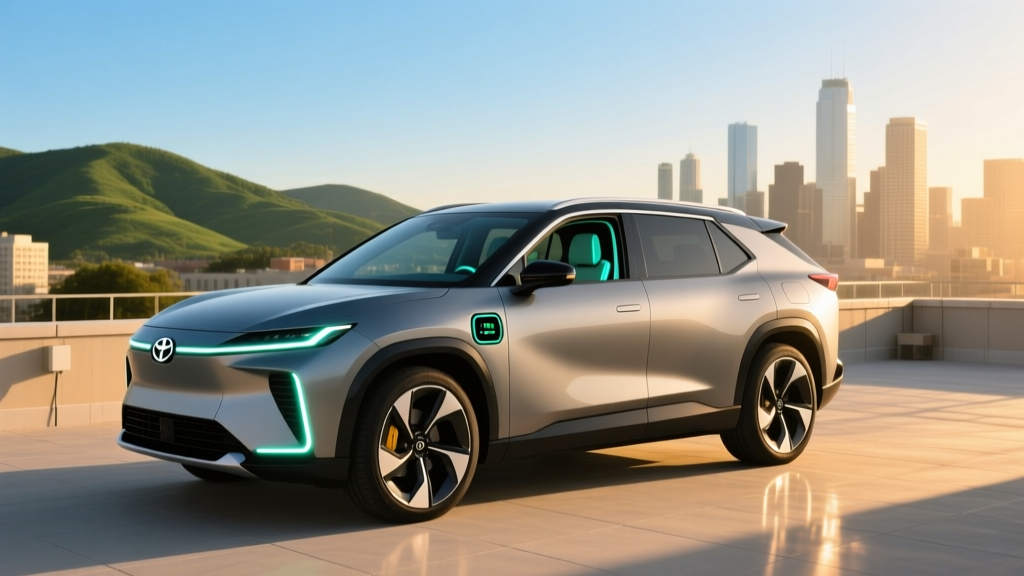
The confusion around an "EV Highlander" is understandable. Toyota unveiled the bZ Large SUV concept at the 2023 New York Auto Show, signaling a three-row battery-electric SUV built on the e-TNGA platform. Industry analysts expect a production version to arrive for the 2027 model year at the earliest, likely wearing a bZ designation rather than the Highlander nameplate. Until then, the Highlander badge remains exclusively hybrid.
Current 2026 Toyota Highlander Hybrid: Specs & Pricing
| Specification | 2026 Highlander Hybrid |
|---|---|
| Powertrain | 2.5L 4-cyl + 2 electric motors (AWD-i) |
| Horsepower | 243 hp combined |
| 0–60 mph | ~7.6 seconds |
| EPA Fuel Economy | 36 MPG combined (36 city / 35 hwy) |
| Fuel Tank | 17.1 gallons |
| Estimated Range | ~615 miles per tank |
| Seating | 7 or 8 passengers |
| Cargo (behind 3rd row) | 16.1 cu ft |
| Towing Capacity | 3,500 lbs |
| Starting MSRP | ~$42,220 (LE Hybrid) |
| Powertrain Warranty | 5 yr / 60,000 mi |
| Hybrid Battery Warranty | 10 yr / 150,000 mi |
The hybrid powertrain is the Highlander's strongest card. Unlike a plug-in hybrid, it requires no home charging infrastructure — you simply fuel it like any gas car and the hybrid system recovers energy through regenerative braking. For families without access to Level 2 home charging, this eliminates the single biggest barrier to electrified ownership.
EV vs. Hybrid vs. Gas: 5-Year Cost Breakdown
To put the Highlander Hybrid in context, here's how a comparable three-row SUV stacks up across powertrain types over five years and 75,000 miles of mixed driving. The EV column uses the 2026 Kia EV9 (the closest three-row electric competitor) as a benchmark.
| Cost Factor | Gas Highlander V6* | Highlander Hybrid | Kia EV9 (EV) |
|---|---|---|---|
| Base MSRP | ~$40,520 | ~$42,220 | ~$54,900 |
| Federal Tax Credit (§30D) | $0 | $0 | Up to $7,500† |
| Effective Purchase Price | $40,520 | $42,220 | ~$47,400 |
| Fuel/Energy (5 yr / 75k mi) | ~$10,350‡ | ~$7,225‡ | ~$3,375§ |
| Maintenance (5 yr) | ~$3,800 | ~$3,200 | ~$1,800 |
| Insurance (5 yr est.) | ~$9,500 | ~$9,500 | ~$11,200 |
| 5-Year Total | ~$64,170 | ~$62,145 | ~$63,775 |
* The V6 Highlander was discontinued after 2022; figures reference a comparable used-gas baseline at ~22 MPG combined.
† §30D credit eligibility depends on MSRP caps (SUVs: $80,000), buyer income limits ($300k MFJ / $150k single), and battery critical-mineral sourcing. Verify at IRS.gov. Available as point-of-sale transfer in 2026.
‡ Based on $3.40/gal national average, 22 MPG (gas) and 36 MPG (hybrid).
§ Based on $0.15/kWh national average home charging; public DC fast charging costs significantly more.
The numbers reveal a nuanced picture. The Highlander Hybrid wins on upfront cost and eliminates charging-infrastructure concerns entirely. A three-row EV like the EV9 narrows the gap through dramatically lower energy and maintenance costs, but only if you qualify for the full federal credit and charge primarily at home. Public DC fast charging at $0.35–$0.50/kWh can erase much of the EV energy-cost advantage.
What Toyota's bZ Large SUV (Future EV Highlander) Might Offer
While not yet in production, Toyota's bZ Large SUV concept and subsequent teasers point toward these projected specifications for a future three-row electric Toyota SUV:
- Platform: e-TNGA (shared architecture with bZ4X, scaled up)
- Battery: Estimated 90–100 kWh usable capacity, likely NMC chemistry for energy density
- EPA Range: Targeted 300+ miles (preliminary; Toyota has not confirmed)
- DC Fast Charging: Expected 150–175 kW peak (Toyota's current e-TNGA vehicles peak around 150 kW)
- Seating: Three rows, 6–7 passengers
- Timeline: 2027 model year at earliest; pricing TBD
One important caveat: Toyota's current e-TNGA vehicles (the bZ4X) have drawn criticism for modest DC charging speeds and real-world range that falls short of EPA estimates in cold weather. A production three-row EV will need to address these shortcomings to compete with the Kia EV9's 236 kW peak charge rate and available 304-mile EPA range.
Real-World Ownership Considerations for Three-Row SUV Buyers
Whether you choose the current Highlander Hybrid or wait for a future electric three-row SUV, these practical factors will shape your ownership experience:
Home Charging Access
For any EV, home Level 2 charging is the make-or-break factor. A 240V Level 2 charger (7–11 kW) adds roughly 25–35 miles of range per hour, easily replenishing a 300-mile battery overnight. Installation costs range from $500 (simple outlet near the panel) to $2,500+ if your electrical panel needs a 200-amp upgrade. If you live in an apartment or lack dedicated parking, public charging becomes your primary refueling method — adding both cost and time.
Cold-Weather Range Loss
EV batteries lose 20–30% of their rated range in sustained sub-freezing temperatures due to increased internal resistance and cabin heating demands. A 300-mile EPA-rated three-row EV might deliver only 210–240 miles on a 20°F winter highway trip. The Highlander Hybrid suffers no such penalty — its engine waste heat warms the cabin essentially for free, and cold fuel economy drops are minimal (typically 5–10%).
Road-Trip Charging
On a 500-mile family road trip, a three-row EV requires at least one 25–35-minute DC fast charging stop. Peak charge rates (measured in kW — that's power, the speed of energy delivery) taper significantly above 80% State of Charge. A vehicle that peaks at 236 kW might sustain only 60–80 kW for the final 20% of the battery, extending total stop time. The Highlander Hybrid refuels in 5 minutes at any gas station, a tangible advantage for frequent long-distance travelers.
Towing
The Highlander Hybrid is rated for 3,500 lbs of towing. EVs can tow, but range drops dramatically — often 40–50% — when pulling a trailer. If you tow a boat or camper regularly, the hybrid's predictable range and ubiquitous refueling remain a significant advantage.
Common Misconceptions About the EV Highlander
| Myth | Fact |
|---|---|
| "The EV Highlander is available now." | No fully electric Highlander exists as of 2026. Toyota's three-row electric SUV is still in concept/pre-production stages, expected no earlier than the 2027 model year. |
| "The Highlander Hybrid needs to be plugged in." | The Highlander Hybrid (HEV) charges its small battery through regenerative braking and the gas engine. There is no plug. It is not a PHEV. |
| "Hybrids don't save much money." | At 36 MPG vs. 22 MPG for the older V6, the hybrid saves roughly $3,125 in fuel over 75,000 miles at $3.40/gallon — plus avoids the EV charging-infrastructure investment. |
| "EV batteries need replacing every few years." | Modern EV batteries are warrantied for 8 years/100,000 miles (federal minimum) and often retain 85–90% capacity at 150,000 miles. Toyota covers its hybrid battery for 10 years/150,000 miles. |
| "All EVs qualify for the $7,500 tax credit." | The §30D credit has strict MSRP caps ($80,000 for SUVs), buyer income limits, and battery-sourcing requirements. Many EVs qualify for only partial credit or none at all. Always verify on fueleconomy.gov. |
Decision Framework: Which Three-Row SUV Should You Buy?
Choose the Toyota Highlander Hybrid if:
- You lack reliable home Level 2 charging access
- You regularly drive 400+ miles in a single day (road trips, towing)
- You live in a region with extreme cold (sustained sub-20°F winters)
- Your budget tops out around $45,000–$52,000
- You want proven Toyota reliability with minimal new-technology risk
- You prefer the simplest ownership experience — fuel it and go
Choose a three-row EV (Kia EV9, Ioniq 9, Model X) if:
- You have a garage or dedicated parking with 240V Level 2 charging
- Your daily driving stays under 200 miles with occasional longer trips
- You qualify for the full §30D federal tax credit (income and sourcing requirements met)
- You want the lowest per-mile energy cost and near-zero routine maintenance
- You value instant electric torque, a flat floor, and a frunk for extra cargo
- You're willing to plan DC fast charging stops on road trips
Wait for Toyota's production three-row EV if:
- You're committed to the Toyota brand and dealer network
- You don't need a new vehicle for 12–18 months
- You want to see confirmed EPA range, pricing, and §30D eligibility before committing
What First-Time EV Buyers Should Know
If you're considering moving from a gas or hybrid SUV to a fully electric three-row model, these fundamentals will save you from costly surprises:
kW vs. kWh — know the difference. Kilowatt-hours (kWh) measure battery capacity — how much energy the vehicle stores, like gallons in a fuel tank. Kilowatts (kW) measure power — how fast energy flows, like the flow rate of a gas pump. A 100 kWh battery charged at 150 kW doesn't fill in 40 minutes because the charge rate tapers as the battery fills.
Charge curves matter more than peak speed. Automakers advertise peak DC fast-charge rates (e.g., "up to 236 kW"), but that peak is typically sustained only between 10–40% State of Charge. Above 80%, charging slows dramatically to protect battery health. The 10–80% time is the more useful metric — plan for 20–35 minutes at a compatible DC fast charger.
EPA range is a best-case estimate. Real-world highway driving at 70+ mph typically yields 85–90% of EPA range. Add cold weather and you may see 70–80%. Always plan road trips around 75% of the sticker range to maintain a safety buffer.
Insurance costs more for EVs. EV insurance premiums run 15–25% higher than equivalent gas vehicles due to higher repair costs and specialized parts. Get quotes before purchasing — the annual difference ($200–$500+) affects your total cost of ownership.
The §30D credit is not guaranteed. Battery critical-mineral and component sourcing requirements tighten annually. A vehicle that qualifies in January may not qualify by December. The credit can now be transferred to the dealer at point of sale, reducing your out-of-pocket cost immediately — but you must still meet income caps ($300,000 modified adjusted gross income for married filing jointly, $150,000 for single filers) when you file your return.
Frequently Asked Questions
Is there a fully electric Toyota Highlander available in 2026?
No. The 2026 Toyota Highlander is available only as a conventional hybrid (HEV). Toyota has previewed a three-row electric SUV via the bZ Large SUV concept, but a production version is not expected before the 2027 model year.
Does the Toyota Highlander Hybrid need to be plugged in?
No. The Highlander Hybrid is a self-charging HEV. Its small traction battery charges through regenerative braking and the gasoline engine. You never plug it in — you simply refuel at a gas station as usual.
How does the Highlander Hybrid's fuel cost compare to an EV?
At 36 MPG and $3.40/gallon, the Highlander Hybrid costs roughly $9.44 per 100 miles in fuel. A three-row EV at 3.0 miles/kWh and $0.15/kWh home electricity costs about $5.00 per 100 miles. The EV saves ~$4.44 per 100 miles, or about $3,330 over 75,000 miles — but this advantage shrinks if you rely on expensive public DC fast charging.
What three-row electric SUVs can I buy right now?
As of 2026, the main options include the Kia EV9 (EPA range up to 304 mi, starting ~$54,900), Hyundai Ioniq 9 (up to ~335 mi, starting ~$56,000), Tesla Model X (up to 335 mi, starting ~$79,990), and the Rivian R1S (up to 352 mi, starting ~$79,900). The EV9 and Ioniq 9 are the most direct competitors to the Highlander in size and price.
Will Toyota's future electric three-row SUV qualify for the federal tax credit?
It's too early to confirm. The §30D credit requires the vehicle's MSRP to fall under $80,000 (SUV cap), the buyer to meet income limits, and the battery to satisfy critical-mineral and component sourcing thresholds that tighten each year. We'll update this guide when Toyota confirms production specs and pricing.