The Short Answer on Toyota Electric Vehicles
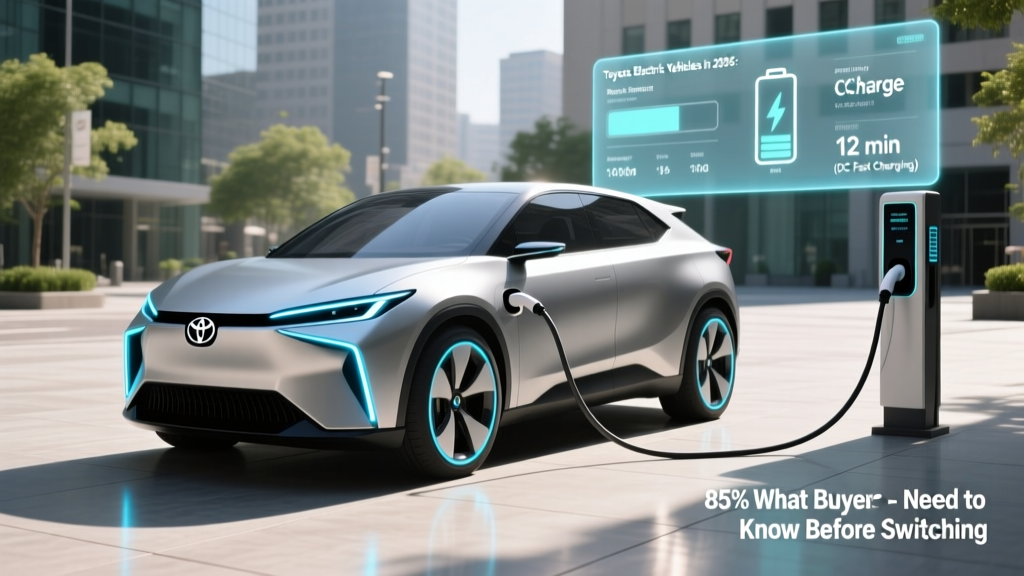
As of the 2026 model year, Toyota's EV lineup in the U.S. is anchored by the bZ4X compact SUV (EPA-estimated 252 miles range, ~$43,000 starting MSRP) and the newly introduced bZ4X three-row variant. Toyota's electric strategy remains cautious compared to rivals — the brand still sells far more hybrids (RAV4 Hybrid, Prius, Camry Hybrid) than pure EVs. If you need a long-range, fast-charging EV for road trips, competitors like the Hyundai Ioniq 5 or Tesla Model Y lead on charging speed and efficiency. If you want a Toyota-badge EV for daily commuting with home charging, the bZ4X works — but run the numbers against a RAV4 Hybrid first.
Toyota's 2026 EV Lineup: Specs at a Glance
Toyota's battery-electric offerings have expanded modestly. Here are the key figures buyers need before visiting a dealer:
| Model | Battery (kWh) | EPA Range | Peak DC Charge | 10–80% Time | 0–60 mph | Base MSRP |
|---|---|---|---|---|---|---|
| bZ4X FWD | 71.4 kWh (NMC) | 252 mi | ~150 kW | ~30 min | 7.1 sec | $43,070 |
| bZ4X AWD | 72.8 kWh (NMC) | 228 mi | ~100 kW | ~35 min | 5.8 sec | $46,700 |
| bZ4X 3-Row (AWD) | ~80 kWh (NMC, est.) | ~260 mi (est.) | ~150 kW | ~28 min (est.) | ~6.0 sec (est.) | ~$52,000 (est.) |
Real-world range reality: The bZ4X FWD's EPA sticker says 252 miles. In mixed highway driving at 70 mph, expect closer to 210–230 miles. In freezing temperatures (below 32°F), range can drop to 170–190 miles due to cabin heating demands and battery chemistry limitations. Toyota uses NMC (nickel manganese cobalt) cells, which are more cold-sensitive than LFP chemistry but offer higher energy density. (Source: EPA / fueleconomy.gov)
bZ4X vs. RAV4 Hybrid: The Numbers That Actually Matter
Most Toyota shoppers cross-shop the bZ4X against the RAV4 Hybrid — and for good reason. Here's a concrete comparison:
| Metric | 2026 bZ4X FWD | 2026 RAV4 Hybrid AWD |
|---|---|---|
| Powertrain | BEV (201 hp) | 2.5L 4-cyl + 2 electric motors (219 hp combined) |
| EPA Range / MPG | 252 mi / 131 MPGe combined | 41 MPG combined |
| Base MSRP | $43,070 | $34,075 |
| Fed. Tax Credit (§30D) | Up to $7,500 (if eligible) | Up to $7,500 (PHEV/HEV rules differ — HEV does not qualify) |
| Annual Fuel/Energy Cost* | ~$650 (home charging at $0.14/kWh) | ~$1,350 (at $3.40/gal, 12,000 mi/yr) |
| 5-Year Fuel/Energy Cost | ~$3,250 | ~$6,750 |
| Maintenance (5-yr est.) | ~$1,200 | ~$2,800 |
| Cargo Volume | 27.7 cu ft (rear seats up) | 37.6 cu ft (rear seats up) |
*Energy costs assume 12,000 miles/year. Home charging rate varies by utility; public DC fast charging can cost $0.35–$0.55/kWh, significantly raising EV costs for those without home charging.
The math is clear: the RAV4 Hybrid costs ~$9,000 less upfront, carries more cargo, and has unlimited range flexibility. The bZ4X saves roughly $3,500 in energy and $1,600 in maintenance over five years — a net savings of ~$5,100, which doesn't close the purchase-price gap unless you qualify for the full federal tax credit and factor in state incentives.
Tax Credit Eligibility: Don't Assume You Qualify
The §30D federal EV tax credit can reduce the bZ4X's effective price by up to $7,500, but eligibility depends on multiple factors that change frequently. Here's the current checklist:
- Buyer income cap: Modified AGI must not exceed $150,000 (single), $225,000 (head of household), or $300,000 (joint filers)
- MSRP cap: SUVs/vans/pickups capped at $80,000; sedans at $55,000. All bZ4X trims qualify on MSRP.
- Battery sourcing: Increasing percentages of critical minerals and battery components must be sourced from the U.S. or free-trade-agreement partners. Toyota's supply chain has evolved, but check current-year IRS guidance for exact eligibility.
- Point-of-sale transfer: As of 2024+, you can transfer the credit to the dealer at purchase, reducing your out-of-pocket cost immediately rather than waiting for tax filing.
- Final assembly: Vehicle must undergo final assembly in North America. Confirm the specific bZ4X you're buying qualifies via the VIN lookup tool on fueleconomy.gov.
Always verify with a tax professional and check IRS.gov for current-year rules before purchasing. Sourcing requirements tighten annually, and a vehicle eligible in January may not be eligible by December.
Charging the bZ4X: Home Setup and Public Reality
The bZ4X's charging performance is one area where Toyota trails competitors. Here's what you'll actually experience:
| Level | Power | Charge Time | Miles Added/Hour | Use Case |
|---|---|---|---|---|
| Level 1 (120V) | ~1.4 kW | ~50 hrs (0–100%) | ~3–4 mi/hr | Emergency only |
| Level 2 (240V, 32A) | ~7.7 kW | ~9.5 hrs (0–100%) | ~25 mi/hr | Home overnight charging |
| DC Fast Charge | Peak ~150 kW | ~30 min (10–80%) | ~180 mi/hr (peak) | Road trips |
Charging curve reality: The bZ4X FWD peaks at roughly 150 kW, but that rate is sustained only between roughly 10–40% state of charge. Above 60%, the rate tapers significantly — the final 20% (60–80%) can take nearly as long as the first 50%. The AWD variant peaks lower at ~100 kW, making it noticeably slower on road trips. Compare this to the Hyundai Ioniq 5, which peaks at 240 kW and charges 10–80% in ~18 minutes on a capable 350 kW charger.
Home charging cost: Installing a 240V Level 2 home charger (like a ChargePoint Home Flex or Emporia V2) typically costs:
| Item | Cost Range |
|---|---|
| Level 2 charger (hardware) | $350–$700 |
| Electrician labor (standard install) | $500–$1,500 |
| Electrical panel upgrade (if needed, 200A) | $1,500–$3,500 |
| Permit | $50–$200 |
| Total (no panel upgrade) | $900–$2,400 |
| Total (with panel upgrade) | $2,400–$5,900 |
If you live in an apartment or lack dedicated parking with electrical access, public charging becomes your primary option — and DC fast charging at $0.35–$0.55/kWh can cost more per mile than gasoline. This is the single biggest ownership variable.
Common Misconceptions About Toyota EVs
| Myth | Fact |
|---|---|
| "The bZ4X battery will need replacing in 5 years." | Toyota warranties the traction battery for 8 years / 100,000 miles against defects and excessive capacity loss (typically below 70% retention). NMC batteries in liquid-cooled packs typically retain 85–90% capacity after 100,000 miles based on industry data. |
| "Toyota doesn't make EVs." | Toyota sells the bZ4X globally and is expanding the bZ series. However, Toyota's EV strategy has been slower than Hyundai/Kia or Tesla, prioritizing hybrids and hydrogen alongside BEVs. |
| "EVs have zero maintenance." | EVs still need tire rotations, cabin air filter changes, brake fluid checks, wiper fluid, and windshield wiper replacements. Savings come from eliminating oil changes, spark plugs, and transmission fluid — but maintenance isn't zero. |
| "I'll save money no matter what." | Savings depend on your electricity rate, driving volume, home charging access, and whether you qualify for tax credits. Low-mileage drivers without home charging may break even or lose money versus a hybrid. |
Decision Framework: Should You Buy a Toyota EV, Hybrid, or Wait?
Choose the bZ4X (EV) if:
- You have reliable home Level 2 charging access
- Your daily driving is under 80 miles round-trip
- You qualify for the full $7,500 federal tax credit (or point-of-sale transfer)
- You value zero tailpipe emissions and lower routine maintenance
- You rarely take road trips over 200 miles one-way
Choose the RAV4 Hybrid if:
- You lack home charging access or live in an apartment
- You regularly drive 300+ miles between stops (road trips, rural areas)
- You live in an extreme cold climate (consistent sub-20°F winters)
- You want maximum cargo space (37.6 cu ft vs. 27.7 cu ft)
- Upfront cost matters more than long-term energy savings
Wait if:
- You want a Toyota EV with 300+ miles of range and 200+ kW charging — Toyota's next-gen solid-state and improved NMC platforms are announced for later this decade but are not yet on sale
- You need a three-row electric SUV and the bZ4X 3-row doesn't meet your space needs — consider the Kia EV9 or Hyundai Ioniq 9 instead
Ownership Costs Over 5 Years: The Full Picture
| Cost Category | bZ4X FWD | RAV4 Hybrid AWD |
|---|---|---|
| Purchase Price (base MSRP) | $43,070 | $34,075 |
| Federal Tax Credit | –$7,500 (if eligible) | $0 (HEV does not qualify) |
| Effective Purchase Price | $35,570 | $34,075 |
| Home Charger Install | $1,500 (avg.) | $0 |
| Energy/Fuel (5 years) | $3,250 | $6,750 |
| Maintenance (5 years) | $1,200 | $2,800 |
| Insurance (5 years, est.) | $9,500 | $7,800 |
| 5-Year Total Cost | $51,020 | $51,425 |
Insurance estimates are national averages; EV insurance premiums run 15–25% higher than comparable gas/hybrid models due to repair costs and battery replacement risk. Get quotes before purchasing. (Source: IIHS)
The 5-year totals are remarkably close. The bZ4X's tax credit and energy savings are nearly offset by higher insurance, the home charger installation, and the higher starting price. Your personal numbers will shift based on local electricity rates, state incentives, driving volume, and insurance quotes.
Frequently Asked Questions
Is the Toyota bZ4X eligible for the $7,500 federal tax credit in 2026?
It can be, but eligibility depends on your income (AGI caps apply), the vehicle's battery sourcing compliance for the current year, and final assembly location. Always verify via the VIN lookup on fueleconomy.gov and confirm with a tax professional. The credit can now be transferred at point of sale, reducing your purchase price directly.
How does the bZ4X handle cold weather?
Expect 20–30% range reduction in sustained below-freezing temperatures. The 252-mile EPA range can drop to roughly 170–190 miles in harsh winter conditions. The bZ4X uses a heat pump (on most trims), which helps efficiency versus resistive heating, but NMC chemistry still loses performance in extreme cold. Preconditioning the battery while plugged in mitigates some loss.
Can I road-trip the bZ4X cross-country?
Yes, but plan carefully. The ~30-minute 10–80% charge time (FWD) and 228–252 mile range means more frequent and longer stops than competitors with faster charging. Use apps like PlugShare or A Better Routeplanner to map charger availability along your route. The AWD model's slower ~100 kW peak rate adds roughly 5 minutes per stop.
What's the battery replacement cost if it fails out of warranty?
Out-of-warranty bZ4X battery replacement is estimated at $12,000–$18,000 including labor, based on current NMC pack pricing. However, widespread battery failures are rare — most NMC packs retain 80%+ capacity well past 150,000 miles. Toyota's 8-year/100,000-mile battery warranty covers defects and significant degradation.
Should I buy a Toyota EV or wait for their next-generation models?
Toyota has announced next-generation EV platforms with improved range (targeting 400+ miles) and potentially solid-state batteries later this decade. If your current vehicle works and you can wait 2–3 years, Toyota's future EVs will likely offer significantly better specs. If you need a vehicle now and the bZ4X fits your driving pattern, it's a competent — if not class-leading — choice.