The Quick Answer: Toyota Electric SUVs in 2026
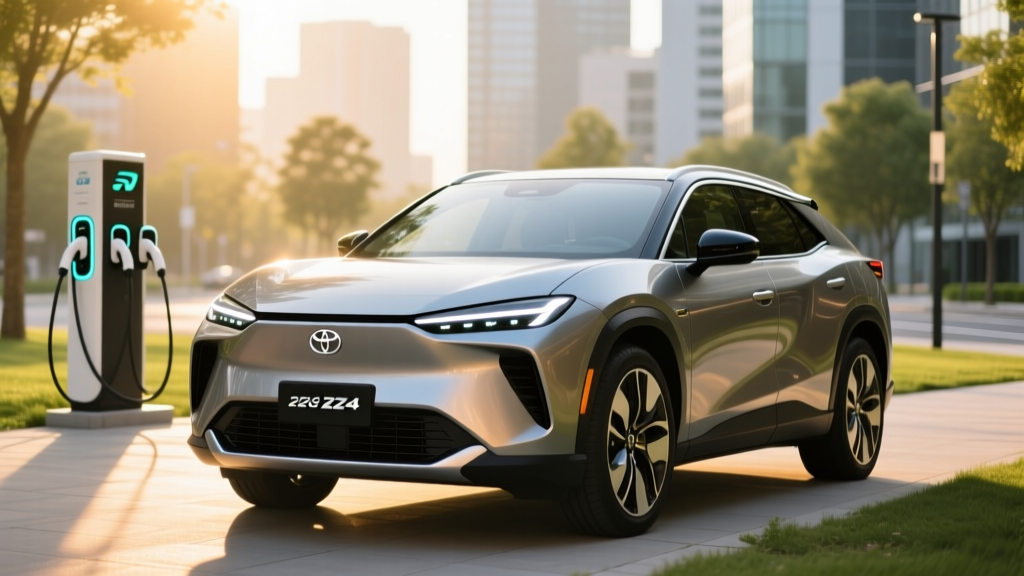
Toyota's sole battery-electric SUV for 2026 is the bZ4X, offered in front-wheel and all-wheel-drive configurations. EPA range spans 236–252 miles depending on trim and drivetrain. Base pricing starts around $38,465 (XLE FWD), with potential eligibility for a federal tax credit of up to $7,500 under IRS §30D rules — subject to income caps, MSRP limits, and battery-sourcing requirements. If you need three rows or 350+ miles of range, Toyota's EV lineup does not yet cover those needs; the upcoming three-row electric SUV remains in announced/preliminary status.
2026 Toyota bZ4X: The Core Specifications
The bZ4X is Toyota's only mass-market battery-electric vehicle (BEV) available in the U.S. as of 2026. It rides on the e-TNGA platform and shares much of its architecture with the Subaru Solterra. Here is what the numbers actually look like across trims:
| Specification | XLE FWD | XLE AWD | Limited FWD | Limited AWD |
|---|---|---|---|---|
| EPA Range | 252 mi | 228 mi | 242 mi | 222 mi |
| Usable Battery (kWh) | ~65.6 kWh (LFP chemistry, BYD-supplied for select markets / NMC for U.S.) | |||
| Peak DC Fast Charge | ~150 kW (FWD) | ~150 kW (AWD) | ||
| 10–80% DC Fast Charge | ~30 minutes | |||
| Level 2 AC Charging | 6.6 kW onboard charger | |||
| Horsepower | 201 hp | 214 hp | 201 hp | 214 hp |
| 0–60 mph | ~7.1 sec | ~6.5 sec | ~7.1 sec | ~6.5 sec |
| Combined MPGe | 119 MPGe | 104 MPGe | 114 MPGe | 102 MPGe |
| Starting MSRP (2026) | ~$38,465 | ~$40,465 | ~$43,165 | ~$45,165 |
| Battery Warranty | 10 years / 150,000 miles (capacity retention guarantee) | |||
Real-World Range vs. EPA Sticker
The EPA numbers are a starting point, not a guarantee. In real-world highway driving at 70–75 mph, expect the FWD XLE to deliver roughly 210–225 miles before needing a charge. Cold weather (below 32°F) can reduce range by 20–30%, dropping effective range to 160–185 miles for AWD trims. The bZ4X's thermal management system does not include a heat pump on all trims in the U.S. market, which impacts winter efficiency compared to competitors like the Hyundai Ioniq 5. Plan conservatively if you regularly drive in sub-freezing climates.
How the bZ4X Compares to Gas and Hybrid SUVs
Toyota built its reputation on hybrids — the RAV4 Hybrid and RAV4 Prime (PHEV) are among the best-selling electrified SUVs in America. So why consider the bZ4X over Toyota's own hybrid lineup? The answer depends entirely on your driving pattern and charging access.
| Metric | bZ4X Limited AWD (BEV) | RAV4 Hybrid AWD (HEV) | RAV4 Prime AWD (PHEV) |
|---|---|---|---|
| Powertrain | Battery Electric | 2.5L + electric motor | 2.5L plug-in hybrid |
| Electric-Only Range | 222 mi (full) | 0 mi | 42 mi |
| EPA Combined | 102 MPGe | 39 MPG | 94 MPGe / 38 MPG (hybrid mode) |
| Fuel / Energy Cost per Year* | ~$600 (electricity) | ~$1,550 (gasoline) | ~$900 (mixed) |
| Annual Maintenance | ~$300 | ~$550 | ~$550 |
| Starting MSRP (2026) | ~$45,165 | ~$35,325 | ~$44,590 |
| Federal Tax Credit Eligibility | Up to $7,500 (§30D) | None | Up to $7,500 (§30D) |
*Annual energy/fuel cost estimates based on 15,000 miles/year, national average electricity rate of $0.16/kWh, and gasoline at $3.40/gallon. Your costs will vary by local rates and driving habits. Source: fueleconomy.gov.
The Break-Even Analysis
If you qualify for the full $7,500 federal credit (see eligibility below), the bZ4X's effective starting price drops to roughly $37,665 — competitive with a mid-trim RAV4 Hybrid. Fuel savings of approximately $950/year over the hybrid mean a payback period of about 5–6 years on the price delta after credit. However, if you do not qualify for the credit due to income limits or battery-sourcing rules, the bZ4X carries a meaningful premium over the RAV4 Hybrid with a longer payback.
Real Costs of Owning a Toyota Electric SUV
Purchase price is only the starting point. Here is a five-year total cost of ownership (TCO) breakdown for the bZ4X XLE FWD, assuming 15,000 miles/year, home charging at $0.16/kWh, and full §30D credit eligibility:
| Cost Category (5 Years) | bZ4X XLE FWD | RAV4 Hybrid XLE AWD |
|---|---|---|
| Purchase Price (MSRP) | $38,465 | $35,325 |
| Federal Tax Credit | −$7,500 | $0 |
| Effective Purchase | $30,965 | $35,325 |
| Energy / Fuel | $3,000 | $7,750 |
| Maintenance | $1,500 | $2,750 |
| Insurance (est. avg) | $7,500 | $6,250 |
| Home Charger Install (Level 2) | $1,200 (one-time) | $0 |
| Total 5-Year Cost | ~$44,165 | ~$52,075 |
Key takeaways: The bZ4X can cost roughly $7,900 less over five years than the RAV4 Hybrid — but only if you qualify for the full tax credit and have access to affordable home charging. Insurance tends to run 15–20% higher on EVs due to repair costs and battery replacement exposure. Always get an insurance quote before purchasing.
Home Charging: The Make-or-Break Factor
Charging at home is where EV ownership economics shine. A Level 2 home charger (240V, 32–48 amps) adds approximately 20–25 miles of range per hour to the bZ4X via its 6.6 kW onboard charger. A full overnight charge from 20% to 100% takes roughly 9–10 hours.
However, installation costs vary significantly:
- Best case: Existing 240V outlet near parking spot, no panel upgrade needed — $500–$800 for a quality Level 2 EVSE and basic electrician labor.
- Typical case: New 240V circuit run from panel — $1,000–$1,800 including equipment, permit, and labor.
- Worst case: Older home needing a 200-amp panel upgrade — $2,500–$5,000+ before the charger is even installed.
If you live in an apartment or lack dedicated parking, public-only charging erases most of the cost advantage. DC fast charging at networks like Electrify America or EVgo typically costs $0.35–$0.55/kWh, pushing annual fueling costs closer to hybrid territory.
Federal Tax Credit: What You Actually Qualify For
The IRS §30D clean vehicle credit offers up to $7,500, but it is not automatic. Here is the current eligibility checklist for 2026:
- MSRP Cap: The bZ4X qualifies — SUVs must be under $80,000 MSRP. All bZ4X trims clear this threshold.
- Buyer Income Limits: Modified AGI must not exceed $150,000 (single), $225,000 (head of household), or $300,000 (joint filers).
- Battery Sourcing: The credit is split into two halves — $3,750 for meeting critical-minerals requirements and $3,750 for battery-component sourcing. These thresholds tighten each year. Verify the bZ4X's current compliance status on fueleconomy.gov before purchasing, as sourcing rules change.
- Point-of-Sale Transfer: Under current IRS rules, you can transfer the credit to the dealer at purchase, reducing your out-of-pocket cost immediately rather than waiting for tax filing.
- One-Time Use: The §30D credit applies once per VIN and is limited to one new EV credit per taxpayer per year.
Important: Tax rules are subject to legislative change. Consult a tax professional or the IRS Clean Vehicle Credit page for the most current guidance.
Charging Speed and Road-Trip Practicality
The bZ4X's DC fast charging tops out at approximately 150 kW — adequate but not class-leading. For context, the Hyundai Ioniq 5 and Kia EV6 can peak above 230–350 kW on compatible chargers. The bZ4X's 10–80% charge time of ~30 minutes is acceptable for road trips, but you will notice the gap on longer drives.
| Charging Level | Power (kW) | Approximate Miles Added per Hour | Typical Use Case |
|---|---|---|---|
| Level 1 (120V) | ~1.4 kW | ~4–5 mi/hr | Overnight trickle; emergencies |
| Level 2 (240V, 32A) | ~6.6 kW (bZ4X max) | ~20–25 mi/hr | Home daily charging |
| DC Fast (150 kW peak) | Up to 150 kW | ~150+ mi in 30 min (10–80%) | Road trips, public stations |
Charging curve reality: The bZ4X does not sustain its peak 150 kW rate for the entire session. Expect peak rates between 10–50% SoC, with significant tapering above 70%. On a road trip, plan stops around the 10–80% window to avoid the slow final stretch — this is standard EV behavior but worth understanding before your first long drive.
Common Misconceptions About Toyota Electric SUVs
| Myth | Fact |
|---|---|
| "The bZ4X battery will need expensive replacement in a few years." | Toyota warranties the battery for 10 years/150,000 miles with a capacity retention guarantee. Industry data from sources like Recurrent shows modern EV batteries typically retain 85–90%+ capacity after 100,000 miles. Full replacement, if ever needed, is estimated at $8,000–$14,000 but is rarely required within normal ownership periods. |
| "You can't drive an EV in cold weather." | You can — but expect 20–30% range reduction in sustained sub-freezing temperatures. Preconditioning the battery while plugged in (using the bZ4X's scheduled climate feature) mitigates this significantly. Owners in cold climates should budget range conservatively and consider AWD for traction. |
| "Toyota doesn't make real electric cars." | The bZ4X is a production BEV sold globally since 2022. While Toyota's EV lineup is smaller than competitors like Hyundai/Kia or Tesla, the bZ4X is a legitimate, widely available electric SUV — not a compliance car. |
| "The bZ4X qualifies for the full $7,500 tax credit for everyone." | Credit eligibility depends on your income, the vehicle's battery sourcing compliance, and current IRS rules. It is not universal — verify before purchasing. |
Decision Framework: Should You Buy the Toyota bZ4X?
Choose the Toyota bZ4X if:
- You want a mainstream-brand electric SUV with Toyota's dealer network and a strong battery warranty.
- Your daily commute is under 80 miles round-trip, and you can charge at home overnight.
- You qualify for the federal tax credit, bringing the effective price below $32,000 on the XLE FWD.
- You value Toyota Safety Sense 3.0 (standard adaptive cruise, lane-keeping, automatic emergency braking) and a familiar infotainment layout.
- You do not need more than 222–252 miles of range or three-row seating.
Consider alternatives if:
- You need 300+ miles of EPA range → look at the Hyundai Ioniq 5 (318 mi), Tesla Model Y (320+ mi), or Chevrolet Equinox EV (315+ mi).
- You need three rows → the Kia EV9 (270+ mi, 3-row) or wait for Toyota's announced three-row electric SUV (preliminary, not yet on sale).
- You frequently road-trip 400+ miles and want the fastest charging → Hyundai/Kia's E-GMP platform charges 10–80% in ~18 minutes on 350 kW chargers.
- You lack home charging access → a RAV4 Hybrid or RAV4 Prime PHEV may be more practical, eliminating reliance on public charging infrastructure.
Frequently Asked Questions
What is the real-world range of the Toyota bZ4X?
The EPA rates the FWD XLE at 252 miles and AWD trims between 222–228 miles. In real-world highway driving, expect 210–225 miles for FWD and 190–205 miles for AWD. Cold weather can reduce these figures by 20–30%.
Does the Toyota bZ4X use NACS or CCS charging?
The 2026 bZ4X uses the CCS1 connector for DC fast charging in the U.S. As Toyota transitions toward NACS (Tesla's connector) across its lineup, future model years may adopt NACS natively. For now, CCS-to-NACS adapters are available if you need Tesla Supercharger access.
How long does it take to charge the bZ4X at home?
On a Level 2 home charger (240V, 6.6 kW), a full charge from near-empty to 100% takes approximately 9–10 hours. Most owners plug in overnight and wake up with a full battery — similar to charging a phone.
Is the Toyota bZ4X good for road trips?
It is adequate but not best-in-class. With ~222–252 miles of range and 30-minute fast-charge stops (10–80%), road trips are manageable with planning. However, competitors like the Ioniq 5 charge faster, and the Supercharger network (via adapter) or Electrify America stations should be mapped in advance for routes through rural areas.
How does the bZ4X compare to the Subaru Solterra?
The Solterra is mechanically nearly identical — same e-TNGA platform, similar battery capacity, and comparable range. The Solterra includes standard AWD and slightly more ground clearance (8.3 inches vs. 8.1 inches), making it marginally better for light off-road use. Pricing and charging speeds are similar. Choose based on which dealer experience and styling you prefer.
What happens if the bZ4X battery degrades?
Toyota's battery warranty covers 10 years/150,000 miles and guarantees a minimum capacity retention threshold (typically 70% of original capacity). If the battery falls below this threshold within the warranty period, Toyota will repair or replace it at no cost. Independent data suggests most EV batteries retain 85%+ capacity well past 100,000 miles under normal use.