Quick Answer: Does Toyota Make an Electric Sports Car?
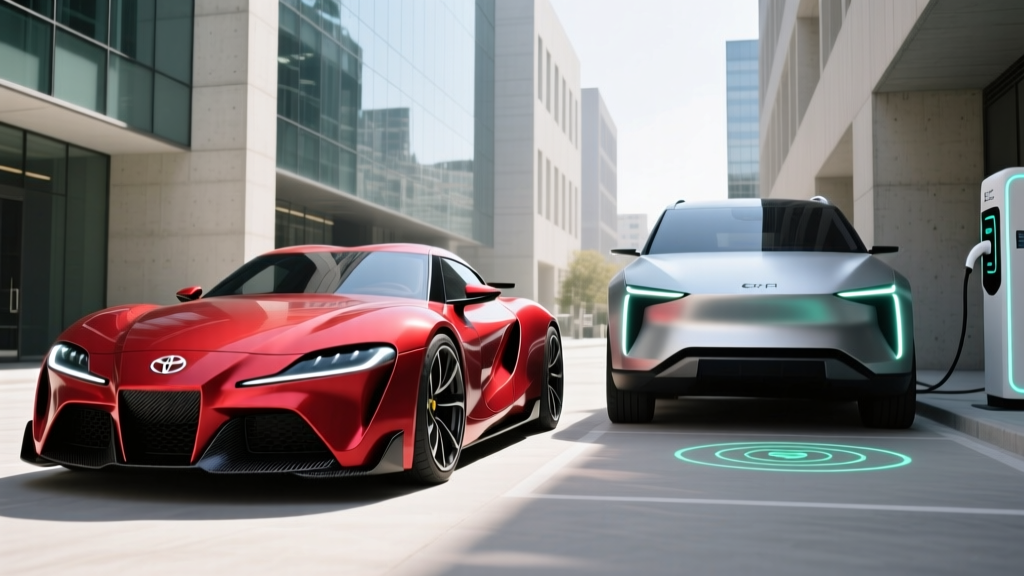
As of early 2026, Toyota does not sell a production electric sports car in the United States. The closest confirmed project is the FT-Se concept, unveiled in late 2023 as a battery-electric, mid-engine sports car designed in collaboration with Gazoo Racing. Toyota has signaled production intent, but no official on-sale date, EPA range, or MSRP has been published. If you want a Toyota EV today, the bZ4X crossover is the only all-electric model available. Buyers hoping for a Toyota electric sports car should expect a production reveal no earlier than late 2026 or 2027, with deliveries likely in the 2028 model year.
What Is the Toyota FT-Se Concept?
The FT-Se (Future Toyota Sports car – Electric) is a battery-electric concept that debuted alongside the FT-3e SUV at the Japan Mobility Show in October 2023. It represents Toyota's vision for a next-generation, driver-focused electric sports car built on a dedicated BEV platform — not a converted combustion chassis.
Key design and engineering signals from the concept include:
- Mid-ship battery layout — placing the battery pack low and behind the driver for weight distribution similar to the GR86/MR2 lineage
- Gazoo Racing tuning — Toyota's motorsport division is leading dynamics development, suggesting a performance-first calibration
- Aerodynamic bodywork — active aero elements and a low drag coefficient target, critical for highway EV range
- Dedicated BEV architecture — the platform is expected to support 800V-class charging, similar to Hyundai's E-GMP and Porsche's J1 architecture
Toyota has not published official battery capacity (kWh), motor output (kW/HP), or 0-60 mph targets for the FT-Se. Based on platform partners and industry analysis, informed estimates suggest a 70–85 kWh usable battery, dual-motor AWD producing 400+ HP, and a target EPA range of 250–300 miles. These figures remain preliminary until Toyota confirms production specs.
Toyota's Current EV Lineup: The bZ4X Baseline
While waiting for an electric sports car, buyers can evaluate Toyota's existing EV technology through the bZ4X, which provides a realistic benchmark for what Toyota's BEV platform delivers today.
| Specification | 2025 Toyota bZ4X XLE FWD | 2025 Toyota bZ4X Limited AWD |
|---|---|---|
| EPA Range | 252 miles | 228 miles |
| Battery (usable) | 71.4 kWh (NMC) | 72.8 kWh (NMC) |
| Motor Output | 201 HP / 150 kW | 214 HP / 160 kW |
| 0-60 mph | ~7.1 sec | ~5.7 sec |
| Max DC Fast Charge | 150 kW (peak) | 150 kW (peak) |
| 10-80% DC Charge | ~30 min (est.) | ~30 min (est.) |
| Level 2 AC Charge | 6.6 kW | 6.6 kW |
| Efficiency (MPGe) | 114 MPGe combined | 102 MPGe combined |
| Base MSRP | $37,070 | $43,070 |
| Battery Warranty | 10 yr / 150,000 mi | 10 yr / 150,000 mi |
The bZ4X's charging performance has drawn criticism — its 150 kW peak and ~30-minute 10-80% time lag behind competitors like the Hyundai Ioniq 5 (240 kW peak, ~18 min 10-80%). A production FT-Se would need to substantially improve on this to compete in the sports car segment where Porsche Taycan and Hyundai Ioniq 5 N set expectations at 270–350 kW peak charging.
How Would a Toyota Electric Sports Car Compare?
If the FT-Se enters production, it will compete against existing and upcoming electric sports cars and performance EVs. Here is how it might stack up against current benchmarks, using preliminary estimates for the Toyota:
| Metric | Toyota FT-Se (Est.) | Porsche Taycan GTS | Hyundai Ioniq 5 N | BMW i4 M50 |
|---|---|---|---|---|
| EPA Range | 250–300 mi | 246 mi | 221 mi | 227 mi |
| Battery (usable) | 70–85 kWh | 83.7 kWh | 84 kWh | 81.5 kWh |
| Horsepower | 400+ HP | 590 HP | 641 HP (N Grin Boost) | 536 HP |
| 0-60 mph | ~4.0 sec (est.) | 3.5 sec | 3.25 sec | 3.7 sec |
| Peak DC Charge | 200–270 kW (est.) | 270 kW | 240 kW | 205 kW |
| 10-80% Charge | ~20–25 min (est.) | ~22 min | ~18 min | ~31 min |
| Starting MSRP | $50,000–$65,000 (est.) | $105,000 | $67,500 | $70,700 |
The FT-Se's potential advantage is price. Toyota's volume manufacturing could position it as the most affordable electric sports car in this group — if it can deliver competitive range and charging speed. The risk is that Toyota's current BEV track record (bZ4X) suggests conservative charging performance and modest range relative to rivals.
Real-World Ownership: What to Expect
Buying a performance EV involves ownership considerations that differ from a gas sports car like the GR86 or Supra. Here is what a prospective Toyota electric sports car buyer should plan for:
Home Charging Access
A performance EV with a 70–85 kWh battery will need Level 2 home charging for practical daily use. Expect to install a 48-amp (11.5 kW) Level 2 charger on a 60-amp circuit, which fully replenishes an 80 kWh pack in roughly 7–8 hours. Installation costs range from $800 to $2,500 depending on panel capacity and wiring distance. If your home has a 100-amp electrical panel, a $2,000–$4,000 panel upgrade to 200 amps may be required.
Charging Deserts and Road Trips
Performance EVs consume energy faster under spirited driving. Expect real-world range to drop 20–35% below EPA estimates during aggressive canyon runs or sustained highway speeds above 75 mph. On a 300-mile EPA-rated FT-Se, that means 195–240 real-world miles during performance driving. Public DC fast charging infrastructure continues to expand through networks like Electrify America and EVgo, but reliability and availability remain inconsistent in rural areas.
Cold-Weather Range Loss
Lithium-ion batteries lose efficiency in cold temperatures. In freezing conditions (below 32°F / 0°C), expect 15–30% range reduction depending on whether the vehicle uses a heat pump for cabin heating. Toyota has not confirmed whether the FT-Se platform will include a heat pump, though the bZ4X does include one — a positive signal.
Cost Breakdown: EV Sports Car vs. Gas Sports Car
| Cost Category (5-Year / 75,000 mi) | Toyota FT-Se (Est. $55K) | Toyota GR Supra 3.0 ($57K) |
|---|---|---|
| Purchase Price (MSRP) | $55,000 | $57,000 |
| Federal Tax Credit (§30D) | Up to $7,500* | $0 |
| Fuel / Charging Cost | $4,200 (home + DC fast) | $9,400 (premium gas) |
| Maintenance | $1,500 | $4,500 |
| Insurance (est. avg.) | $12,500 | $10,800 |
| Estimated Depreciation | $22,000 | $18,000 |
| Total 5-Year Cost | $71,200 | $72,700 |
*Federal §30D tax credit eligibility depends on MSRP caps ($55,000 for sedans/sports cars), buyer income limits ($150K single / $300K joint), and battery critical-mineral sourcing requirements. Verify current-year rules at IRS.gov before purchasing. Point-of-sale transfer is available at participating dealers.
The EV's fuel and maintenance savings are significant — roughly $8,200 less over 5 years — but are partially offset by higher insurance premiums and potentially steeper depreciation, which is common for first-generation EVs. Sports car insurance tends to be expensive regardless of powertrain, but EV-specific factors (battery replacement risk, higher repair costs after collisions) can push premiums 10–20% above equivalent gas models.
Common Misconceptions About Toyota and EVs
| Myth | Fact |
|---|---|
| "Toyota is anti-EV and only makes hybrids." | Toyota sells the bZ4X BEV today and has committed $70B+ to electrification through 2030, including 30 BEV models. Their strategy is multi-pathway (HEV, PHEV, BEV, FCEV), not anti-EV. |
| "Toyota EV batteries degrade quickly." | Toyota warranties its EV batteries for 10 years / 150,000 miles against capacity loss below 70%. The bZ4X uses NMC chemistry with active thermal management. Long-term data is limited, but Toyota's hybrid battery track record (Prius batteries lasting 200K+ miles) is strong. |
| "An electric sports car can't be fun without engine sound." | EV sports cars deliver instant torque, a low center of gravity, and precise torque vectoring. Models like the Ioniq 5 N simulate gear shifts and sound for engagement. Toyota's Gazoo Racing division is likely developing similar driver-engagement features for the FT-Se. |
| "I'll save money on fuel so an EV sports car is cheap to own." | Charging costs are lower per mile, but insurance, depreciation, and potential home charging installation add real costs. Total savings depend on your electricity rate, driving habits, and how long you keep the vehicle. |
Should You Wait or Buy Now?
Decision Framework: Wait for the FT-Se or Buy Today?
Wait for the Toyota FT-Se if:
- You want a Toyota-badged electric sports car specifically and are willing to wait until at least 2028
- You currently own a gas sports car and have 1–2 years before your next purchase cycle
- Home charging installation is feasible at your residence (garage or driveway with panel access)
- You prioritize long-term reliability and Toyota's dealer network over being an early adopter
Buy an existing electric performance car now if:
- You need a vehicle within the next 6 months
- You want proven real-world data on range, charging, and degradation (Ioniq 5 N, Taycan, i4 M50 all have multi-year track records)
- You have reliable home charging and access to DC fast charging for road trips
- You are comfortable with higher depreciation risk on current-gen performance EVs
Stick with a gas or hybrid sports car if:
- You live in an apartment or lack home charging access
- You frequently drive in areas with limited public charging infrastructure
- Your budget is under $40,000 (no electric sports car exists at this price point today)
- You prioritize lightweight, analog driving feel — a GR86 at 2,800 lbs is far lighter than any current EV
Toyota's Broader EV Roadmap
Beyond the FT-Se, Toyota has announced a next-generation BEV platform expected to debut around 2026–2027 with several critical upgrades:
- Improved battery energy density — targeting 20% greater range per kWh through bipolar cell design
- Faster charging architecture — likely 800V-class for 10-80% charges under 20 minutes
- LFP battery option — for lower-cost models, trading some energy density for longer cycle life and reduced cobalt/nickel dependency
- Arene OS — Toyota's new vehicle operating system enabling over-the-air updates and advanced ADAS features
These platform improvements will directly benefit the FT-Se if it launches on this architecture. Toyota's challenge is execution — the bZ4X was widely regarded as a conservative first effort, and competitors have moved quickly.
Will the Toyota FT-Se qualify for the $7,500 federal tax credit?
It depends on the final MSRP, battery sourcing, and your income. Under current IRS §30D rules, sports cars and sedans must have an MSRP at or below $55,000 to qualify. If Toyota prices the FT-Se above that cap, the credit is unavailable regardless of your income. Buyer income caps also apply: $150,000 for single filers, $300,000 for joint filers. Battery critical-mineral and component sourcing requirements add further complexity. Always verify eligibility in the purchase year.
What connector will the Toyota FT-Se use for charging?
Toyota has committed to adopting the NACS (North American Charging Standard) connector — the Tesla-designed plug — across its EV lineup starting with 2025 model-year vehicles. A production FT-Se would almost certainly feature a NACS port, granting access to Tesla Supercharger stations (with appropriate adapters for CCS legacy chargers during the transition period).
How does a Toyota electric sports car compare to the GR86?
The GR86 weighs approximately 2,800 lbs with a 228 HP boxer engine and starts around $30,000. An electric sports car will likely weigh 4,000+ lbs due to the battery pack, produce 400+ HP, and start above $50,000. The EV will be dramatically quicker in a straight line and cheaper to fuel, but heavier through corners and far more expensive to purchase. They serve different driving philosophies — the GR86 is an analog, lightweight purist car; the FT-Se would be a tech-forward, torque-heavy grand tourer.
When will Toyota release a production electric sports car?
Toyota has not confirmed an on-sale date. Industry analysts expect a production reveal in late 2026 or 2027, with US deliveries likely in the 2028 model year. Toyota's pace of EV development has been slower than competitors, so delays beyond this window are possible. Monitor Toyota's official press site and major auto shows for updates.
Is an electric sports car practical as a daily driver?
Yes, with caveats. A 250+ mile EPA range covers most daily commutes comfortably, and home Level 2 charging means you start every morning with a full battery. The limitations appear on road trips (30+ minute DC fast charging stops every 200 miles), in extreme cold (15-30% range loss), and for apartment dwellers without charging access. If your daily drive is under 60 miles round-trip and you can charge at home, an electric sports car is highly practical Monday through Friday.