Quick Answer: Toyota Electric Sedans in 2026
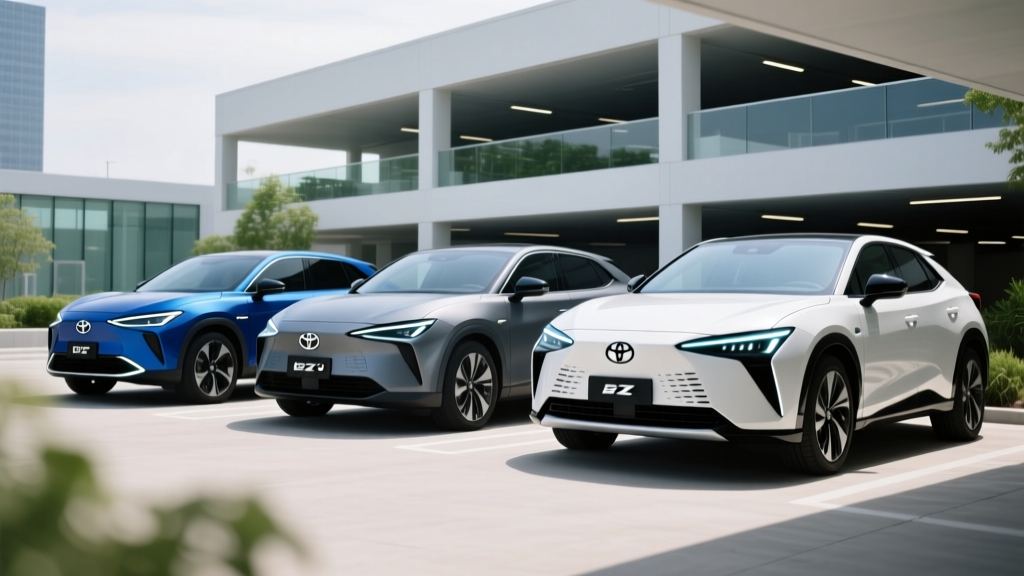
Toyota's electric sedan lineup centers on the bZ4X crossover-sedan (EPA range up to 252 miles, starting around $37,070) and the newly introduced bZ5 sedan (announced for select markets, EPA range estimated ~330 miles). For US buyers seeking a Toyota sedan with electric propulsion, the Prius Plug-In Hybrid (44 miles electric-only, 52 MPG combined) remains the most practical electrified sedan until Toyota's dedicated battery-electric sedans arrive in volume. Federal §30D tax credit eligibility varies by model, battery sourcing, and buyer income — always verify on IRS.gov.
Toyota's Electrified Sedan Lineup: What's Actually Available
Toyota has taken a measured approach to full battery-electric vehicles (BEVs) compared to rivals like Hyundai and Tesla. As of early 2026, US buyers looking for a Toyota electric sedan face a nuanced landscape:
- bZ4X — Technically a compact crossover, but often cross-shopped with sedans. Available now. EPA range: 222–252 miles depending on trim and drivetrain.
- bZ5 Sedan — Announced for Chinese and select Asian markets. US availability remains unconfirmed. Preliminary specs suggest ~73 kWh battery and 330+ mile range on the CLTC cycle (expect ~280–300 EPA-equivalent).
- Prius Plug-In Hybrid (PHEV) — The closest thing to an electrified Toyota sedan you can buy today. 44 miles of electric-only range, then 52 MPG combined as a hybrid.
- Crown (Hybrid) — Available as a hybrid sedan with up to 41 MPG combined, but no plug-in or full-electric variant in the US.
If you're specifically searching for a battery-electric Toyota sedan — not a crossover, not a hybrid — the honest answer is that Toyota's US sedan offerings are still evolving. Here's what each option delivers in real-world ownership.
bZ4X: The Closest Toyota BEV to a Sedan
The bZ4X is built on Toyota's e-TNGA platform and serves as the brand's volume electric vehicle in the US. While its ride height and hatchback profile place it in the crossover category, its footprint and pricing overlap heavily with electric sedans like the Tesla Model 3 and Hyundai Ioniq 6.
| Spec | XLE FWD | XLE AWD | Limited AWD |
|---|---|---|---|
| EPA Range | 252 mi | 228 mi | 222 mi |
| Battery (usable) | 65.6 kWh (LFP) | 65.6 kWh (LFP) | 65.6 kWh (LFP) |
| Horsepower | 201 hp | 214 hp | 214 hp |
| 0–60 mph | ~7.4 sec | ~6.5 sec | ~6.5 sec |
| Peak DC Charge Rate | ~150 kW | ~150 kW | ~150 kW |
| 10–80% DC Charge | ~32 min | ~32 min | ~32 min |
| Level 2 (240V) Rate | ~7.2 kW | ~7.2 kW | ~7.2 kW |
| Efficiency (MPGe) | 131/107/119 | 114/94/104 | 112/92/102 |
| Base MSRP | $37,070 | $40,070 | $44,070 |
| Battery Warranty | 8 years / 100,000 miles | ||
Sources: fueleconomy.gov, Toyota USA press materials.
Real-World Range Reality Check
EPA Sticker: 252 miles (XLE FWD)
Expect in practice: ~210–230 miles on mixed highway driving at 70+ mph. In cold weather (below 32°F), plan for 170–195 miles due to battery heating demands and reduced LFP chemistry efficiency. The bZ4X's LFP battery handles repeated 100% charging well, so you can top off daily without the degradation concerns of NMC packs.
Charging Curve Reality
The bZ4X peaks at approximately 150 kW at a DC fast charger, but like most EVs, it doesn't sustain that rate. The charge curve tapers noticeably above 60% state of charge (SoC). In real-world testing, a 10–80% session takes roughly 32 minutes at a 150+ kW station, but pushing from 80–100% can add another 25–30 minutes. For road trips, plan stops around the 80% mark to avoid wasting time at the charger.
bZ5 Sedan: What We Know (and Don't)
Toyota unveiled the bZ5 as a dedicated electric sedan primarily for the Chinese market, developed in partnership with BYD. Key preliminary specifications:
- Battery: ~73 kWh (BYD Blade LFP)
- CLTC Range: ~550 km (~342 miles)
- EPA-equivalent estimate: ~280–300 miles (CLTC cycles run ~15–20% more optimistic than EPA)
- Dimensions: Mid-size sedan, slightly larger than a Camry
- Status: On sale in China; no confirmed US release date or pricing
Until Toyota confirms US specifications, pricing, and §30D tax credit eligibility for a bZ sedan, American buyers should treat this as a future possibility, not a current option. Any US-bound variant would likely need different battery sourcing to qualify for federal incentives.
EV vs Hybrid: The Real Cost Comparison
For Toyota buyers, the most relevant comparison isn't bZ4X vs Tesla — it's bZ4X vs the Prius Plug-In Hybrid. Both can run on electricity, but the ownership math differs substantially.
| Cost Factor | bZ4X XLE FWD | Prius PHEV (SE) | Camry LE (Gas) |
|---|---|---|---|
| Base MSRP | $37,070 | $33,445 | $29,495 |
| Est. Federal Tax Credit | Up to $7,500* | Up to $7,500* | $0 |
| Effective Purchase Price | ~$29,570 | ~$25,945 | $29,495 |
| 5-Year Fuel/Energy (15k mi/yr) | ~$3,400 (home charging) | ~$3,800 (electric + gas) | ~$8,250 (gas at $3.30/gal) |
| 5-Year Maintenance | ~$1,500 | ~$2,800 | ~$3,500 |
| 5-Year Insurance (avg) | ~$9,500 | ~$7,800 | ~$7,200 |
| 5-Year Total (est.) | ~$43,970 | ~$40,345 | ~$48,445 |
*Tax credit eligibility depends on MSRP caps, buyer income limits, battery component sourcing, and point-of-sale transfer rules under IRS §30D. Verify current eligibility at irs.gov. Insurance estimates based on national averages; actual premiums vary by state, driving record, and insurer.
The Prius PHEV wins on total cost for most buyers who can charge at home and have commutes under 44 miles. The bZ4X closes the gap significantly when the full $7,500 credit applies and home electricity rates are low (below $0.15/kWh). The gas Camry, while cheapest at the dealership, costs the most over five years due to fuel and maintenance.
Real-World Ownership: What First-Time Toyota EV Buyers Need to Know
Home Charging Is Non-Negotiable for Cost Savings
The $3,400 five-year energy estimate for the bZ4X assumes predominantly Level 2 home charging at ~$0.14/kWh. If you rely on public DC fast charging exclusively (averaging $0.35–$0.50/kWh at networks like Electrify America or EVgo), your five-year energy cost jumps to $6,800–$9,500 — erasing much of the fuel savings over gas.
A Level 2 home charger installation typically costs:
| Component | Cost Range |
|---|---|
| Level 2 Charger (32–48A) | $300–$700 |
| Electrician Labor (240V circuit) | $500–$2,000 |
| Panel Upgrade (if needed, 100A→200A) | $1,500–$3,500 |
| Permit & Inspection | $50–$300 |
| Total (no panel upgrade) | $850–$3,000 |
| Total (with panel upgrade) | $2,350–$6,500 |
Cold Climate? Plan Around It
LFP batteries, like the one in the bZ4X, lose more efficiency in cold weather than NMC chemistries. In sustained sub-freezing temperatures, expect 20–30% range reduction. The bZ4X does include a battery preconditioning feature for DC fast charging, but it's less aggressive than Tesla's system. If you live in Minnesota, Maine, or Colorado, budget your daily range expectation at ~175 miles in winter, not 252.
Maintenance Savings Are Real
The bZ4X eliminates oil changes, spark plugs, transmission fluid, and exhaust system maintenance. Brake pad life extends significantly thanks to regenerative braking — many EV owners report original brake pads at 80,000+ miles. Toyota's 8-year/100,000-mile battery warranty covers capacity loss below 70% of original, which is industry-standard but not class-leading (Hyundai offers 10 years/100,000 miles).
Common Misconceptions About Toyota Electric Sedans
| Myth | Fact |
|---|---|
| "Toyota doesn't make electric cars" | The bZ4X is available now in all 50 states. Toyota also sells the bZ3 sedan in China and has announced additional BEVs through 2028. |
| "Toyota EV batteries degrade quickly" | Toyota's LFP chemistry is among the most durable available, rated for 3,000+ full charge cycles with minimal degradation. The 8-year/100,000-mile warranty backs this up. |
| "You'll always get the full $7,500 tax credit" | §30D eligibility depends on battery critical-mineral sourcing, component manufacturing origin, buyer AGI limits ($150K single / $300K joint), and MSRP caps ($55K for sedans, $80K for SUVs). The bZ4X qualifies in many configurations, but rules change — always check the IRS portal. |
| "EVs cost more to insure" | Sometimes true, but the gap is narrowing. The bZ4X's insurance premium averages 15–25% above a comparable gas Camry, primarily due to higher repair costs for battery and structural components. Shop multiple insurers — some offer EV-specific discounts. |
| "You can't take a Toyota EV on a road trip" | The bZ4X charges on CCS1 connectors at Electrify America, EVgo, and other networks. A 250-mile trip requires one 25–30 minute stop. It's slower than Tesla's Supercharger network, but entirely feasible with planning. |
Decision Framework: Which Toyota Electrified Vehicle Is Right for You?
If X, Then Y
- If you have home charging AND a commute under 40 miles: The Prius PHEV delivers the best value — drive on electricity daily, use gas for longer trips, and never worry about charging infrastructure. Total cost of ownership is the lowest in Toyota's lineup.
- If you have home charging AND want zero tailpipe emissions AND road-trip 2–4 times per year: The bZ4X works well. Plan road trips around CCS-compatible DC fast chargers, and enjoy ~$600/year in electricity costs (at $0.14/kWh, 12,000 miles/year).
- If you do NOT have home charging access: A PHEV like the Prius Plug-In is still viable (you'll just use more gas). A full BEV like the bZ4X becomes expensive and inconvenient on public charging alone — reconsider unless your workplace offers Level 2 charging.
- If you live in a cold climate (sustained sub-30°F winters): The Prius PHEV is the safer bet. You'll still get ~30 miles of electric range in winter (down from 44), plus unlimited gas range with no cold-weather charging headaches.
- If you want a true Toyota electric sedan and can wait: Monitor Toyota's announcements for a US-spec bZ sedan or next-generation BEV on their upcoming dedicated EV platform. Expect 2027–2028 availability with potentially 300+ miles of EPA range.
- If you need a sedan today and range is the top priority: Cross-shop the Tesla Model 3 (EPA 341 mi Long Range), Hyundai Ioniq 6 (EPA 361 mi), and Chevrolet Equinox EV (EPA 319 mi). None are Toyotas, but they lead the electric sedan segment on range and charging speed.
Federal Tax Credit: What Actually Applies in 2026
The §30D Clean Vehicle Credit offers up to $7,500 for qualifying new EVs and up to $4,000 for qualifying used EVs. For the bZ4X, eligibility depends on several factors that change periodically:
- MSRP Cap: $55,000 for sedans; $80,000 for SUVs/vans/pickups. The bZ4X (classified as an SUV) qualifies at all trim levels.
- Buyer Income Cap: Adjusted gross income must not exceed $150,000 (single), $225,000 (head of household), or $300,000 (married filing jointly).
- Battery Sourcing: The $7,500 credit splits into two halves — $3,750 for critical mineral sourcing and $3,750 for battery component manufacturing. Both must be met for the full amount. Toyota's supply chain has been evolving to meet these requirements, but confirm current status at fueleconomy.gov.
- Point-of-Sale Transfer: Since 2024, buyers can transfer the credit to the dealer at purchase, reducing the sale price directly rather than waiting for a tax refund. This effectively lowers your out-of-pocket cost at the dealership.
Tax rules are complex and subject to change. Consult a tax professional and verify vehicle eligibility on the IRS Clean Vehicle portal before purchasing.
Frequently Asked Questions
Does Toyota make a fully electric sedan in the US?
Not a traditional sedan. The bZ4X is a crossover with sedan-like pricing and dimensions. The bZ5 sedan exists in China but has no confirmed US release date. Toyota's Prius Plug-In Hybrid is the closest electrified sedan available, offering 44 miles of electric-only range.
What is the real-world range of the Toyota bZ4X?
The EPA rates the bZ4X XLE FWD at 252 miles. In mixed real-world driving at highway speeds, expect 210–230 miles. In cold weather (below freezing), plan for 170–195 miles. These figures assume you're driving to 80–90% state of charge, not a full 100%.
How long does it take to charge the bZ4X at home?
On a Level 2 home charger (240V, 32A, ~7.2 kW), a full 0–100% charge takes approximately 9.5 hours. A typical overnight charge from 20% to 80% takes about 5.5 hours, which is sufficient for daily use. On a standard 120V outlet (Level 1), expect ~1.4 kW, adding roughly 5 miles of range per hour — too slow for daily replenishment if you drive more than 30 miles.
Is the bZ4X eligible for the $7,500 federal tax credit?
The bZ4X has qualified for partial or full §30D credit depending on the model year and battery sourcing. Eligibility changes as supply chains shift. Always verify the specific VIN on the IRS Clean Vehicle portal before purchase. You must also meet income limits and the vehicle must be under the MSRP cap.
Should I buy a bZ4X or a Prius PHEV?
Choose the Prius PHEV if you want lower total cost, flexible range for road trips, and your commute is under 44 miles. Choose the bZ4X if you want zero tailpipe emissions, have reliable home charging, and are comfortable planning DC fast-charging stops on road trips. The Prius is the pragmatic pick; the bZ4X is the commitment to full electrification.
What connector does the bZ4X use?
The US-market bZ4X uses the CCS1 connector for DC fast charging and the J1772 connector for Level 1/Level 2 AC charging. It is not natively compatible with Tesla's NACS connector or Supercharger network, though adapters are becoming available. Toyota has signaled future models may adopt NACS.
How long will the bZ4X battery last?
Toyota warranties the bZ4X battery for 8 years or 100,000 miles against capacity loss below 70%. The LFP chemistry is rated for 3,000+ full charge cycles, which theoretically translates to 600,000+ miles before significant degradation. Real-world data on the bZ4X specifically is still accumulating (the model launched in 2023), but LFP packs in other vehicles have shown excellent longevity.