The Quick Answer on Toyota Electric Vehicles
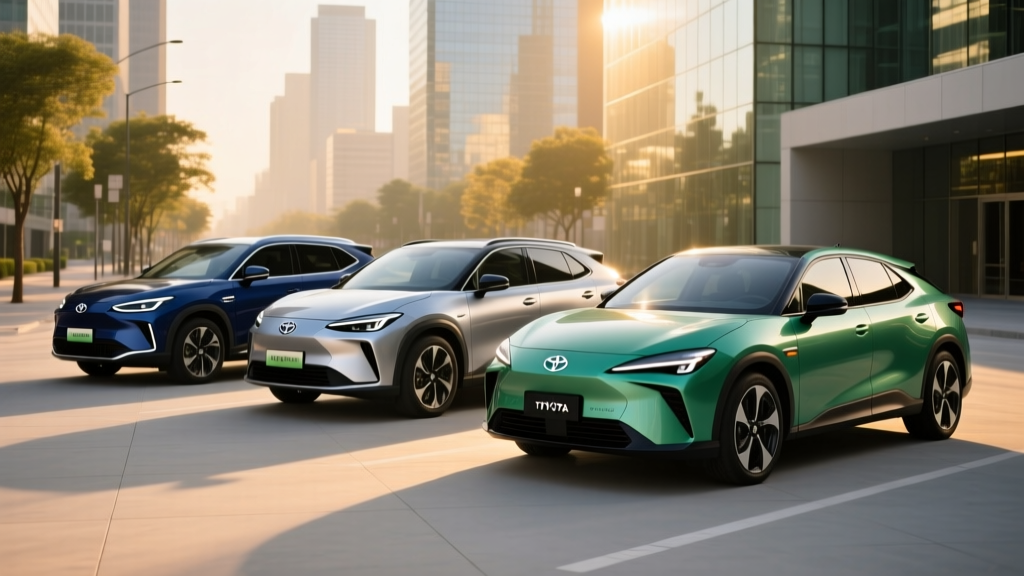
Toyota's battery-electric lineup in 2026 centers on the bZ4X crossover (EPA-estimated 252 miles range, starting around $38,465) and the newly expanded bZ family, which now includes the larger bZ4X Touring / bZ Large SUV variant and the bZ3C sedan for select markets. If you want a Toyota with electrified powertrains but aren't ready for full battery-electric, Toyota still offers one of the broadest hybrid and PHEV lineups in the industry — and for many buyers, a RAV4 Hybrid or RAV4 Prime may still be the smarter financial call. The right Toyota electric choice depends entirely on your daily mileage, home charging access, and climate.
Toyota's 2026 Electric Vehicle Lineup at a Glance
Toyota was slower than Hyundai/Kia and Tesla to embrace full battery-electric vehicles (BEVs), and that caution shows in a lineup that's still maturing. Here's where the Toyota electric portfolio stands for the 2026 model year, based on manufacturer specifications and EPA data at fueleconomy.gov:
| Model | Body Style | Battery (kWh usable) | EPA Range | Peak DC Charge Rate | 0-60 mph | Starting MSRP |
|---|---|---|---|---|---|---|
| bZ4X (FWD) | Compact Crossover | ~71.4 kWh (NMC) | 252 mi | ~150 kW | 7.1 sec | ~$38,465 |
| bZ4X (AWD) | Compact Crossover | ~72.8 kWh (NMC) | 228 mi | ~150 kW | 6.5 sec | ~$42,585 |
| bZ Large SUV (announced) | 3-Row Midsize SUV | Est. 90-100 kWh | Est. 300+ mi | Est. 180+ kW | TBD | Est. $50,000+ |
| bZ3C Sedan (limited markets) | Midsize Sedan | ~73.9 kWh (BYD Blade LFP) | ~270 mi (est. US equiv.) | ~150 kW | TBD | TBD |
Key takeaway: The bZ4X is the only widely available Toyota BEV in the US for 2026. The bZ Large SUV (previewed as a concept and confirmed for production) is expected to arrive as a 2027 model. Toyota's strategy remains "multi-pathway" — they sell far more hybrids than BEVs, and they're candid about it.
Real-World Range: What the EPA Sticker Doesn't Tell You
EPA Estimate (bZ4X FWD): 252 miles
Real-World Expectation: 210–230 miles in mixed highway driving; 170–200 miles in sustained 75+ mph highway travel or cold weather (below 30°F)
The bZ4X's real-world range has been one of the most debated topics among EV owners since its launch. Early 2023 models drew criticism for falling significantly short of EPA estimates in highway and cold-weather conditions. Toyota issued software updates and battery preconditioning improvements through 2024–2025 that narrowed the gap, but the fundamental physics remain:
- Highway driving (70-80 mph): Expect roughly 15–20% below EPA. Aerodynamic drag hits all EVs hard at speed, and the bZ4X's crossover profile isn't as slippery as a sedan.
- Cold weather (20-30°F): Range drops 20–30% due to battery chemistry limitations and cabin heating demands. The bZ4X uses a resistive PTC heater in most trims rather than a more efficient heat pump (standard on the Hyundai Ioniq 5 and Tesla Model Y). This matters significantly in northern climates.
- City/mild weather (50-70°F, sub-60 mph): You can meet or even slightly exceed the 252-mile EPA figure thanks to regenerative braking recapturing energy in stop-and-go traffic.
For comparison, the Hyundai Ioniq 5 (303 miles EPA, Long Range RWD) and Tesla Model Y (320 miles EPA, Long Range AWD) both offer meaningfully more range buffer. If your commute exceeds 80 miles round-trip or you live in a cold climate, the bZ4X's ~210-mile real-world range requires more deliberate trip planning than its competitors.
Charging Speeds and Infrastructure: The bZ4X's Practical Reality
Charging speed is where the bZ4X shows its most notable limitation relative to rivals. Here's the concrete data:
| Charging Level | Power | Approximate Speed | Typical Use Case |
|---|---|---|---|
| Level 1 (120V household) | ~1.4 kW | ~4 miles/hour | Overnight top-up, emergency |
| Level 2 (240V home/public) | ~7.2 kW (onboard charger) | ~22 miles/hour | Daily home charging |
| DC Fast Charge (CCS) | Peak ~150 kW | 10–80% in ~32 min | Road trips |
The charging curve matters more than peak kW. The bZ4X peaks near 150 kW but sustains that rate only briefly before tapering. Real-world 10-80% sessions at a 150+ kW CCS station typically take 30–35 minutes. By contrast, the Hyundai Ioniq 5's 800V architecture enables a 10-80% charge in roughly 18 minutes at a 350 kW charger, and the Tesla Model Y achieves 10-80% in about 25 minutes on a V3 Supercharger (250 kW). That 10–15 minute gap adds up on road trips.
Connector note: The bZ4X uses the CCS1 connector for DC fast charging. Toyota has confirmed that future models (and potentially updated bZ4X model years) will adopt the NACS (Tesla-style) connector, aligning with the industry shift. For now, bZ4X owners can access Tesla Superchargers using a Toyota-approved CCS-to-NACS adapter, which expands the available fast-charging network substantially.
Home charging prerequisite: Level 2 home charging is strongly recommended for bZ4X ownership. Relying solely on public DC fast charging will cost roughly 2–3x more per mile and accelerate battery wear. If you lack access to a garage, driveway, or workplace Level 2 charger, a Toyota hybrid may be a more practical electrified choice until charging access is secured.
Cost Breakdown: Toyota bZ4X vs. RAV4 Hybrid vs. Gas RAV4
Toyota buyers cross-shop heavily between the bZ4X, RAV4 Hybrid, and conventional gas RAV4. Here's a five-year total-cost-of-ownership comparison using concrete numbers. Assumptions: 15,000 miles/year, $3.50/gallon regular gas, $0.14/kWh home electricity (national average), and 70% home / 30% public charging mix.
| Cost Factor (5 years / 75,000 mi) | bZ4X FWD | RAV4 Hybrid (HEV) | RAV4 Gas (FWD) |
|---|---|---|---|
| Starting MSRP | $38,465 | $33,575 | $30,425 |
| Est. Federal Tax Credit (§30D) | Up to $7,500* | $0 | $0 |
| Effective Purchase Price | ~$30,965 | $33,575 | $30,425 |
| Fuel / Energy (5 years) | ~$3,940 | ~$6,560 | ~$9,375 |
| Maintenance (5 years) | ~$1,800 | ~$3,200 | ~$3,800 |
| Insurance (5-year avg.) | ~$9,500 | ~$7,800 | ~$7,200 |
| Est. 5-Year Total | ~$46,205 | ~$51,135 | ~$50,800 |
*Federal §30D tax credit eligibility depends on MSRP caps (under $80,000 for SUVs), buyer income limits ($150K single / $300K joint), battery component and critical mineral sourcing requirements, and point-of-sale transfer availability. Verify current eligibility at IRS.gov before purchasing. Credit amounts and sourcing rules are subject to legislative change.
Key insights from this comparison:
- The bZ4X can be the cheapest option over five years if you qualify for the full $7,500 credit and charge primarily at home.
- EV insurance premiums run 15–25% higher than equivalent gas/hybrid models — factor this in.
- The RAV4 Hybrid's lower purchase price and zero credit dependency make it a safer financial bet for buyers who don't itemize or exceed income caps.
- Maintenance savings on the bZ4X are real (no oil changes, fewer brake replacements due to regen), but they're smaller than many buyers expect — roughly $1,400–$2,000 over five years vs. the gas RAV4.
Toyota Electric vs. Toyota Hybrid: The Decision Framework
This is the most important question for Toyota shoppers: should you go full electric (bZ4X) or stick with Toyota's proven hybrid technology? Here's a practical decision framework:
Choose the Toyota bZ4X (BEV) if:
- You have reliable Level 2 home charging (garage, driveway, or dedicated parking spot with 240V access)
- Your daily driving is under 120 miles round-trip, leaving comfortable range buffer
- You live in a mild-to-moderate climate (or can accept 20-30% range loss in winter)
- You qualify for the federal §30D tax credit (income and sourcing requirements met)
- You want the lowest per-mile fuel cost and reduced maintenance
- You're motivated by tailpipe-emission reduction and energy independence
Choose a Toyota Hybrid (RAV4 Hybrid, Camry Hybrid, etc.) if:
- You lack home charging access (apartment, street parking, no 240V option)
- You regularly drive 300+ miles between stops or tow frequently
- You live in an area with limited public charging infrastructure (rural routes, charging deserts)
- You experience extreme cold (below 10°F regularly) and can't afford range uncertainty
- Your budget is tighter and you don't qualify for the EV tax credit
- You want maximum resale-value predictability (hybrid depreciation is currently lower than BEV)
Consider the RAV4 Prime (PHEV) if:
- You want 42 miles of electric-only range for daily commuting plus a gas engine for road trips
- You can charge at home but want zero range anxiety for longer drives
- You want the best of both worlds — and accept a higher MSRP (~$44,000+) and a smaller cargo area due to the larger battery
Common Misconceptions About Toyota Electric Vehicles
| Myth | Fact |
|---|---|
| "The bZ4X battery will need expensive replacement within a few years." | Toyota covers the bZ4X battery with an 8-year / 100,000-mile warranty against capacity loss below 70%. Industry data from Recurrent Auto shows modern NMC batteries typically retain 90%+ capacity after 100,000 miles with proper charging habits. Full battery replacement (if needed out of warranty) currently costs $12,000–$18,000, but this is rare. |
| "Toyota doesn't make real electric cars." | Toyota sells the bZ4X globally and has committed to 30 BEV models by 2030. Their caution has been strategic — they prioritized hybrids (which sell in far greater volume) while battery costs and charging infrastructure matured. The bZ4X is a legitimate, if not class-leading, EV. |
| "Charging a bZ4X costs about the same as gas." | At $0.14/kWh (home average), the bZ4X costs roughly $0.05 per mile to fuel. A gas RAV4 at 30 MPG combined and $3.50/gallon costs $0.12 per mile. Home charging is less than half the cost. Public DC fast charging at $0.35–$0.50/kWh narrows the gap to near-parity with gas. |
| "The bZ4X qualifies for the full $7,500 tax credit automatically." | Credit eligibility depends on battery sourcing (critical minerals and component manufacturing requirements under §30D), buyer income, and MSRP. These rules have tightened annually. Always verify on the IRS Clean Vehicle Credit page before assuming eligibility. The point-of-sale transfer option lets you apply the credit as a down payment reduction at the dealer. |
| "I can rely on public fast chargers instead of installing a home charger." | You can, but you'll pay 2–3x more per mile, spend 30+ minutes per session, and deal with charger downtime (studies show 15–20% of public CCS chargers are non-functional at any given time). Home Level 2 charging is the foundation of practical EV ownership. |
Battery Technology, Warranty, and Long-Term Ownership
The bZ4X uses a lithium-ion NMC (nickel manganese cobalt) battery pack. This chemistry offers higher energy density than LFP (lithium iron phosphate), which keeps the pack compact and the range competitive, but it comes with a few ownership considerations:
- Daily charging recommendation: Toyota recommends setting the charge limit to 80% for daily use and charging to 100% only before long trips. This is standard for NMC chemistry and helps preserve long-term battery health.
- DC fast charging impact: Frequent DC fast charging (multiple times per week) can accelerate degradation slightly. If you have home Level 2 access, use DC fast charging primarily for road trips.
- Warranty coverage: 8 years / 100,000 miles against battery capacity dropping below 70% of original. The powertrain (motors, inverter) is covered for 5 years / 60,000 miles. This is competitive with industry standards, though Hyundai offers 10 years / 100,000 miles on the Ioniq 5's battery.
- Thermal management: The bZ4X uses a liquid-cooled battery pack with active thermal management, which is essential for longevity and consistent charging speeds. Toyota added battery preconditioning for DC fast charging via software updates — make sure your vehicle has the latest OTA update installed.
What First-Time Toyota EV Buyers Should Know
If you're moving from a gas Toyota (or any gas vehicle) to the bZ4X, here are the practical realities that catch new EV owners off guard:
- Plan your home charging setup before you buy. A Level 2 home charger (240V, 32–48 amp) costs $500–$1,200 for the unit plus $800–$2,500 for professional electrical installation, depending on whether your panel needs an upgrade. Budget $1,500–$3,500 total. A licensed electrician should evaluate your panel capacity (a 200-amp service is typically sufficient).
- Download charging apps before your first road trip. PlugShare, ChargePoint, EVgo, and Electrify America apps are essential for finding and activating public chargers. The bZ4X's built-in navigation includes charger routing, but third-party apps provide real-time availability and user-reported reliability data.
- Regenerative braking takes adjustment. The bZ4X offers adjustable regen levels, but it doesn't quite achieve true one-pedal driving like a Tesla or Nissan LEAF. Expect a learning curve of a few days.
- Tire wear increases on EVs. The bZ4X's instant torque and heavier curb weight (~4,400 lbs) wear tires 15–25% faster than a gas RAV4. Budget for replacement tires every 30,000–40,000 miles instead of 50,000+.
- Insurance quotes vary wildly for EVs. Get quotes from at least three insurers before purchasing. Some companies (like Geico and Progressive) have EV-specific rates; others still price EVs at a significant premium. State minimums and coverage levels affect this more than the powertrain in some cases.
Toyota Electric FAQ
Does Toyota make a fully electric car in 2026?
Yes. The Toyota bZ4X is a fully electric compact crossover available in all 50 states. Toyota has announced additional bZ models (including a larger 3-row SUV), but the bZ4X is currently the only widely available Toyota BEV in the US market. Toyota also sells numerous hybrids and one PHEV (RAV4 Prime).
What is the real-world range of the Toyota bZ4X?
The EPA rates the bZ4X FWD at 252 miles and the AWD at 228 miles. In real-world mixed driving, expect 210–230 miles (FWD) and 190–210 miles (AWD). Highway speeds above 70 mph and cold weather below 30°F will reduce range further — potentially to 170–200 miles in winter highway conditions.
How long does it take to charge the bZ4X at home?
On a Level 2 home charger (240V, 32A), a full 0–100% charge takes approximately 9.5 hours. Most owners charge from 20–80% overnight, which takes about 6 hours and provides roughly 150–180 miles of range — more than enough for daily use.
Is the Toyota bZ4X eligible for the $7,500 federal tax credit?
Eligibility depends on multiple factors under IRS §30D: your income (under $150K single / $300K joint for the full credit), the vehicle's MSRP (under $80,000 for SUVs — the bZ4X qualifies), and battery sourcing requirements (critical minerals and component manufacturing). These sourcing rules have tightened annually and can change. Verify current eligibility at IRS.gov or with a tax professional before purchasing.
Should I buy a bZ4X or a RAV4 Hybrid?
If you have home charging, drive under 120 miles daily, live in a moderate climate, and qualify for the federal tax credit, the bZ4X will likely cost less over five years. If you lack charging access, drive long distances frequently, live in extreme cold, or want maximum flexibility, the RAV4 Hybrid (39 MPG combined) is the more pragmatic choice. The RAV4 Prime PHEV splits the difference with 42 miles of electric range plus a gas engine.
Does Toyota offer a larger electric SUV?
Toyota has confirmed a larger bZ-branded 3-row SUV is in development, expected to arrive as a 2027 model year vehicle. Specs are preliminary — estimated 300+ miles of range and a starting price above $50,000. Until it launches, the bZ4X remains the only Toyota BEV available in the US, and buyers needing 3-row electric capacity should look at the Kia EV9, Hyundai Ioniq 9, or Tesla Model X.
What is the bZ4X battery warranty?
Toyota provides an 8-year / 100,000-mile warranty on the bZ4X's high-voltage battery, covering capacity loss below 70% of original. The basic vehicle warranty is 3 years / 36,000 miles, and the powertrain warranty is 5 years / 60,000 miles.