The Bottom Line on the Toyota Electric Corolla
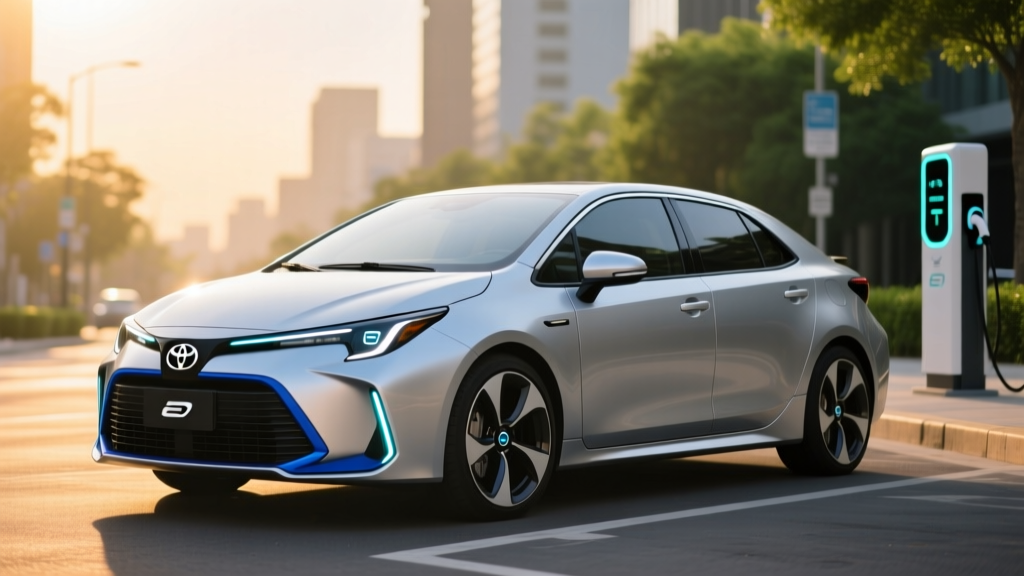
As of mid-2026, Toyota has not yet released a fully electric Corolla for the U.S. market. The next-generation Corolla, expected around the 2027 model year, will be built on Toyota's newly developed EV platform and will offer a battery-electric variant alongside hybrid options. Until then, buyers looking for an electrified Corolla can choose the Corolla Hybrid (starting around $23,500, EPA-estimated 50 MPG combined) or step up to the bZ4X crossover (EPA range up to 252 miles, starting near $37,000). If you're specifically waiting for a battery-electric Corolla sedan, plan for a 2027 or 2028 arrival with preliminary specs still being finalized.
What Toyota Has Confirmed About Its Next-Gen Electric Corolla
Toyota announced in 2023 that its next-generation compact cars — including the Corolla — would ride on a dedicated battery-electric architecture, separate from the TNGA platform used for current hybrids. This matters because dedicated EV platforms typically deliver better interior packaging (flat floors, larger battery trays), improved weight distribution, and faster DC charging capability compared to vehicles adapted from gas-powered architectures.
Toyota's EV strategy has evolved significantly. The company initially leaned heavily into hybrids and hydrogen, but under CEO Koji Sato (who took over in April 2023), Toyota committed to launching 30 battery-electric models globally by 2030, with a target of 3.5 million annual BEV sales. The Corolla — Toyota's global best-seller with over 50 million units sold since 1966 — is a linchpin in that plan.
Here's what we can reasonably project based on Toyota's announced platform specifications and competitive positioning:
| Spec | Projected Figure | Basis |
|---|---|---|
| Battery Capacity | ~55–65 kWh usable | Compact EV segment norms; Toyota bZ platform scaling |
| Chemistry | LFP (base) / NMC (long-range) | Toyota's announced LFP adoption for cost reduction |
| EPA Range (est.) | 250–300 miles | Competitive with Chevy Bolt successor, Hyundai Kona Electric |
| Peak DC Fast Charge | ~150 kW (est.) | bZ4X peaks at 150 kW; next-gen platform expected similar or improved |
| 10–80% Charge Time | ~30 minutes (est.) | Based on bZ4X real-world testing; taper above 80% |
| Level 2 Charging | ~7–11 kW onboard charger | Standard for segment |
| 0–60 mph | ~7.0–8.0 seconds (est.) | Single-motor FWD; AWD variant possible |
| Starting MSRP (est.) | $28,000–$33,000 | Competitive with Bolt, Kona Electric, Nissan Leaf successor |
| Federal Tax Credit | Up to $7,500 (§30D, eligibility TBD) | Depends on battery sourcing and MSRP/income caps |
| Battery Warranty | 8 years / 100,000 miles (min.) | Federal mandate for emissions-related; Toyota typically matches |
Note: These figures are projections based on Toyota's public announcements and segment analysis. Final specs will be confirmed closer to launch. We will update this article when official data is available.
Corolla Electric vs. Corolla Hybrid vs. Gas: A Cost Comparison
For buyers weighing their options right now, here's how a projected electric Corolla stacks up against the current Corolla Hybrid and the conventional gas Corolla over a 5-year ownership period. This comparison uses the projected electric Corolla specs alongside confirmed 2025/2026 data from fueleconomy.gov.
| Cost Category | Gas Corolla LE | Corolla Hybrid LE | Electric Corolla (Projected) |
|---|---|---|---|
| Base MSRP | $22,050 | $23,550 | ~$30,000 (est.) |
| Federal Tax Credit | $0 | $0 | Up to $7,500 (§30D, if eligible) |
| Effective Purchase Price | $22,050 | $23,550 | ~$22,500 (est., after credit) |
| Fuel/Energy (5 yrs) | ~$9,400 (gas @ $3.50/gal, 33 MPG) | ~$6,200 (gas @ $3.50/gal, 50 MPG) | ~$3,750 (electricity @ $0.17/kWh, 3.5 mi/kWh) |
| Maintenance (5 yrs) | ~$3,200 | ~$2,800 | ~$1,500 (no oil changes, fewer brake replacements) |
| Insurance (5 yrs, avg.) | ~$7,500 | ~$7,500 | ~$8,500 (EVs typically 10–15% higher) |
| Total 5-Year Cost | ~$42,150 | ~$40,050 | ~$36,250 |
Key takeaways:
- If the electric Corolla qualifies for the full §30D credit (more on eligibility below), its effective purchase price approaches the gas Corolla — and its 5-year operating costs are significantly lower.
- The Corolla Hybrid remains the safest bet for buyers without reliable home charging access or those in extreme climates where EV range loss is a concern.
- Insurance is typically 10–15% higher for EVs due to higher repair costs and battery replacement risk. Get quotes before committing.
Federal Tax Credit Eligibility: What We Know So Far
The IRS §30D clean vehicle credit offers up to $7,500 for qualifying new EVs, but eligibility depends on several factors that won't be finalized for the electric Corolla until Toyota confirms its battery supply chain. Here are the current rules:
- MSRP Cap: Sedans must be priced at or below $55,000 — the electric Corolla should clear this easily.
- Buyer Income Cap: Modified adjusted gross income must not exceed $150,000 (single), $225,000 (head of household), or $300,000 (joint).
- Battery Component Sourcing: A percentage of battery components must be manufactured or assembled in North America (threshold increases annually).
- Critical Minerals: A percentage of critical minerals must be sourced from the U.S. or free-trade-agreement partners.
- Point-of-Sale Transfer: Buyers can transfer the credit to the dealer at purchase, reducing the upfront price rather than waiting for a tax refund.
The critical unknown is whether Toyota's battery supply chain for a U.S.-market electric Corolla will meet the sourcing thresholds. Toyota has been investing in North Carolina battery production, which improves the odds — but the final determination is made per model year and per trim. We'll update when Toyota publishes its IRS-submitted compliance documentation.
Real-World Ownership: What a First-Time EV Buyer Needs to Know
If you've never owned an EV, the Corolla Electric (when it arrives) will require some lifestyle adjustments. Here's an honest assessment:
Home Charging Access Is the Biggest Factor
Charging at home on a Level 2 (240V) outlet is the single biggest determinant of EV satisfaction. A typical Level 2 setup delivers 7–11 kW, adding roughly 25–40 miles of range per hour — meaning a full overnight charge covers most daily driving. Installation costs range from $500 (simple outlet near the panel) to $2,500+ (panel upgrade, long conduit runs). If you live in an apartment or lack off-street parking, public charging becomes your primary fuel source, which is more expensive and less convenient.
Cold Weather Reduces Range by 20–35%
Lithium-ion batteries lose efficiency in cold temperatures, and cabin heating draws significant energy. Expect a 250-mile EPA-rated electric Corolla to deliver roughly 170–200 miles in sustained sub-freezing driving. A heat pump (if Toyota includes one) can mitigate this to around 15–20% loss. This is manageable for most commutes but matters for winter road trips.
DC Fast Charging Is Not Linear
When Toyota advertises a peak charge rate (say, 150 kW), that number applies only at a low state of charge (typically 10–30%). Above 80%, charging slows dramatically to protect battery health — this is called the charge curve taper. A "30-minute 10–80% charge" might become a 55-minute 10–95% charge. Plan road-trip stops accordingly: charge to 80%, then move on.
Maintenance Is Simpler, but Not Zero
EVs eliminate oil changes, spark plugs, timing belts, and exhaust system repairs. Brake pads last much longer thanks to regenerative braking. However, tire wear is typically 20–30% faster on EVs due to higher vehicle weight and instant torque. Budget for tire replacement every 30,000–40,000 miles rather than the 50,000+ miles common on gas cars.
Common Misconceptions About a Toyota Electric Corolla
| Myth | Fact |
|---|---|
| "The electric Corolla is available now." | As of 2026, Toyota sells the Corolla Hybrid and the bZ4X electric crossover. The electric Corolla sedan is expected for the 2027–2028 model year. |
| "It will get $7,500 in tax credits automatically." | Credit eligibility depends on battery sourcing, buyer income, and MSRP caps per IRS §30D rules. Final determination is pending. |
| "EVs are worse in the cold, so the electric Corolla won't work in Minnesota." | Range drops 20–35% in extreme cold, but preconditioning (warming the battery while plugged in) and heat pumps significantly mitigate this. Millions of EVs operate in Nordic countries year-round. |
| "I'll need to replace the battery for $20,000 in a few years." | Modern EV batteries are designed to last 15–20 years with gradual degradation (typically 10–15% capacity loss over 100,000 miles). Toyota's battery warranty is expected to cover 8 years/100,000 miles minimum. |
| "The Corolla Hybrid is basically the same as an electric Corolla." | Hybrids use a small battery (~1 kWh) and a gas engine. They can't be plugged in (PHEVs excepted). A fully electric Corolla runs solely on battery power and must be charged from the grid. |
Decision Framework: Should You Wait or Buy Now?
If X, Then Y
- If you need a car now and want Toyota reliability: Buy the Corolla Hybrid ($23,550, 50 MPG combined). It's proven, needs no charging infrastructure, and has the lowest upfront cost.
- If you want an EV now and are open to a crossover: Consider the Toyota bZ4X (EPA range up to 252 miles, ~$37,000 before incentives) or competitors like the Hyundai Ioniq 5, Chevy Equinox EV, or Tesla Model 3.
- If you specifically want an electric sedan from Toyota and can wait: Hold for the electric Corolla, expected 2027–2028. Sign up for Toyota notifications and follow IRS credit eligibility updates.
- If you don't have home charging access: The Corolla Hybrid is the better choice. Public-only EV charging is feasible but adds cost, time, and logistical friction to daily life.
- If you drive less than 40 miles daily and have home charging: Any current EV (Bolt, Kona Electric, Model 3) will meet your needs today without waiting. You don't need to hold for the electric Corolla.
- If you live in extreme cold and drive long distances regularly: A hybrid (Corolla Hybrid or a PHEV like the Prius Prime) offers more winter flexibility until solid-state batteries improve cold-weather performance.
What to Watch Before the Electric Corolla Arrives
Between now and launch, several factors will shape whether the electric Corolla is worth the wait:
- Battery chemistry confirmation: Toyota has signaled it will use LFP (lithium iron phosphate) batteries for cost-sensitive models. LFP offers excellent cycle life and lower cost but slightly lower energy density than NMC — meaning the electric Corolla may be slightly heavier or have marginally less range than an NMC-equipped rival. LFP batteries also tolerate regular 100% charging better than NMC, simplifying daily use.
- Charging connector: Toyota has committed to adopting the NACS (Tesla-style) connector for future EVs in North America. If the electric Corolla launches with NACS, it will have access to Tesla's Supercharger network (over 25,000 stalls) in addition to Electrify America, EVgo, and other networks — a significant advantage over CCS-only vehicles.
- IRS §30D credit eligibility: Toyota's North Carolina battery plant is ramping production. Whether the electric Corolla's cells and critical minerals meet the escalating annual thresholds will determine if buyers can access the $7,500 credit at the point of sale.
- Competitive pricing pressure: By 2027–2028, the compact EV sedan segment will include refreshed versions of the Tesla Model 3, Chevy Bolt successor, Hyundai Kona Electric, and potentially a Volkswagen ID.2 variant. Toyota will need to price aggressively — likely in the $28,000–$32,000 range before incentives — to compete.
Frequently Asked Questions
Is there a Toyota electric Corolla available to buy in 2026?
No. Toyota currently sells the Corolla Hybrid (HEV) and the Corolla Cross Hybrid in the U.S. The fully electric Corolla is expected for the 2027 or 2028 model year. The closest Toyota EV available now is the bZ4X crossover.
What will the Toyota electric Corolla cost?
Based on segment positioning and Toyota's pricing strategy, we project a starting MSRP of $28,000–$33,000. If it qualifies for the full $7,500 federal tax credit via point-of-sale transfer, the effective price could drop to approximately $20,500–$25,500 — competitive with the gas Corolla.
Will the electric Corolla have 300 miles of range?
That's unlikely for a base trim at the projected price point. We estimate 250–300 miles EPA for a long-range variant, with the base LFP battery trim potentially offering 220–250 miles. For context, the current Chevy Bolt offers 259 miles and the Hyundai Kona Electric offers 261 miles.
Should I buy a Corolla Hybrid now or wait for the electric version?
If your current vehicle needs replacing within 12 months, the Corolla Hybrid is an excellent, low-risk choice with 50 MPG combined and no charging requirements. If you can wait 18–24 months and have home charging access, the electric Corolla may offer lower long-term operating costs — but final specs and pricing remain unconfirmed.
Will the electric Corolla use Tesla's Supercharger network?
Toyota has committed to the NACS connector for future North American EVs. If the electric Corolla ships with NACS, it will have native access to Tesla Superchargers. If it launches with CCS, an adapter will be available, though native NACS is more likely given Toyota's public commitments.
How does the Corolla Hybrid compare to a fully electric Corolla in daily use?
The hybrid requires zero behavior change — fill up at any gas station, no charging needed. The electric version requires home or workplace charging for convenience, offers lower per-mile energy costs (roughly $0.05/mile on electricity vs. $0.11/mile on gas for the hybrid), and eliminates oil changes. The trade-off is charging logistics on road trips and potential cold-weather range reduction.