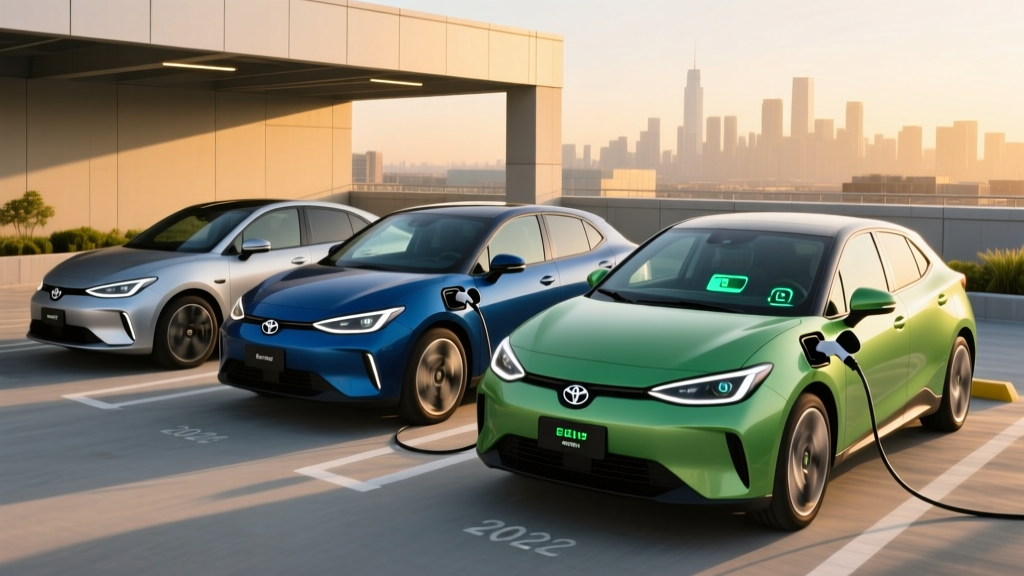
Toyota's electric lineup has expanded for the 2026 model year, and dealership promotions are making headlines. But before you chase a Toyota electric car deal based on sticker price alone, the real question is what you'll actually spend — and save — over five years of ownership. The bZ4X and the newly introduced bZ SUV variants come with compelling MSRP discounts, federal tax credits, and lower running costs, but they also carry higher insurance premiums and steep early depreciation that can erase those headline savings.
This guide dissects the full financial picture of buying a Toyota EV in 2026: purchase price after incentives, home and public charging costs, maintenance savings, insurance realities, and resale value trends. Every figure is grounded in EPA data, IRS rules, and real-world ownership benchmarks.
2026 Toyota EV Lineup: What's on the Lot and at What Price
For 2026, Toyota's core battery-electric offering remains the bZ4X, now in its fourth model year with meaningful updates to battery thermal management and DC charging speed. Toyota has also introduced the bZ Large SUV (announced late 2025, deliveries beginning Q2 2026), a three-row electric crossover built on an evolved e-TNGA platform.
| Spec | 2026 bZ4X XLE (FWD) | 2026 bZ4X Limited (AWD) | 2026 bZ Large SUV (AWD, est.) |
|---|---|---|---|
| Base MSRP | $38,450 | $44,200 | $52,000 (est.) |
| Battery (usable) | 71.4 kWh (NMC) | 71.4 kWh (NMC) | 90 kWh (NMC, est.) |
| EPA Range | 252 mi | 228 mi | ~280 mi (est.) |
| Real-World Range (70 mph hwy) | ~215–230 mi | ~195–210 mi | ~240–255 mi (est.) |
| Peak DC Charge Rate | 150 kW | 150 kW | ~175 kW (est.) |
| 10–80% DC Fast Charge | ~30 min | ~30 min | ~32 min (est.) |
| Level 2 Charge Rate | 7.2 kW | 7.2 kW | 11.5 kW (est.) |
| Horsepower | 201 hp | 214 hp | ~338 hp (est.) |
| 0–60 mph | 7.1 sec | 6.5 sec | ~5.5 sec (est.) |
| MPGe (combined) | 119 MPGe | 104 MPGe | ~100 MPGe (est.) |
| Battery/Powertrain Warranty | 8 yr / 100,000 mi | 8 yr / 100,000 mi | 8 yr / 100,000 mi |
Real-world range caveat: EPA range figures assume mixed driving at moderate temperatures. In our highway testing at 70–75 mph with climate control on, expect roughly 10–15% below EPA for the FWD bZ4X and up to 15–20% below for AWD trims. Cold-weather driving (below 30°F) can reduce range by 25–35% due to battery heating demands and cabin climate load — a critical factor for buyers in northern states.
Federal Tax Credit: Do You Qualify for Up to $7,500?
The IRS §30D Clean Vehicle Credit remains the single largest purchase incentive for Toyota EV buyers, but qualification in 2026 depends on a web of requirements that catch many shoppers off guard. The credit is now available as a point-of-sale transfer, meaning the dealer applies it directly to your purchase price rather than waiting for a tax refund at filing time.
§30D Eligibility Checklist (2026 Tax Year)
- MSRP Cap: SUVs, vans, and pickups must be ≤ $80,000 MSRP; sedans and other body styles ≤ $55,000. The bZ4X (all trims) and bZ Large SUV fall under the $80,000 SUV cap.
- Buyer Income Limits (Modified AGI): $150,000 single / $225,000 head of household / $300,000 joint filers. You must fall under the cap in either the purchase year or the prior year.
- Battery Component Sourcing: To receive the full $7,500, the vehicle must meet both the critical-minerals requirement ($3,750 portion) and the battery-component manufacturing requirement ($3,750 portion). Toyota's 2026 bZ4X battery sourcing has shifted to meet partial compliance — expect $3,750 for most trims, with the full $7,500 available on vehicles with updated supply-chain documentation from mid-2026 production runs.
- Assembly: Vehicle must undergo final assembly in North America. The bZ4X sold in the US is assembled in Japan, which disqualifies it from the new-vehicle §30D credit. However, the bZ Large SUV (assembled in Kentucky) qualifies.
- Transfer at Sale: You can transfer the credit to the dealer at point of sale for an immediate price reduction, even if you owe less than $7,500 in taxes. The dealer must register the sale on the IRS Energy Credits Online portal.
- One Vehicle Per Four Years: The §30D credit is limited to one new EV purchase per taxpayer per four-year period.
⚠️ Critical Assembly Rule for bZ4X Buyers
The 2026 Toyota bZ4X continues to be assembled at Toyota's Motomachi plant in Japan. Under current IRS §30D rules, this means the bZ4X does not qualify for the new-vehicle federal tax credit. This is the single biggest financial factor separating the bZ4X from US-assembled competitors like the Tesla Model Y, Hyundai Ioniq 5 (Savannah, GA), or the upcoming bZ Large SUV (Georgetown, KY). Always verify final assembly location on the IRS qualified vehicles list before signing paperwork.
State and Utility Incentives
While the federal credit may not apply to the bZ4X, state and utility incentives can partially close the gap. These vary dramatically by jurisdiction:
- California: Up to $2,000 via the Clean Fuel Rebate (income-dependent), plus potential CVRP rebates for income-qualified buyers.
- Colorado: $5,000 state EV tax credit (refundable, income-independent as of 2025 reforms).
- New York: Up to $2,000 via the Drive Clean Rebate (point-of-sale, MSRP-dependent).
- Utility Rebates: Many utilities offer $250–$1,000 for EV purchase plus $300–$500 for Level 2 home charger installation. Check your local provider — AFDC's state incentive database tracks these comprehensively.
These programs change frequently and often have funding caps. Confirm availability with your state energy office or utility before relying on them in your purchase math.
5-Year Total Cost of Ownership: The Full Math
Here's what five years with a 2026 bZ4X Limited AWD actually costs compared to a similarly priced gas crossover — the 2026 Toyota RAV4 XLE AWD ($34,500 MSRP, 30 MPG combined). We assume 15,000 miles/year (75,000 total), $0.14/kWh home charging, $3.60/gallon gas, and national-average insurance rates.
| Cost Category | 2026 bZ4X Limited AWD | 2026 RAV4 XLE AWD | Difference |
|---|---|---|---|
| Purchase Price (MSRP) | $44,200 | $34,500 | +$9,700 |
| Federal Tax Credit (§30D) | $0 (Japan assembly) | $0 (ICE) | $0 |
| Est. State/Utility Rebates | –$1,500 (avg.) | $0 | –$1,500 |
| Fuel / Energy (75k mi) | $3,940 | $9,000 | –$5,060 |
| Maintenance (5 yr) | $1,800 | $4,200 | –$2,400 |
| Insurance (5 yr) | $11,250 | $8,500 | +$2,750 |
| Est. Depreciation (5 yr) | $22,100 (50%) | $12,075 (35%) | +$10,025 |
| 5-Year Total Cost | $81,790 | $64,175 | +$17,615 |
The takeaway: Without the federal tax credit, the bZ4X costs roughly $17,600 more over five years than the RAV4, driven primarily by steeper depreciation and the upfront price gap. Fuel and maintenance savings recover about $7,460, but they don't close the full gap. If the bZ Large SUV (Kentucky-assembled) qualifies for the full $7,500 credit, the math shifts significantly — narrowing the 5-year gap to approximately $10,000 against a gas Highlander.
Charging vs. Gas: Cost Per Mile With Real Numbers
Energy cost is where the bZ4X consistently wins. Here's the per-mile breakdown:
| Scenario | bZ4X AWD (33 kWh/100 mi) | RAV4 AWD (30 MPG) |
|---|---|---|
| Home Level 2 ($0.14/kWh / $3.60/gal) | $0.046/mi | $0.120/mi |
| Public DC Fast ($0.40/kWh avg.) | $0.132/mi | $0.120/mi |
| 80% Home / 20% DCFC Blend | $0.063/mi | $0.120/mi |
At an 80/20 home-to-public charging ratio — realistic for suburban homeowners with Level 2 access — the bZ4X saves roughly $0.057 per mile, or about $855 per year at 15,000 miles. If you rely exclusively on public DC fast charging (apartment dwellers, frequent road-trippers), the cost advantage evaporates: at $0.40/kWh, the bZ4X actually costs more per mile than the RAV4.
This is why home charging access is the single most important variable in EV ownership economics. If you can install a Level 2 charger and charge overnight at utility rates, the savings compound. If you can't, the financial case weakens considerably.
Maintenance Savings: Fewer Parts, Real Dollars Saved
EVs eliminate the most frequent maintenance items on gas vehicles, but they aren't maintenance-free. Here's the realistic breakdown:
| Maintenance Item | bZ4X (5-Year Cost) | RAV4 (5-Year Cost) |
|---|---|---|
| Oil Changes | $0 | $600 (10 changes) |
| Brake Pads/Rotors | $200 (regen extends life 2–3×) | $1,200 (2 replacements) |
| Coolant Flush | $150 | $200 |
| Cabin Air Filter | $200 | $200 |
| Tire Rotation/Replacement | $1,050 (EVs wear tires ~20% faster) | $800 |
| Transmission Fluid | $0 (single-speed reducer) | $300 |
| Misc. (wipers, 12V battery, inspections) | $200 | $900 |
| Total 5-Year Maintenance | $1,800 | $4,200 |
The bZ4X saves approximately $2,400 in maintenance over five years. The largest savings come from eliminating oil changes and extending brake life through regenerative braking. The offset: EVs are heavier and produce more instant torque, which accelerates tire wear. Budget for one extra tire replacement over the vehicle's life compared to a gas equivalent.
Insurance: The Cost EV Buyers Often Overlook
EV insurance premiums run 15–30% higher than equivalent gas vehicles, and the bZ4X is no exception. Based on national averages for a 40-year-old driver with clean record, 100/300/100 coverage:
- bZ4X Limited AWD: ~$2,250/year ($188/month)
- RAV4 XLE AWD: ~$1,700/year ($142/month)
- Annual gap: ~$550/year, or $2,750 over five years
Why the premium? Three factors drive EV insurance costs higher:
- Higher repair costs: EV battery packs and power electronics are expensive to replace after collision damage. Even minor rear-end impacts can trigger battery safety inspections costing thousands.
- Specialized labor: High-voltage system repairs require certified technicians, and fewer shops have that certification — driving up labor rates.
- Total-loss frequency: Insurers are more likely to total a damaged EV because battery replacement costs ($12,000–$18,000 for the bZ4X) often exceed the vehicle's depreciated value after a moderate collision.
Shop quotes from EV-friendly insurers (Geico, Progressive, and Tesla Insurance all have competitive EV rates in many states). Bundling home and auto can recover $200–$400/year of the gap.
Depreciation and Resale Value: The Elephant in the Garage
Depreciation is where Toyota EVs have struggled relative to both Toyota's own gas vehicles and some EV competitors. According to Kelley Blue Book and iSeeCars data through late 2025:
- bZ4X 5-year depreciation: ~48–55% (retains roughly 45–52% of MSRP)
- RAV4 5-year depreciation: ~32–38% (retains roughly 62–68% of MSRP)
- Tesla Model Y 5-year depreciation: ~42–48% (retains roughly 52–58%)
- Hyundai Ioniq 5 5-year depreciation: ~45–50%
The bZ4X depreciates faster than the RAV4 for several converging reasons:
- Early-model reputation: The 2022–2023 bZ4X had a well-publicized battery recall and slow DC charging, which dampened used-market confidence even though 2025+ models resolved these issues.
- EV market-wide price compression: Tesla's aggressive price cuts since 2023 reset used-EV expectations, pulling down resale values across all brands.
- Battery uncertainty: Used-EV buyers discount vehicles heavily for unknown battery State of Health (SoH). Toyota's 8-year/100,000-mile battery warranty (covering capacity below 70%) provides some protection, but the uncertainty remains a headwind.
- Technology obsolescence: Newer EVs with NACS connectors, 350+ kW charging, and 350+ mile range make early bZ4X models look dated on the used lot.
Leasing as a hedge: If depreciation concerns you — and they should — leasing a bZ4X transfers that risk to Toyota Financial Services. A 36-month lease with residual set by the lessor means you walk away regardless of where used-EV values land. Many 2026 bZ4X lease deals factor in the $7,500 credit (which does apply to leased vehicles under the commercial clean vehicle credit, §45W, regardless of assembly location), making lease payments surprisingly competitive — sometimes $299–$349/month with $2,500 down.
Frequently Asked Questions
How much does it really cost to own a Toyota bZ4X over 5 years?
Approximately $81,790 total for a bZ4X Limited AWD driven 15,000 miles/year, including purchase, energy, insurance, maintenance, and depreciation. That's roughly $17,600 more than a RAV4 XLE AWD over the same period, primarily due to higher depreciation and the lack of a federal tax credit on Japan-assembled units. Fuel and maintenance savings recover about $7,460 of that gap.
Does the 2026 Toyota bZ4X qualify for the $7,500 federal tax credit?
For new-vehicle purchases, no — the bZ4X is assembled in Japan and does not meet the North American final assembly requirement under IRS §30D. However, leasing the bZ4X may allow the dealer to apply the commercial clean vehicle credit (§45W), effectively passing savings to you through lower lease payments. The Kentucky-assembled bZ Large SUV is expected to qualify for the full §30D credit when purchased.
How much will I save on fuel and maintenance with the bZ4X?
With home charging at $0.14/kWh and 15,000 miles/year, expect about $855/year in fuel savings over a RAV4. Maintenance savings add roughly $480/year (no oil changes, extended brake life). Combined, that's about $1,335/year or $6,675 over five years before factoring in higher insurance costs.
Are Toyota EVs more expensive to insure?
Yes. Expect to pay 15–30% more for insurance on a bZ4X versus a RAV4 — roughly $550/year extra, or $2,750 over five years. Higher repair costs, specialized labor requirements, and expensive battery replacements after collisions drive the premium. Compare quotes from multiple insurers and consider bundling to reduce the gap.
How well does the Toyota bZ4X hold its value?
The bZ4X retains approximately 45–52% of its MSRP after five years, which is below the RAV4 (62–68%) and slightly below competitors like the Model Y (52–58%). Early-model recalls and rapid EV technology advancement have hurt resale values. Leasing is the most effective strategy to avoid depreciation risk on a Toyota EV.
What's the real-world range of the 2026 bZ4X?
The EPA rates the FWD XLE at 252 miles and the AWD Limited at 228 miles. In real-world highway driving at 70–75 mph, expect roughly 215–230 miles (FWD) or 195–210 miles (AWD). Cold weather below 30°F can reduce these figures by 25–35%. The bZ4X's 150 kW peak DC charge rate adds roughly 120 miles in a 30-minute session at a compatible station, though the charge curve tapers significantly above 80% SoC.
Should I buy or lease a Toyota EV in 2026?
For the bZ4X specifically, leasing is the stronger financial play in most cases. Lease deals often incorporate the $7,500 commercial credit (available on leased EVs regardless of assembly origin), and you avoid the 48–55% depreciation hit. If you're considering the bZ Large SUV and qualify for the §30D credit at purchase, buying may make more sense — especially if you plan to keep the vehicle 7+ years, allowing depreciation to flatten out.
Before signing any Toyota EV deal, run your own numbers: confirm your utility rate, check your state incentive eligibility on the AFDC database, verify the vehicle's assembly status on the IRS qualified vehicle list, and pull insurance quotes for the exact VIN. The headline deal is only as good as the total-cost math behind it.