Quick Answer: Is There a Toyota Corolla Electric?
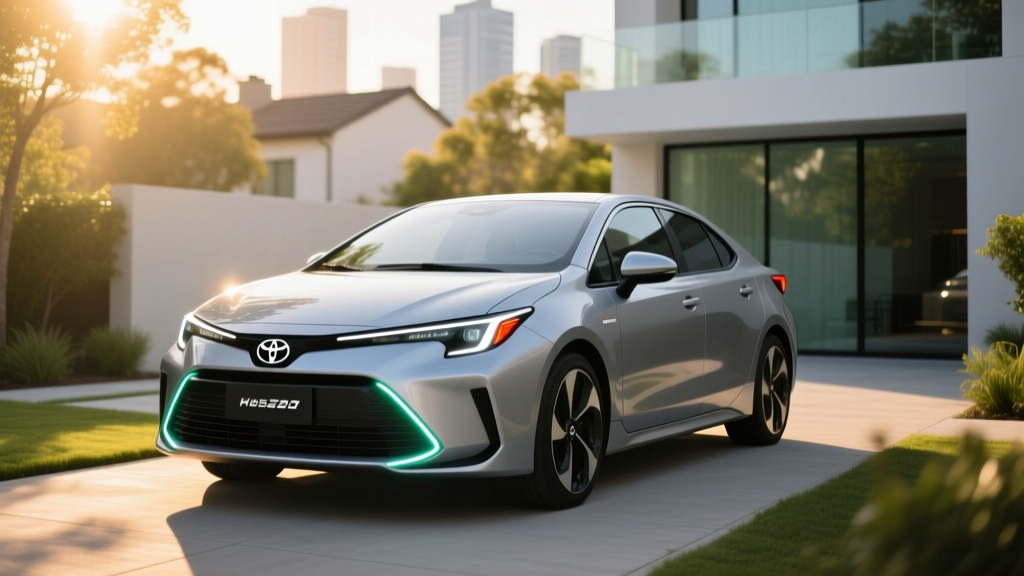
As of early 2026, Toyota has not released a battery-electric Corolla. The automaker has announced a next-generation EV platform co-developed with BYD and its own solid-state battery roadmap, but a production "Toyota Corolla Electric" is not currently available for purchase in the U.S. What Toyota does sell is the Corolla Hybrid (starting around $23,500, EPA-estimated 50 MPG combined), which remains one of the most efficient electrified compacts on the market. If you're searching for a Toyota Corolla Electric, here's a realistic breakdown of what exists, what's announced, and what your best alternatives are today.
Toyota's EV Roadmap: Where Does a Corolla Electric Fit?
Toyota has been cautious on full battery-electric vehicles (BEVs) compared to rivals like Hyundai, Kia, and Volkswagen. The bZ4X, Toyota's first mass-market BEV, launched for the 2023 model year with an EPA-estimated range of up to 252 miles and a usable battery of approximately 64 kWh (NMC chemistry). Sales have been modest, and real-world range has fallen short of EPA estimates in cold-weather and highway testing — a pattern we've documented in our bZ4X review.
In 2024–2025, Toyota announced a revised EV strategy that includes:
- A new dedicated EV platform for next-generation battery-electric models, targeting 2026–2027 production.
- Solid-state battery development with a stated goal of 621 miles (1,000 km) of range and 10-minute fast charging, though Toyota has acknowledged this technology won't reach mass-market vehicles until approximately 2027–2028 at the earliest.
- Continued investment in hybrids and plug-in hybrids as a bridge technology — the Prius, Corolla Hybrid, RAV4 Hybrid, and RAV4 Prime remain core to Toyota's U.S. lineup.
A Corolla-sized BEV would slot below the bZ4X in Toyota's electric lineup and compete directly with the Chevrolet Bolt EV/EUV successors, Hyundai Kona Electric, Kia Niro EV, and Nissan Leaf replacement. However, Toyota has not confirmed a Corolla Electric by name, and any specs circulating online are speculative until an official reveal.
What a Toyota Corolla Electric Would Need to Compete
If Toyota does bring a Corolla Electric to market, it will need to match or beat the current class leaders on the metrics that matter to compact EV buyers. Here's where the bar sits in 2026:
| Vehicle | EPA Range | Battery (kWh) | Peak DC Charge | 10–80% Time | Base MSRP |
|---|---|---|---|---|---|
| Hyundai Kona Electric | 261 mi | 64.8 (NMC) | ~100 kW | ~43 min | $32,975 |
| Kia Niro EV | 239 mi | 64.8 (NMC) | ~85 kW | ~45 min | $39,600 |
| Chevrolet Bolt EV (if reintroduced) | ~259 mi (prior gen) | ~65 (NMC) | ~55 kW (prior gen) | ~50+ min | ~$28,000 (est.) |
| Toyota bZ4X (for reference) | 252 mi | ~64 (NMC) | ~150 kW | ~30 min | $43,070 |
What this means: A Corolla Electric would need at least 250+ miles of EPA range, a usable battery around 60–70 kWh, DC fast charging at 100+ kW (ideally 150 kW to match the bZ4X), and a starting price under $35,000 to be competitive. Anything less — particularly slow charging or sub-200-mile range — would struggle against established rivals.
Corolla Electric vs. Corolla Hybrid: The Real Comparison
For buyers who want an electrified Corolla today, the 2026 Toyota Corolla Hybrid is the practical choice. Here's how a hypothetical Corolla Electric would stack up against the real Corolla Hybrid on the factors that drive ownership decisions:
| Factor | Corolla Hybrid (Available Now) | Corolla Electric (Hypothetical) |
|---|---|---|
| Powertrain | 1.8L 4-cyl + electric motor (HEV) | Battery-electric (BEV) |
| EPA Efficiency | ~50 MPG combined | Est. 120–130 MPGe |
| Range / Tank | ~530 miles (11.4-gal tank) | Est. 240–270 miles |
| Base MSRP | ~$23,500 | Est. $30,000–$35,000 |
| Federal Tax Credit | None (HEV not eligible for §30D) | Up to $7,500 (if eligible) |
| Fuel/Energy Cost (per mile) | ~$0.07/mi (gas at $3.50/gal) | ~$0.04/mi (home L2 at $0.14/kWh) |
| Maintenance | Oil changes, filters, spark plugs | Minimal — no oil, fewer fluids |
| Cold-Weather Impact | Minor MPG reduction | 20–30% range loss at 20°F |
| Refueling/Recharging | 5 min at any gas station | 30+ min DC fast; 8+ hr home L2 |
The Corolla Hybrid wins on range, refueling convenience, and upfront cost. A Corolla Electric would win on per-mile energy cost (with home charging), lower maintenance, and potential tax-credit eligibility — but only if the buyer can charge at home and doesn't regularly drive in extreme cold or take long road trips without planning.
Real Costs: What Would Corolla Electric Ownership Actually Cost?
Let's model a realistic 5-year ownership scenario. We'll compare the Corolla Hybrid (available) against a hypothetical Corolla Electric at $32,000 MSRP with the full $7,500 federal credit applied at point of sale, driven 12,000 miles/year.
| Cost Category | Corolla Hybrid | Corolla Electric (Est.) |
|---|---|---|
| Purchase Price (after credit) | $23,500 | $24,500 ($32,000 − $7,500) |
| Fuel / Electricity (60k mi) | $4,200 (gas) | $2,400 (home L2) |
| Maintenance (5 years) | $2,500 | $1,200 |
| Insurance (5 years, avg.) | $7,500 | $8,500 |
| Home Charger Install (L2) | $0 | $1,200 (avg. 240V/48A) |
| 5-Year Total | $37,700 | $37,800 |
The takeaway: Even with the full $7,500 tax credit, a Corolla Electric would roughly break even with the Corolla Hybrid over 5 years when you factor in the home charger installation and higher EV insurance premiums. The savings gap widens in the EV's favor after year 5 as fuel savings accumulate and the hybrid requires more maintenance. But this model assumes home charging access — without it, public DC fast charging at $0.35–$0.50/kWh erases the energy-cost advantage entirely.
Federal Tax Credit: Would a Corolla Electric Qualify?
The IRS §30D Clean Vehicle Credit offers up to $7,500 for qualifying new EVs, but eligibility depends on multiple factors that change frequently. For a hypothetical Corolla Electric to qualify:
- MSRP cap: The vehicle must have an MSRP at or below $55,000 (sedans/wagons). A Corolla Electric would easily clear this.
- Buyer income cap: Modified adjusted gross income must not exceed $150,000 (single), $225,000 (head of household), or $300,000 (joint filers).
- Battery sourcing: A percentage of critical minerals and battery components must be sourced from the U.S. or free-trade-agreement partners. These thresholds increase annually — for 2026, the requirements are stringent, and vehicles with Chinese-sourced battery components may be disqualified.
- Point-of-sale transfer: Buyers can transfer the credit to the dealer at purchase, reducing the out-of-pocket price immediately rather than waiting to claim it on their tax return.
Critical caveat: Toyota's battery supply chain has historically relied on Panasonic (Japan) and, increasingly, CATL and BYD (China) for certain models. Whether a Corolla Electric would meet the 2026 critical-minerals and battery-component thresholds is unknown until Toyota publishes the vehicle's battery sourcing documentation. Always verify eligibility on the IRS website or with a tax professional before counting on the credit.
Myths vs. Facts: Common Corolla Electric Misconceptions
| Myth | Fact |
|---|---|
| "The Toyota Corolla Electric is available now." | False. No Corolla-badged BEV is on sale in the U.S. as of 2026. The Corolla Hybrid is the electrified option. |
| "A Corolla EV would get 400+ miles of range." | Unlikely near-term. Solid-state batteries capable of that range aren't expected in mass-market vehicles until 2028+. A Corolla Electric would likely target 240–280 miles. |
| "EVs cost more to own than hybrids, always." | Depends. With home charging, the $7,500 credit, and low maintenance, a BEV can break even or beat a hybrid over 5–7 years. Without home charging, the hybrid usually wins. |
| "Toyota doesn't make electric cars." | False. Toyota sells the bZ4X BEV and the Prius Prime PHEV. But Toyota's BEV lineup is smaller than Hyundai/Kia/GM. |
| "I'll save thousands per year driving electric." | Overstated. At 12,000 miles/year, home-charging savings vs. gas in a 50-MPG hybrid are roughly $360/year. The real savings come over 7+ years and with higher annual mileage. |
Decision Framework: Should You Wait or Buy Now?
If-Then Guide for Corolla Shoppers
Buy the Corolla Hybrid NOW if:
- You need a car within the next 3–6 months
- You don't have access to home Level 2 charging (apartment, street parking, no garage)
- You regularly drive in sub-20°F winters where BEV range drops 20–30%
- Your budget is firm at $25,000 or below
- You take frequent road trips exceeding 300 miles and don't want to plan charging stops
- You want proven Toyota reliability with a decade of hybrid track record
Wait for a Corolla Electric (or buy a different BEV now) if:
- You have a garage or dedicated parking with access to a 240V outlet for Level 2 charging
- Your daily commute is under 60 miles round-trip (well within any BEV's range)
- You qualify for the full $7,500 §30D tax credit (income under caps, filing status eligible)
- You want to eliminate oil changes and reduce maintenance costs long-term
- You're willing to wait until 2027–2028 for Toyota to potentially release a Corolla BEV
- You're open to alternatives like the Hyundai Kona Electric, Chevrolet Equinox EV, or Tesla Model 3 today
Consider a PHEV (Prius Prime) as a middle ground if:
- You want ~40 miles of electric-only range for daily commuting with a gas engine for longer trips
- You can charge at home but still want the flexibility of gas for road trips
- You want partial EV benefits without full range-anxiety risk
What First-Time EV Buyers Should Know Before Committing
If you're seriously considering an EV — whether it's a future Corolla Electric or an available model today — these realities will shape your ownership experience:
1. Home charging is non-negotiable for cost savings. A Level 2 home charger (240V, 32–48 amps) adds roughly 25–35 miles of range per hour and costs $800–$2,000 installed by a licensed electrician, depending on whether your electrical panel needs an upgrade. Without home charging, you'll rely on public DC fast chargers at $0.35–$0.50/kWh, which can cost as much per mile as a 50-MPG hybrid running on gas.
2. kW and kWh are not the same thing. Kilowatt-hours (kWh) measure battery capacity — think of it as the "gallon" equivalent. Kilowatts (kW) measure charging power — the "flow rate." A 65 kWh battery charged at 11 kW (Level 2) takes about 6 hours from empty; at 150 kW (DC fast), it can go 10–80% in roughly 25–30 minutes, though charging slows significantly above 80% State of Charge to protect the battery.
3. Real-world range is less than the EPA sticker. Expect 10–15% less range on sustained highway driving (70+ mph) and 20–30% less in temperatures below 30°F. A BEV rated at 260 miles EPA may deliver 200–220 miles on a winter highway trip. Always plan trips with a 20% buffer.
4. Battery degradation is real but slow. Most modern NMC and LFP batteries lose 5–10% capacity over the first 100,000 miles. Toyota's hybrid battery warranty is 10 years/150,000 miles; a future BEV warranty would likely be 8 years/100,000 miles with a capacity-retention threshold of 70%. Replacement costs for a 60–70 kWh pack currently range from $8,000–$15,000 out of warranty.
5. Insurance costs more for EVs. EV insurance premiums run 15–25% higher than comparable gas or hybrid vehicles due to higher repair costs (especially battery replacement after collision). Get quotes before purchasing.
Frequently Asked Questions
Is Toyota making a Corolla Electric?
Toyota has not officially confirmed a Corolla-badged battery-electric vehicle. The company has announced next-generation EV platforms for 2026–2027 and is developing solid-state batteries, but no Corolla Electric has been revealed with confirmed specs, pricing, or a release date.
What is the most efficient Toyota Corolla available now?
The 2026 Toyota Corolla Hybrid achieves an EPA-estimated 50 MPG combined (53 city / 46 highway for the LE trim), making it one of the most fuel-efficient non-plug-in compacts available. The EPA's fueleconomy.gov lists full efficiency data.
Would a Corolla Electric qualify for the $7,500 tax credit?
Possibly, but it depends on battery sourcing, your income, and the vehicle's MSRP. The §30D credit requires battery components and critical minerals to meet U.S./FTA sourcing thresholds that tighten each year. Always check the latest rules on IRS.gov before assuming eligibility.
Should I buy a Corolla Hybrid or wait for an electric version?
If you need a vehicle now, lack home charging, or drive in extreme cold, the Corolla Hybrid is the pragmatic choice. If you can charge at home, commute under 60 miles daily, and are willing to wait 1–2+ years, holding out for a Corolla Electric — or buying a different compact BEV today — may be worthwhile.
What compact EVs can I buy today instead?
Strong alternatives include the Hyundai Kona Electric (261 mi range, ~$33,000), Chevrolet Equinox EV (315+ mi range, ~$33,000), Tesla Model 3 (272–341 mi range, ~$38,990), and Kia Niro EV (239 mi range, ~$39,600). Each has trade-offs in charging speed, interior space, and tax-credit eligibility.