Quick Answer: As of early 2026, Toyota has not released a battery-electric Corolla in the United States. The Corolla lineup remains hybrid-only (the Corolla Hybrid, rated at 50 MPG combined). However, Toyota has confirmed a next-generation compact EV built on its modular EV platform, widely expected to carry the Corolla Electric nameplate for global markets. If and when it arrives in the U.S., industry estimates point to an EPA range near 250 miles, a starting MSRP around $33,000, and eligibility for a partial or full §30D federal tax credit depending on battery sourcing. Until then, buyers cross-shopping a "Corolla Electric" are really choosing between the Corolla Hybrid and competing compact EVs like the Chevrolet Equinox EV, Nissan Leaf, or Hyundai Kona Electric.
What "Corolla Electric" Actually Means in 2026
Search interest in "Corolla Electric" continues to climb — and for good reason. The Corolla is the best-selling nameplate in automotive history, and Toyota's slow-but-steady pivot to battery-electric vehicles has buyers wondering when the icon goes fully electric. Here is where things stand:
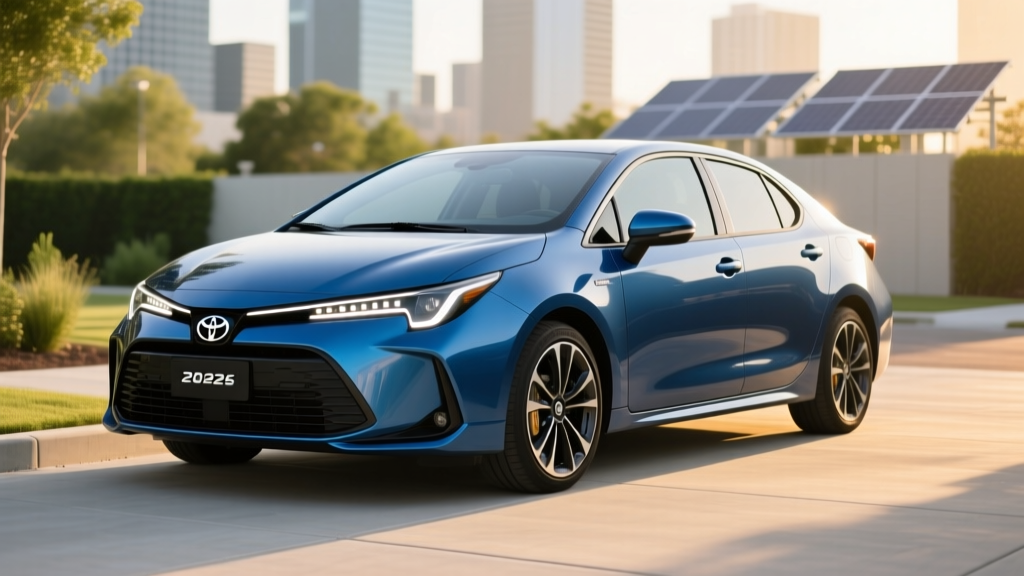
- Corolla Hybrid (available now): 1.8L four-cylinder hybrid powertrain, 50 MPG combined EPA, starting MSRP of $23,500 (2026 model year). No plug, no electric-only range — this is a conventional HEV.
- Corolla Electric (announced/not yet U.S.-available): Toyota has teased a compact BEV on its evolved e-TNGA platform. European and Asian market previews suggest a ~55 kWh LFP or NMC battery, ~250-mile WLTP range (translating to roughly 220–240 miles EPA), and DC fast charging up to 150 kW. U.S. launch timing remains unconfirmed.
- Corolla Cross Hybrid (available now): The small SUV variant, 42 MPG combined, starting near $29,000.
If you landed here ready to buy a Corolla Electric today, the practical path is either the Corolla Hybrid or a competing compact EV. Let's break down both options with real numbers.
Corolla Hybrid vs. Compact EVs: The Numbers That Matter
Below is a data-driven comparison of the 2026 Corolla Hybrid against three compact EVs that U.S. buyers actually cross-shop. All figures reflect current EPA data and manufacturer specs.
| Spec | 2026 Toyota Corolla Hybrid (LE) | 2026 Chevrolet Equinox EV (2LT) | 2026 Hyundai Kona Electric (SEL) | 2026 Nissan Leaf (SV Plus) |
|---|---|---|---|---|
| Powertrain | 1.8L HEV | BEV (NMC) | BEV (NMC) | BEV (NMC) |
| EPA Range / MPG | 50 MPG combined | 319 mi | 261 mi | 212 mi |
| Battery Capacity | ~0.9 kWh (hybrid) | 85 kWh usable | 65 kWh usable | 60 kWh usable |
| Peak DC Charge Rate | N/A | 190 kW | 100 kW | 100 kW |
| 10–80% DC Charge Time | N/A | ~24 min | ~43 min | ~45 min |
| Horsepower | 138 hp (combined) | 213 hp | 201 hp | 214 hp |
| 0–60 mph | ~9.2 sec | ~7.8 sec | ~7.2 sec | ~6.9 sec |
| Base MSRP | $23,500 | $34,900 | $33,975 | $30,690 |
| Federal Tax Credit (§30D) | N/A (HEV) | Up to $7,500* | Up to $7,500* | Up to $7,500* |
| Battery Warranty | 10 yr / 150,000 mi (hybrid system) | 8 yr / 100,000 mi | 10 yr / 100,000 mi | 8 yr / 100,000 mi |
*§30D credit eligibility depends on buyer income caps ($150K single / $300K joint), MSRP caps ($55K sedans), battery critical-mineral sourcing, and North American assembly requirements. Always verify current rules at IRS.gov before purchasing.
Real Costs: Five-Year Ownership Breakdown
The sticker price is only the start. Here is a realistic five-year/75,000-mile total cost of ownership comparison, assuming national averages for electricity ($0.16/kWh), gasoline ($3.30/gallon), and insurance.
| Cost Category | Corolla Hybrid (LE) | Equinox EV (2LT, after $7,500 credit) | Kona Electric (SEL, after $7,500 credit) |
|---|---|---|---|
| Net Purchase Price (after credit) | $23,500 | $27,400 | $26,475 |
| Fuel / Energy (75K mi) | $4,950 (gas) | $2,400 (electric) | $2,600 (electric) |
| Maintenance (5 yr) | $2,800 | $1,200 | $1,200 |
| Insurance (5 yr est.) | $6,500 | $7,800 | $7,200 |
| Home Charger Install (Level 2) | $0 | $1,200 | $1,200 |
| 5-Year Total | $37,750 | $40,000 | $38,675 |
Key takeaways from this data:
- The Corolla Hybrid wins on pure upfront cost. No home charger install, no credit-eligibility hoops, and cheap insurance keep the five-year total low.
- The Kona Electric nearly breaks even once the $7,500 tax credit and fuel savings are factored in — but only if you qualify for the full credit and have reliable home charging.
- EV insurance premiums run 15–25% higher on average, driven by costly battery repairs and specialized collision training. This erodes some of the fuel savings.
- Maintenance savings on EVs are real: no oil changes, no spark plugs, reduced brake wear from regen. Expect to spend roughly $1,200 over five years on cabin filters, tire rotations, wiper fluid, and brake inspections.
Real-World Range and Charging: What the EPA Sticker Doesn't Tell You
If Toyota brings a Corolla Electric to the U.S. with an EPA rating around 240 miles, plan for less in practice. Here is how real-world conditions shrink range, based on extensive testing data from current compact EVs in this class:
- Highway driving at 75 mph: Expect a 12–18% reduction. A 240-mile EPA rating drops to roughly 200–210 miles on sustained interstate runs.
- Cold weather (below 30°F): LFP and NMC batteries both lose 20–35% range in freezing temps without a heat pump. With preconditioning and a heat pump, losses hold closer to 15–20%.
- DC fast-charging taper: Peak charge rates (e.g., 150 kW) only hold from roughly 10–50% State of Charge. Above 80%, speeds drop sharply — often below 40 kW. A "10–80% in 30 minutes" spec means that last 20% could add another 25+ minutes.
For context, the current Kona Electric's EPA-estimated 261 miles translates to about 215–225 miles in mixed real-world driving and closer to 175–190 miles on a cold winter highway run. Check fueleconomy.gov for official EPA range and efficiency data on any model you consider.
First-Time EV Buyer: What You Must Know Before Switching
Moving from a Corolla gas or hybrid to any battery-electric vehicle requires a lifestyle audit. Here are the non-negotiable considerations:
Home Charging Access
Over 80% of EV charging happens at home. If you have a garage or driveway with access to a 240V outlet (or can install one), an EV works seamlessly — plug in at night, wake up "full." A Level 2 home charger (7–11 kW) adds roughly 25–40 miles of range per hour of charging. Installation costs typically run $800–$2,000 depending on your electrical panel capacity and distance from the panel to the charger location.
If you live in an apartment or rely on street parking, public charging becomes your primary refueling method. This adds time (30–45 minutes per DC fast-charge session), cost ($0.35–$0.55/kWh at public DC stations vs. $0.16/kWh at home), and unpredictability (broken chargers, wait times). Without home charging, a hybrid is almost always the more practical choice.
Driving Patterns
A daily commute under 60 miles round-trip is ideal for an EV — you charge overnight and never visit a gas station. But if you regularly drive 200+ miles one-way or tow frequently, a compact EV's range and charging stops become a real friction point. The Corolla Hybrid handles any road trip with a 2-minute gas stop and 450+ miles of total range.
Climate
If you live in the Sun Belt or a temperate coastal region, an EV's range stays close to its EPA estimate most of the year. In the upper Midwest, Mountain West, or Northeast, winter range loss of 20–35% is the norm — not the exception. A heat pump (standard on many newer EVs, optional on others) mitigates this but does not eliminate it.
Myths vs. Facts: Clearing Up Corolla EV Confusion
| Myth | Fact |
|---|---|
| "The Corolla Electric is available now in the U.S." | As of 2026, Toyota sells the Corolla as a hybrid (HEV) only in the U.S. A BEV variant has been previewed globally but has no confirmed U.S. launch date. |
| "EVs cost more to own than hybrids over five years." | It depends on tax credit eligibility, home charging access, and annual mileage. With the full $7,500 §30D credit and home charging, compact EVs like the Kona Electric can match or beat the Corolla Hybrid's five-year cost. |
| "EV batteries need replacing every few years." | Modern NMC and LFP batteries are warrantied for 8–10 years / 100,000–150,000 miles at 70%+ capacity retention. Real-world degradation data shows most EV batteries retain 85–90% capacity after 100,000 miles. Replacement is rare and typically costs $8,000–$16,000 if needed out of warranty. |
| "You can't take an EV on a road trip." | You can, but it requires planning. A 500-mile trip in a compact EV with 250 miles of range means one 30-minute DC fast-charge stop — manageable, but longer than a 5-minute gas stop. The Corolla Hybrid does the same trip nonstop. |
| "All EVs qualify for the $7,500 tax credit." | Fewer than half of EVs on the U.S. market qualify for the full credit as of 2026 due to battery sourcing, critical mineral, and North American assembly requirements under §30D. Always check the IRS's current eligible vehicle list. |
Decision Framework: Should You Wait, Go Hybrid, or Go Electric?
Choose the Corolla Hybrid if:
- You lack reliable home charging (apartment, street parking, no 240V access).
- You regularly drive 300+ miles in a day or live in a region with sparse DC fast-charging infrastructure.
- Your budget is firm under $25,000 and you cannot wait for a potential Corolla Electric launch.
- You live in an extreme cold-weather climate where winter range loss would make a compact EV impractical.
Choose a compact EV now (Kona Electric, Equinox EV, Leaf) if:
- You have home charging access and a daily commute under 80 miles.
- You qualify for the full $7,500 §30D federal tax credit (income under $150K single / $300K joint, vehicle meets sourcing rules).
- You want lower per-mile energy costs ($0.04–$0.05/mile on home electricity vs. $0.10–$0.12/mile on gas in the Corolla Hybrid).
- You are ready to plan road trips around DC fast-charging stops.
Wait for the Corolla Electric if:
- You are committed to the Toyota brand and dealer network.
- Your current vehicle has 12–18 months of life left, giving Toyota time to confirm U.S. specs, pricing, and launch timing.
- You want Toyota's historically strong reliability and resale value applied to a BEV platform — but understand that first-year models of any new EV carry early-production risk.
Frequently Asked Questions
Is Toyota making a fully electric Corolla?
Toyota has confirmed a next-generation compact EV that is widely expected to wear the Corolla nameplate in global markets. A U.S. launch has not been officially confirmed as of early 2026. Toyota's U.S. EV lineup currently includes the bZ4X crossover and the upcoming three-row bZ SUV.
How much would a Corolla Electric cost?
Based on Toyota's global EV pricing and the competitive compact EV segment in the U.S., a Corolla Electric would likely start between $30,000 and $35,000 before incentives. If it qualifies for the §30D credit, the effective price could drop to the mid-$20,000s — undercutting many competitors.
Is the Corolla Hybrid better than an EV for most buyers?
For buyers without home charging, with long commutes, or in extreme cold climates, the Corolla Hybrid's 50 MPG and zero range-anxiety make it the pragmatic pick. For buyers with home charging, a moderate commute, and tax-credit eligibility, a compact EV will cost less per mile to operate and provide a smoother, quieter drive.
What compact EV is closest to a "Corolla Electric" today?
The Hyundai Kona Electric is the closest analog: similar footprint, practical cargo space, 261 miles of EPA range, and a starting price near $34,000. The Chevrolet Equinox EV offers more range (319 miles) at a slightly higher price. Both may qualify for the §30D credit — verify at IRS.gov.
How long do EV batteries last, and what does replacement cost?
Most modern EV batteries retain 85–92% of original capacity after 100,000 miles based on fleet data. Federal law mandates a minimum 8-year/100,000-mile battery warranty (10 years/150,000 miles in CARB states). Out-of-warranty replacement for a compact EV battery currently runs $8,000–$16,000 depending on the model and chemistry. Full replacement remains uncommon — most degradation-related claims involve individual module repairs, not full pack swaps.
Do I need to upgrade my electrical panel for a home EV charger?
It depends on your home's existing capacity. A Level 2 charger draws 32–48 amps on a 240V circuit. Homes with a 100-amp panel may need an upgrade to 200 amps, adding $1,500–$3,500 to your installation cost. Homes with 200-amp service typically accommodate a Level 2 charger without a panel upgrade. Always get a load calculation from a licensed electrician before committing.
Sources: EPA fuel economy data via fueleconomy.gov, IRS §30D clean vehicle credit rules via irs.gov, manufacturer specification pages for Toyota, Chevrolet, Hyundai, and Nissan (2026 model year).