The Quick Answer on the Toyota C-HR EV
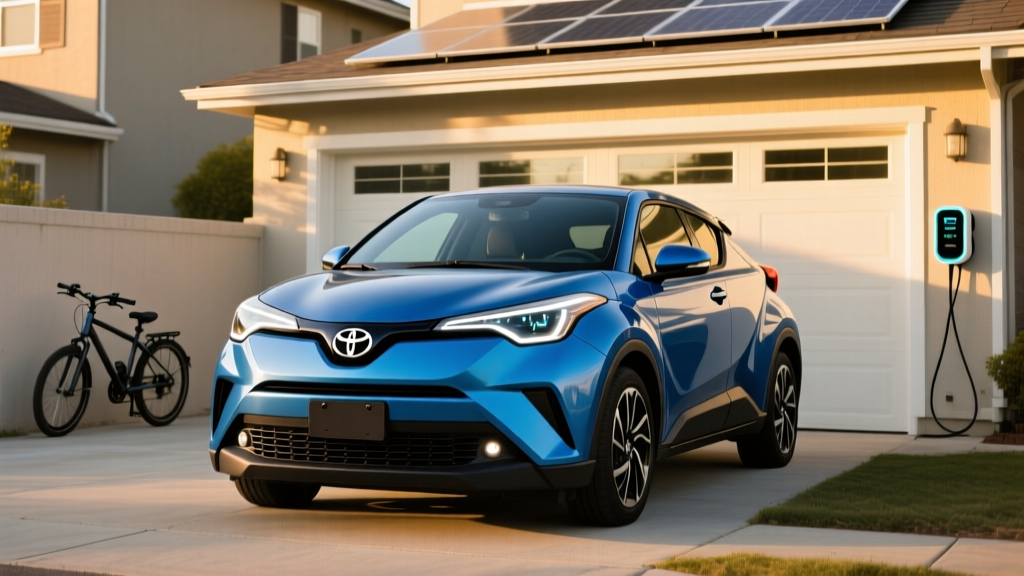
As of early 2026, the Toyota C-HR EV (also known as the bZ3X in some markets) is not available for sale in the United States. Toyota has launched the electric C-HR in Europe and China, where it rides on the e-TNGA platform with up to a ~55 kWh LFP battery and roughly 250–280 miles of WLTP range. US buyers looking for a compact Toyota EV currently have no direct equivalent domestically — the closest Toyota electrified options remain the bZ4X crossover and a broad lineup of hybrids like the Corolla Cross Hybrid. If Toyota announces a US-spec C-HR EV, expect an EPA range near 220–250 miles and a starting MSRP in the $32,000–$38,000 range before incentives.
What Is the Toyota C-HR EV, Exactly?
The C-HR nameplate originally debuted as a subcompact gasoline crossover that Toyota discontinued in the US after the 2022 model year. In 2024–2025, Toyota reintroduced the C-HR in Europe as a plug-in hybrid and, separately, launched a fully electric version in China under the bZ3X badge, developed in partnership with GAC Group. The European electric C-HR variant shares the e-TNGA architecture that underpins the bZ4X and Subaru Solterra.
Here's what we know from announced and available international specs:
| Spec | Value (Estimated / Market-Dependent) |
|---|---|
| Platform | e-TNGA |
| Battery Capacity | ~55 kWh usable (LFP chemistry) |
| WLTP Range | 250–280 miles (varies by market/trim) |
| Estimated EPA Range | ~220–250 miles (if US-spec arrives) |
| Motor Output | ~150–201 hp (FWD single motor) |
| DC Fast Charge (Peak) | ~100–150 kW |
| 10–80% DC Charge Time | ~30–35 minutes (estimated) |
| Level 2 AC Charging | 7–11 kW onboard charger |
| 0–60 mph | ~7.5–8.5 seconds (estimated) |
Critical note on range figures: WLTP testing (used in Europe and China) tends to produce range numbers 10–15% higher than the US EPA cycle. If you see a "280-mile" WLTP figure, the EPA-equivalent number would likely land closer to 235–250 miles. Always compare EPA numbers when shopping in the US.
C-HR EV vs. Gas and Hybrid Alternatives: The Numbers
Since US buyers can't currently purchase a C-HR EV, the real comparison is against what you can buy in this segment. Let's stack up the economics of the closest Toyota options:
| Metric | C-HR EV (Projected US) | Corolla Cross Hybrid | Corolla Cross (Gas) |
|---|---|---|---|
| Starting MSRP | ~$34,000 (est.) | $30,295 | $25,060 |
| EPA Efficiency | ~110 MPGe (est.) | 42 MPG combined | 32 MPG combined |
| Annual Fuel/Energy Cost* | ~$550 | ~$1,150 | ~$1,500 |
| Annual Maintenance | ~$300 | ~$550 | ~$650 |
| 5-Year Fuel + Maint. | ~$4,250 | ~$8,500 | ~$10,750 |
*Based on 12,000 miles/year, $0.16/kWh national average electricity, $3.30/gallon gasoline. Your costs will vary by local utility rates and gas prices. Source: fueleconomy.gov methodology.
The EV's operating-cost advantage is substantial — roughly $1,000–$1,300 per year in fuel and maintenance savings versus the gas Corolla Cross. Over five years, that gap reaches $6,000–$6,500. However, the EV's higher purchase price (estimated $8,000–$9,000 more than the gas model) means the break-even point on total cost of ownership lands around year 5–7, depending on incentives.
Real-World Ownership: What a First-Time EV Buyer Must Consider
If Toyota does bring the C-HR EV to the US, here's what will actually determine whether it works for your daily life:
Home Charging Access Is the Make-or-Break Factor
Over 80% of EV charging happens at home. If you have a garage or driveway where a Level 2 (240V) charger can be installed, a ~55 kWh battery like the C-HR EV's refills overnight in roughly 6–8 hours on a 7–8 kW home unit. That's every morning with a full "tank."
If you rely on street parking or apartment living with no charging infrastructure, ownership becomes significantly harder. Public DC fast charging works, but it's more expensive ($0.30–$0.50/kWh at many networks vs. $0.12–$0.18/kWh at home) and adds 30+ minutes to your routine several times a week.
Climate and Real-World Range Loss
LFP (lithium iron phosphate) batteries, which the C-HR EV is expected to use, have excellent longevity and thermal stability but are more susceptible to cold-weather range loss than NMC chemistry. Expect:
- Mild climate (50–80°F): Near-EPA range, perhaps 5–8% below sticker
- Cold climate (below 32°F): 20–30% range reduction, meaning a 240-mile EPA rating drops to ~170–190 miles in winter
- Highway driving at 75+ mph: 10–15% below EPA combined range due to aerodynamic drag
If your commute is 60+ miles round-trip in a cold climate, a ~55 kWh battery may feel tight in January. A heat pump (if equipped) helps but doesn't eliminate the loss.
Charging Speed and Road Trips
The C-HR EV's estimated 100–150 kW peak DC charge rate is adequate but not class-leading. For context, the Hyundai Ioniq 5 peaks at 240 kW and charges 10–80% in ~18 minutes. The C-HR EV would likely need 30–35 minutes for the same session. On road trips with 200+ miles between stops, that difference adds up.
Cost Breakdown: What Would C-HR EV Ownership Actually Cost?
| Cost Category | C-HR EV (Projected) | Corolla Cross Gas |
|---|---|---|
| Purchase Price (MSRP) | $34,000 | $25,060 |
| Federal Tax Credit (§30D) | Up to $7,500 (if eligible) | $0 |
| Effective Purchase Price | $26,500–$34,000 | $25,060 |
| Home Charger Install | $800–$2,500 | $0 |
| 5-Year Fuel/Energy | $2,750 | $7,500 |
| 5-Year Maintenance | $1,500 | $3,250 |
| 5-Year Insurance (est.) | $7,500–$9,000 | $6,000–$7,500 |
| 5-Year Total (approx.) | $38,250–$49,050 | $41,810–$43,310 |
The tax credit dramatically shifts the math. Under current IRS §30D rules, eligibility depends on:
- Buyer income caps: Modified AGI ≤ $150,000 (single) or ≤ $300,000 (joint)
- MSRP cap: ≤ $55,000 for SUVs/crossovers
- Battery sourcing: Critical minerals and battery components must meet phased-in domestic/free-trade-partner thresholds (see IRS §30D guidelines)
If the C-HR EV qualifies for the full $7,500 credit (a significant "if" given evolving battery-sourcing rules), the effective purchase price becomes competitive with the gas model from day one, and the operating savings stack on top.
Common Misconceptions About Small EVs Like the C-HR
| Myth | Fact |
|---|---|
| "250 miles of range isn't enough for daily driving." | The average American drives 37 miles per day (FHWA data). A 240-mile EPA range covers nearly a week of commuting without charging. |
| "EV batteries need replacement every few years." | Modern LFP batteries retain 85–90% capacity after 100,000+ miles. Toyota typically warranties its EV batteries for 8 years / 100,000 miles with a 70% capacity retention threshold. |
| "Charging an EV takes hours everywhere." | Home Level 2 charging takes 6–8 hours but happens while you sleep. DC fast charging adds 150+ miles in 20–30 minutes on road trips. |
| "A small EV like the C-HR can't handle road trips." | With DC fast charging and the growing Supercharger/Tesla NACS network opening to other brands, road trips are viable — just plan 25–35 minute charging stops every 2–2.5 hours. |
| "EVs are always cheaper to own." | Not always. Higher insurance, potential home charger installation costs, and upfront price premiums mean the break-even timeline is typically 4–7 years. Short ownership cycles may not capture the savings. |
Decision Framework: Should You Wait for the C-HR EV or Buy Now?
Choose to WAIT for the C-HR EV if:
- You specifically want a compact Toyota EV and are not in a rush to buy
- You have home charging access and a daily commute under 50 miles round-trip
- You live in a mild climate where LFP range loss won't be a major issue
- You plan to own the vehicle 6+ years (to capture full operating-cost savings)
Choose to BUY NOW (alternative) if:
- You need a vehicle within 3–6 months — the C-HR EV has no confirmed US timeline
- You want proven US availability with dealer support → consider the Toyota bZ4X (252 mi EPA, ~$37,000 after credit), Hyundai Kona Electric (261 mi EPA, ~$33,000), or Chevrolet Equinox EV (319 mi EPA, ~$33,000)
- You drive in extreme cold regularly → consider a hybrid like the Corolla Cross Hybrid (42 MPG, no range anxiety) or an EV with NMC chemistry and a heat pump
- You lack home charging → a hybrid or PHEV is the more practical electrified choice right now
What Toyota's US EV Strategy Tells Us
Toyota has been cautious with battery-electric vehicles in the US, leaning heavily on hybrids (the RAV4 Hybrid, Camry Hybrid, and Prius are sales pillars). The bZ4X, launched for 2023, was Toyota's first dedicated US-market EV — and its initial recall and modest range drew criticism. Since then, Toyota has invested in a next-generation EV platform and announced plans for a broader BEV lineup, but specific US models remain unconfirmed.
The C-HR EV's existence in China and Europe signals Toyota's capability in the compact EV space, but US-market vehicles require different crash standards, charging connector adoption (NACS vs. CCS), and battery-sourcing compliance for tax credits. Any US-bound C-HR EV would likely need NACS port compatibility to access the Tesla Supercharger network — now a near-requirement for competitive EVs in America.
Frequently Asked Questions
Will the Toyota C-HR EV be sold in the United States?
Toyota has not announced a US launch for the electric C-HR as of early 2026. The model is available in Europe and China. Toyota's US EV roadmap may eventually include a compact crossover, but no timeline has been confirmed.
What battery chemistry does the C-HR EV use?
International-spec models use LFP (lithium iron phosphate) chemistry. LFP offers excellent cycle life (2,000+ full cycles with minimal degradation) and thermal safety, but lower energy density than NMC, which limits range in a compact package. LFP also tolerates regular 100% charging better than NMC — Toyota may actually recommend periodic full charges for battery calibration.
How does the C-HR EV compare to the Toyota bZ4X?
The bZ4X is a larger, more expensive compact/midsize crossover with a ~71.4 kWh NMC battery and 252 miles of EPA range. The C-HR EV would slot below it in size and price, likely with a smaller battery (~55 kWh) and less range. Think of it as the EV equivalent of the Corolla Cross vs. RAV4 relationship.
Would the C-HR EV qualify for the $7,500 federal tax credit?
That depends on battery sourcing at the time of sale. Under current IRS §30D rules, the vehicle must meet critical-mineral and battery-component sourcing thresholds that tighten annually. Its projected MSRP (under $55,000) would clear the SUV cap, and most buyers would fall within income limits — but battery sourcing is the wildcard that disqualifies many otherwise-eligible EVs.
What's the best Toyota EV alternative I can buy right now?
The Toyota bZ4X (252 mi EPA, starting ~$37,000, potentially eligible for partial tax credit) is Toyota's current US EV offering. If you want a Toyota but need more range flexibility, the RAV4 Plug-in Hybrid (42 miles electric-only, then 38 MPG as a hybrid) is arguably the most versatile electrified Toyota on sale and qualifies for some incentives.
What should I do while waiting for a compact Toyota EV?
Use the time to install a Level 2 home charger (budget $1,200–$2,500 for a quality 40–48 amp unit plus electrician labor and permitting). Having charging infrastructure ready means any EV you eventually buy — Toyota or otherwise — will be immediately practical. Check with a licensed electrician about whether your panel needs an upgrade to support a 240V/50A circuit.