Quick Answer: Does a Toyota C-HR EV Exist?
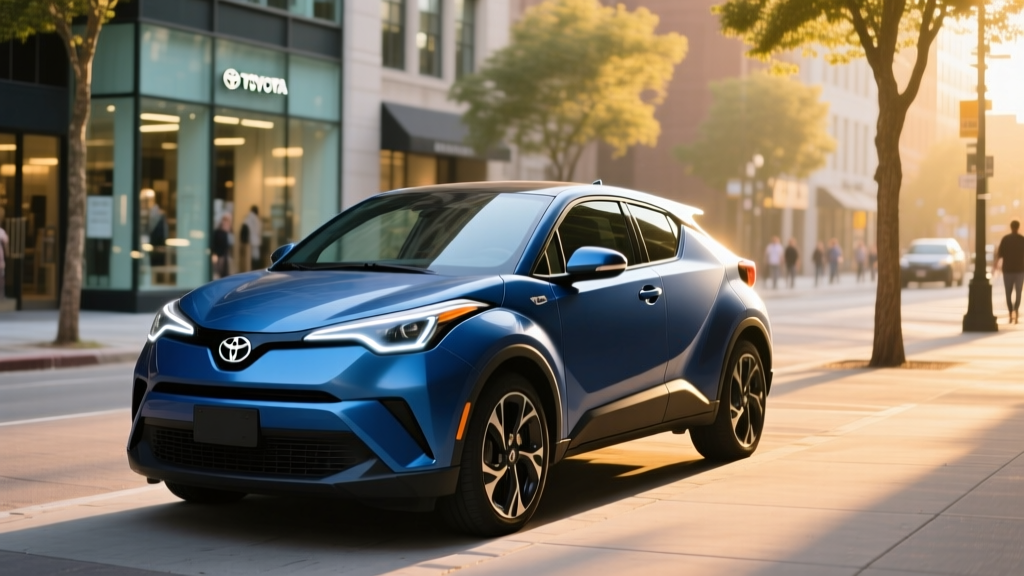
As of early 2026, Toyota has not released a fully electric Toyota C-HR EV for the U.S. market. The original C-HR was discontinued in the U.S. after the 2022 model year and was replaced by the Corolla Cross. Toyota has announced a next-generation global C-HR (sold in Europe as a hybrid-only model), and the company has teased a broader EV lineup through 2028, but a battery-electric C-HR remains unannounced and unavailable. If you're searching for a "Toyota C-HR EV," you're likely looking for either a future product or confusing it with the Toyota bZ4X (Toyota's current electric SUV) or the hybrid C-HR sold overseas.
What Is the Toyota C-HR, and Why Are People Searching for an EV Version?
The Toyota C-HR (Coupe High-Rider) was a subcompact crossover sold in the U.S. from 2018 through 2022. It was powered by a 2.0-liter four-cylinder engine making 144 horsepower, paired with a CVT, and returned an EPA-estimated 27 city / 31 highway / 29 combined MPG. Toyota discontinued it stateside in favor of the slightly larger and more practical Corolla Cross.
In Europe and other global markets, Toyota launched a second-generation C-HR for the 2024 model year. This new model is available as a conventional hybrid (HEV) and a plug-in hybrid (PHEV), but not as a battery-electric vehicle (BEV). The European C-HR PHEV offers roughly 41 miles (WLTP) of electric-only range — which translates to approximately 32–35 miles under the EPA's more stringent testing cycle — from an 11.4 kWh battery pack.
The search interest in a "Toyota C-HR EV" likely stems from three factors:
- Toyota's EV pivot: Toyota has committed to launching 30 battery-electric models globally by 2030 and has been expanding its bZ ("beyond Zero") EV sub-brand.
- Segment demand: The subcompact electric SUV segment is booming, with models like the Hyundai Kona Electric, Kia Niro EV, and Volvo EX30 attracting buyers who want exactly the footprint the C-HR occupied.
- Nameplate confusion: Some shoppers conflate the C-HR with the bZ4X or assume the C-HR's European PHEV variant is a full EV.
What Toyota EVs Can You Actually Buy Right Now?
If you want a Toyota electric vehicle today, your options are limited but real:
| Model | Type | EPA Range | Battery | Starting MSRP (2025/2026) |
|---|---|---|---|---|
| Toyota bZ4X | BEV | 236–252 mi | 71.4 kWh (NMC) | ~$37,070 |
| Toyota Prius Prime | PHEV | 44 mi electric + 440 mi total | 13.6 kWh (lithium-ion) | ~$33,445 |
| Toyota RAV4 Prime | PHEV | 42 mi electric + 600 mi total | 18.1 kWh (lithium-ion) | ~$43,690 |
The bZ4X is the closest analog to what a C-HR EV would be — a compact electric crossover. However, it's sized closer to a RAV4 than the subcompact C-HR, with EPA-estimated range of 236 miles (AWD) to 252 miles (FWD) from its 71.4 kWh NMC battery. Peak DC fast charging reaches approximately 150 kW, with a 10–80% charge taking roughly 30 minutes under ideal conditions. In real-world testing, the bZ4X has drawn criticism for charging speeds that lag behind competitors like the Hyundai Ioniq 5 (which peaks at 240 kW and hits 10–80% in about 18 minutes).
For buyers specifically wanting a subcompact Toyota EV in the C-HR's size class, there's currently no option. Toyota's announced battery-electric roadmap focuses on larger segments first.
If Toyota Builds a C-HR EV: What Would It Need to Compete?
While a Toyota C-HR EV remains speculative, we can benchmark what the subcompact EV segment demands in 2026 based on existing competitors:
| Spec | Hyundai Kona Electric (2025) | Kia Niro EV (2025) | Volvo EX30 (2025) | Hypothetical C-HR EV Target |
|---|---|---|---|---|
| EPA Range | 261 mi | 239 mi | 275 mi (est.) | 250+ mi |
| Battery | 65.4 kWh (NMC) | 64.8 kWh (NMC) | 69 kWh (NMC) | ~60–70 kWh |
| Peak DC Charge | 100+ kW | 85 kW | 153 kW | 150+ kW |
| 10–80% Time | ~41 min | ~44 min | ~26 min | <30 min |
| 0–60 mph | 7.4 sec | 7.8 sec | 3.4 sec (Twin Motor) | ~6–7 sec |
| Starting MSRP | $32,975 | $39,600 | $34,900 | $30,000–$35,000 |
Any Toyota C-HR EV would need to deliver at least 250 miles of EPA range, charge at 150 kW or faster, and start under $35,000 to be competitive. Toyota's current e-TNGA platform (used in the bZ4X) is too large for a subcompact application. A C-HR EV would likely require Toyota's smaller, more modular EV architecture — potentially the platform underpinning concepts shown at recent auto exhibitions.
EV vs. Hybrid: Which Makes More Sense in a Subcompact Crossover?
Since the C-HR is currently available only as a hybrid overseas, and a BEV version is hypothetical, here's how the two powertrains compare in this segment using real data:
| Factor | Subcompact BEV (e.g., Kona Electric) | Subcompact HEV (e.g., C-HR Hybrid) | Subcompact PHEV (e.g., C-HR PHEV) |
|---|---|---|---|
| MSRP | $32,975 | ~$28,000 (EU pricing) | ~$35,000 (EU pricing) |
| Fuel/Energy Cost (15,000 mi/yr) | ~$540 (at $0.14/kWh) | ~$1,350 (at $3.50/gal, 48 MPG) | ~$750 (mixed) |
| Annual Maintenance | ~$300 | ~$600 | ~$500 |
| Federal Tax Credit (§30D) | Up to $7,500 (if eligible) | $0 | Up to $7,500 (if eligible) |
| Home Charging Needed? | Strongly recommended | No | Recommended for EV range |
| Real-World Cold Climate Impact | 15–30% range loss | Minimal | Reduced EV range |
The math is clear: a BEV saves roughly $800–$1,000 per year on fuel and maintenance compared to a conventional hybrid, but requires home charging access and carries higher upfront cost. The §30D federal tax credit can offset up to $7,500 of a qualifying BEV's purchase price, but eligibility depends on MSRP caps ($55,000 for SUVs), buyer income limits ($150,000 single / $300,000 joint), and battery critical-mineral sourcing requirements. Always verify current-year rules on IRS.gov or consult a tax professional.
Real-World Ownership: What First-Time EV Buyers Must Know
If a C-HR EV arrives — or if you're considering the bZ4X or a competitor — here's what the ownership reality looks like beyond the spec sheet:
Home Charging Is Non-Negotiable for Most Owners
Over 80% of EV charging happens at home. A Level 2 home charger (240V, 32–48 amps, 7.7–11.5 kW) will fully replenish a ~65 kWh battery overnight in roughly 7–9 hours. Installation costs range from $500–$2,500 depending on your electrical panel's capacity. Homes with older 100-amp panels may need a $1,500–$3,000 panel upgrade before a Level 2 charger can be added. If you rent or live in a condo without charging access, public-only charging is viable but significantly more expensive — typically $0.30–$0.50/kWh at DC fast chargers versus $0.12–$0.16/kWh at home.
Charging Curves Matter More Than Peak kW
Manufacturers advertise peak DC fast-charging rates (e.g., "150 kW"), but no EV sustains peak speed for an entire session. Charging speed tapers significantly above 80% state of charge (SoC) to protect battery health. A vehicle that peaks at 150 kW might average only 80–100 kW across a 10–80% session. This is why the 10–80% time is a more useful metric than peak kW alone.
Cold Weather Cuts Range — Plan for It
In temperatures below 30°F, expect 15–30% range reduction depending on the vehicle's thermal management system. A 260-mile EPA-rated EV might deliver only 185–220 miles in winter highway driving. Vehicles with heat pumps (which most 2025–2026 EVs include) mitigate this loss but don't eliminate it.
Insurance Costs More
EV insurance premiums run 15–25% higher than equivalent gas vehicles due to higher repair costs and battery replacement risk. Get quotes before purchasing — the annual premium difference of $200–$500 partially offsets fuel savings.
Battery Degradation Is Slower Than You Think
Modern NMC and LFP batteries typically retain 90–95% capacity after 5 years / 100,000 miles based on fleet data. Federal law mandates a minimum 8-year/100,000-mile battery warranty (10 years/150,000 miles in CARB states). Toyota provides an 8-year/100,000-mile EV battery warranty on the bZ4X with a 70% capacity retention threshold.
Common Misconceptions About a Toyota C-HR EV
| Myth | Fact |
|---|---|
| "The Toyota C-HR EV is available to buy now." | No fully electric C-HR exists. The European C-HR is a hybrid/PHEV only. The U.S. C-HR was discontinued after 2022. |
| "The C-HR PHEV is basically an EV." | The PHEV offers ~32–35 EPA-estimated miles of electric range, then operates as a conventional hybrid. It cannot match a BEV's zero-emission driving or fuel savings. |
| "Toyota doesn't make electric cars." | Toyota sells the bZ4X BEV in the U.S. (236–252 mi range, ~$37,070). It's a real EV, just not in the C-HR's subcompact class. |
| "EV batteries need replacing every few years." | Data shows modern EV batteries lose roughly 1–2% capacity per year. Most will outlast 150,000+ miles before hitting 70% SoH. |
| "The $7,500 tax credit applies to every EV." | §30D has MSRP caps, buyer income limits, and battery-sourcing requirements. Many EVs qualify for $0 or $3,750. Always check IRS.gov for current eligibility. |
Decision Framework: Should You Wait for a C-HR EV or Buy Now?
Choose the Toyota bZ4X if:
- You want a Toyota BEV today and can accept a slightly larger crossover (RAV4-class, not C-HR-class)
- You prioritize Toyota's reliability reputation and dealer network over best-in-class charging speed
- Your daily driving is under 200 miles and you have home Level 2 charging
- You can find one below MSRP with dealer incentives (common in 2025–2026)
Choose the Hyundai Kona Electric or Kia Niro EV if:
- You specifically want a subcompact EV in the C-HR's size and price class
- You need 240+ miles of EPA range and can't wait for a speculative Toyota model
- You want proven availability with current §30D tax credit eligibility
Choose a C-HR Hybrid (if available in your market) if:
- You lack home charging access and can't install a Level 2 charger
- You live in a cold climate where BEV range loss is a concern
- You want lower upfront cost and don't mind paying for gasoline
- Your daily commute is short and you prioritize simplicity
Wait for a potential C-HR EV if:
- You're not in a rush to buy and your current vehicle serves you for another 2–3 years
- You're committed to the Toyota brand and the subcompact crossover form factor
- You expect battery technology and pricing to improve by 2027–2028
Frequently Asked Questions
Will Toyota make a C-HR EV for the U.S. market?
Toyota has not announced a fully electric C-HR for any market. The company has committed to 30 BEV models globally by 2030, and a subcompact electric crossover would fill a gap in its lineup, but no timeline, specs, or pricing exist. Any claims of a "2026 Toyota C-HR EV" are speculative.
What is the closest Toyota EV to a C-HR?
The Toyota bZ4X is Toyota's only current U.S. BEV. It's larger than the C-HR (closer to a RAV4 in footprint), offers 236–252 miles of EPA range, and starts around $37,070. For a subcompact Toyota EV, you'd need to wait for future product announcements.
Is the European Toyota C-HR PHEV worth importing?
No. The European C-HR PHEV isn't certified for U.S. sale, lacks EPA certification, and wouldn't qualify for U.S. safety compliance or tax credits. Its ~32–35 miles of EV range is also modest compared to U.S.-market PHEVs like the RAV4 Prime (42 mi) or Prius Prime (44 mi).
How much would a Toyota C-HR EV cost if it existed?
Based on segment benchmarks, a competitive subcompact Toyota EV would need to price between $30,000 and $35,000 before incentives. After the §30D federal tax credit (if eligible), the effective price could drop to roughly $25,000–$30,000. This is speculative — no official pricing exists.
Should I buy a used Toyota C-HR instead?
Used 2018–2022 C-HR models are gas-only (2.0L, 29 MPG combined). They're reliable and affordable on the used market ($15,000–$22,000 depending on mileage), but offer no electrification. If fuel savings are your priority, a used Prius or a new subcompact EV delivers significantly lower operating costs.
What should I check before buying any EV?
Confirm your home electrical panel can support a Level 2 charger (consult a licensed electrician), verify §30D tax credit eligibility on IRS.gov, check fueleconomy.gov for official EPA range and efficiency data, and get insurance quotes for the specific model and trim you're considering.