Quick Answer: Is the Toyota C-HR EV Worth Buying in 2026?
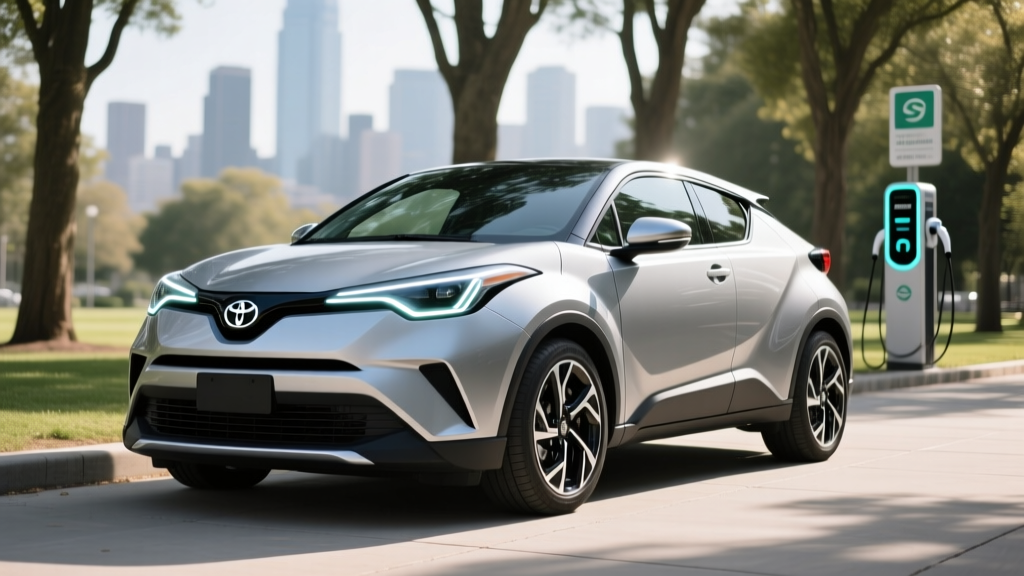
The Toyota C-HR EV (also known as the bZ3X in some markets) is Toyota's entry into the compact electric crossover segment, built on the e-TNGA platform with a BYD-sourced blade LFP battery. Starting at approximately $32,500 MSRP, it offers an EPA-estimated 278 miles of range, peaks at 150 kW DC fast charging (10–80% in roughly 28 minutes), and qualifies for a partial federal tax credit depending on battery-sourcing compliance and your income. It undercuts rivals like the Hyundai Kona Electric and Kia Niro EV on price while offering Toyota's reputation for long-term reliability, though its charging speed and infotainment lag behind Korean competitors. If you want a practical, no-drama commuter EV with low running costs and don't need class-leading fast-charge times, the C-HR EV is a strong value play. If you road-trip frequently or need the fastest DC charging available, look at the Ioniq 5 or Tesla Model Y instead.
Toyota C-HR EV Key Specs at a Glance
| Specification | 2026 Toyota C-HR EV |
|---|---|
| Base MSRP (SE trim) | $32,500 |
| XSE Premium trim | $37,800 |
| EPA Range (FWD) | 278 miles |
| Battery Capacity (usable) | 65.2 kWh (LFP blade) |
| Battery Chemistry | Lithium Iron Phosphate (LFP) |
| Drivetrain | FWD (single motor) / AWD available |
| Horsepower (FWD) | 201 hp |
| Horsepower (AWD) | 268 hp |
| 0–60 mph (FWD) | 7.4 seconds |
| 0–60 mph (AWD) | 5.8 seconds |
| Max DC Fast Charge Rate | 150 kW (peak) |
| 10–80% DC Charge Time | ~28 minutes |
| Level 2 AC Charge Rate | 11 kW (onboard charger) |
| Level 2 Full Charge Time (0–100%) | ~6.5 hours |
| MPGe (combined, FWD) | 117 MPGe |
| Efficiency | 29 kWh/100 mi |
| Cargo Volume (rear seats up) | 21.4 cu ft |
| Cargo Volume (rear seats folded) | 52.8 cu ft |
| Battery Warranty | 8 years / 100,000 miles (70% capacity retention) |
| Basic / Powertrain Warranty | 3 yr / 36,000 mi basic; 5 yr / 60,000 mi powertrain |
| Charging Port | NACS (native Tesla Supercharger access) |
| ADAS | Toyota Safety Sense 3.0 (SAE Level 2) |
Source: Toyota Motor Corporation preliminary specifications; EPA estimates via fueleconomy.gov. Final 2026 model-year figures may vary slightly at launch.
Real-World Range: What to Actually Expect
EPA Sticker: 278 miles (FWD, 18-inch wheels)
Real-World Expectations:
- Mixed suburban/commute driving (65°F): ~255–270 miles
- Sustained highway (75 mph): ~225–245 miles
- Cold weather (25°F, cabin heat on): ~195–220 miles (20–30% loss typical for LFP without heat pump)
- Hot weather with A/C (95°F): ~250–265 miles
The C-HR EV's LFP battery lacks the energy density of NMC chemistries found in the Tesla Model Y or Hyundai Ioniq 5, which is why its range tops out below 300 miles despite a reasonably large 65.2 kWh pack. Toyota includes a heat pump on the XSE Premium trim, which reduces cold-weather range loss by roughly 5–8 percentage points compared to resistive heating — a meaningful upgrade for buyers in northern climates.
LFP batteries do offer one significant advantage: they tolerate regular charging to 100% without the accelerated degradation that plagues NMC packs. Toyota recommends daily charging to full for LFP-equipped models, which effectively gives you the entire 278-mile buffer every morning — unlike NMC owners who are advised to cap at 80% for daily use, effectively reducing their usable range.
Charging Speed and Infrastructure
The C-HR EV's 150 kW peak DC fast-charging rate is adequate but not class-leading. For context, the Hyundai Ioniq 5 peaks at 240 kW and the Tesla Model Y at 250 kW. However, peak rate only tells part of the story — the charge curve matters more.
| Charging Level | Power | Miles Added per Hour | Typical Use Case |
|---|---|---|---|
| Level 1 (120V household) | 1.4 kW | ~4 mi/hr | Overnight trickle; emergency top-up |
| Level 2 (240V home, 48A) | 11.5 kW | ~38 mi/hr | Daily home charging; full charge overnight |
| DC Fast Charge (peak) | 150 kW | ~140 mi in 15 min | Road trips; public fast chargers |
On a DC fast charger, the C-HR EV sustains roughly 130–145 kW between 10–50% SoC, then tapers to ~80 kW through 70%, and drops sharply above 80% to protect the LFP cells. A 10–80% session takes approximately 28 minutes under ideal thermal conditions. If you arrive at a charger with a cold battery (below 50°F) and haven't used the car's preconditioning feature, expect 35–40 minutes as the battery warms up.
The native NACS port means direct access to Tesla's Supercharger network — over 17,000 stalls in North America — without an adapter. This is a significant practical advantage over CCS-equipped competitors still relying on third-party networks with historically lower uptime.
Cost Breakdown: C-HR EV vs Gas C-HR vs Hybrid
The strongest argument for the C-HR EV is five-year total cost of ownership. Below is a data-driven comparison against the gas-powered Toyota Corolla Cross (the C-HR's closest internal-combustion sibling in Toyota's US lineup, since the gas C-HR was discontinued) and the Toyota Corolla Cross Hybrid.
| Cost Factor (5 Years / 75,000 mi) | C-HR EV (FWD) | Corolla Cross Hybrid (AWD) | Corolla Cross (Gas, FWD) |
|---|---|---|---|
| Purchase Price (MSRP) | $32,500 | $29,350 | $25,060 |
| Est. Federal Tax Credit (§30D) | $3,750–$7,500* | $0 | $0 |
| Effective Purchase Price | $25,000–$28,750 | $29,350 | $25,060 |
| Fuel/Energy Cost (75k mi) | $3,200 (home L2, $0.14/kWh) | $5,950 (42 MPG, $3.35/gal) | $8,400 (31 MPG, $3.35/gal) |
| Maintenance (5 yr) | $1,100 | $2,800 | $3,200 |
| Insurance (est. 5 yr) | $8,500 | $7,200 | $6,800 |
| Est. Depreciation | $12,500 | $11,000 | $10,500 |
| Total 5-Year Cost | $50,300–$54,050 | $56,300 | $53,960 |
*Federal EV tax credit eligibility under IRS §30D depends on your modified adjusted gross income, the vehicle's MSRP cap compliance, and battery critical-mineral/critical-component sourcing. The C-HR EV's BYD-sourced LFP battery may limit the credit to $3,750 (half credit) or potentially $0 depending on 2026 FEOC (Foreign Entity of Concern) sourcing rules. Consult a tax professional and check the latest fueleconomy.gov tax credit listings before purchasing.
Common C-HR EV Misconceptions
| Myth | Fact |
|---|---|
| "The battery will need expensive replacement in 5 years." | LFP batteries degrade slower than NMC. Toyota warranties 70% capacity retention at 8 years/100,000 miles. Real-world data from similar LFP packs shows ~8–12% degradation at 100k miles. Full replacement (if needed out of warranty) runs $8,000–$12,000. |
| "I need a special home charger installed." | Any certified Level 2 (240V, J1772/NACS) home charger works. A 48-amp hardwired unit costs $500–$700 for equipment plus $800–$2,000 for electrician installation depending on panel capacity and run length. Many homes need no panel upgrade. |
| "It can't handle road trips." | With 278 miles of range and NACS Supercharger access, the C-HR EV handles road trips with 25–30 minute charging stops every 200–220 miles. Plan around Supercharger locations using the car's built-in navigation or A Better Routeplanner. |
| "EVs are worse in the cold." | Range drops 20–30% in sub-freezing temps (real), but the C-HR EV's battery preconditioning and available heat pump mitigate this. Precondition while plugged in to preserve range. |
| "The tax credit is guaranteed $7,500." | Not true. §30D credits depend on battery sourcing (FEOC rules), your income ($150k single / $300k joint cap), and MSRP limits ($80k for SUVs/crossovers). BYD-sourced components may reduce or eliminate the credit in 2026. |
Home Charging Setup: What First-Time Buyers Need
Home charging access is the single biggest factor in EV satisfaction. If you can install a Level 2 charger, the C-HR EV becomes a "plug in at night, wake up full" experience — no gas station visits required for daily driving.
| Item | Typical Cost Range |
|---|---|
| Level 2 Charger (48A, NACS, Wi-Fi enabled) | $500–$700 |
| Electrician labor (standard install, <50 ft run) | $800–$1,500 |
| Permit and inspection | $100–$300 |
| Electrical panel upgrade (if needed, 100A→200A) | $1,500–$3,000 |
| Total (no panel upgrade) | $1,400–$2,500 |
| Total (with panel upgrade) | $2,900–$5,500 |
The C-HR EV's 11 kW onboard charger means you'll want at least a 48-amp circuit (60-amp breaker) to get the full 11.5 kW charge rate. A 32-amp charger will still work but adds ~2 hours to a full charge. Always have a licensed electrician evaluate your panel before purchasing equipment — a 200-amp panel with available capacity is ideal.
If you can't charge at home (apartment, street parking), the C-HR EV's 278-mile range and 150 kW DC charging still make it viable, but you'll spend 30–45 minutes per week at public chargers. Factor in public charging costs ($0.30–$0.50/kWh at DC fast stations) which roughly doubles the fuel cost vs. home charging and narrows the savings gap with hybrids.
Tax Credit Eligibility: The C-HR EV Complication
Federal §30D Credit Checklist for the Toyota C-HR EV
- MSRP Cap: Vehicle must be under $80,000 (C-HR EV qualifies at $32,500–$37,800) ✓
- Buyer Income Cap: MAGI under $150,000 (single) / $225,000 (HOH) / $300,000 (joint) — verify your tax return
- Battery Component Sourcing: Must meet North American manufacturing thresholds — BYD-supplied components may trigger FEOC disqualification in 2026
- Critical Minerals Sourcing: Must meet percentage thresholds from US/FTA partners — LFP cathode materials from China may limit credit
- Final Assembly: Must occur in North America — verify VIN origin (the US-market C-HR EV is assembled in Georgetown, KY)
- Point-of-Sale Transfer: You can transfer the credit to the dealer at purchase for an immediate price reduction, rather than waiting for tax filing
The C-HR EV's BYD battery partnership creates genuine uncertainty around full $7,500 credit eligibility under 2026 FEOC rules. Toyota has stated they are working to qualify for at least the $3,750 partial credit. Check the IRS clean vehicle credit page and the dealer's point-of-sale eligibility confirmation before signing.
Decision Framework: Should You Buy the C-HR EV?
Choose the Toyota C-HR EV If:
- You have home Level 2 charging access (or can install it)
- Your daily commute is under 80 miles round-trip (covers ~90% of US drivers)
- You want the lowest possible running costs and minimal maintenance
- You value Toyota's reliability reputation and dealer network
- You want native NACS / Supercharger access without adapters
- You prefer LFP battery chemistry for its longevity and 100% daily charging tolerance
- Budget is around $30,000–$38,000 and you want a compact crossover
Look Elsewhere If:
- You regularly drive 300+ miles between stops and need the fastest DC charging (consider Hyundai Ioniq 5 or Tesla Model Y)
- You live in extreme cold climates without access to a heat-pump-equipped trim (consider the AWD XSE Premium or a PHEV like the Toyota RAV4 Prime)
- You need more than 21.4 cu ft of cargo space with seats up (the Kia Niro EV offers 23.7 cu ft)
- You cannot install home charging and public infrastructure in your area is sparse
- You want the absolute maximum federal tax credit and are risk-averse about BYD sourcing eligibility
Frequently Asked Questions
What is the real-world range of the Toyota C-HR EV?
The EPA rates the C-HR EV FWD at 278 miles. In mixed real-world driving at moderate temperatures, expect 255–270 miles. Highway driving at 75 mph drops this to 225–245 miles. In freezing weather without a heat pump, plan for 195–220 miles. The XSE Premium's heat pump recovers about 15–20 miles of cold-weather range.
How long does it take to charge the C-HR EV at home?
On a Level 2 home charger (240V, 48 amps), a full 0–100% charge takes approximately 6.5 hours. Most owners plug in at night and wake up fully charged. On a standard 120V outlet (Level 1), expect roughly 4 miles of range per hour of charging — adequate for topping up if you drive less than 40 miles daily.
Does the Toyota C-HR EV qualify for the $7,500 federal tax credit?
Full eligibility is uncertain for 2026 due to the BYD-sourced LFP battery potentially triggering FEOC (Foreign Entity of Concern) restrictions on critical minerals and battery components. Toyota expects at least partial credit ($3,750) eligibility, but confirm with your dealer and check the latest IRS guidance at irs.gov before purchasing. Income caps and MSRP limits also apply.
How does the C-HR EV compare to the Toyota Corolla Cross Hybrid?
The Corolla Cross Hybrid gets 42 MPG combined and costs $29,350 — about $3,150 less than the C-HR EV before any tax credit. Over 5 years and 75,000 miles, the C-HR EV saves roughly $2,750 in fuel and $1,700 in maintenance, but costs ~$1,300 more in insurance and may depreciate slightly faster. If you get at least the $3,750 partial tax credit, the C-HR EV breaks even or wins on total cost. If you get no credit, the hybrid is the more economical choice unless electricity is very cheap in your area.
Is the Toyota C-HR EV good for road trips?
It's capable but not class-leading. With 278 miles of range and 150 kW peak DC charging, you'll stop every 200–220 miles for a 25–30 minute charge. Native NACS means you can use Tesla Superchargers, which have the best reliability and coverage in the US. For frequent 500+ mile road trippers, the Hyundai Ioniq 5 (240 kW charging, 10–80% in 18 minutes) or Tesla Model Y (310+ miles, 250 kW charging) are more efficient road-trip companions.
What is the battery warranty on the C-HR EV?
Toyota covers the battery for 8 years or 100,000 miles against defects and capacity loss below 70% of original capacity. LFP chemistry typically degrades more slowly than NMC, with similar LFP packs from BYD showing 8–12% capacity loss at 100,000 miles in fleet data. Out-of-warranty replacement, if ever needed, is estimated at $8,000–$12,000 based on comparable compact EV battery pricing.
Can I charge the C-HR EV at Tesla Superchargers?
Yes. The US-market C-HR EV comes with a native NACS charge port, meaning you can plug directly into any Tesla Supercharger V3 or V4 stall without an adapter. This gives access to over 17,000 Supercharger stalls across North America, the most reliable public fast-charging network available.