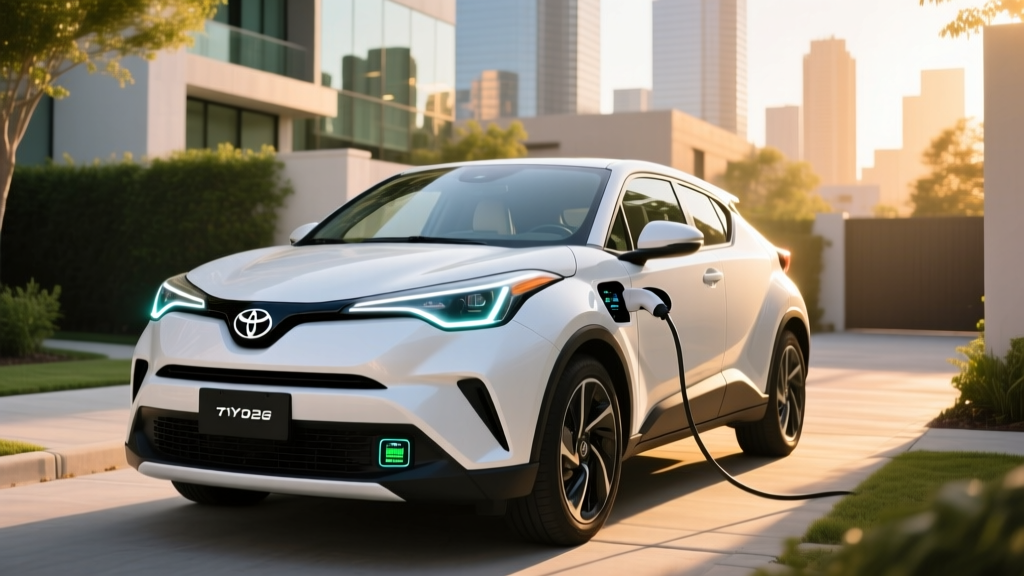
The short answer: As of early 2026, Toyota has not officially launched a fully electric C-HR for the U.S. market. The gasoline C-HR was discontinued in the U.S. after the 2022 model year, and while Toyota has unveiled battery-electric concepts and announced a broad EV rollout through 2028, a production-spec Toyota C-HR Electric SUV 2026 has not been confirmed for American showrooms. Toyota's current subcompact electrified offerings in the U.S. center on the bZ4X (a compact electric crossover) and hybrid models. If Toyota does bring an electric C-HR stateside, expect a starting MSRP near $32,000–$36,000, an EPA-estimated range around 230–270 miles, and DC fast charging at roughly 150 kW peak based on Toyota's current bZ platform capabilities. Until an official announcement, buyers looking in this segment should cross-shop the Hyundai Kona Electric, Kia Niro EV, and Volvo EX30.
Where the Toyota C-HR Electric SUV 2026 Stands Right Now
Toyota's EV strategy has evolved considerably since the bZ4X's rocky 2023 launch. The company has committed to launching 30 battery-electric models globally by 2030 and has invested heavily in next-generation battery technology, including a revised e-TNGA platform that underpins the bZ4X and its Subaru Solterra twin. However, the U.S. lineup remains narrow compared to Toyota's global EV ambitions.
In Europe and China, Toyota has explored smaller electric crossovers that slot below the bZ4X — vehicles closer in size and spirit to the original C-HR. The Toyota bZ Compact SUV concept, revealed in late 2022, hinted at what a subcompact electric Toyota crossover could look like: approximately 172 inches long, with a projected range exceeding 250 miles. Industry analysts have speculated this concept could become a production electric C-HR successor, but Toyota has not confirmed a U.S. launch timeline or pricing.
For 2026, the closest you can get to a "Toyota C-HR Electric" in the United States is the 2026 Toyota bZ4X, which starts at approximately $37,070 (including destination) and delivers an EPA-estimated 236–252 miles of range depending on trim and drivetrain. It's a larger vehicle than the old C-HR, but it occupies a similar price tier and appeals to similar urban-oriented buyers.
Expected Specs: What a Production Electric C-HR Would Look Like
Based on Toyota's current e-TNGA platform architecture, global concept reveals, and competitive positioning, here is a projected specification table for a hypothetical U.S.-market Toyota C-HR Electric SUV 2026. These figures are estimated and preliminary — not confirmed by Toyota.
| Specification | Estimated (FWD) | Estimated (AWD) |
|---|---|---|
| Battery Capacity (usable) | ~58 kWh (LFP or NMC TBD) | ~72 kWh (NMC) |
| EPA Range (est.) | 250–270 mi | 230–245 mi |
| Motor Output | ~150 kW (201 hp) | ~160 kW combined (214 hp) |
| 0–60 mph (est.) | ~7.8 sec | ~6.5 sec |
| DC Fast Charge Peak | ~150 kW | ~150 kW |
| 10–80% DC Charge Time | ~30 min | ~30 min |
| Level 2 Charge Rate (est.) | ~7.2 kW | ~7.2 kW |
| Starting MSRP (est.) | $32,000–$34,000 | $36,000–$38,000 |
| Battery Warranty | 8 yr / 100,000 mi (typical Toyota) | |
Key context on battery chemistry: Toyota has been evaluating both LFP (lithium iron phosphate) and NMC (nickel manganese cobalt) chemistries. LFP offers longer cycle life, lower cost, and better thermal stability but sacrifices some energy density — meaning slightly less range for the same pack weight. NMC delivers higher energy density for longer range but at higher material cost and with slightly faster long-term degradation. A base FWD C-HR Electric could plausibly use LFP to hit an aggressive price point, while AWD variants would likely use NMC for maximum range.
EV vs. Gas vs. Hybrid: How the Numbers Compare
Even without a confirmed electric C-HR, we can model the ownership economics against the vehicles a C-HR Electric buyer would actually cross-shop: the discontinued gas C-HR (last sold 2022), the current Toyota Corolla Cross Hybrid, and the Hyundai Kona Electric.
| Metric | Gas C-HR (2022) | Corolla Cross Hybrid (2026) | Kona Electric (2026) | C-HR Electric (est.) |
|---|---|---|---|---|
| Powertrain | 2.0L I4 Gas | 2.0L Hybrid | BEV (64.8 kWh) | BEV (~58–72 kWh) |
| Combined MPG / MPGe | 29 MPG | 44 MPG | 129 MPGe | ~120–130 MPGe (est.) |
| Range | ~345 mi | ~460 mi | 261 mi (EPA) | 250–270 mi (est.) |
| Base MSRP | $22,770 (hist.) | ~$30,500 | ~$34,075 | $32,000–$36,000 (est.) |
| Annual Fuel/Energy Cost | ~$1,650 | ~$1,090 | ~$580 | ~$550–$620 (est.) |
| Federal Tax Credit (§30D) | $0 | $0 (HEV) | Up to $7,500* | Up to $7,500* |
| 5-Year Fuel Savings vs. Gas C-HR | — | ~$2,800 | ~$5,350 | ~$5,150–$5,500 (est.) |
*Federal §30D tax credit eligibility depends on MSRP caps ($55,000 for SUVs), buyer income limits ($150K single / $300K joint), battery component and critical mineral sourcing requirements, and point-of-sale transfer availability. Always verify current rules at IRS.gov. Credit eligibility for a future Toyota C-HR Electric is unknown until battery sourcing details are confirmed.
The data makes a clear case: a fully electric C-HR would deliver the lowest per-mile "fuel" cost — roughly $0.04–$0.05 per mile on national average electricity rates ($0.16/kWh) versus $0.12–$0.14 per mile for a 29-MPG gas vehicle at $3.50/gallon. The hybrid sits in between at roughly $0.08 per mile. Over five years at 12,000 miles annually, the EV saves approximately $4,800–$5,500 in energy costs alone compared to the gas C-HR.
Real-World Ownership Considerations
Specs and sticker prices only tell part of the story. If you're evaluating a subcompact electric SUV — whether it's a future C-HR Electric, a Kona Electric, or a bZ4X — these practical factors will shape your daily experience.
Home Charging Access Is the Biggest Variable
EV ownership economics depend heavily on whether you can charge at home. A Level 2 home charger (240V, typically 32–48 amps / 7.2–11.5 kW) adds roughly 25–40 miles of range per hour of charging and can fully replenish a 60–72 kWh battery overnight. Installation costs range from $500–$2,500 depending on whether your electrical panel needs an upgrade.
If you rely exclusively on public DC fast charging, your per-mile cost roughly doubles (national average ~$0.30–$0.45/kWh at public chargers), and your convenience drops significantly. Buyers in apartments or condos without dedicated parking should carefully assess local charging infrastructure before committing to any EV.
Cold-Weather Range Loss Is Real
Lithium-ion batteries lose efficiency in cold temperatures. In sustained sub-30°F conditions, expect 20–35% range reduction compared to the EPA sticker. A C-HR Electric rated at 260 miles EPA might deliver only 170–210 miles in a Minnesota January. Vehicles equipped with a heat pump (which the bZ4X includes) mitigate cabin-heating energy draw, but the battery chemistry itself still loses usable capacity in extreme cold. If you live in a cold climate, budget for this reduction and prioritize a larger battery pack.
Charging Speed: Peak kW vs. Sustained Reality
Toyota's current e-TNGA platform has faced criticism for its DC fast-charging performance. The bZ4X peaks at approximately 150 kW but sustains that rate for only a short window, with the charge curve tapering notably above 60% state of charge. A 10–80% charge takes roughly 30 minutes under ideal conditions (preconditioned battery, moderate ambient temperature). This is slower than competitors like the Hyundai Kona Electric (which can sustain higher rates for longer) and significantly behind 800V-architecture vehicles that achieve 10–80% in under 20 minutes. A future C-HR Electric would likely share this charging profile unless Toyota upgrades to an 800V system.
Cost Breakdown: Purchase, Charging, Maintenance, and Insurance
| Cost Category (5-Year Estimate) | Gas C-HR (Baseline) | Corolla Cross Hybrid | Electric C-HR (Est.) |
|---|---|---|---|
| Purchase Price (base MSRP) | $22,770 (hist.) | $30,500 | $33,000 (midpoint est.) |
| Federal Tax Credit | $0 | $0 | Up to –$7,500* |
| Net Purchase (after credit) | $22,770 | $30,500 | $25,500–$33,000 |
| Energy/Fuel (5 yr @ 12K mi/yr) | $8,250 | $5,450 | $2,750–$3,100 |
| Maintenance (5 yr) | $2,800 | $2,500 | $1,200–$1,500 |
| Insurance (5 yr avg.) | $6,500 | $6,800 | $7,200–$7,800 |
| Home Charger Install (one-time) | $0 | $0 | $800–$2,000 |
| Total 5-Year Cost (approx.) | $40,320 | $45,250 | $37,450–$45,400 |
Maintenance savings are a real advantage. EVs eliminate oil changes, spark plugs, timing belts, and exhaust system repairs. Regenerative braking significantly extends brake pad life — many EV owners report original brake pads lasting 80,000+ miles. Annual maintenance for an EV averages $0.061 per mile versus $0.101 per mile for a gas car, according to AAA data.
Insurance is typically higher for EVs — usually 10–20% more than equivalent gas vehicles — due to higher repair costs after collisions (specialized labor, battery replacement risk). Shop quotes before purchasing.
Common Misconceptions About Subcompact Electric SUVs
| Myth | Fact |
|---|---|
| "EVs don't have enough range for road trips." | A 250+ mile range covers most daily driving easily. On road trips, a 20–30 minute DC fast charge every 2–3 hours aligns with normal rest stops. Plan routes around charger availability using apps like A Better Routeplanner. |
| "The battery will need replacing in a few years and cost a fortune." | Modern EV batteries are warrantied for 8 years / 100,000 miles (Toyota's standard). Real-world degradation data shows most batteries retain 85–92% capacity after 100,000 miles. Full replacement, if ever needed, costs $8,000–$15,000 but is rarely required within the vehicle's useful life. |
| "Charging takes too long compared to filling up with gas." | Home Level 2 charging happens while you sleep — you start every day with a "full tank." Public DC fast charging is slower than gas, but most EV owners do 80%+ of charging at home. The time cost applies mainly to road trips. |
| "EVs aren't really better for the environment." | Even on the U.S. average grid mix, EVs produce significantly lower lifecycle emissions than comparable gas vehicles, according to the Union of Concerned Scientists. The advantage grows as the grid decarbonizes and with home solar. |
| "The $7,500 tax credit applies to every EV." | The §30D credit has strict MSRP caps, buyer income limits, and battery-sourcing requirements that change annually. Many EVs qualify for the full amount; some qualify for partial credit or none. Always check IRS guidance and consult a tax professional. |
Decision Framework: Should You Wait or Buy Now?
Choose to WAIT for the Toyota C-HR Electric SUV if:
- You're committed to the Toyota brand and prefer to wait for their next-generation EV platform (potentially with improved charging speeds and LFP battery options).
- Your current vehicle is functional and you can delay a purchase 12–24 months.
- You want Toyota's reputation for long-term reliability applied to an EV — though this track record is still being established in the electric space.
- You prioritize a compact footprint (the C-HR was smaller than the bZ4X) for tight urban parking.
Choose to BUY a current alternative now if:
- You need a vehicle within the next 3–6 months and can't wait for an unannounced product.
- You want to lock in current §30D tax credit eligibility before potential rule changes — the credit's battery-sourcing requirements tighten over time.
- You're open to competitors: the Hyundai Kona Electric (261 mi range, ~$34,075, strong charging speeds), Kia Niro EV (239 mi, ~$39,600), or Volvo EX30 (275 mi est., ~$36,150) are all available now with confirmed specs and credit eligibility.
- You're flexible on the Toyota brand and would consider the bZ4X (236–252 mi, ~$37,070) as a slightly larger alternative from the same manufacturer.
What First-Time EV Buyers Should Know Before Committing
If the Toyota C-HR Electric SUV 2026 — or any subcompact electric SUV — would be your first EV, these practical realities will shape your satisfaction more than any spec sheet:
- Get a home electrical assessment first. Before buying any EV, have a licensed electrician evaluate your panel capacity. A 200-amp panel can typically support a 48-amp Level 2 charger. Older homes with 100-amp service may need a $1,500–$3,000 panel upgrade. This is the single most overlooked cost in EV planning.
- Understand kW vs. kWh. This is the most common confusion for new EV buyers. kW (kilowatts) measures power — how fast energy flows, like water pressure. kWh (kilowatt-hours) measures energy capacity — how much the battery holds, like the size of the tank. A 72 kWh battery charged at 7.2 kW takes roughly 10 hours from empty to full. A DC fast charger at 150 kW can deliver that same energy in under 30 minutes (in the optimal portion of the charge curve).
- Test your actual commute and errands. Track your weekly mileage for two weeks. Most Americans drive under 40 miles per day — easily within any modern EV's range. Range anxiety usually stems from the exception (the annual road trip), not the rule (Tuesday's commute).
- Download charging apps before you buy. Install PlugShare, ChargePoint, and EVgo (or your regional equivalents) and map the chargers near your home, workplace, and frequent destinations. If you find a charging desert, that's critical information before purchase.
- Factor in the total cost, not just the sticker price. As the cost table above shows, a higher-MSRP EV can actually cost less over five years than a cheaper gas car once you factor in fuel savings, tax credits, and reduced maintenance.
Frequently Asked Questions
Is Toyota making an electric C-HR for 2026?
As of early 2026, Toyota has not confirmed a production electric C-HR for the U.S. market. Toyota has shown concepts (notably the bZ Compact SUV) that suggest a subcompact electric crossover is in development, and the company has announced an expanded EV lineup through 2028. However, no official U.S. launch date, pricing, or specifications have been published. The closest current Toyota EV is the bZ4X compact crossover.
What Toyota electric SUVs can I actually buy right now?
The 2026 Toyota bZ4X is Toyota's only fully electric vehicle currently sold in the U.S. It starts at approximately $37,070, offers 236–252 miles of EPA-estimated range, and seats five. Toyota also sells several hybrids (Corolla Cross Hybrid, RAV4 Hybrid, Highlander Hybrid) and the RAV4 Prime plug-in hybrid, which offers 42 miles of electric-only range before the gas engine engages.
Will a Toyota C-HR Electric qualify for the $7,500 federal tax credit?
This cannot be determined until Toyota confirms battery sourcing and component manufacturing details. The §30D credit requires that a vehicle meet escalating thresholds for North American battery component manufacturing and critical mineral sourcing, in addition to MSRP caps ($55,000 for SUVs) and buyer income limits. Check the fueleconomy.gov credit lookup tool once the vehicle is officially listed.
How does a subcompact electric SUV compare to a hybrid for city driving?
For stop-and-go city driving, a full EV has a significant efficiency advantage. Regenerative braking recaptures energy that a gas car wastes as heat, and electric motors deliver instant torque from a stop with zero idling fuel consumption. A hybrid like the Corolla Cross Hybrid achieves strong city MPG (estimated ~45 city) but still burns fuel at stops and low speeds. An EV in the same size class would achieve roughly 120–130 MPGe combined, with per-mile energy costs about half that of the hybrid on average electricity rates.
What's the realistic range I should expect from a 250-mile EPA electric SUV?
Plan for real-world variability. In mild weather with mixed driving, expect 230–250 miles. On sustained highway driving at 75+ mph, expect 200–220 miles due to aerodynamic drag. In cold weather (below 30°F), expect 170–210 miles due to battery chemistry limitations and cabin heating demand. Preconditioning the battery while plugged in (a feature most modern EVs offer) can recover some of this lost efficiency.
Should I lease or buy if I'm considering a future Toyota EV?
Leasing can be advantageous for first-time EV buyers for several reasons: it eliminates long-term battery degradation risk, allows you to upgrade as charging technology improves rapidly, and in some cases, the leasing company can pass through the §30D tax credit as a lease incentive (sometimes called the "lease loophole" under §45W commercial credit rules). However, leasing means you build no equity and are subject to mileage limits. If you drive under 12,000 miles per year and plan to keep the vehicle 5+ years, buying usually wins financially.
Sources: fueleconomy.gov (EPA range and efficiency data), IRS.gov §30D clean vehicle credits, Toyota Motor Corporation U.S. press materials. All estimated specifications are based on publicly available concept data and platform analysis; final production figures may differ.