The EPA Promise vs. Real-World Reality
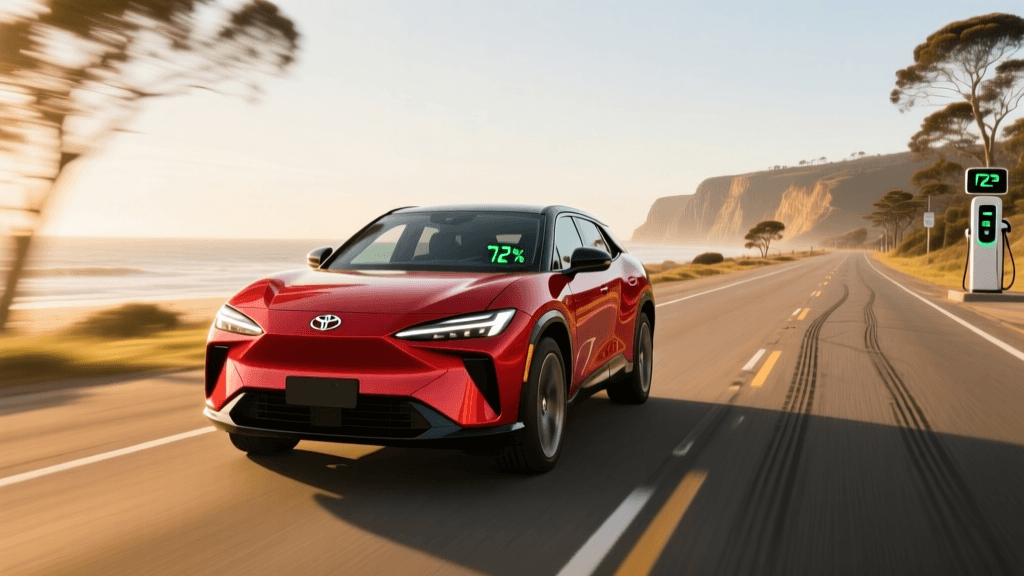
When Toyota finally introduced the bZ4X, its first dedicated mass-market battery electric vehicle (BEV), the automotive world watched closely. As the pioneer of the modern hybrid via the Prius, Toyota’s cautious approach to full electrification has been a subject of intense industry debate. The bZ4X was meant to be the bridge between Toyota’s hybrid dominance and its electric future. However, shortly after its launch, a pervasive narrative emerged among early adopters and automotive journalists alike: range anxiety. But is the anxiety truly justified by the vehicle's engineering, or is it a byproduct of mismatched consumer expectations in a rapidly evolving EV landscape?
On paper, the front-wheel-drive (FWD) Toyota bZ4X boasts an EPA-estimated range of 252 miles, while the all-wheel-drive (AWD) variant drops to 228 miles. These figures are derived from the vehicle's 71.4 kWh lithium-ion battery pack. However, as any seasoned EV owner knows, the EPA estimate is a laboratory benchmark, not a guarantee. In real-world highway testing, where aerodynamic drag exponentially increases energy consumption at speeds above 65 mph, the bZ4X frequently falls short of its window sticker promises. According to Car and Driver's real-world testing, the bZ4X struggled to break the 200-mile barrier during sustained 75-mph highway loops, a critical metric for road-tripping consumers accustomed to the extended ranges of competitors like the Tesla Model Y or Hyundai Ioniq 5.
Data Table: bZ4X Range & Charging Metrics
To understand the scope of the bZ4X's capabilities and limitations, we have compiled a comparison of official estimates versus observed real-world performance metrics. This data highlights the variance between controlled testing and daily driving scenarios.
| Metric | bZ4X FWD | bZ4X AWD |
|---|---|---|
| EPA Estimated Range | 252 miles | 228 miles |
| Real-World Highway (75 mph) | ~205 miles | ~185 miles |
| Cold Weather Range (20°F) | ~175 miles | ~155 miles |
| Max DC Fast Charge Rate | 150 kW | 150 kW |
| 10-80% DC Charge Time | ~30 mins | ~30 mins |
| AC Level 2 Max Acceptance | 7.6 kW | 7.6 kW |
Unpacking the bZ4X Range Anxiety
Why does the bZ4X suffer from more pronounced range drop-off than its rivals? The answer lies in a combination of thermal management, aerodynamics, and battery chemistry. Unlike many of its modern competitors, early US-spec bZ4X models were not equipped with a standard heat pump. Instead, they relied on traditional resistive PTC (Positive Temperature Coefficient) heating. Resistive heating is notoriously energy-intensive, drawing heavily from the main battery pack to warm the cabin. As highlighted by Recurrent Auto's extensive cold-weather research, EVs lacking advanced heat pump systems can see their range reduced by 30% or more in freezing temperatures. For a vehicle starting with a modest 228-mile AWD range, a 30% drop leaves the driver with a stressful sub-160-mile practical radius in winter conditions.
Furthermore, the bZ4X's design prioritizes interior cabin space and rugged SUV styling over slippery aerodynamics. The vehicle's relatively high drag coefficient means that at highway speeds, the electric motors must work significantly harder to push the vehicle through the air, accelerating battery depletion. Combined with a DC fast-charging curve that peaks at 150 kW but tapers off quickly after 50% state-of-charge, the bZ4X demands more frequent and slightly longer stops on long road trips, directly feeding into the psychological phenomenon of range anxiety.
Actionable Advice: Maximizing Your bZ4X Range
If you currently own or are considering purchasing a Toyota bZ4X, range anxiety can be heavily mitigated through strategic driving and charging habits. Here is practical, actionable advice to extract the maximum distance from every kilowatt-hour:
- Precondition While Plugged In: Always use the Toyota app to precondition the cabin and battery while the vehicle is still connected to your home Level 2 charger. This draws power from the grid rather than the battery, ensuring you leave with a warm cabin and a 100% state-of-charge.
- Leverage Seat and Steering Wheel Heaters: Because resistive cabin heating is a massive energy drain, lower the ambient cabin temperature to 65°F and rely on the heated seats and heated steering wheel to keep your body warm. This can save up to 10% of battery capacity in cold weather.
- Optimize Regenerative Braking: Use the steering wheel paddles to increase regenerative braking in city and stop-and-go traffic. While one-pedal driving isn't as aggressive as in a Nissan Leaf, maximizing regen captures kinetic energy that would otherwise be lost to friction brakes.
- Maintain Tire Pressure: EVs are heavy, and the bZ4X is no exception. Under-inflated tires increase rolling resistance significantly. Check your tire pressure monthly and keep it at the exact PSI recommended on the driver’s side door jamb.
- Utilize Smart Route Planning: For road trips, do not rely solely on the native infotainment system. Use third-party apps like A Better Routeplanner (ABRP) or PlugShare to map out charging stops, ensuring you arrive at DC fast chargers with a battery temperature optimized for rapid charging.
Future Trends: Toyota’s Solid-State Battery Horizon
To truly understand the bZ4X, one must view it through the lens of Toyota's broader industry outlook and future trends. Toyota has repeatedly stated that the current generation of lithium-ion BEVs is merely a stepping stone. The company's true endgame relies on the commercialization of solid-state batteries. According to Toyota's official technology roadmap, the automaker is targeting the rollout of next-generation solid-state batteries between 2027 and 2028. These advanced cells promise to deliver a staggering 745 kilometers (approximately 460 miles) of range and can recharge from 10% to 80% in just 10 minutes.
From an industry perspective, this forward-looking strategy explains why Toyota was seemingly content to launch the bZ4X with conservative, albeit flawed, first-generation BEV metrics. Toyota views the current liquid-electrolyte lithium-ion market as a transitional phase, heavily subsidizing the R&D required for solid-state dominance. For the consumer, however, this creates a difficult purchasing dilemma. The bZ4X feels like a beta test for a future revolution, leaving current buyers to grapple with the limitations of today's technology while waiting for tomorrow's breakthroughs.
Industry Outlook: Should You Buy the bZ4X Now or Wait?
The electric vehicle market is unforgiving to first-generation products. Competitors like Hyundai and Kia are already iterating on their second-generation E-GMP platforms, offering 800-volt ultra-fast charging and standard heat pumps across the board. Tesla continues to refine the Model Y's efficiency, squeezing more miles out of smaller battery packs. In this context, the Toyota bZ4X represents a paradox: it is built with Toyota's legendary reliability and excellent interior ergonomics, yet it lags behind in the core metrics that define the modern EV experience—namely, range efficiency and charging speed.
If your daily routine consists of a predictable commute of under 80 miles round-trip, and you have access to home charging, the bZ4X's real-world range limitations will rarely impact you. It remains a comfortable, quiet, and practical crossover for local driving. However, if you are a frequent road-tripper, live in a region with harsh winters, or rely exclusively on public DC fast charging, the bZ4X's range anxiety is a valid concern that will actively detract from your ownership experience.
Ultimately, the bZ4X is a cautionary tale of an industry giant transitioning too cautiously. It serves as a baseline that highlights the immense promise of Toyota's upcoming solid-state battery era. Until that future tech arrives in the latter half of the decade, prospective buyers must weigh the appeal of the Toyota badge against the tangible, real-world compromises of its first electric endeavor.