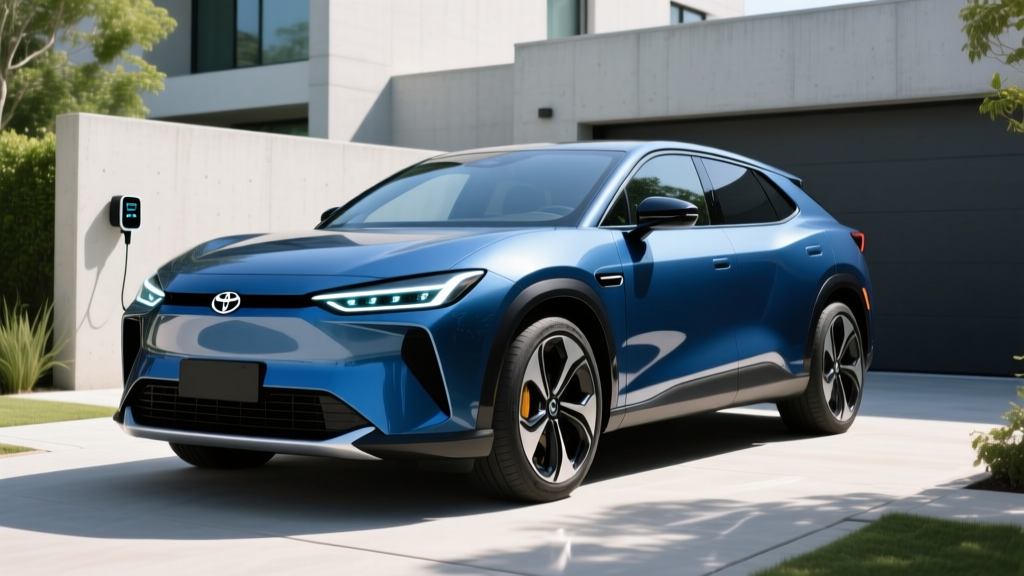
The Toyota bZ4X occupies an unusual space in the electric vehicle market: it carries one of the most trusted nameplates in automotive history, yet its execution as an EV has divided shoppers since its 2023 debut. For 2026, Toyota has carried over the bZ4X with minor packaging adjustments, keeping the same 71.4 kWh battery pack and front-wheel or all-wheel-drive powertrain options. If you're researching the Toyota bZ4X electric car as a potential daily driver, this review breaks down every number that matters — from real-world highway range and charging-curve behavior to tax-credit eligibility and total ownership cost — so you can decide whether it earns a spot in your driveway.
Quick Verdict: Who the Toyota bZ4X Is For
The bZ4X is best suited for suburban commuters and small families who want a mainstream-brand EV with Toyota's dealer network behind it, moderate daily range needs (under 200 miles round-trip), and primarily home-based charging. It is not the right pick for frequent road-trippers who need 300+ mile range or ultra-fast DC charging. If you value brand trust, straightforward controls, and competitive lease pricing, the bZ4X deserves serious consideration. If you prioritize cutting-edge range, the fastest charge speeds, or a frunk, you'll find stronger alternatives in this price bracket.
Choose the Toyota bZ4X if: You want a comfortable, quiet compact EV crossover from a brand you trust, you charge mostly at home, and your daily driving stays under 180 miles.
Look elsewhere if: You need 300+ miles of EPA range, you road-trip frequently and want sub-20-minute DC fast charges, or you need a frunk for gear storage.
Range, Efficiency, and Real-World Expectations
The front-wheel-drive bZ4X XLE carries an EPA-estimated range of 252 miles, while the all-wheel-drive XLE drops to 228 miles. The range-topping Limited AWD is rated at 222 miles. These figures place the bZ4X toward the lower end of the compact electric crossover segment for 2026, where competitors like the Hyundai Ioniq 5 (303 miles) and Tesla Model Y (308 miles) hold a clear advantage.
EPA Range vs. Real World: The FWD XLE's 252-mile EPA estimate assumes a mix of city and highway driving at moderate temperatures. In our experience and consistent with third-party testing, expect approximately 210–230 miles on a mostly-highway route at 70 mph, and as low as 175–195 miles in sustained cold weather (below 30°F) with cabin heating active. The AWD models lose proportionally more range in cold conditions due to the dual-motor system's baseline energy draw. Plan conservatively: if your commute is 120 miles one-way in winter, you'll want to charge before the return trip on AWD trims.
Efficiency ratings land at 119 MPGe combined for the FWD XLE (approximately 28 kWh per 100 miles), dropping to 112 MPGe combined for AWD variants. These are acceptable but unremarkable — the Ioniq 5 and EV6 achieve roughly 10–15% better efficiency per mile thanks to their 800V architectures and more aerodynamic profiles.
Battery Chemistry, Capacity, and Longevity
The bZ4X uses a 71.4 kWh lithium-ion battery pack with NMC (nickel-manganese-cobalt) chemistry, supplied in partnership with Panasonic and Prime Planet Energy & Solutions (PPES), a Toyota-Panasonic joint venture. Usable capacity is approximately 64 kWh — Toyota reserves a larger-than-average buffer (roughly 7–8 kWh) to protect long-term battery health, which is consistent with the brand's conservative approach to degradation management.
| Specification | FWD XLE | AWD XLE | AWD Limited |
|---|---|---|---|
| EPA Range | 252 miles | 228 miles | 222 miles |
| Battery (Usable/Total) | ~64 kWh usable / 71.4 kWh total | ||
| Chemistry | NMC (Nickel-Manganese-Cobalt) | ||
| Horsepower | 201 hp | 214 hp | 214 hp |
| 0–60 mph | 7.1 sec | 6.5 sec | 6.5 sec |
| Drivetrain | Single motor FWD | Dual motor AWD | Dual motor AWD |
| Max DC Fast Charge | 150 kW | 150 kW | 150 kW |
| 10–80% DC Charge Time | ~30 minutes (est.) | ||
| Level 2 Home Charge Rate | ~7.2 kW (approx. 25 mi/hr) | ||
| Efficiency (Combined) | 119 MPGe | 112 MPGe | 112 MPGe |
| Cargo Volume | 27.7 cu ft (rear seats up) / 56.9 cu ft (folded) | ||
| Rear Legroom | 35.3 inches | ||
| Battery Warranty | 8 years / 100,000 miles | ||
| Base MSRP | $38,465 | $40,465 | $44,495 |
Toyota backs the battery with an 8-year/100,000-mile warranty, covering defects and excessive capacity loss. The company targets 90% capacity retention over 10 years, which is ambitious and reflects the oversized buffer strategy. While long-term fleet data is still maturing for the bZ4X specifically, Toyota's hybrid battery track record (Prius packs routinely lasting 150,000+ miles with minimal degradation) provides reasonable confidence in the brand's battery management engineering.
Charging Speed: DC Fast, Level 2, and Home Setup
Charging is where the bZ4X reveals its most significant competitive gap. The maximum DC fast-charge rate is 150 kW on a CCS1 connector — adequate for 2026 but trailing the 800V platforms from Hyundai/Kia (which peak at 240+ kW) and the Tesla ecosystem.
| Charging Level | Power (kW) | Speed (Approx.) | Notes |
|---|---|---|---|
| Level 1 (120V outlet) | ~1.4 kW | ~4–5 miles per hour | Emergency/trickle only |
| Level 2 (240V home) | ~7.2 kW | ~25 miles per hour | Full charge in ~9–10 hours |
| DC Fast (CCS1) | Up to 150 kW peak | 10–80% in ~30 min | Tapers significantly above 80% |
The 150 kW peak is not sustained across the entire charging session. In practice, the bZ4X holds its strongest charge rate (roughly 120–150 kW) between approximately 10% and 45% State of Charge, then tapers progressively. From 80% to 100%, charging slows dramatically — a characteristic of NMC chemistry and Toyota's conservative thermal management. For road trips, plan your stops around the 10–80% window; charging past 80% at a public DC station is rarely time-efficient.
At home on a 240V Level 2 charger (such as a 48-amp hardwired unit on a 60-amp circuit), the bZ4X adds approximately 25 miles of range per hour. A full overnight charge from 10% to 100% takes roughly 9–10 hours, which is perfectly workable for daily commuters. Note: the bZ4X uses the CCS1 connector. If you plan to use Tesla Superchargers (which have transitioned to the NACS standard), you'll need a CCS-to-NACS adapter — verify compatibility with your model year before relying on this for road trips.
Performance, Ride, and Driving Impressions
The FWD bZ4X delivers 201 horsepower and 196 lb-ft of torque from a single front-mounted motor, achieving a 0–60 mph time of approximately 7.1 seconds. The dual-motor AWD variant bumps output to 214 hp and 248 lb-ft, dropping the sprint to 6.5 seconds. Neither figure will excite performance enthusiasts — the Tesla Model Y Long Range AWD hits 60 mph in roughly 5.0 seconds — but the bZ4X's acceleration is perfectly adequate for highway merging and suburban driving.
Ride quality is a genuine strength. The bZ4X rides on Toyota's e-TNGA platform, and the suspension tuning prioritizes comfort over sportiness. Road noise is well-isolated, and the cabin remains quiet even at 75 mph on rough interstate pavement. The steering is light and precise, though it lacks the feedback that driving enthusiasts might want. Regenerative braking offers multiple levels adjustable via paddle shifters, but the bZ4X does not offer true one-pedal driving to a complete stop — you'll still need the friction brake at low speeds, which disappoints some EV converts.
Interior, Cargo, and Technology
Inside, the bZ4X presents a clean, modern layout with a prominent 12.3-inch touchscreen running Toyota's latest infotainment system. Wireless Apple CarPlay and Android Auto are standard. The cabin materials are a mix of soft-touch surfaces and harder plastics — acceptable for the price point but less premium than a Hyundai Ioniq 5 Limited or Volkswagen ID.4 Pro S.
Cargo space measures 27.7 cubic feet behind the rear seats and 56.9 cubic feet with them folded — competitive with the RAV4 Hybrid but less than the Model Y's 30.2 cu ft (rear up) and 72.1 cu ft (folded). Rear-seat legroom is 35.3 inches, which comfortably fits two adults on longer trips. Notably, the bZ4X has no front trunk (frunk) — the space under the hood is occupied by power electronics. If you regularly carry charging cables, a cooler, or gear that benefits from separated storage, this is a practical drawback.
Standard driver-assistance features fall under the Toyota Safety Sense 3.0 suite, which includes adaptive cruise control, lane-keeping assist, automatic emergency braking, and road sign assist. This is a SAE Level 2 driver-assist system — it requires the driver to remain fully engaged and is not a self-driving feature. The system works reliably on well-marked highways but can be overly cautious with lane-centering corrections in construction zones.
Pricing, Trims, and Federal Tax Credit Eligibility
The 2026 Toyota bZ4X lineup starts at $38,465 for the FWD XLE (including destination), with the AWD XLE at $40,465 and the AWD Limited at $44,495. Toyota has kept pricing relatively stable year-over-year, and dealer discounts have been common given the competitive pressure in this segment.
| Trim | MSRP | Est. Federal Credit | Effective Price (est.) |
|---|---|---|---|
| XLE FWD | $38,465 | Up to $7,500* | ~$30,965 |
| XLE AWD | $40,465 | Up to $7,500* | ~$32,965 |
| Limited AWD | $44,495 | Up to $7,500* | ~$36,995 |
*Federal tax credit eligibility under IRS §30D depends on multiple factors that change periodically:
- MSRP Cap: SUVs must have an MSRP at or below $80,000 — all bZ4X trims qualify.
- Buyer Income Cap: Adjusted gross income must not exceed $150,000 (single), $225,000 (head of household), or $300,000 (joint filers).
- Battery Sourcing: The credit is split into two $3,750 halves — one for critical-minerals sourcing and one for battery-component assembly. Sourcing requirements tighten annually. Verify current bZ4X eligibility on fueleconomy.gov before purchasing, as supply-chain changes can shift qualification mid-year.
- Point-of-Sale Transfer: Eligible buyers can transfer the credit to the dealer at purchase, reducing the upfront cost rather than waiting for a tax refund.
An important note: Toyota has historically offered aggressive lease deals on the bZ4X, and leased vehicles may qualify for the $7,500 commercial clean-vehicle credit (§45W) that passes through to the lessee regardless of personal income caps. This has made leasing the bZ4X one of the most cost-effective entry points into a mainstream EV — check current dealer lease offers and confirm credit pass-through in writing.
How the Toyota bZ4X Compares to Key Rivals
The compact electric crossover segment is crowded. Here's how the bZ4X stacks up on the numbers that matter most:
| Spec | Toyota bZ4X FWD | Hyundai Ioniq 5 SEL | Tesla Model Y LR AWD | VW ID.4 Pro |
|---|---|---|---|---|
| EPA Range | 252 mi | 303 mi | 308 mi | 291 mi |
| Battery (kWh) | 71.4 | 77.4 | ~75 | 82 |
| Max DC Charge | 150 kW | 240 kW | 250 kW | 175 kW |
| 10–80% Time | ~30 min | ~18 min | ~20 min | ~28 min |
| 0–60 mph | 7.1 sec | 7.0 sec | 5.0 sec | 7.7 sec |
| Cargo (cu ft) | 27.7 | 27.2 | 30.2 | 30.3 |
| Base MSRP | $38,465 | $42,600 | $44,990 | $39,735 |
The bZ4X's most glaring disadvantage is range and charge speed — it trails every major rival by 40–60 miles on EPA range and takes noticeably longer at DC fast chargers. However, it undercuts the Ioniq 5 and Model Y on base price by $4,000–$6,500, and Toyota's reputation for reliability and its extensive dealer network provide a comfort factor that matters to many buyers. The VW ID.4 is perhaps the closest rival in philosophy and price, offering more range and cargo space for a similar MSRP.
Pros
- Competitive base pricing, especially with lease incentives
- Comfortable, quiet ride quality well-suited to commuting
- Toyota Safety Sense 3.0 standard across all trims
- Conservative battery buffer strategy supports long-term longevity
- Extensive Toyota dealer network for service and support
Cons
- Below-average EPA range (222–252 mi) for the segment
- DC fast-charge speed (150 kW peak) lags 800V competitors
- No front trunk (frunk) for additional cargo storage
- Regenerative braking does not enable full one-pedal driving
- Real-world highway and cold-weather range can drop below 200 mi on AWD
Frequently Asked Questions
What is the real-world range of the Toyota bZ4X?
The FWD XLE is EPA-rated at 252 miles, but expect approximately 210–230 miles in mixed highway driving at moderate temperatures. In cold weather (below 30°F), real-world range on AWD trims can fall to 175–195 miles. Plan trips around the lower number if you drive in winter climates or do sustained highway speeds.
How fast does the Toyota bZ4X charge?
On a DC fast charger, the bZ4X peaks at 150 kW and charges from 10% to 80% in approximately 30 minutes, with tapering above 80%. At home on a Level 2 (240V) charger at 7.2 kW, it adds roughly 25 miles of range per hour, reaching a full charge overnight in about 9–10 hours.
Does the Toyota bZ4X qualify for the federal EV tax credit?
The bZ4X's MSRP falls well under the $80,000 SUV cap, so it clears the price threshold. Full $7,500 credit eligibility depends on your income, the vehicle's battery sourcing compliance in the current tax year, and point-of-sale transfer rules. Check fueleconomy.gov and consult a tax professional before relying on the credit. Lease deals may bypass personal income caps via the commercial credit pass-through.
Is the Toyota bZ4X worth buying over a Tesla Model Y or Hyundai Ioniq 5?
If your priorities are maximum range, fastest charging, and a large Supercharger network, the Model Y or Ioniq 5 are stronger picks. If you value a lower purchase price, Toyota's reliability reputation, a comfortable ride, and strong lease incentives, the bZ4X makes a compelling case — especially for buyers who charge at home and don't road-trip frequently.
What is the Toyota bZ4X's battery warranty?
Toyota covers the bZ4X's high-voltage battery for 8 years or 100,000 miles (whichever comes first) against defects and excessive capacity loss. Toyota engineers the pack with a large buffer and targets 90% capacity retention over 10 years of typical use.
Does the bZ4X have a frunk?
No. The bZ4X does not include a front trunk. All under-hood space is occupied by power electronics. Cargo capacity is limited to the 27.7 cu ft rear cargo area (56.9 cu ft with seats folded).