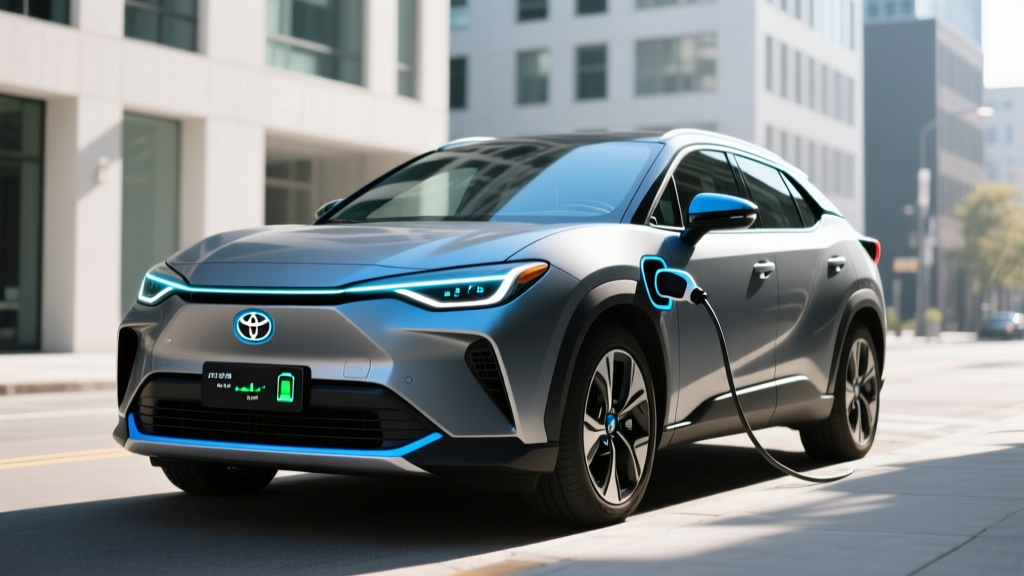
Toyota's first dedicated battery-electric vehicle has matured since its rocky 2023 launch. The 2026 bZ4X arrives with incremental battery and charging refinements, a competitive starting price, and Toyota's reputation for long-term reliability. But in a segment packed with stronger performers, does the bZ4X's MSRP translate into genuine value? This review dissects every number that matters — from real-world range to DC fast-charging curves — so you can decide before stepping into a dealership.
2026 Toyota bZ4X MSRP and Trim Breakdown
The 2026 bZ4X continues with two trims — XLE and Limited — and the choice between front-wheel drive (single motor) and all-wheel drive (dual motor). Pricing below reflects the base MSRP before destination charges and before any federal or state incentives.
| Trim / Drivetrain | Base MSRP | With Destination (~$1,395) | EPA Range |
|---|---|---|---|
| XLE FWD | $37,070 | $38,465 | 252 mi |
| XLE AWD | $39,120 | $40,515 | 228 mi |
| Limited FWD | $41,570 | $42,965 | 236 mi |
| Limited AWD | $43,620 | $45,015 | 214 mi |
The XLE FWD remains the value play, undercutting rivals like the Hyundai Ioniq 5 (~$42,000 base) and Volkswagen ID.4 (~$39,700). The Limited adds a panoramic fixed-glass roof, 20-inch alloy wheels, a 360-degree camera, and Toyota's Digital Rearview Mirror, but the larger wheels cost roughly 16 miles of EPA range compared to the XLE's 18-inch setup.
EPA Range vs. Real-World Expectations
The bZ4X uses a 71.4 kWh (usable) lithium-ion battery pack with NMC (nickel-manganese-cobalt) chemistry. Toyota does not offer an LFP variant. The EPA rates the FWD model at 252 miles combined, while AWD drops to 228 miles.
EPA sticker: 252 mi (XLE FWD) / 228 mi (XLE AWD)
Expect in practice: ~210–230 mi on a highway-heavy trip at 70 mph; ~190–210 mi in sub-freezing winter conditions with cabin heat running. City driving with regenerative braking can push closer to the EPA number or slightly above.
Why the gap? The bZ4X's aerodynamic profile (Cd ~0.29) is adequate but not class-leading, and its thermal management system, while improved over 2023, does not match the heat-pump efficiency of Hyundai's E-GMP platform in cold weather.
Efficiency lands at 119 MPGe combined for the FWD model, which translates to roughly 28 kWh per 100 miles — respectable but trailing the Ioniq 5 Standard Range (~114 MPGe / 29 kWh/100mi) and significantly behind the Tesla Model Y (~122 MPGe). Source: fueleconomy.gov.
Charging Speed: DC Fast and Level 2
Charging remains the bZ4X's most debated spec. Toyota rates the peak DC fast-charge capability at 150 kW on a CCS1 connector. In controlled testing on a 350 kW Electrify America station, the bZ4X sustains roughly 120–135 kW between 10–40% SoC, then tapers progressively. A 10–80% charge takes approximately 30 minutes — adequate for road-trip stops but noticeably slower than the Hyundai Ioniq 5 (18 minutes at 240 kW) or the Kia EV6 (18 minutes at 239 kW).
| Charging Level | Power (kW) | Speed / Time | Connector |
|---|---|---|---|
| Level 1 (120V household) | ~1.4 kW | ~4 mi/hr | J1772 |
| Level 2 (240V, 32A home) | ~7.7 kW | ~24 mi/hr; full charge ~9.5 hr | J1772 |
| DC Fast Charge | Peak 150 kW | 10–80% in ~30 min | CCS1 |
Home charging note: The onboard charger maxes at 7.7 kW (32 amps). If you install a 48-amp Level 2 wallbox, the bZ4X will not use the extra capacity — it caps at 32A. This is a meaningful distinction if you share a charger with a vehicle that can accept 11.5 kW (48A), such as the Ford Mustang Mach-E or Tesla vehicles with a J1772 adapter.
Toyota includes one year of complimentary charging on the Electrify America network (up to 1,000 kWh), which covers roughly 3,500 miles of driving. After that, expect to pay EA's prevailing per-kWh rate (typically $0.35–$0.48/kWh depending on region and guest vs. subscriber pricing).
Performance, Drivetrain, and Ride Quality
The single-motor FWD model produces 201 horsepower and 196 lb-ft of torque, delivering a 0–60 mph time of approximately 7.1 seconds. The dual-motor AWD variant bumps output to 214 hp and 248 lb-ft, cutting the 0–60 to roughly 6.5 seconds. Neither figure will embarrass the bZ4X at highway merges, but both trail the Ioniq 5 RWD (225 hp, ~6.8 sec) and significantly lag the Model Y Long Range AWD (384 hp, ~4.8 sec).
Ride quality is where Toyota's tuning philosophy shows. The bZ4X prioritizes comfort over sportiness — soft damping, light steering, and well-isolated road noise. It's a commuter's car, not a canyon carver. The 3,950-lb curb weight (FWD) is managed competently, with minimal brake dive under regen-heavy driving.
Regen and one-pedal driving: Toyota offers adjustable regen levels via paddle shifters, but the bZ4X does not provide true one-pedal driving to a complete stop in all modes — it creeps at very low speeds, which some owners find annoying in stop-and-go traffic.
Interior Space, Cargo, and Technology
The bZ4X rides on Toyota's e-TNGA platform, yielding a 112.2-inch wheelbase and competitive interior volume:
- Front headroom: 39.4 in | Front legroom: 42.5 in
- Rear headroom: 37.1 in | Rear legroom: 35.6 in
- Cargo behind rear seats: 27.7 cu ft
- Cargo with seats folded: 56.9 cu ft
- Frunk: None — the bZ4X has no front trunk, a missed opportunity given the e-TNGA's packaging
The cabin uses a yoke-inspired steering wheel concept in early prototypes, but all US-market 2026 models ship with a conventional round wheel. The 12.3-inch Toyota Audio Multimedia touchscreen is responsive, supports wireless Apple CarPlay and Android Auto, and includes native cloud-based navigation on Limited trims. Over-the-air (OTA) updates are supported.
Driver assistance: Toyota Safety Sense 3.0 comes standard across all trims, including:
- Pre-Collision System with Pedestrian Detection
- Full-Speed Range Dynamic Radar Cruise Control
- Lane Departure Alert with Steering Assist
- Lane Tracing Assist (SAE Level 2 — requires hands on wheel)
- Road Sign Assist and Proactive Driving Assist
Federal Tax Credit and Ownership Economics
Tax credit eligibility for the bZ4X is nuanced and depends on your income, the vehicle's MSRP, and battery-component/critical-mineral sourcing requirements under IRS §30D rules.
| Factor | Requirement / Detail |
|---|---|
| Vehicle MSRP Cap (SUVs/CUVs) | ≤ $80,000 — bZ4X qualifies (all trims under $46,000) |
| Buyer Income Cap (Modified AGI) | ≤ $150,000 single / ≤ $300,000 married filing jointly |
| Battery Component Sourcing | Must meet North American assembly thresholds — verify VIN on fueleconomy.gov |
| Critical Minerals Sourcing | Must meet FTA-country extraction/processing thresholds — verify VIN |
| Max Credit | $7,500 (if both sourcing requirements met), $3,750 (if only one) |
| Point-of-Sale Transfer | Available — apply credit as down payment at dealership |
Critical caveat: The bZ4X is manufactured at Toyota's Motomachi plant in Japan. Battery cell sourcing involves Panasonic and CATL partnerships. As of early 2026, certain bZ4X VINs qualify for the full $7,500 credit, while others may only qualify for $3,750 or none at all depending on the specific production batch's mineral and component sourcing. Always enter the exact VIN on the IRS portal or fueleconomy.gov before committing to a purchase.
Estimated effective pricing (XLE FWD, full credit): $38,465 (with destination) − $7,500 = ~$30,965 before state incentives, dealer fees, or taxes. This positions the bZ4X as one of the most affordable nameplate electric CUVs on the market — provided you qualify.
Warranty Coverage and Battery Longevity
Toyota backs the bZ4X with its standard new-vehicle warranty plus enhanced EV-specific coverage:
- Basic (bumper-to-bumper): 3 years / 36,000 miles
- Powertrain: 5 years / 60,000 miles
- EV Battery: 8 years / 100,000 miles (covers defects and capacity loss below 70% of original)
- Corrosion perforation: 5 years / unlimited miles
- ToyotaCare (maintenance): 2 years / 25,000 miles
The 70% capacity retention threshold is industry-standard but less generous than Hyundai's approach (which warrants the battery against dropping below 70% with no separate mileage limit in some markets). In practice, NMC batteries from reputable suppliers typically retain 85–90% capacity after 100,000 miles under normal use. Toyota's conservative thermal management — liquid cooling with moderate charge/discharge C-rates — should support long-term durability, though we lack multi-year fleet data on the bZ4X specifically.
Pros, Cons, and the Verdict
- Low starting MSRP for an electric CUV ($37,070)
- Toyota's reliability reputation and dealer network (1,500+ US locations)
- Standard Toyota Safety Sense 3.0 — comprehensive ADAS at no extra cost
- Comfortable, quiet ride tuned for commuting
- Eligible for up to $7,500 federal tax credit (VIN-dependent)
- 1 year of free Electrify America charging included
- DC fast charging peaks at 150 kW — 30 min 10–80% lags rivals
- No front trunk (frunk) — wasted packaging space
- AWD range drops to 214 mi on Limited trim
- 7.7 kW onboard charger caps home charging speed
- No hands-free highway driving feature (unlike Super Cruise / BlueCruise)
- Tax credit eligibility is VIN-specific and not guaranteed
Choose the bZ4X if: You're a daily commuter driving under 80 miles round-trip, you value Toyota's service network and long-term reliability, you can charge at home overnight, and you qualify for the full $7,500 federal credit — bringing effective price near $31K.
Look elsewhere if: You take frequent road trips (the 30-minute 10–80% charge adds up), you need hands-free highway driving (consider GM's Super Cruise vehicles), you require AWD with 250+ miles of range, or you want a frunk for gear storage.
Competitor Comparison at a Glance
| Spec | 2026 Toyota bZ4X XLE FWD | 2026 Hyundai Ioniq 5 SE Std Range RWD | 2026 VW ID.4 Pro S |
|---|---|---|---|
| Base MSRP | $37,070 | $42,600 | $39,735 |
| EPA Range | 252 mi | 240 mi | 275 mi |
| Battery (usable kWh) | 71.4 (NMC) | 58.0 (NMC) | 77.0 (NMC) |
| DC Fast Charge Peak | 150 kW | 185 kW | 175 kW |
| 10–80% Time | ~30 min | ~22 min | ~28 min |
| 0–60 mph | 7.1 sec | 7.4 sec | 7.7 sec |
| Cargo (behind rear) | 27.7 cu ft | 27.2 cu ft | 30.3 cu ft |
| Battery Warranty | 8 yr / 100,000 mi | 10 yr / 100,000 mi | 8 yr / 100,000 mi |
The bZ4X wins on entry price and 0–60 acceleration among these three. The Ioniq 5 wins on charging speed and warranty length. The ID.4 wins on range and cargo space. All three qualify for at least partial federal tax credits, but exact amounts are VIN-dependent.
Frequently Asked Questions
What is the real-world range of the Toyota bZ4X?
The EPA rates the XLE FWD at 252 miles combined. In real-world highway driving at 70 mph, expect 210–230 miles. In freezing temperatures with cabin heat, plan for 190–210 miles. City driving with frequent regen can match or slightly exceed the EPA figure.
How fast does the bZ4X charge on DC fast chargers and at home?
DC fast charging peaks at 150 kW via CCS1, achieving 10–80% in approximately 30 minutes on a capable station. Home Level 2 charging runs at 7.7 kW (32A max), adding about 24 miles per hour — a full charge from empty takes roughly 9.5 hours. Level 1 (120V) adds about 4 miles per hour and is only suitable for emergency trickle charging.
How much does the bZ4X cost after the federal EV tax credit?
If you qualify for the full $7,500 §30D credit (income within limits, VIN meets both battery-sourcing requirements), the XLE FWD drops from ~$38,465 (with destination) to approximately $30,965. However, credit eligibility is VIN-specific. Some bZ4X units may qualify for only $3,750 or no credit at all. Always verify your exact VIN on fueleconomy.gov before purchase.
Does the Toyota bZ4X qualify for the federal EV tax credit?
It can, but eligibility is not guaranteed for every vehicle. Under IRS §30D, the bZ4X meets the MSRP cap (under $80,000 for SUVs/CUVs) and the buyer must meet income caps ($150K single / $300K joint). The battery component and critical mineral sourcing requirements vary by production batch because the bZ4X is assembled in Japan with multinational battery supply chains. Use the VIN lookup tool at fueleconomy.gov to confirm.
Is the bZ4X worth buying vs. the Hyundai Ioniq 5 or Tesla Model Y?
If your priority is lowest entry price and Toyota dealership proximity, the bZ4X is compelling — especially near $31K after the tax credit. If road-trip charging speed matters, the Ioniq 5's 22-minute 10–80% time is significantly better. If range and Supercharger access are paramount, the Model Y Long Range (310+ mi, NACS connector) is the stronger pick, though at a higher MSRP. The bZ4X is a solid commuter EV at a fair price; it's not the class leader in any single performance metric.
Does the bZ4X have a heat pump for cold weather?
Yes. The 2026 bZ4X includes a standard heat pump on all trims, which improves cold-weather efficiency compared to resistive cabin heating. However, real-world cold-weather range loss of 15–25% is still expected — consistent with most EVs using NMC chemistry.
Can the bZ4X tow?
Toyota does not rate the US-market bZ4X for towing. If towing is a requirement, consider the Hyundai Ioniq 5 (up to 2,300 lbs with the towing package) or the Ford Mustang Mach-E (up to 2,200 lbs with the trailer hitch option).