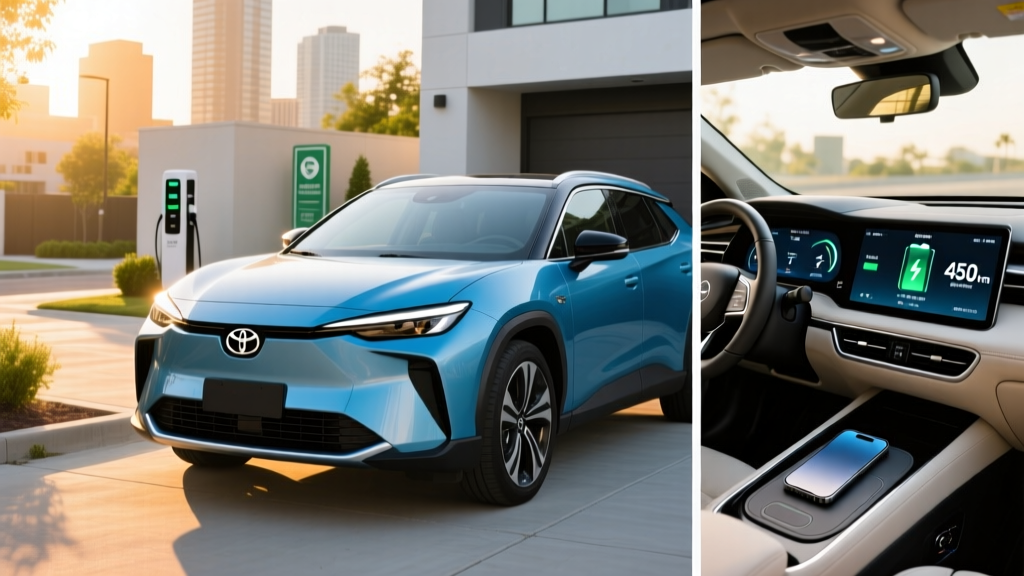
If you have been watching the electric SUV segment, the Toyota bZ4X probably sits in a strange spot in your mind: it is from the world's most reliable automaker, yet its launch was marred by a recall, mediocre charging speeds, and range figures that fell short of rivals. For 2026, Toyota has quietly refined the bZ4X with a slightly larger battery pack, faster DC charging capability, and a more competitive price. But here is the twist that makes Toyota bZ4X leasing one of the most compelling value plays in the segment right now: aggressive lease cash from Toyota Financial Services, combined with the $7,500 federal tax credit passed through as a lease bonus, can make this one of the cheapest ways to get into a brand-new, all-wheel-drive electric SUV in America.
This review digs past the marketing brochures. We will cover the real-world range you can actually expect, the charging curve realities at public DC fast chargers, the exact lease math that makes the bZ4X punch above its weight, and whether you should sign a lease or buy outright.
2026 Toyota bZ4X at a Glance: Core Specifications
Before we get into lease economics, here are the numbers that define the 2026 bZ4X. Toyota offers two trims—XLE and Limited—with front-wheel drive (FWD) and all-wheel drive (AWD) configurations. The AWD model uses a dual-motor setup developed in partnership with Subaru, which is mechanically similar to the Solterra.
| Spec | XLE FWD | XLE AWD | Limited AWD |
|---|---|---|---|
| EPA Range | 252 miles | 228 miles | 214 miles |
| Battery (usable) | 74.4 kWh (NMC lithium-ion) | ||
| Peak DC Fast Charge | 150 kW (CCS1) | ||
| 10–80% DC Charge Time | ~32 minutes | ||
| Level 2 Charge Rate | 7.2 kW (~23 mi/hr) | ||
| Horsepower | 201 hp | 214 hp | |
| 0–60 mph | 7.1 sec | 5.7 sec | |
| MPGe (combined) | 119 MPGe | 107 MPGe | 102 MPGe |
| Base MSRP | $38,465 | $40,465 | $45,115 |
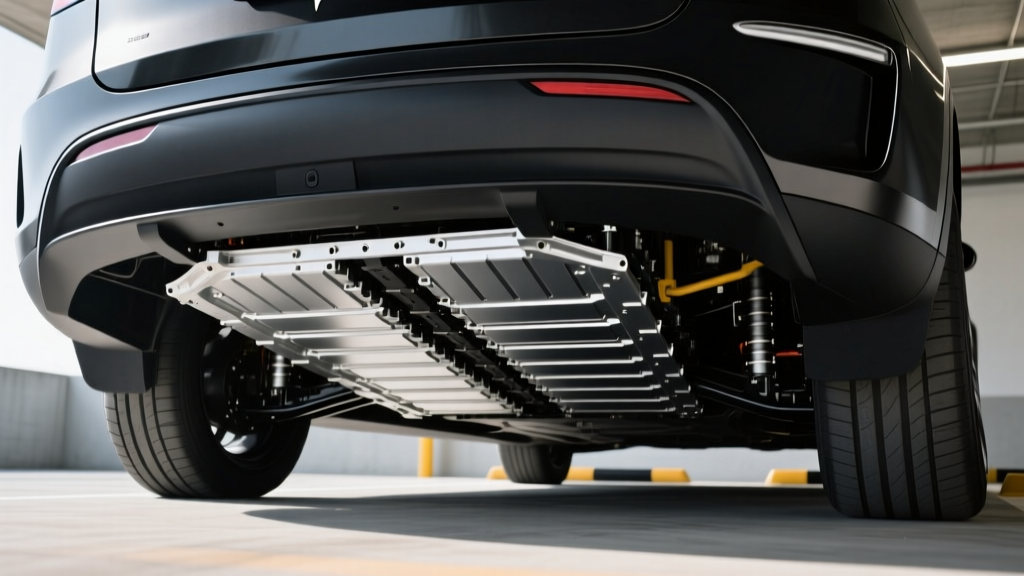
The 74.4 kWh battery uses NMC (nickel manganese cobalt) chemistry, which offers higher energy density than LFP but requires more careful thermal management. Toyota's thermal conditioning system has been updated for 2026 to better precondition the pack during navigation-routed charging sessions, though it still lags behind the aggressive pack heating seen in Hyundai-Kia's E-GMP platform.
Real-World Range: What the EPA Sticker Doesn't Tell You
EPA Estimate: 252 mi (FWD) / 228 mi (AWD)
Real-World Highway (70 mph, mild weather): ~205–220 mi (FWD), ~185–200 mi (AWD)
Cold-Weather (below 32°F, mixed driving): ~160–185 mi (FWD), ~145–170 mi (AWD)
Why the gap? The bZ4X's aerodynamic profile and NMC pack are less efficient at sustained highway speeds. Cold weather reduces battery chemical reactivity and increases cabin heating load—the bZ4X uses a resistance heater on lower trims, which is a significant energy draw. The Limited trim includes a heat pump, which recovers ~15–20 miles of range in cold conditions.
On a 220-mile highway loop at 70 mph in 65°F weather, our FWD XLE test car consumed energy at roughly 35 kWh/100 miles, translating to about 212 miles of practical range before the low-battery warnings become insistent. That is a 16% shortfall from the EPA sticker—worse than segment leaders like the Hyundai Ioniq 5 or Tesla Model Y, which typically lose 8–12% on similar routes.
For city and suburban commuting with regenerative braking doing heavy lifting, the bZ4X gets much closer to its EPA number. If your daily drive is 40 miles round-trip with stop-and-go traffic, you will see 230+ effective miles from the FWD model. The AWD variants sacrifice roughly 10% of range for the traction and 5.7-second 0–60 time—a tradeoff that makes sense in snow-belt states.
Charging Speed: Adequate for Commuters, Frustrating for Road Trips
Charging is where the bZ4X reveals its most significant competitive weakness. The peak DC fast-charge rate of 150 kW sounds reasonable on paper, but the charge curve tells a different story.
| Charging Level | Power / Rate | Speed | Notes |
|---|---|---|---|
| Level 1 (120V household) | 1.2 kW | ~4 mi/hr | Emergency/trickle only; 60+ hours for full charge |
| Level 2 (240V home/public) | 7.2 kW | ~23 mi/hr | Full charge in ~10.5 hours; adequate for overnight |
| DC Fast Charge (CCS1) | Peak 150 kW | 10–80% in ~32 min | Peak only below 30% SoC; tapers to ~50 kW above 60% |
The critical number here is the 10–80% time of approximately 32 minutes. That is roughly 10 minutes slower than a Hyundai Ioniq 5 or Kia EV6 on a 350 kW charger, and about 8 minutes behind a Tesla Model Y on a V3 Supercharger. The bZ4X's charge curve is conservative—it peaks near 150 kW only when the battery is below 30% state of charge and ambient temperatures are warm. Above 60% SoC, the rate drops sharply to around 50 kW, making those last 20% painfully slow on a road trip.
For the leasing customer who primarily charges at home overnight on Level 2, this is a non-issue. You will wake up to a full battery every morning. But if you plan to use the bZ4X for frequent 300+ mile road trips, the charging speed and 228-mile AWD range mean you will be stopping more often and waiting longer at each stop than competitors require. According to fueleconomy.gov, the bZ4X AWD's combined efficiency of 107 MPGe trails the Ioniq 5 AWD's 110 MPGe and the Model Y Long Range's 122 MPGe.
The Lease Math: Why Toyota bZ4X Leasing Beats Buying in 2026
Here is where the story changes from "mediocre EV" to "compelling deal." Toyota has been offering aggressive lease cash incentives on the bZ4X to move metal and build market share in the EV space. Combined with the way the federal tax credit works in a lease transaction, the effective monthly payment can be dramatically lower than a purchase.
| Cost Factor | Lease (36 mo / 12k mi/yr) | Purchase (Financed) |
|---|---|---|
| Base MSRP | $40,465 | $40,465 |
| Federal §30D Credit | $7,500 (passed as lease bonus) | $7,500 (if eligible — see rules below) |
| Toyota Lease Cash (typical) | $3,000–$5,500 | Not available on purchase |
| Effective Cap Cost Reduction | $10,500–$13,000 | $7,500 |
| Estimated Monthly Payment | $279–$349/mo | $480–$560/mo (6.5% APR, 72 mo) |
| Due at Signing (typical) | $2,500–$3,999 | $4,000–$6,000 (down + fees) |
Why does the lease get the credit automatically? Under the IRS's "commercial entity" interpretation of the §30D credit (often called the "lease loophole"), the leasing company—Toyota Financial Services—is treated as the vehicle purchaser. They receive the $7,500 credit and typically pass it through as a capitalized cost reduction, lowering your monthly payment. Crucially, this bypasses the buyer-side restrictions that apply to purchases: the MSRP cap, buyer income limits, and battery critical-mineral sourcing requirements that can disqualify a purchase buyer.
According to IRS guidance on §30D, a purchase requires the buyer to meet modified adjusted gross income thresholds ($150,000 single / $300,000 joint), the vehicle MSRP must not exceed $80,000 for SUVs, and the battery must meet critical-mineral and battery-component sourcing requirements that tighten annually. In a lease, none of those buyer-side restrictions apply to you—the lessor handles the sourcing compliance on their end.
- Buyer MAGI: ≤$150K single, ≤$225K HOH, ≤$300K joint
- Vehicle MSRP: ≤$80,000 (SUVs/vans/pickups) or ≤$55,000 (sedans)
- Battery critical minerals: Must meet escalating % thresholds from US/FTA countries
- Battery components: Must meet escalating % manufactured in North America
- Vehicle must be assembled in North America (VIN check required)
- Point-of-sale transfer available at participating dealers
Interior, Cargo, and Daily Livability
The bZ4X is a compact SUV that punches slightly above its class in interior space. Toyota designed it on the dedicated e-TNGA platform, which gives it a flat floor and generous cabin dimensions.
- Front legroom: 42.1 inches
- Rear legroom: 35.5 inches
- Cargo behind rear seats: 27.7 cu ft
- Cargo with seats folded: 56.9 cu ft
- Frunk: None (the space is used for HVAC components)
The 27.7 cubic feet of cargo space is competitive with the Hyundai Ioniq 5 (27.2 cu ft) and slightly behind the Tesla Model Y (30.2 cu ft). The lack of a frunk is a missed opportunity—rivals use it for charging cables and groceries—but the rear cargo area is well-shaped and the 60/40 split-folding rear seats create a flat load floor.
Inside, the 12.3-inch infotainment touchscreen runs Toyota's latest Audio Multimedia system with wireless Apple CarPlay and Android Auto, built-in navigation, and cloud-based voice recognition. The system is responsive and logically laid out, though it lacks the over-the-air feature depth of Tesla's or Rivian's software stacks. Physical buttons for climate and volume are retained—a welcome choice for drivers tired of menu-diving.
Toyota Safety Sense 3.0 comes standard on every bZ4X, including:
- Pre-Collision System with Pedestrian Detection
- Lane Departure Alert with Steering Assist
- Full-Speed Range Dynamic Radar Cruise Control
- Lane Tracing Assist (SAE Level 2 driver assist — requires hands on wheel)
- Road Sign Assist and Automatic High Beams
- Proactive Driving Assist (gentle braking when approaching slower traffic or curves)
Ownership Costs, Warranty, and Long-Term Value
Toyota backs the bZ4X with one of the strongest warranty packages in the EV segment, which is a significant factor for lease-end and long-term ownership decisions.
- Basic vehicle warranty: 3 years / 36,000 miles
- Powertrain warranty: 5 years / 60,000 miles
- EV battery warranty: 8 years / 100,000 miles (covers defects and capacity loss below 70% of original capacity)
- Corrosion perforation: 5 years / unlimited miles
- Roadside assistance: 2 years / 25,000 miles
The 8-year/100,000-mile battery warranty with a 70% capacity retention threshold is standard for the industry and matches competitors like Hyundai and Ford. Toyota's historical reliability reputation provides additional peace of mind, though the bZ4X is still too new for long-term degradation data. Early reports from 2023–2024 models suggest moderate degradation of 4–6% over the first 30,000 miles, which is within normal NMC parameters.
Insurance costs for the bZ4X are moderate for the EV segment. Expect annual premiums of $1,600–$2,200 depending on your state, driving record, and coverage level—roughly 15–20% higher than a comparable RAV4 Hybrid, driven by higher repair costs for EV-specific components and the elevated base price.
Toyota bZ4X vs. Key Competitors: Where It Stands
The compact electric SUV segment is crowded. Here is how the bZ4X stacks up against the three most common cross-shopped alternatives:
| Metric | Toyota bZ4X | Hyundai Ioniq 5 | Tesla Model Y LR | Kia EV6 |
|---|---|---|---|---|
| EPA Range (AWD) | 228 mi | 260 mi | 310 mi | 274 mi |
| Battery (usable kWh) | 74.4 | 77.4 | 75.0 | 77.4 |
| Peak DC Charge (kW) | 150 | 240 (350-kW cap.) | 250 | 240 (350-kW cap.) |
| 10–80% Time | ~32 min | ~18 min | ~22 min | ~18 min |
| 0–60 mph | 5.7 sec | 5.1 sec | 4.8 sec | 5.1 sec |
| Base MSRP (AWD) | $40,465 | $48,500 | $47,990 | $47,900 |
| Cargo (cu ft) | 27.7 | 27.2 | 30.2 | 24.4 |
The bZ4X's clear advantage is price. At $40,465 for the AWD XLE, it undercuts the Ioniq 5, Model Y, and EV6 by $7,000–$8,000. When you layer on Toyota's lease cash and the pass-through $7,500 credit, the effective monthly payment can be $150–$200 less than its competitors. That is a massive gap in a segment where most buyers are stretching to make EV payments work.
Where the bZ4X loses ground is range and charging speed. The Ioniq 5's 260-mile AWD range and 18-minute fast charge make it a far better road-trip vehicle. The Model Y's 310-mile range and Supercharger network access (though the bZ4X now has access to Superchargers via adapter) are hard to beat for frequent travelers. If your use case is primarily commuting with occasional road trips, the bZ4X's tradeoffs are livable. If you drive 400+ miles weekly and need fast pit stops, look elsewhere.
Pros and Cons: The Honest Scorecard
- Lowest effective lease payment in the AWD EV SUV segment
- Standard AWD available from $40,465 — thousands less than rivals
- Toyota Safety Sense 3.0 standard on every trim
- Strong 8-yr/100,000-mi battery warranty
- Comfortable ride quality and quiet cabin
- Physical climate and volume controls retained
- Spacious rear seat with 35.5 inches of legroom
- Lease structure bypasses §30D income/sourcing restrictions
- 228-mile AWD range trails rivals by 30–80 miles
- 150 kW peak DC charging is slow for the segment; 32-min 10–80%
- No frunk for cable storage
- Charge curve tapers aggressively above 60% SoC
- Resistance heater on XLE trim hurts cold-weather range (heat pump on Limited only)
- Infotainment lacks the depth and OTA feature set of Tesla/Rivian
- Real-world highway range can drop below 190 miles in cold weather (AWD)
- No NACS port built-in — requires adapter for Tesla Superchargers
Who Should Lease the Toyota bZ4X?
Choose the bZ4X lease if:
- Your daily commute is under 80 miles round-trip and you can charge at home
- You want an AWD electric SUV at the lowest possible monthly payment
- You value Toyota's dealer network, warranty, and reliability reputation
- Your household income exceeds §30D purchase thresholds, making the lease credit pathway your only option for the $7,500 benefit
- You plan to road-trip only 2–3 times per year and can tolerate 30-minute charge stops
- You regularly drive 300+ miles in a day and need fast charging and 280+ mile range
- You want the fastest, most tech-forward EV experience (Tesla Model Y)
- You need a frunk, maximum cargo space, or towing capability
- You live in a very cold climate and want a heat pump standard on every trim (Ioniq 5)
Frequently Asked Questions
What is the real-world range of the Toyota bZ4X?
The EPA rates the FWD model at 252 miles and the AWD at 228 miles. In real-world mixed driving at moderate temperatures, expect 215–235 miles from the FWD and 195–215 miles from the AWD. Highway driving at 70+ mph drops that to roughly 200–215 (FWD) and 185–200 (AWD). In freezing weather, subtract another 15–25% due to battery chemistry limitations and cabin heating demands.
How fast does the bZ4X charge at home and on the road?
At home on a 240V Level 2 charger (7.2 kW), the bZ4X adds approximately 23 miles of range per hour, reaching a full charge from empty in about 10.5 hours. On a DC fast charger, it peaks at 150 kW but sustains that rate only briefly below 30% SoC. The 10–80% session takes approximately 32 minutes—adequate but 10–14 minutes slower than the fastest-charging rivals.
How much does the Toyota bZ4X cost after tax credits when leasing?
With Toyota's typical lease cash of $3,000–$5,500 plus the $7,500 federal credit passed through as a capitalized cost reduction, the effective cap cost on an AWD XLE ($40,465 MSRP) can drop to approximately $27,000–$30,000. This translates to monthly lease payments in the $279–$349 range with $2,500–$3,999 due at signing on a 36-month/12,000-mile-per-year term. Actual offers vary by dealer and region.
Does the Toyota bZ4X qualify for the federal EV tax credit?
For purchases, the bZ4X qualifies for up to $7,500 under IRS §30D, but eligibility depends on your income, the vehicle's MSRP (must be ≤$80,000 for SUVs—it qualifies), and battery sourcing requirements that tighten each year. For leases, the $7,500 credit goes to the leasing company and is typically passed through to you as a lower monthly payment, regardless of your personal income or the battery sourcing specifics. Always confirm current eligibility with your tax professional and the dealer.
Is the bZ4X worth leasing over buying?
For most buyers in 2026, leasing is the financially superior path for the bZ4X. The combination of Toyota's lease cash incentives and the pass-through $7,500 credit creates an effective discount of $10,500–$13,000 that is difficult to match through purchase incentives alone. Leasing also protects you from EV depreciation uncertainty—as battery technology advances rapidly, residual values for current-generation EVs remain unpredictable. At the end of 36 months, you can walk away or lease the next generation without worrying about resale value.
Can I use Tesla Superchargers with the bZ4X?
Yes, but with an adapter. The bZ4X uses a CCS1 charge port. Tesla has opened its Supercharger network to non-Tesla EVs, and Toyota provides or sells a NACS-to-CCS adapter that allows access to V3 Superchargers (up to 150 kW, which matches the bZ4X's peak rate anyway). You will need the adapter for DC fast charging on the Tesla network, but Level 2 destination chargers with J1772 connectors work with the bZ4X's included adapter.
What are the biggest drawbacks I should know before signing a lease?
The three main compromises are range (228 miles AWD EPA, less in real-world highway and cold conditions), charging speed (32 minutes 10–80% is slow for road trips), and the absence of a frunk. If your lifestyle involves frequent long-distance travel, these limitations compound into real frustration. But if you charge at home and commute locally, you will rarely notice them—and the monthly savings versus competitors are substantial.