2026 Toyota bZ4X: Lease Value Meets Real-World EV Practicality
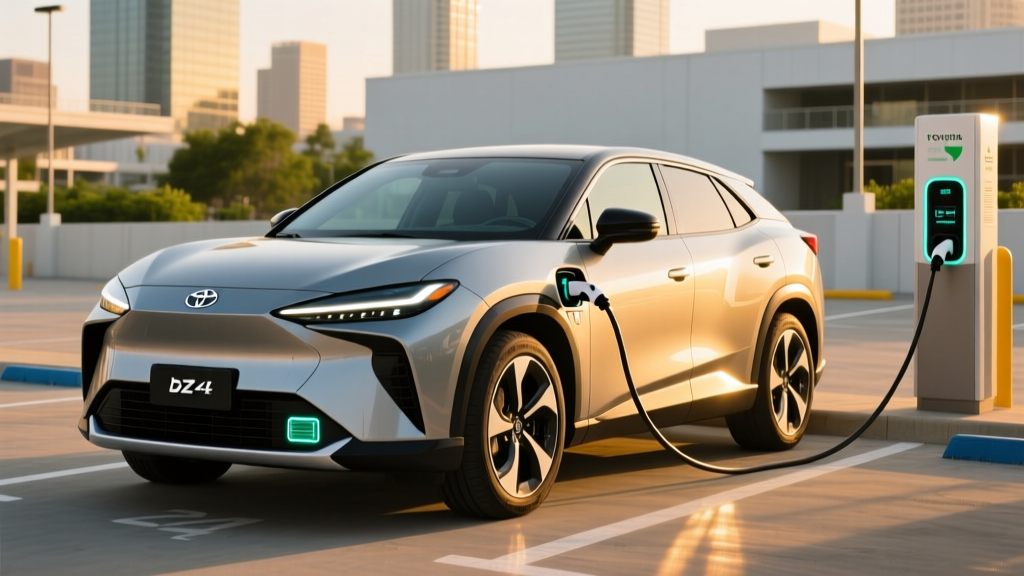
The Toyota bZ4X occupies a unique position in the compact electric SUV segment: it's not the longest-range option, nor the quickest to charge, but aggressive lease offers and Toyota's reputation for reliability make it worth a serious look for cost-conscious EV shoppers. For 2026, the bZ4X carries over with minor refinements, and manufacturers are using lease incentives to move inventory — creating opportunities for savvy buyers who understand what they're actually getting.
Before signing any lease paperwork, you need to know the real numbers behind the EPA sticker: actual highway range, charging curve behavior in cold weather, and whether the federal tax credit flows through to your monthly payment. This review breaks down everything that matters for an informed bZ4X lease decision.
EPA Range vs. Real-World Driving
Real-World Expectation: 210–230 miles highway (70-75 mph), 180–200 miles in freezing temperatures
The 2026 bZ4X uses a 71.4 kWh usable lithium-ion battery (NMC chemistry). Front-wheel drive XLE trims achieve the highest EPA rating at 252 miles, while all-wheel drive models with larger 20-inch wheels drop to 228 miles due to increased rolling resistance and drivetrain losses.
In real-world highway testing at sustained 70-75 mph speeds, expect roughly 210-230 miles before needing to charge — a 10-15% reduction from the EPA combined figure. Cold weather (below 32°F) compounds this loss, with range dropping to 180-200 miles due to battery heating demands and reduced regenerative braking efficiency. If your daily commute is under 60 miles round-trip with home charging access, this range works fine. For frequent 300+ mile road trips, competitors like the Hyundai Ioniq 5 or Tesla Model Y offer 50-80 additional miles of buffer.
Charging Speed: Home and DC Fast Charging
| Charging Level | Power | Time/Rate | Use Case |
|---|---|---|---|
| Level 1 (120V) | 1.4 kW | ~4 miles/hour | Emergency/overnight trickle |
| Level 2 (240V, 32A) | 7.7 kW | ~25 miles/hour, full charge in 9.5 hours | Home/workplace daily charging |
| DC Fast Charge | Peak 150 kW | 10-80% in ~30 minutes | Road trips, quick top-ups |
The bZ4X charges at a peak 150 kW on DC fast chargers (CCS1 connector), but like most EVs, it doesn't sustain that rate throughout the session. The charge curve peaks around 20-30% state of charge, then tapers progressively. From 10-80%, expect roughly 30 minutes at a properly functioning 150+ kW station. Above 80%, charging slows dramatically to protect battery health — plan for 45+ minutes if you need a full charge.
For home charging, the onboard 7.7 kW Level 2 charger adds about 25 miles per hour. A typical overnight session (8-10 hours) easily replenishes a full day's driving. Installation of a 240V/40A home charger typically costs $800-$1,500 depending on panel proximity and local permitting, according to Energy.gov estimates.
Cold-weather charging note: The bZ4X lacks a battery preconditioning feature for DC fast charging. In freezing temperatures, expect slower initial charge rates until the battery warms naturally — adding 5-10 minutes to your 10-80% session.
Performance, Efficiency, and Drivetrain
| Specification | FWD XLE | AWD XLE/Limited |
|---|---|---|
| Motor Configuration | Single front motor | Dual motor (front + rear) |
| Horsepower | 201 hp | 214 hp |
| Torque | 196 lb-ft | 248 lb-ft |
| 0-60 mph | 7.1 seconds | 6.5 seconds |
| EPA Efficiency | 131 MPGe combined | 119 MPGe combined |
| Energy Consumption | 26 kWh/100 mi | 28 kWh/100 mi |
The bZ4X delivers adequate but not thrilling acceleration. The AWD dual-motor setup provides confident highway merging and all-weather traction, though it sacrifices some range and efficiency. Regenerative braking offers moderate one-pedal driving capability, though it doesn't bring the car to a complete stop like some competitors.
Efficiency-wise, the bZ4X sits in the middle of the pack. At 26-28 kWh per 100 miles, it's less efficient than the Tesla Model Y (27 kWh/100 mi AWD) but comparable to the Hyundai Ioniq 5 and Ford Mustang Mach-E. According to fueleconomy.gov, the FWD bZ4X achieves 131 MPGe combined.
Pricing, Lease Offers, and Tax Credit Impact
| Trim | MSRP | Typical Lease (36 mo/12k mi) | Federal Credit Eligibility |
|---|---|---|---|
| XLE FWD | $43,070 | $299-$399/month (with incentives) | Yes (if income/MSRP rules met) |
| XLE AWD | $45,150 | $349-$449/month | Yes (if income/MSRP rules met) |
| Limited AWD | $48,450 | $399-$499/month | Yes (if income/MSRP rules met) |
Federal Tax Credit (§30D) Eligibility: The 2026 bZ4X qualifies for up to $7,500 in federal tax credits, but eligibility depends on multiple factors per IRS guidelines:
- Buyer income caps: $150,000 single / $225,000 head of household / $300,000 joint filers (modified AGI)
- MSRP cap: $80,000 for SUVs (all bZ4X trims qualify)
- Battery sourcing: Must meet critical minerals and battery component requirements (verify current-year compliance)
- Point-of-sale transfer: Credit can be applied at purchase or transferred to dealer for lease deals
Lease-specific advantage: When you lease a bZ4X, the manufacturer (Toyota Financial Services) claims the tax credit, not you. Many dealers pass this savings through as a capitalized cost reduction, lowering your monthly payment. A $7,500 credit on a 36-month lease reduces payments by roughly $208/month. However, this isn't guaranteed — always verify the credit is factored into your lease quote.
At the $299-$399/month range (common in promotional lease offers), the bZ4X becomes competitive with gas-powered RAV4 leases when you factor in fuel savings and reduced maintenance.
Interior Space, Tech, and Daily Livability
The bZ4X offers solid interior dimensions for the compact SUV class:
- Cargo volume: 27.7 cu ft behind rear seats / 56.9 cu ft with seats folded
- Rear legroom: 35.6 inches (competitive with Ioniq 5, less than Model Y's 40.9")
- Front legroom: 41.1 inches
- Ground clearance: 8.1 inches (AWD) — adequate for light snow, not off-road use
The 12.3-inch touchscreen runs Toyota's latest infotainment interface with wireless Apple CarPlay and Android Auto. Physical climate controls remain, a practical choice over touchscreen-only setups. The digital gauge cluster sits high on the dash, requiring a learning period for sight-line adjustment.
Toyota Safety Sense 3.0 comes standard with adaptive cruise control, lane centering, automatic emergency braking, and blind-spot monitoring. This is a Level 2 driver-assist system per SAE classification — the driver must remain engaged and hands-on at all times. It's not autonomous driving, but it reduces fatigue on highway commutes.
Notable drawbacks: No front trunk (frunk) due to motor placement. Limited regenerative braking customization. Rear visibility is compromised by thick C-pillars (consider the digital rearview mirror option).
Warranty and Long-Term Ownership
- Basic warranty: 3 years / 36,000 miles
- Powertrain warranty: 5 years / 60,000 miles
- Hybrid/EV battery: 8 years / 100,000 miles (covers defects and capacity loss below 70%)
- Corrosion perforation: 5 years / unlimited miles
Toyota's 8-year/100,000-mile battery warranty is industry-standard. The 70% capacity retention threshold means Toyota will repair or replace the battery if it degrades below that level within the warranty period. Real-world degradation data for the bZ4X is still limited (the model launched in 2023), but Toyota's hybrid battery track record suggests conservative degradation curves.
For lease customers, the 36-month typical lease term means you'll return the vehicle well within warranty coverage, eliminating long-term battery replacement cost concerns.
Pros and Cons: Is the bZ4X Lease Worth It?
Pros
- Competitive lease pricing with tax credit pass-through
- Toyota reliability reputation and dealer network
- Standard AWD availability for all-weather confidence
- Physical climate controls and straightforward infotainment
- Comprehensive Toyota Safety Sense 3.0 standard
Cons
- Below-average EPA range vs. Ioniq 5, Model Y
- No battery preconditioning for DC fast charging
- Slower 10-80% charge time (30 min vs. 18 min for competitors)
- No front trunk (frunk)
- Rear visibility limitations
Who Should Lease the 2026 bZ4X?
Best fit: Daily commuters with home charging access, driving 30-80 miles round-trip. The bZ4X's range is sufficient for this use case, and lease economics make it cost-competitive with gas SUVs. Toyota's reliability track record appeals to risk-averse buyers who want a "set it and forget it" EV experience.
Consider alternatives if: You frequently drive 300+ miles without overnight stops (the 228-252 mile range and 30-minute charge stops add friction). You prioritize cutting-edge tech and performance (Tesla Model Y, Hyundai Ioniq 5 N). You need maximum cargo space (Model Y offers 76 cu ft vs. bZ4X's 56.9 cu ft).
Bottom line: The 2026 bZ4X isn't the most exciting EV in its class, but aggressive lease offers — especially when the $7,500 federal credit is applied — make it a rational choice for practical buyers who value Toyota's brand and don't need segment-leading range or charging speed.
Frequently Asked Questions
What is the real-world range of the Toyota bZ4X?
Expect 210-230 miles on highway trips at 70-75 mph, and 180-200 miles in freezing weather. The EPA rates FWD models at 252 miles and AWD at 228 miles, but real-world driving typically yields 10-20% less depending on speed, temperature, and terrain.
How fast does the bZ4X charge at home and on road trips?
At home on a 240V Level 2 charger (7.7 kW), you'll add about 25 miles per hour — a full charge takes roughly 9.5 hours. On DC fast chargers, the bZ4X peaks at 150 kW and charges from 10-80% in about 30 minutes. Above 80%, charging slows significantly.
Does the bZ4X qualify for the $7,500 federal tax credit?
Yes, the bZ4X is eligible for up to $7,500 under IRS §30D rules, provided you meet income caps ($150K single / $300K joint) and the vehicle meets current-year battery sourcing requirements. For leases, Toyota claims the credit and may pass savings through as a lower monthly payment — always verify this in your lease quote.
Is leasing better than buying the bZ4X?
Leasing often makes sense for the bZ4X due to promotional offers and tax credit pass-through. You avoid long-term battery degradation risk and can upgrade to newer EV tech in 3 years. However, if you drive high annual miles (15,000+), purchase may be more economical despite higher upfront costs.
How does the bZ4X compare to the Hyundai Ioniq 5 and Tesla Model Y?
The Ioniq 5 offers more range (303 mi EPA), faster charging (10-80% in 18 min), and 800V architecture. The Model Y provides superior range (330 mi), performance, and Supercharger access. The bZ4X competes primarily on lease pricing and Toyota brand loyalty. Choose the bZ4X if lease economics and Toyota reliability matter more than range and charging speed.
Does the bZ4X have one-pedal driving?
The bZ4X offers regenerative braking with adjustable levels, but it doesn't provide true one-pedal driving that brings the car to a complete stop. You'll still need to use the brake pedal for final stops, unlike some competitors with stronger regen systems.