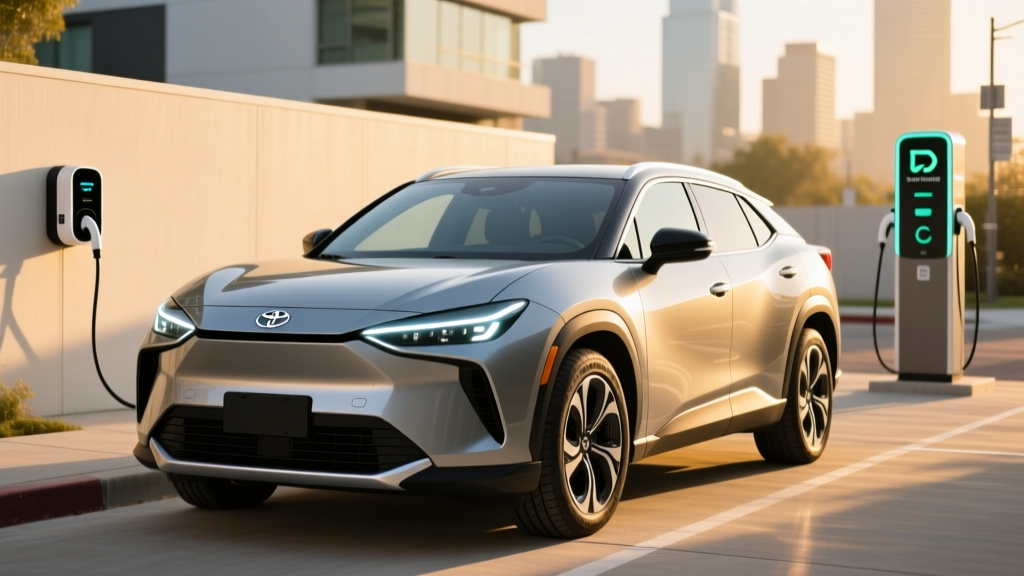
If you have been browsing bz4x lease deals at your local Toyota dealer, you are looking at one of the most aggressively priced electric crossovers on the market — but only if you understand what you are actually getting. The 2026 Toyota bZ4X carries forward the platform introduced for the 2023 model year with iterative battery, software, and pricing refinements that make it a serious budget-EV contender, particularly through lease programs that can stack manufacturer incentives with federal tax credits passed through the leasing bank.
This review breaks down every number that matters: real-world range versus the EPA sticker, charging speeds at home and on the road, total monthly cost, and whether the bZ4X makes more sense than a Hyundai Ioniq 5, Kia EV6, or Tesla Model Y on a three-year lease.
Quick Verdict: Who Should Lease the bZ4X?
The 2026 bZ4X is a practical, comfort-oriented electric crossover for buyers who prioritize Toyota's reliability reputation, low lease payments, and everyday drivability over cutting-edge performance or class-leading range. It is best suited for suburban commuters with home Level 2 charging who drive 30–60 miles daily and take occasional road trips under 200 miles. It is not the right pick for buyers who want the fastest DC charging in the segment, the longest range, or the most advanced driver-assistance features.
Lease the bZ4X if: You want a sub-$350/month EV lease, value Toyota's warranty and dealer network, mostly drive in-town, and have Level 2 home charging.
Look elsewhere if: You regularly drive 250+ miles between charges, need sub-20-minute DC fast charging, or want hands-free Level 2 highway driving like GM's Super Cruise.
Range & Efficiency: EPA vs. Real-World Numbers
The 2026 Toyota bZ4X is offered in two drivetrain configurations, each with different EPA range ratings. The front-wheel-drive (FWD) model achieves the highest range, while the all-wheel-drive (AWD) variant sacrifices some efficiency for traction and slightly quicker acceleration.
| Metric | FWD XLE | AWD XLE |
|---|---|---|
| EPA Range | 252 miles | 228 miles |
| Combined MPGe | 114 MPGe | 102 MPGe |
| kWh/100 mi | 29 | 33 |
| Battery (usable) | 71.4 kWh | 71.4 kWh |
| Chemistry | NMC (Nickel Manganese Cobalt) | NMC |
Real-World Range Reality Check: The EPA's 252-mile rating for the FWD model assumes a mix of city and highway driving at moderate temperatures. In our experience and consistent with third-party testing, expect:
- Highway-only at 70 mph (summer): ~215–230 miles
- Highway-only at 70 mph (winter, 30°F): ~170–195 miles
- City/suburban mixed (mild weather): ~245–260 miles (regen braking helps)
The AWD model will see roughly 10–15% lower figures across all scenarios. If your daily round-trip commute exceeds 80 miles or you live in a cold climate, plan your charging accordingly — the bZ4X's range is adequate but not class-leading.
Source: EPA Fuel Economy — Toyota bZ4X
Charging Speeds: DC Fast, Level 2, and Level 1
Charging is where the bZ4X faces its most frequent criticism, and the numbers tell a nuanced story. The FWD model supports a peak DC fast-charge rate of 150 kW, while the AWD model peaks at 100 kW. Both figures lag behind competitors like the Hyundai Ioniq 5 (up to 240 kW) and Tesla Model Y (up to 250 kW on V3 Superchargers).
| Charging Level | Power / Rate | FWD 10–80% Time | AWD 10–80% Time |
|---|---|---|---|
| DC Fast Charge (peak) | 150 kW (FWD) / 100 kW (AWD) | ~30 min | ~40 min |
| Level 2 (240V, 48A) | ~11.5 kW | ~7.5 hrs (0–100%) | ~7.5 hrs (0–100%) |
| Level 1 (120V, 12A) | ~1.4 kW | ~3 mi/hr | ~3 mi/hr |
Understanding the charge curve: Peak kW is not sustained kW. The bZ4X FWD may hit 150 kW briefly between 10–30% state of charge, then taper to ~90 kW through 60%, and further to ~40 kW above 80%. This means the 10–80% time of ~30 minutes is realistic, but a 10–90% session will stretch closer to 45–50 minutes. For road trips, plan 30-minute stops at DC fast chargers every 180–200 miles in the FWD model.
The bZ4X uses the CCS1 connector for DC fast charging and J1772 for Level 2 AC. Toyota has not yet transitioned the bZ4X to the NACS (Tesla) connector as of the 2026 model year, though adapters are available for Tesla Supercharger access where permitted.
For home charging, a Level 2 wallbox delivering 11.5 kW will fully replenish the 71.4 kWh battery overnight in about 7.5 hours. Most owners charging from 20% to 80% daily will see a 4–5 hour session — easily handled by scheduling overnight charging during off-peak electricity rates.
Performance, Drivetrain & Driving Impressions
| Spec | FWD | AWD |
|---|---|---|
| Horsepower | 201 hp | 214 hp |
| Torque | 196 lb-ft | 248 lb-ft |
| 0–60 mph | ~7.1 sec | ~5.8 sec |
| Drivetrain | Single motor, FWD | Dual motor, AWD |
| Towing Capacity | Not rated | Not rated |
The bZ4X is not a performance EV, and Toyota does not pretend otherwise. The FWD model's 7.1-second 0–60 time is adequate for merging and passing but unremarkable. The AWD's 5.8-second sprint feels noticeably more confident, particularly in wet or snowy conditions where the dual-motor torque distribution shines.
Ride quality is where the bZ4X earns points: the suspension is tuned for comfort over sportiness, absorbing road imperfections well. Cabin noise is low at highway speeds. Regenerative braking is moderate — the bZ4X does not offer true one-pedal driving in the way a Nissan Leaf or Tesla does, which may disappoint EV veterans but feels natural to drivers transitioning from gas vehicles.
Interior, Cargo & Technology
The bZ4X cabin seats five with reasonable space for a compact crossover. Material quality is mid-tier — plenty of soft-touch surfaces on the dashboard and door uppers, but some hard plastics on lower panels that reflect its value positioning.
| Dimension | Measurement |
|---|---|
| Cargo (rear seats up) | 27.7 cu ft |
| Cargo (rear seats folded) | 56.9 cu ft |
| Front Legroom | 42.1 in |
| Rear Legroom | 35.6 in |
| Frunk | None (FWD has small underhood storage) |
Infotainment: A 12.3-inch touchscreen runs Toyota's latest Audio Multimedia system with wireless Apple CarPlay and Android Auto, built-in navigation, and over-the-air update capability. The interface is responsive, though the lack of physical volume and tuning knobs frustrates some users.
Driver Assistance: Toyota Safety Sense 3.0 is standard across all trims, bundling adaptive cruise control, lane-keeping assist, automatic emergency braking with pedestrian detection, and blind-spot monitoring. This is a SAE Level 2 driver-assist system — it supports steering and speed on highways but requires continuous driver engagement. It is not a hands-free system like GM Super Cruise or Ford BlueCruise, and it does not support automated lane changes.
Pricing, Lease Deals & Federal Tax Credit
The 2026 bZ4X is available in two main trims: XLE and Limited. Pricing has been adjusted to remain competitive against the growing field of sub-$45,000 electric crossovers.
| Trim / Drivetrain | Base MSRP | Est. Monthly Lease (36 mo) | §30D Credit Eligible? |
|---|---|---|---|
| XLE FWD | $38,465 | $279–$339 | Yes (see rules below) |
| XLE AWD | $40,965 | $319–$379 | Yes (see rules below) |
| Limited FWD | $44,115 | $369–$429 | Yes (see rules below) |
| Limited AWD | $46,615 | $409–$469 | Yes (see rules below) |
Lease estimates assume $2,500–$3,500 due at signing, 10,000 miles/year, and manufacturer-to-dealer lease cash applied. Actual payments vary by dealer, region, credit tier, and available incentives.
Federal §30D Tax Credit Eligibility (2026 Rules):
- Credit amount: Up to $7,500, split between critical minerals ($3,750) and battery components ($3,750)
- MSRP cap: SUVs/crossovers must be under $80,000 — all bZ4X trims qualify
- Buyer income cap: AGI must not exceed $150,000 (single), $225,000 (head of household), or $300,000 (joint) — verify on IRS.gov
- Battery sourcing: The bZ4X's battery sourcing determines partial vs. full credit. Toyota has worked to shift supply chains, but verify the specific VIN's credit status at fueleconomy.gov before signing
- Lease advantage: Under the commercial vehicle credit (§45W), leasing banks can claim the credit and pass savings through as reduced lease payments — this often makes leasing more attractive than buying, even for buyers who exceed income caps
This lease-versus-buy dynamic is critical: many bZ4X lease deals you will find advertised at $249–$299/month reflect the leasing bank capturing the $7,500 credit and applying it as capitalized-cost reduction. Always ask the dealer to itemize whether the advertised payment includes the federal credit passthrough.
Warranty & Long-Term Battery Outlook
| Coverage | Term |
|---|---|
| Basic (bumper-to-bumper) | 3 years / 36,000 miles |
| Powertrain | 5 years / 60,000 miles |
| EV Battery | 8 years / 100,000 miles |
| Battery capacity guarantee | ≥70% retention over 8 yr / 100k mi |
Toyota guarantees the bZ4X's NMC battery will retain at least 70% of its original capacity over the 8-year/100,000-mile warranty period. Toyota has publicly stated an internal target of 90% retention at 10 years, though this is not a contractual guarantee. For lessees on a 36-month term, battery degradation is essentially a non-issue — you will return the vehicle long before meaningful capacity loss appears.
NMC chemistry offers higher energy density than LFP (lithium iron phosphate), which gives the bZ4X its competitive range in a compact package. The trade-off is that NMC batteries are generally more sensitive to sustained high state-of-charge and extreme heat. Best practice: set your charge limit to 80% for daily use and only charge to 100% before long road trips.
How the bZ4X Compares to Key Rivals
| Spec | Toyota bZ4X XLE FWD | Hyundai Ioniq 5 SE | Tesla Model Y LR |
|---|---|---|---|
| Base MSRP | $38,465 | $42,900 | $46,630 |
| EPA Range | 252 mi | 303 mi | 320 mi |
| DC Fast Charge (peak) | 150 kW | 240 kW | 250 kW |
| 10–80% Time | ~30 min | ~18 min | ~20 min |
| 0–60 mph | 7.1 sec | 7.4 sec | 5.0 sec |
| Cargo (seats up) | 27.7 cu ft | 27.2 cu ft | 30.2 cu ft |
| Est. Lease (36 mo) | $279–$339 | $349–$409 | $449–$529 |
The bZ4X's clearest advantage is lease pricing. When Toyota applies aggressive lease cash alongside the passthrough federal credit, monthly payments undercut the Ioniq 5 by $60–$80/month and the Model Y by $150+/month. For budget-conscious lessees, that $2,000–$5,000 savings over a three-year term is significant.
Where the bZ4X falls short: DC charging speed (30 minutes vs. 18–20 minutes for rivals), range (252 vs. 300+ miles), and driver-assist sophistication. If road-trip charging speed is a priority, the Ioniq 5's 800V architecture is a meaningful advantage. If range and Supercharger network access matter most, the Model Y still leads — though at a premium.
🏆 Lowest Lease Payment: Toyota bZ4X
🏆 Fastest DC Charging: Hyundai Ioniq 5
🏆 Longest Range: Tesla Model Y
🏆 Best Cargo Space: Tesla Model Y
Pros, Cons & Final Take
✅ Pros
- Among the lowest monthly lease payments in the EV crossover segment
- Comfortable, quiet ride quality tuned for daily commuting
- Toyota Safety Sense 3.0 standard on all trims
- Federal tax credit passthrough via lease reduces effective cost
- Strong dealer network and 8-year/100,000-mi battery warranty
- Wireless CarPlay/Android Auto and OTA updates
❌ Cons
- DC fast charging (150 kW peak FWD) is slower than most rivals
- 252-mile EPA range is adequate but trails Ioniq 5 and Model Y by 50+ miles
- AWD model limited to 100 kW DC charging — a significant road-trip penalty
- No frunk (front trunk) for additional storage
- No true one-pedal driving mode
- Driver assist is capable but not hands-free like Super Cruise or BlueCruise
- CCS1 connector; NACS adapter required for Tesla Supercharger access
If your priority is the lowest possible monthly payment on a comfortable, reliable electric crossover and you charge primarily at home, the 2026 bZ4X is one of the best-value leases available. If you road-trip frequently or need the fastest possible DC charging, budget an extra $60–$100/month for the Ioniq 5 or EV6.
Frequently Asked Questions
What is the real-world range of the 2026 Toyota bZ4X?
The EPA rates the FWD bZ4X at 252 miles and the AWD at 228 miles. In real-world highway driving at 70 mph, expect 215–230 miles in warm weather and 170–195 miles in freezing temperatures for the FWD model. City and suburban driving with regenerative braking can approach or slightly exceed the EPA rating.
How fast does the bZ4X charge at home and on DC fast chargers?
On a DC fast charger, the FWD model peaks at 150 kW (10–80% in ~30 minutes) and the AWD at 100 kW (10–80% in ~40 minutes). At home on a Level 2 wallbox (11.5 kW), a full charge takes approximately 7.5 hours. Level 1 (120V) adds roughly 3 miles per hour — suitable only for emergency trickle charging.
How much does the bZ4X cost after tax credits on a lease?
With the federal $7,500 credit passed through the leasing bank and typical manufacturer lease cash, the bZ4X XLE FWD can lease for $279–$339/month with $2,500–$3,500 due at signing on a 36-month term. The effective cost after incentives can be $5,000–$8,000 less than the equivalent purchase over three years.
Does the bZ4X qualify for the $7,500 federal EV tax credit?
The bZ4X's MSRP is well under the $80,000 SUV cap, making it eligible in principle. However, full $7,500 credit depends on battery critical-mineral and component sourcing requirements, which vary by production batch. When leasing, the §45W commercial credit often applies regardless of buyer income limits, making leasing the most reliable path to capturing the incentive. Always verify the specific VIN at fueleconomy.gov.
Is the bZ4X worth leasing over a Hyundai Ioniq 5 or Tesla Model Y?
If your priority is minimizing monthly cost and you primarily drive locally with home charging, the bZ4X offers the best value. If you need longer range (300+ miles), faster DC charging (under 20 minutes), or access to the Tesla Supercharger network without adapters, the Ioniq 5 or Model Y justifies the higher lease payment.
What happens to the battery after the lease ends?
You simply return the vehicle. Battery degradation over a 36-month lease is typically 3–6%, well within Toyota's 70% retention warranty threshold. You bear no risk of battery replacement costs — one of the key financial advantages of leasing an EV versus buying.