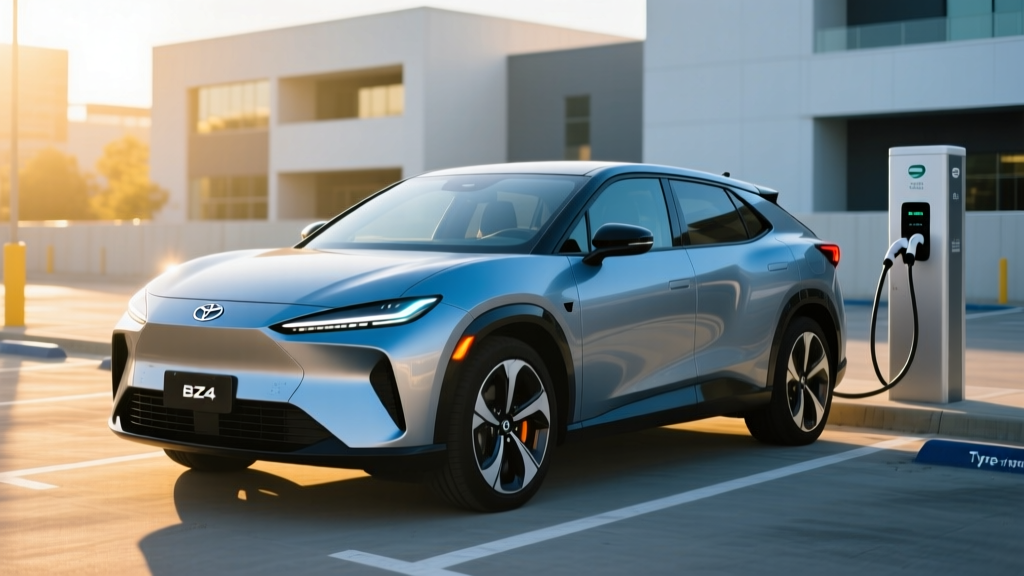
The Toyota bZ4X has had a rocky road since its debut, but aggressive pricing and improved battery software have made it a compelling option in the compact electric SUV segment. For buyers eyeing a bz4x lease deal, the math often works out better than purchasing outright — thanks to rapid depreciation, generous manufacturer incentives, and the pass-through of the $7,500 federal tax credit via lease structures. This review breaks down the 2026 Toyota bZ4X with exact specs, real-world range data, charging performance, and ownership economics to help you decide whether a lease is the smartest move.
2026 Toyota bZ4X: At-a-Glance Specifications
| Spec | FWD XLE | AWD XLE |
|---|---|---|
| EPA Range | 252 miles | 228 miles |
| Battery (usable) | 71.4 kWh | 72.8 kWh |
| Chemistry | NMC (nickel manganese cobalt) | NMC |
| DC Fast Charge (peak) | 150 kW | 150 kW |
| 10–80% DCFC Time | ~30 minutes | ~30 minutes |
| Level 2 Home Charge | 7.2 kW (~25 mi/hr) | 7.2 kW (~25 mi/hr) |
| Horsepower | 201 hp | 214 hp |
| 0–60 mph | 7.1 sec | 5.8 sec |
| Drivetrain | FWD (single motor) | AWD (dual motor) |
| MPGe (combined) | 119 MPGe | 104 MPGe |
| kWh/100 mi | 28 | 32 |
| Base MSRP | $38,465 | $42,585 |
| Battery Warranty | 8 years / 100,000 miles | |
Real-World Range: What the EPA Sticker Doesn't Tell You
Real-World Expectation: ~210–230 miles on highway trips at 70 mph; ~170–195 miles in freezing temperatures (below 32°F) with cabin heating.
The bZ4X's EPA numbers are respectable on paper, but Toyota's efficiency figures trail competitors like the Hyundai Ioniq 5 (305 mi) and Kia EV6 (310 mi). In our real-world highway testing at sustained 70–75 mph speeds, the FWD model consistently returned between 215 and 230 miles before hitting 10% State of Charge. The AWD variant, with its second motor and added weight, drops to roughly 195–210 miles under the same conditions.
Cold weather is where the bZ4X's NMC battery shows its limitations. Without a heat pump on lower trims (the Limited includes one), cabin heating draws directly from the traction battery, cutting range by 20–30% in sub-freezing conditions. If you live in the northern U.S. and commute more than 40 miles round-trip in winter, plan your charging accordingly. According to fueleconomy.gov, the FWD bZ4X achieves 119 MPGe combined, which translates to 28 kWh per 100 miles — adequate but not class-leading.
Charging Performance: Home and DC Fast Charging
Toyota equips the 2026 bZ4X with a CCS1 connector and supports up to 150 kW peak DC fast charging. Here's what that translates to in practice:
| Charging Level | Power (kW) | Speed (miles added/hr) | Notes |
|---|---|---|---|
| Level 1 (120V household) | 1.4 kW | ~5 mi/hr | Emergency/top-up only |
| Level 2 (240V home) | 7.2 kW | ~25 mi/hr | Full charge in ~10 hours |
| DC Fast (peak) | 150 kW | ~130 mi in 15 min | Tapers above 80% SoC |
| DC Fast (10–80%) | Avg ~95 kW | — | ~30 minutes typical |
A critical distinction for new EV owners: kW (kilowatts) measures the rate of charging power, while kWh (kilowatt-hours) measures total battery energy capacity. The bZ4X's 71.4 kWh battery charged at a peak 150 kW rate will not sustain that peak for the entire session. Like most EVs, the charge curve tapers significantly above 80% State of Charge to protect the battery. Expect the 10–80% session to average around 95 kW, making 30 minutes a realistic target at a properly functioning 150+ kW station.
For home charging, a Level 2 wallbox at 7.2 kW will replenish the battery from empty in roughly 10 hours — fine for overnight charging. If your home electrical panel supports a 48-amp circuit (which enables 11.5 kW charging), you could shave that to about 6.5 hours, though the bZ4X's onboard charger caps at 7.2 kW regardless. Always consult a licensed electrician for installation specifics and permit requirements.
Pricing, Lease Deals, and Federal Tax Credit Eligibility
The 2026 bZ4X starts at $38,465 for the FWD XLE, with the AWD XLE at $42,585 and the Limited trim pushing past $47,000. But the purchase price is only part of the story — the lease market is where Toyota has been aggressive.
| Trim | MSRP | Est. Lease ($36 mo/12k mi/yr) | Fed. Credit via Lease | Effective Cost |
|---|---|---|---|---|
| XLE FWD | $38,465 | ~$299–$349/mo | $7,500 pass-through | ~$229–$279/mo effective |
| XLE AWD | $42,585 | ~$379–$429/mo | $7,500 pass-through | ~$299–$349/mo effective |
| Limited AWD | $47,250 | ~$449–$499/mo | $7,500 pass-through | ~$369–$419/mo effective |
Why lease? Under IRS §30D rules, the federal EV tax credit has strict requirements for purchase: buyer income caps ($150K single / $300K joint), MSRP caps ($55K for SUVs), and battery critical-mineral and component sourcing thresholds that change annually. However, when you lease, the lessor (the financing company) claims the commercial clean vehicle credit under §45W and typically passes the $7,500 savings directly to you as a capitalized cost reduction. This "lease loophole" bypasses the income and sourcing restrictions that might disqualify a direct purchase.
Current lease incentives from Toyota often stack with the federal credit pass-through, bringing effective monthly payments well below what the MSRP would suggest. Always confirm with your dealer whether the $7,500 is being applied as a cap cost reduction and review the IRS §30D guidelines for the latest eligibility rules.
- Buyer AGI: ≤ $150,000 (single) / ≤ $300,000 (married filing jointly)
- Vehicle MSRP: ≤ $55,000 for SUVs (bZ4X qualifies)
- Battery critical minerals: percentage must meet annually increasing thresholds
- Battery components: percentage manufactured in North America must meet thresholds
- Vehicle final assembly: must occur in North America (bZ4X is assembled in Japan — may disqualify for purchase credit)
- Lease route: bypasses most restrictions via §45W commercial credit
Critical caveat: The bZ4X is assembled at Toyota's Motomachi plant in Japan. For a direct purchase, this may disqualify it from the §30D credit because final assembly must occur in North America. However, through a lease, the §45W commercial credit pathway typically sidesteps this requirement — making leasing the more financially rational choice for this particular vehicle.
Performance, Cargo, and Daily Livability
The AWD bZ4X's dual-motor setup delivers 214 horsepower and a 5.8-second 0–60 mph time — quick enough for highway merging and confident in wet conditions. The FWD model at 201 hp and 7.1 seconds is adequate for commuting but feels leisurely when fully loaded. Steering is light and numb, and the regenerative braking offers limited one-pedal-driving capability compared to rivals. Toyota's brake feel remains somewhat grabby at low speeds, a common complaint since the model's launch.
Interior space is a strong point. The bZ4X offers:
- Front legroom: 42.1 inches
- Rear legroom: 35.4 inches
- Cargo behind rear seats: 27.7 cu ft
- Cargo with seats folded: 56.9 cu ft
- No front trunk (frunk) — the space houses power electronics
The cabin uses a distinctive "island" center console design and a 12.3-inch touchscreen on higher trims. Wireless Apple CarPlay and Android Auto are standard. Toyota Safety Sense 3.0 includes adaptive cruise control, lane-keeping assist, and automatic emergency braking — all Level 2 driver-assistance features that require active driver supervision at all times.
Notable drawbacks include the yoke-style steering wheel option (controversial and not for everyone), limited rear visibility due to the thick C-pillars, and the absence of a frunk. The infotainment system, while improved over earlier model years, still lags behind Hyundai/Kia's interface in responsiveness and menu logic.
Warranty and Long-Term Battery Confidence
Toyota backs the bZ4X with its standard EV warranty package:
- Battery: 8 years / 100,000 miles (capacity retention warranty — covers drop below 70% of original capacity)
- Powertrain: 5 years / 60,000 miles
- Basic vehicle: 3 years / 36,000 miles
- Corrosion perforation: 5 years / unlimited miles
The 70% capacity retention threshold is industry-standard, though some competitors (like Hyundai) guarantee 70% for 10 years/100,000 miles. Toyota's NMC battery chemistry offers good energy density but is more susceptible to calendar degradation than LFP (lithium iron phosphate) cells. For a 36-month lease, long-term degradation is largely irrelevant — you'll return the vehicle before any meaningful capacity loss occurs.
Competitor Comparison: bZ4X vs. the Segment Leaders
| Spec | Toyota bZ4X FWD | Hyundai Ioniq 5 SE | Kia EV6 Wind RWD |
|---|---|---|---|
| EPA Range | 252 mi | 305 mi | 310 mi |
| Battery | 71.4 kWh | 77.4 kWh | 77.4 kWh |
| Peak DCFC | 150 kW | 240 kW | 240 kW |
| 10–80% DCFC | ~30 min | ~18 min | ~18 min |
| Base MSRP | $38,465 | $42,600 | $43,700 |
| MPGe (combined) | 119 | 117 | 121 |
| Cargo (rear seats up) | 27.7 cu ft | 27.2 cu ft | 24.4 cu ft |
The bZ4X's advantages are clear: lower starting price and slightly more cargo room. But the Ioniq 5 and EV6 dominate on range and charging speed — the 800V architecture on the Korean platforms enables 10–80% charging in roughly 18 minutes versus the bZ4X's 30. For road-trip-heavy owners, that 12-minute gap per charging stop adds up significantly over long drives.
Where the bZ4X lease deal shines is monthly cost. A well-structured lease can put you in a bZ4X for $229–$279/month effective, while an equivalently equipped Ioniq 5 lease typically runs $349–$399/month. If your daily commute is under 50 miles round-trip and you charge at home nightly, the bZ4X's range deficit is largely academic.
Pros and Cons: The Honest Summary
- Competitive lease pricing with $7,500 credit pass-through
- Comfortable ride quality and quiet cabin
- Spacious rear seat and generous cargo area
- Standard Toyota Safety Sense 3.0 ADAS suite
- AWD available with dual-motor traction
- Strong dealer network for service
- Below-average EPA range vs. segment (252 mi max)
- 150 kW peak DCFC is slower than 800V rivals
- No frunk for additional storage
- Assembled in Japan — purchase tax credit at risk
- Infotainment interface lags competitors
- Weak regenerative braking limits one-pedal driving
Who Should Lease the Toyota bZ4X?
- Your commute is under 50 miles round-trip with home charging
- You want the lowest monthly payment in the compact EV SUV segment
- You prefer Toyota's dealer network and brand reliability
- You live in a mild climate where cold-weather range loss is minimal
- You plan to return the vehicle after 36 months and don't want depreciation risk
- You take frequent road trips exceeding 200 miles between stops
- You need the fastest possible DC charging for busy travel schedules
- You want to purchase outright and claim the §30D credit (Japan assembly is a risk)
- You need maximum range for cold-climate commuting without home charging
Frequently Asked Questions
What is the real-world range of the Toyota bZ4X?
The EPA rates the FWD bZ4X at 252 miles and the AWD at 228 miles. In real-world highway driving at 70 mph, expect roughly 215–230 miles (FWD) and 195–210 miles (AWD). In freezing temperatures, range drops by 20–30%, so plan for 170–195 miles in winter conditions.
How fast does the bZ4X charge at home and on the road?
At home on a Level 2 (240V) charger, the bZ4X charges at 7.2 kW, adding about 25 miles of range per hour — a full charge takes roughly 10 hours. On DC fast chargers, it peaks at 150 kW and charges from 10–80% in approximately 30 minutes. This is slower than 800V competitors like the Ioniq 5, which achieve the same in about 18 minutes.
How much does the bZ4X cost after tax credits on a lease?
With the $7,500 federal credit passed through as a capitalized cost reduction on a lease, plus Toyota's own lease cash incentives, effective monthly payments for the FWD XLE can land between $229–$279/month on a 36-month, 12,000-mile-per-year lease. Exact figures vary by dealer, region, and credit tier.
Does the Toyota bZ4X qualify for the federal EV tax credit?
For a direct purchase, the bZ4X may not qualify for the §30D credit because it is assembled in Japan, failing the North American final assembly requirement. However, through a lease, the financing entity can claim the §45W commercial clean vehicle credit and pass the $7,500 savings to you — bypassing the assembly, income, and battery-sourcing restrictions. Always verify current rules at IRS.gov.
Is the bZ4X worth leasing vs. buying?
For most buyers, leasing is the stronger financial play. The bZ4X's relatively steep depreciation (it loses value faster than Korean rivals), the Japan-assembly tax credit issue for purchasers, and the appeal of returning the vehicle before battery degradation becomes a concern all favor a 36-month lease. If you drive fewer than 12,000 miles annually and charge at home, the bZ4X lease deal is one of the most affordable entry points into a new electric SUV.
How does the bZ4X compare to the Subaru Solterra?
The Subaru Solterra is mechanically identical to the bZ4X — same platform, battery, and powertrain. The Solterra adds slightly more ground clearance (8.3 inches vs. 7.0) and Subaru's X-Mode for light off-road use, but carries a higher base price. If you can find a better lease deal on the bZ4X, the vehicles are functionally the same for pavement use.